“The place of crucifixion was near a garden, where there was a new tomb, never used before.”
John 19:41 (NLT)
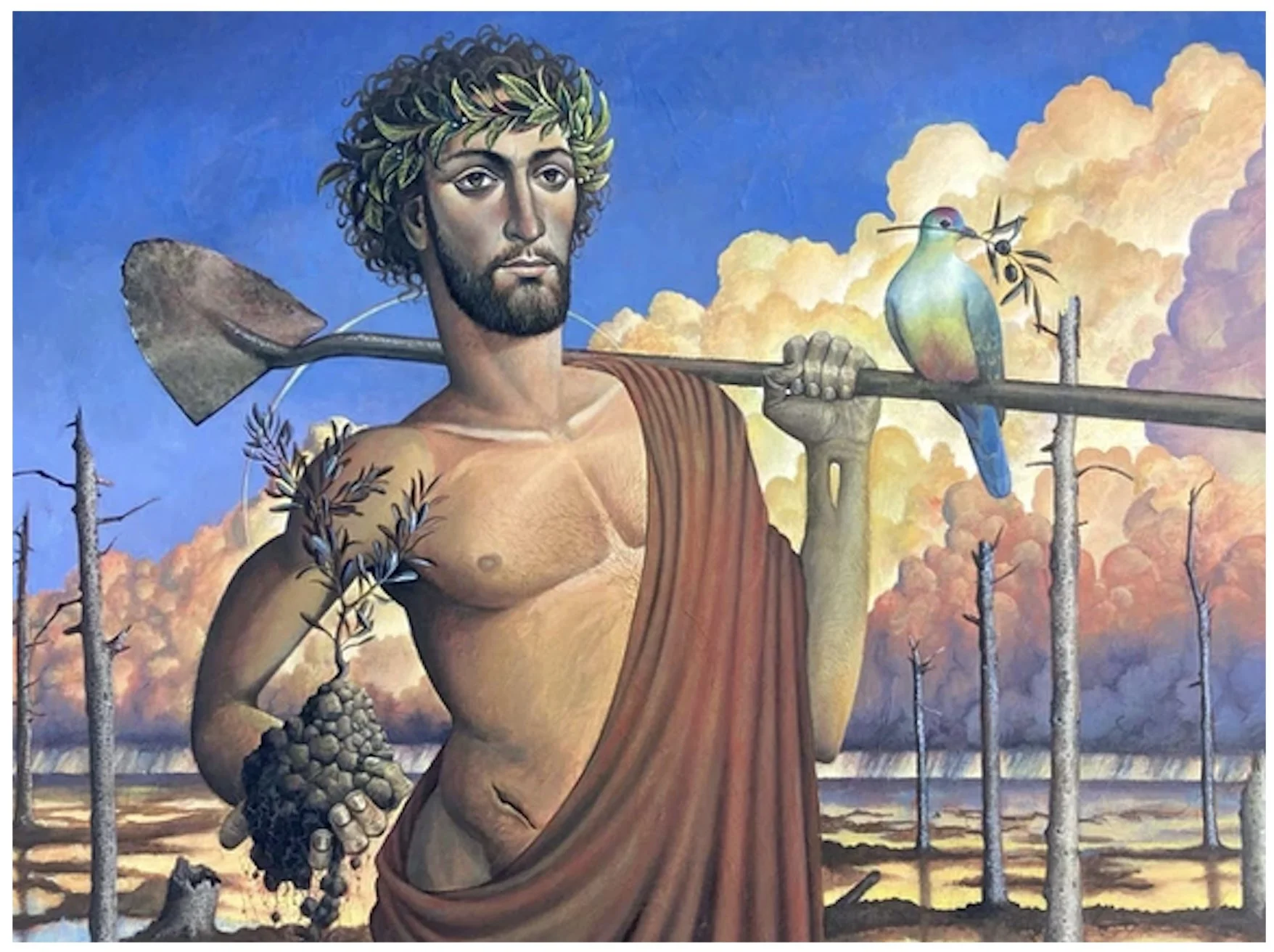
The portrayal of the risen Christ as a gardener has a deep history in religious art. This recent work is one of my favorites. It is “The Gardener (2021) by Joel Briggs. Image from here (accessed 3/5/2026).
Hat on, hat off
As a field instructor with the Jerusalem Center for Biblical Studies (JCBS), I have led hundreds of student and church groups through the Church of the Holy Sepulchre (CHS) in Jerusalem’s Old City. Throughout the experience, my schtick is to deliver part of the talk holding my hat over my heart, and the other part holding my hat over my head.
It is my way of navigating the tension that inevitably develops in places like this—the tension between what I hold to be true as a believer and what I hold to be true as an archaeologist and historian. No matter what you’ve heard, this is a very real struggle for those who take both the biblical text and the archaeological record seriously.
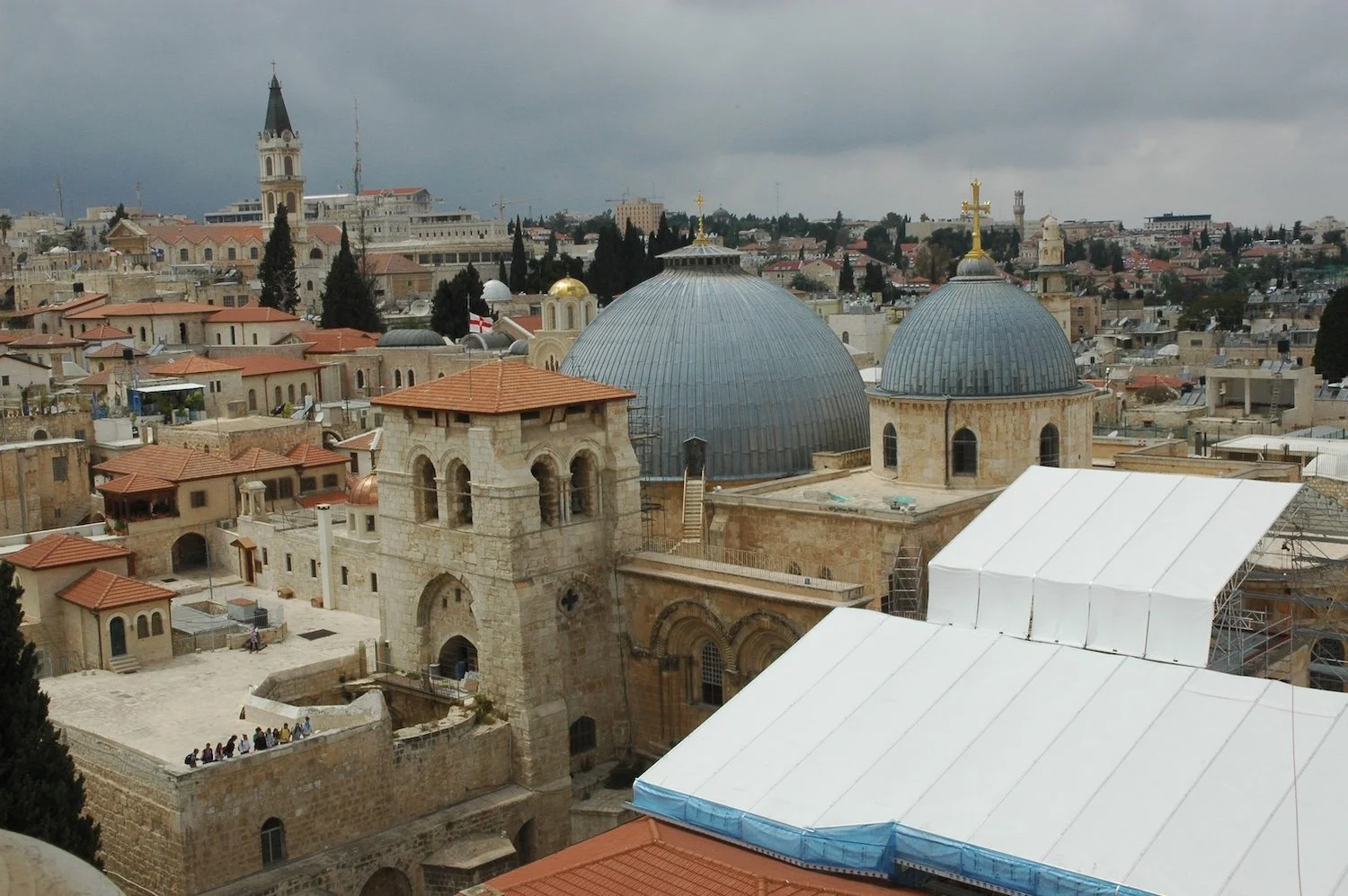
View to the twin (grey) domes of the Church of the Holy Sepulchre.The structure today is surrounded by the Christian Quarter of Jerusalem’s Old City.
At the CHS, this tension becomes acute for many Western Protestant pilgrims. Unfamiliar with the accoutrements and traditions of the Old World (and Eastern) Christianity, they often balk at a presentation that appears gaudy to the eye, ritualistic to the ear, reeks of incense, and feels crowded or even unruly.
This discomfort often drives pilgrims toward the Garden Tomb (“Gordon’s Calvary”) on the other side of town. Despite having zero archaeological merit for the identification assigned to it, the Garden Tomb is tidy, Protestant, very British, and—as the name suggests—looks like a garden. It simply feels better. But as many Evangelicals are learning, feelings can be deceptive.
I am convinced that if Western Protestant pilgrims can look beyond first impressions and take the archaeological and historic facts of the CHS seriously, the tensions that arise between head and heart can be reconciled and an even more powerful Easter reading may be produced. To do this, we start deep in the ground.
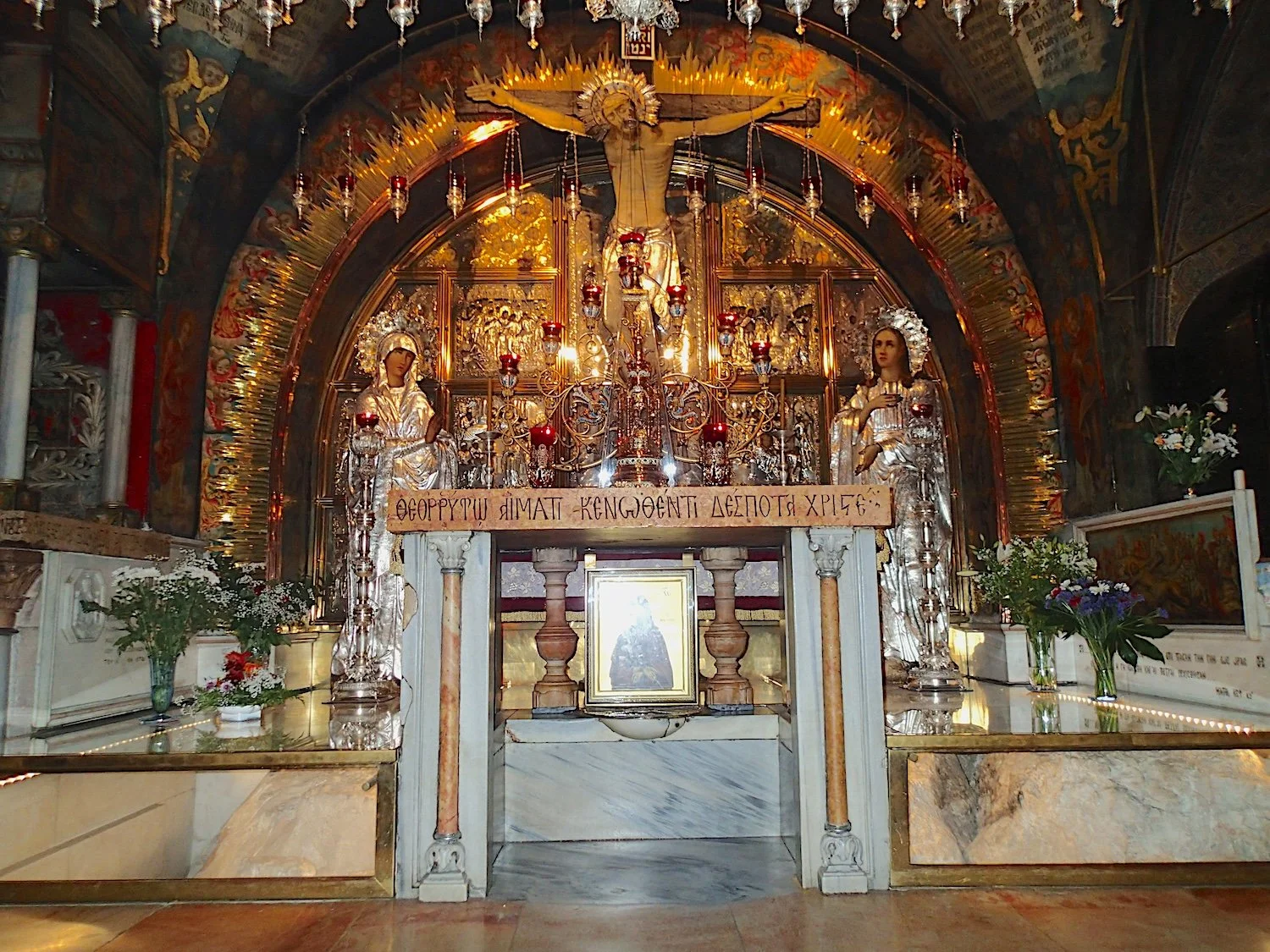
The Greek Orthodox Golgotha site. This is the traditional site where Christ was crucified inside the Church of the Holy Sepulchre. Note the yellowish stone framed on either side of the altar, near the floor. This stone under the glass is cracked and crumbly and ancient, left behind by the quarrymen.
A stone Quarry outside the city walls
Two key points launch our reading. First, before it was a church, the footprint of the CHS was a stone quarry. Second, that quarry was located immediately outside the city walls of Jerusalem at the time of Jesus’s crucifixion.
Building a strong city like Jerusalem requires stone—lots of it. Fortunately, the limestone beneath the city is excellent for construction. It is a mix of hard and chalky materials, but it’s the hard stuff (the iconic "Jerusalem stone") that builders crave. For centuries, it has been extracted from sites like Zedekiah’s Cave, Ramat Shlomo, and Har Hotzvim. The footprint of the CHS is no different.
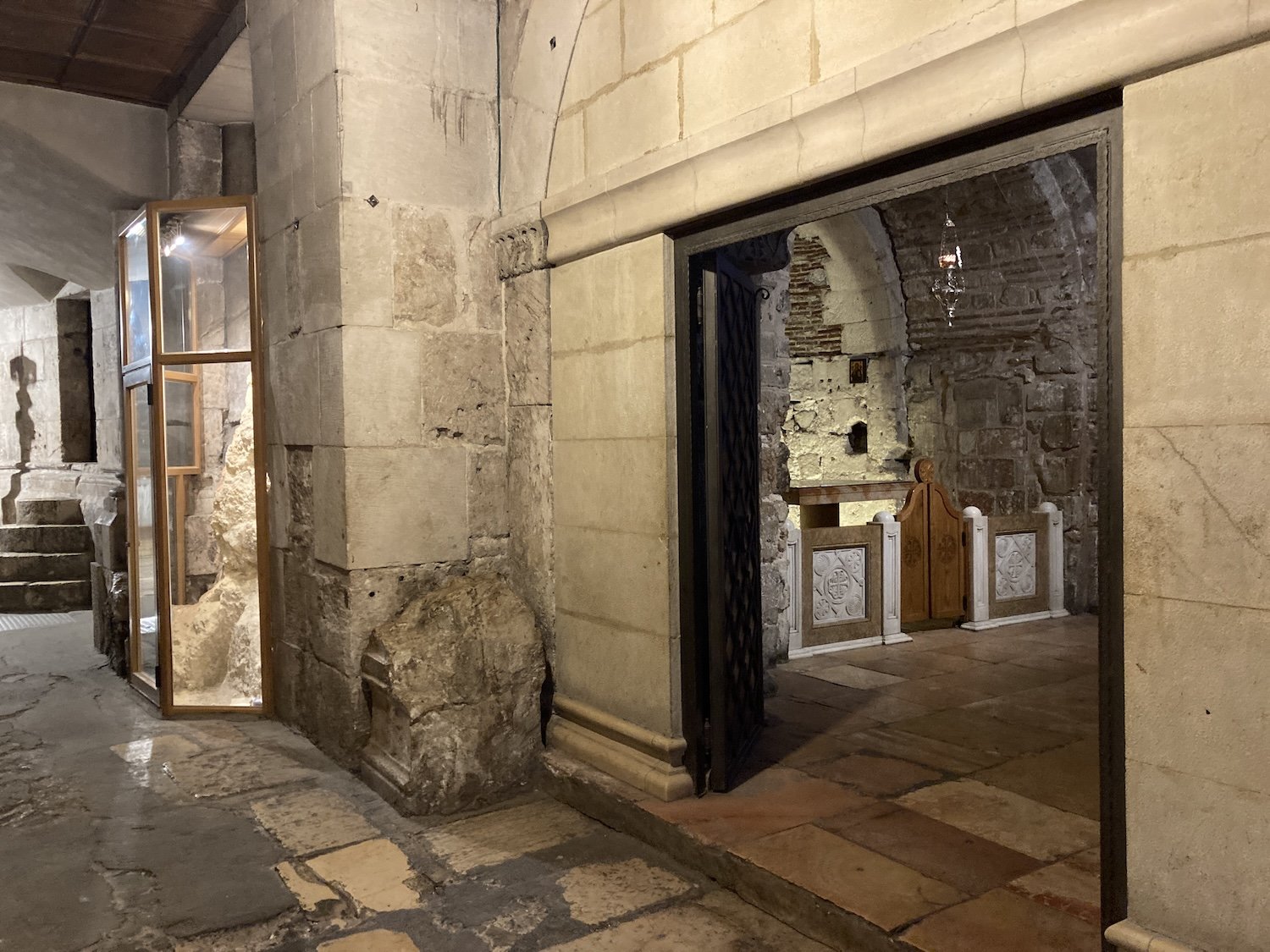
The door on the right leads into the Chapel of Adam, immediately under the Greek Orthodox Golgothat site. Portions of the left-behind limestone are visible behind the altar. On the left, parts of this same limestone block are encased in glass.
In these sites, quarrymen pursued the higher-quality building stone, leaving the poor-quality, cracked material behind. You can see this "leftover" stone in several places—high and low—within the CHS today:
The Greek Othodox Golgotha site: The traditional place of the Cross is essentially a nubbin of crumbly, cracked limestone the quarrymen deemed useless. Its height is actually artificial—the result of the better limestone around it being cut away. This is best appreciated at the base of the stairs or in the adjacent Chapel of Adam.
The Chapel of the Finding of the True Cross: In the lowest portion of the building, the quarry work is unmistakable. You can still see pick marks on the walls and the precise, cubical gaps where blocks were hewn out in the walls and ceiling.
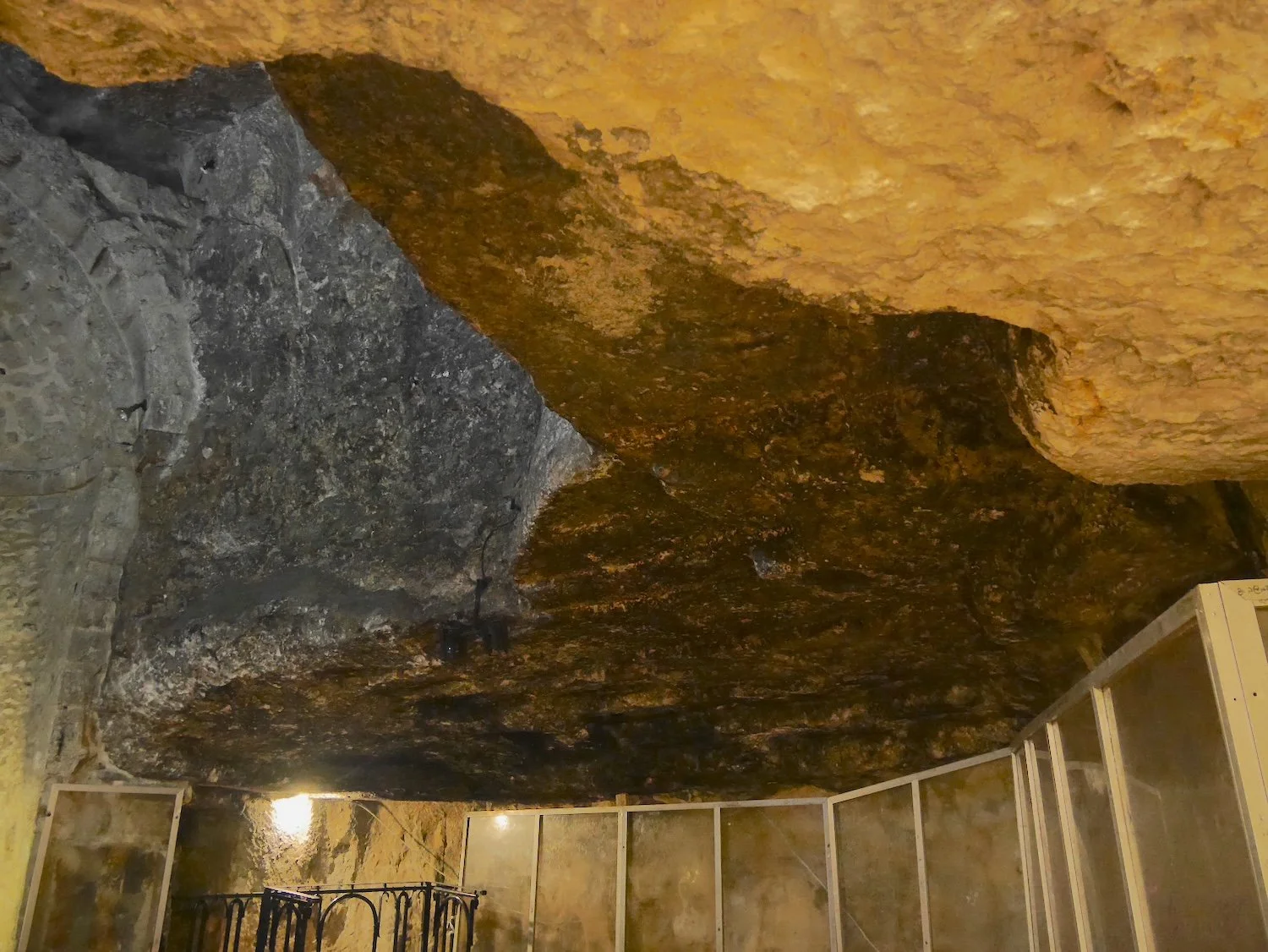
Quarry marks on the wall and ceiling inside the Chapel of the Finding of the True Cross. Long before it was used as a chapel, this space was a quarry site modified for use as a cistern.
The Threshold of the City
Recognizing the quarry is easy once you know what to look for. Proving it was outside the city walls in the first century is more challenging.
The need for the CHS to be "outside" is driven by the presence of first-century graves found in the lower portions of the quarry. Because Jewish custom considered tombs ritually unclean, it is inconceivable that executions would be conducted or the dead buried inside the city limits. This aligns with Hebrews 13:12, which states that Jesus “suffered outside the gate.”
The confusion for the modern visitor comes from the fact that the Old City walls we see today encompass the CHS. While this line corresponds in places to earlier boundaries, these walls were raised by the Ottomans, some 15 centuries after the biblical period. They are irrelevant to the discussion.
The Jewish historian Josephus describes three different first-century wall systems. For our purposes, his Second Wall is the key. Its exact path has been debated for a century or more. Josephus’s clues are few: it started at the Gennath (Garden) Gate, encompassed a part of the northern city, and terminated at the Antonia Fortress. While archaeological evidence for the Second Wall remains enigmatic, the best recent data comes from a 2020 radar survey near the Lutheran Church of the Redeemer. Faint readings suggest the crowning of a wall, supporting the consensus that the Second Wall "zig-zagged" leaving this quarry—a place of rejection and discarded stone—just outside the gate.
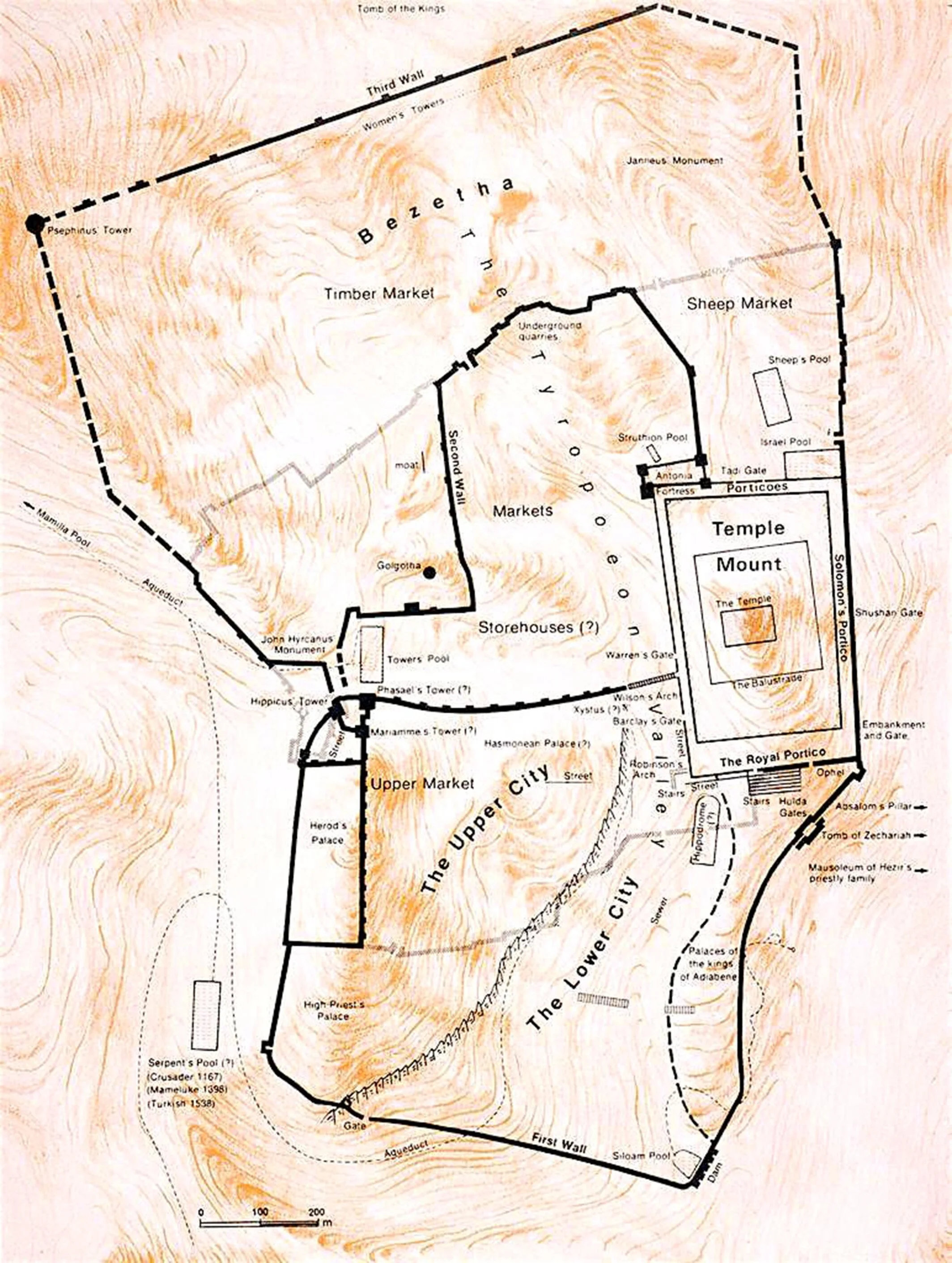
Consider this map of Jerusalem showing the three walls of Josephus. Note the dot labeled “Golgotha to the outside of the “Second Wall.” line. Be aware that the “Third Wall” shown here was a late addition to the city, built after the lifetime of Jesus. The faint dotted line suggests the path of the Ottoman-era wall.
Reimagining the easter setting
Forgive the audacity of the suggestion, but if we could somehow lift the CHS off the ground for a moment and peek beneath it, I think the visual would be clear.
Fortunately, through digital reconstruction, it is not an impossible ask. Consider the careful illustration below produced by the good folks at National Geographic.* Note the quarried pits, the presence of the city wall on the right of the image, the position of the crosses on a nubbin of elevated stone in the middle, and the tiny outline of a tomb dug into the quarry wall on the left.
This graphic provides a starting point for reimagining the Easter setting.
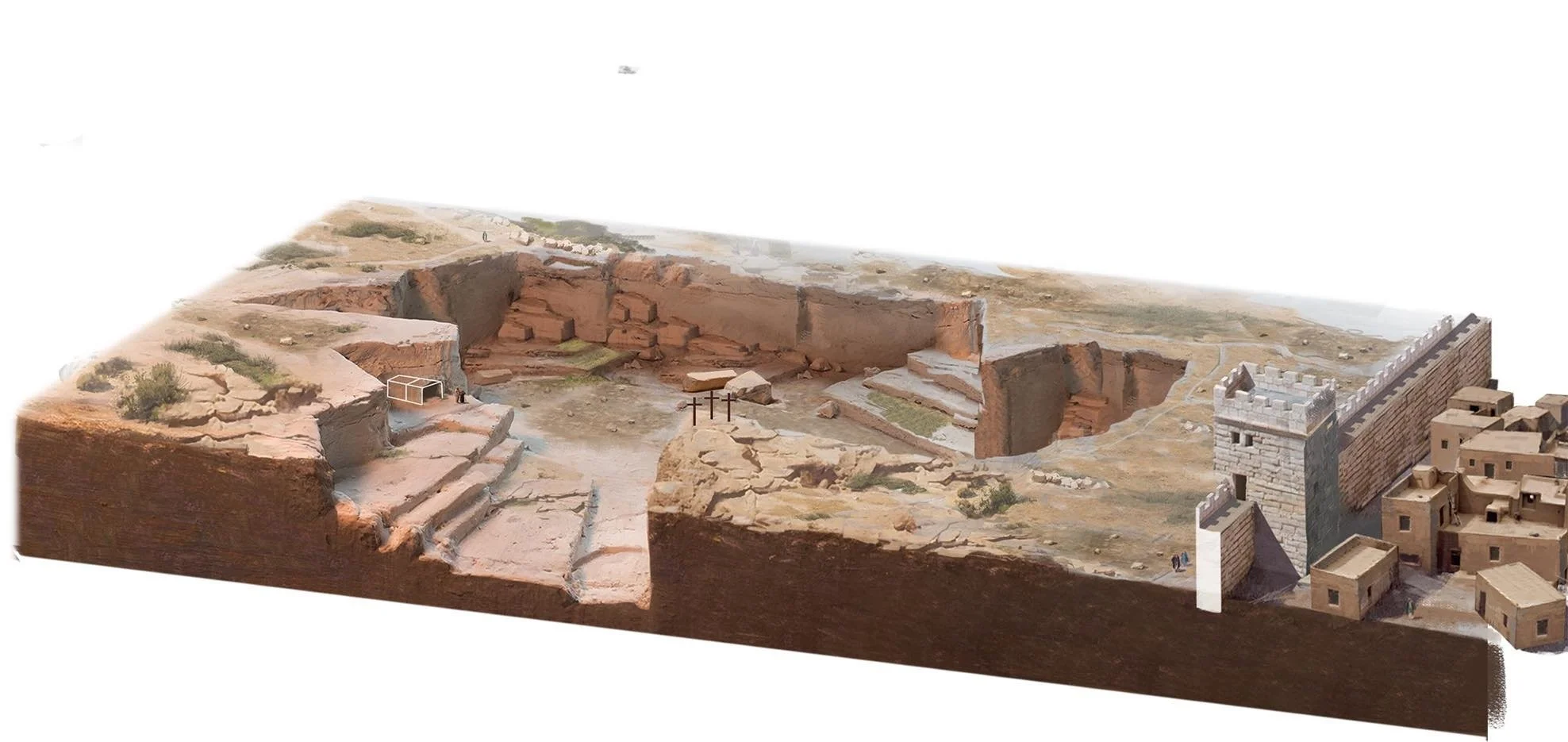
Digital reconstruction of the quarry site, ca AD 30. Image from here (accessed 4/5/2026).
I have long taught that the crucifixion took place in a sterile, discarded landscape of stone. An exhausted quarry has little value, except as an execution ground or graveyard. The CHS footprint fits the bill, being in a public location just outside the city wall.
But the interpretation also raises a nagging question: How do you explain the presence of a gardener in such a place? Put differently, how do we read John 20 and Mary Magdalene’s surprise encounter with the resurrected Christ?
Stay tuned for Part 2.
Notes:
*Fernando G Baptista and Kennedy Elliot, “The Site that May be Jesus’ Tomb” (Nov 28, 2017). Nationalgeographic.com.