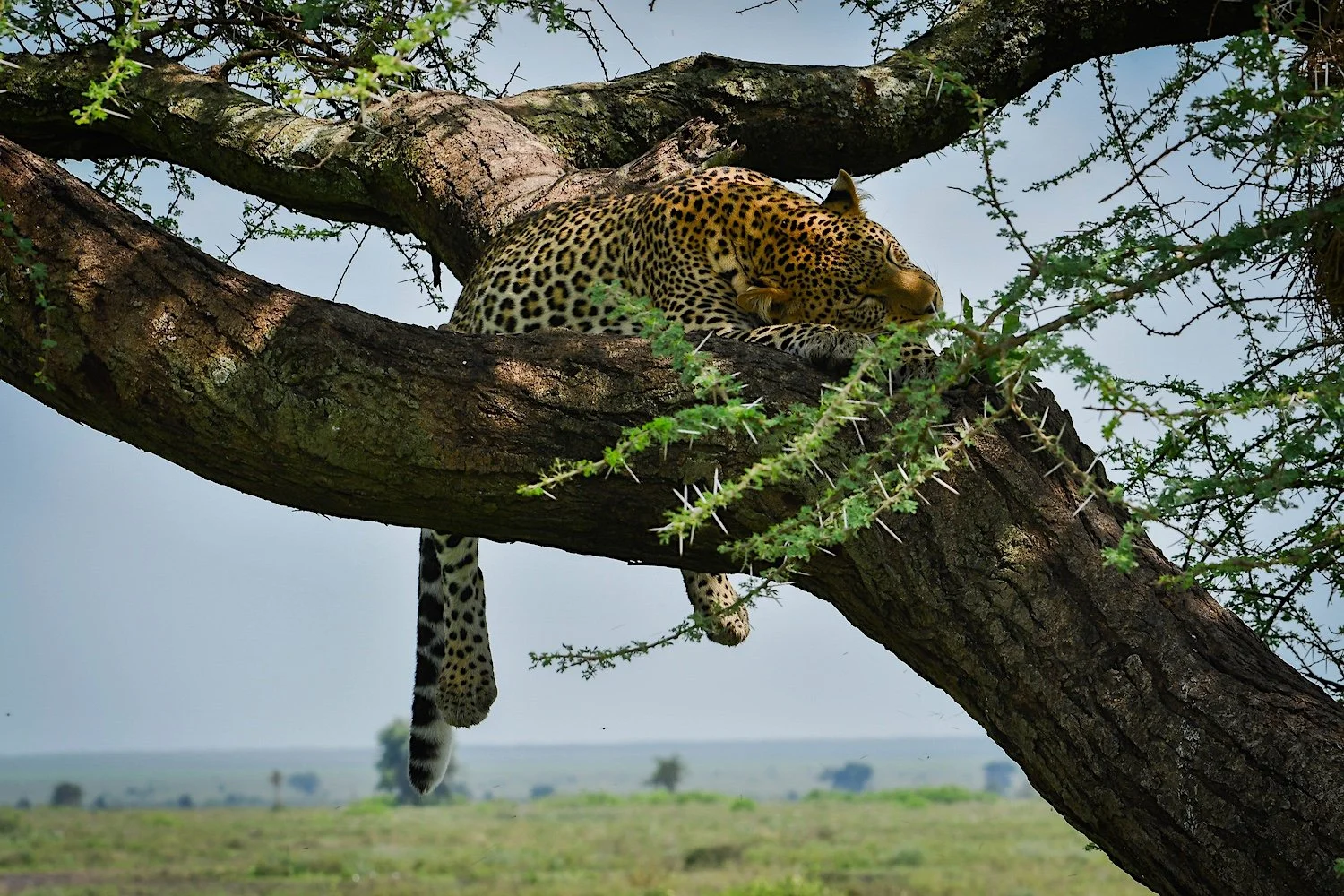
African leopard dangling legs while sleeping in an Acacia tree.
The Physics of the “Dangle”
Ever wondered why a sleeping leopard looks like he’s been draped over a tree branch? This iconic “dangling” pose isn't just about comfort—it’s a tutorial in feline engineering and survival.
By draping their limbs over both sides of a branch, leopards create a low center of gravity. This prevents them from tumbling off, even when their muscles completely relax during deep sleep. But beyond the mechanics, this posture serves several purposes that help explain leopard behavior.
Understanding Leopard Behavior
Stability During REM Sleep: Just like humans, leopards enter a deep REM cycle where their muscles go limp. Hanging their legs ensures they stay “locked” onto the branch via weight distribution rather than active gripping.
Built-in Air Conditioning: Draping their legs increases the surface area of skin exposed to the air, allowing even a light breeze to help regulate their body temperature on scorching savanna days.
High-Altitude Safety: Sleeping high in the canopy keeps leopards safely out of reach from ground-dwelling rivals like lions and hyenas.
Guarding the Groceries: Leopards often nap right next to their kills. By hoisting their prey into the branches, they protect their hard-earned meal from scavengers.
Not all trees make the cut, though! Leopards are picky, preferring species like the Acacia or Marula, which offer the perfect horizontal “hammock” branches for a long afternoon siesta.
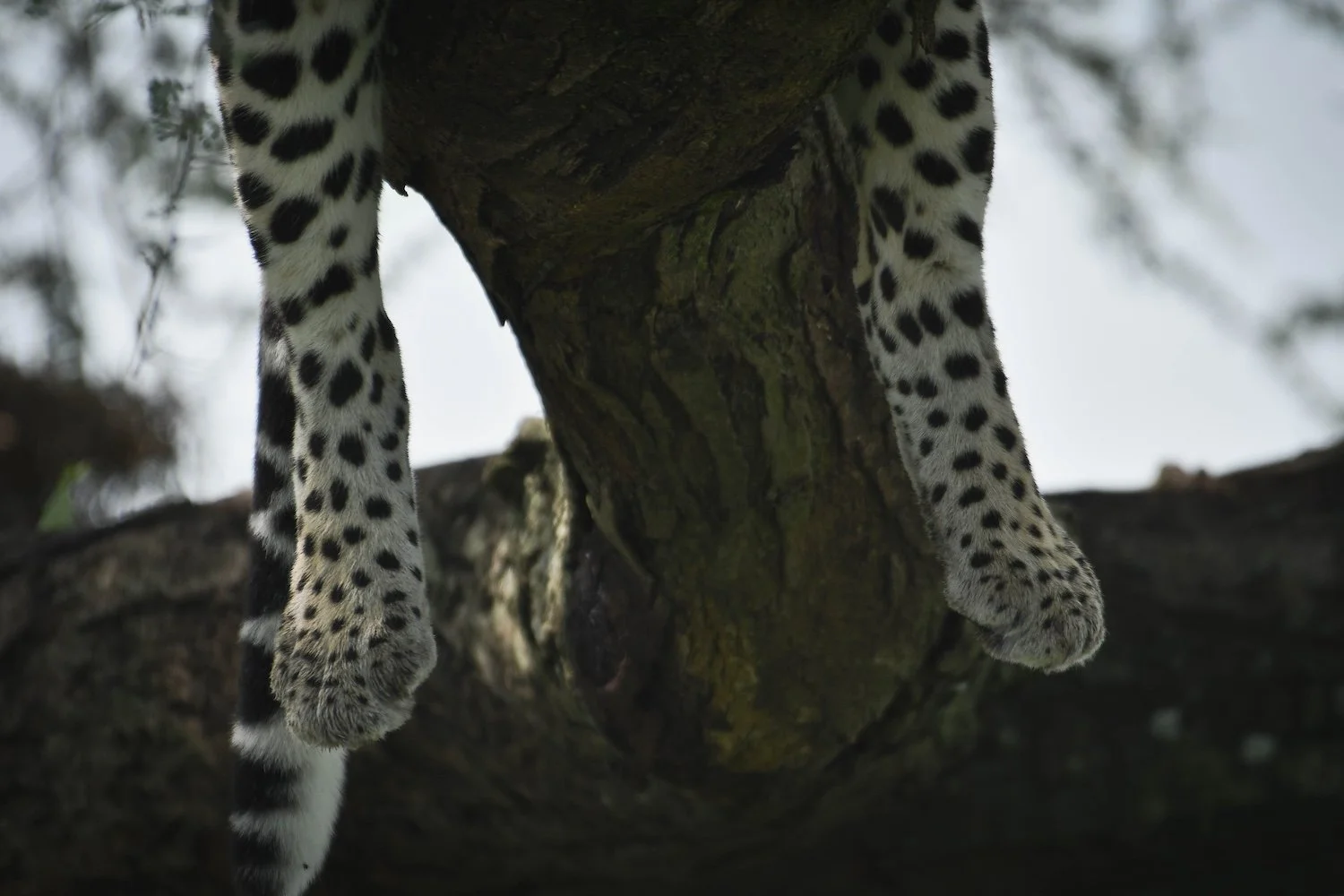
Dangling leopard legs and tail in the Central Serengeti.
Want to see a dangling leopard?
Finding one is not easy. But we will try. Join our Tanzanian safari scheduled for June 3-13, 2027. Email me at BibleLandExplorer@gmail.com to express interest and receive further information as it becomes available.