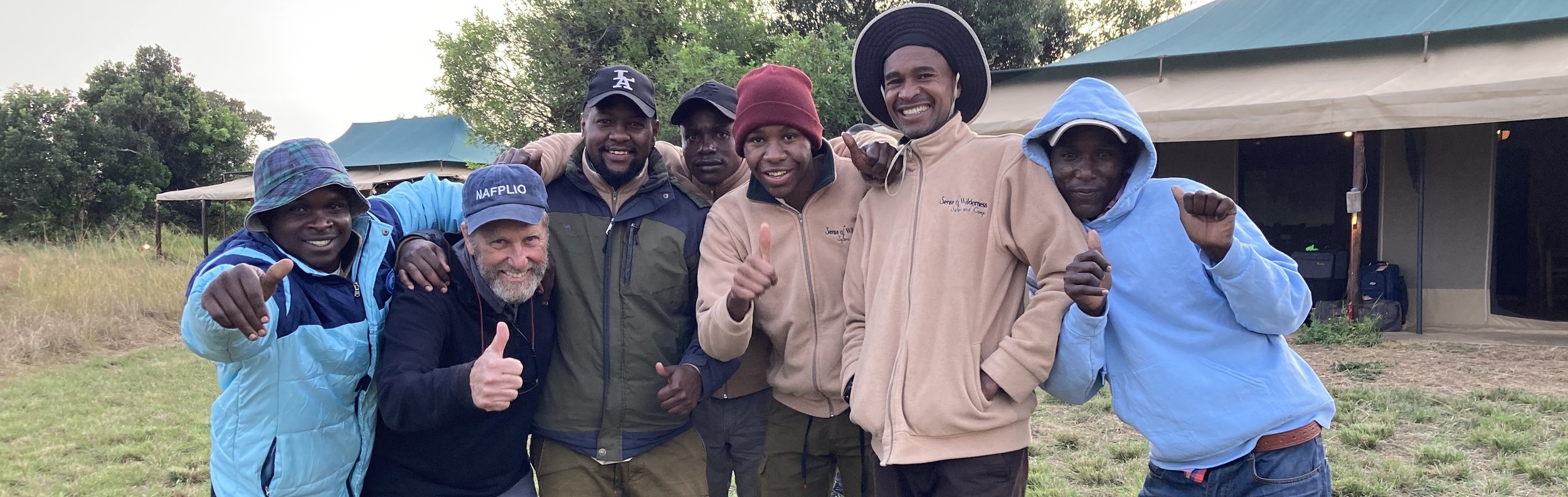
But only for a moment.
We were driving up the road to Sepphoris when George, my favorite driver, began stammering: “Dr. Mark! Dr. Mark!” (George insists on such formalities, even in the midst of crisis.)
Blogs, Vlogs, Images, and Ideas
Our Stories
The dried seafloor is peeled back to reveal the road. It runs away from me like the pith of a split banana. The creamy ruts of farm vehicles are baked hard and pie-crust frilly on the edges. They issue commentary on a day prior to my own. I’m guessing it was a sweltering one, a humid afternoon of work in the hayfields.
I rise so as not to disturb other sleepers. Three Columbians, two young men and one woman, came into the hostel last night to join the two Canadians and myself already in residence. One of the Columbians took the bunk beside me, another swung into the bunk directly above. I listen to their breathing. It is slow and regular. The single oscillating fan cools the room and helps cover the noise of my exit. I dress and drag my pack out from under the bed. I carry it into the courtyard and set it on a bench.
Nazareth is a congested place, a town poured in a limestone bowl. Undisciplined roads scrape the steep slopes. Some 100,000 people call this miracle-site home, and oddly enough, in a modern manifestation of honking glory, they all manage to pound away on their car horns at precisely the same time. Daily. The city is a perpetual traffic jam.
Linda is not your usual tour-guide. Of course, hers is not your usual tour.
For starters, this tour is free. It originates daily from the Fauzi Azar Inn. And even though the focus of our walkabout is Nazareth, the boyhood home of Jesus, the tour is not about the churches or shrines or even the mosques that draw most folks to this town.
My first venture into the country of Ghana has gone by quickly. On the whole, it has been a marvelous experience. I have little room to complain. However, if forced to identify one persistent challenge to my visit, it would have wheels.
Before I tell you about our problem vehicles, let me tell you about three that were not a problem.
If we were to combine everybody’s list of noble Ghanaians, it would be quite a collection. However, since I don’t have the time to contact everybody this afternoon, my own short list must suffice.
These individuals are doing big things with few resources. Take note of their names; when we all get to heaven you will hear of them again. I promise. In the meantime, whisper a prayer for the work they are doing.
Here they are (in no particular order).
Watching Ghana fly by my windshield, I see familiar needs in unfamiliar places. I see oddities that I’ve never seen before. I see more West African Dwarf Goats than in all of Kentucky and West Virginia put together. And I see faith and free enterprise combined in (how shall I put this respectfully) other creative ways?
When it comes to apex predators, it is hard to imagine anything more terrifying than the Nile crocodile (Crocodylus niloticus).
This reptile grows to lengths of fifteen feet or more and can easily weigh a thousand pounds. In Africa’s muddy water it is without peer; even on land it can be deceptively quick. The Nile crocodile can do more than run: it can gallop! The size and mobility of this amazing creature, combined with an armor-plated hide, a bone-breaking tail, a fearsome maw of ivories, and an real bad attitude, make it a perfect killing machine.
Edem, KK, James, and myself get the the skinny from the Park Guide. The “swing,” as he calls it, is a third of a mile long, half a football field above the ground, and is “suspended from seven solid trees.” The “solid” part is of interest. I would hate to dangle a half a football field from something less than “solid.”
The tunnel leads from the dungeons to the harbor.
At the end of the tunnel hangs an ominous sign: “Door of no return.”
Through this door human beings were marched from the bowels of the castle to the holds of slave ships. The transition from a stone to a wooden prison offered the captives one last gaze to the African sun. They would not see it, their families, or their homes again.
Moses of the wilderness talks as we follow tracks in Mole National Park. He is a a wealth of knowledge.
He describes the African bush elephant’s keen sense of smell.
“If someone tries to hurt him, he will take the smell. If that person comes back again, even after many years, twenty years maybe, the elephant will remember and attack him.”
I try to remember what I ate for breakfast. (Pause.) It is already a lost cause.
We stand on a bluff overlooking the largest wildlife refuge in the country of Ghana. Mole (MOH-Lay) National Park unrolls under our feet, soft and green in the rainy season. Life abounds in this savanna wilderness: baboons, warthogs, birds, crocodiles, antelope, and snakes await the curious traveler, as do lions. But we have driven a long and difficult road looking for an even more majestic beast: the African bush elephant (Loxodonta africana).
Africa has a brown lumpy head. Either that or horns. With the Magreb’s Atlas Mountains on the west and the Cyrenian Rise on the east, Africa’s upper corners reach up to hook Europe. Between them sags the Bay of Sidra where the lost sailors in the conclusion of the book of Acts feared submarine sand.