
The outline of Durnstein Castle came into view on the port side of the ship. It clung to a ridge above the village.
The sky was steel-grey and spitting rain as we entered the Wachau Valley.
The winemakers didn’t seem to mind. Their vines, draped neatly along this twelve-mile stretch of the Danube, thrive in a continental climate of cold winters and long, dry growing seasons. With less than 20 inches of rain a year, drip irrigation is a necessity when the heavens grow stingy.
Our captain, however, was generous. He slowed the AmaVerde to a crawl, hugging the port side so we could fully appreciate Dürnstein Castle (Burgruine Dürnstein) overlooking the narrows. Then, he swung the bow around for a second pass, ensuring those on the starboard balconies didn't miss the view.
Vicki and I braved the mist on the top deck. We watched the grapevines creep up steep slopes until they gave way to vertical slabs of natural stone. Higher still, clinging to the rock, were the remains of broken masonry and irregular rooms. With a little imagination, I could see arches and window holes opening and closing to the sky as we drifted by.

A view of Dürnstein from Rossatz. An old inscription marks its reverse: "Castle of Dürnstein.” Image from here: https://www.dorotheum.com/fileadmin/lot-images/38Z181002/hires/englischer-reisemaler-1.-haelfte-19.-jahrhundert-5718604.jpg (accessed 7/18/2022).
Dürnstein Castle was established in the mid-12th century by Hademar I of Kuenring. It sat on a lofty post overlooking the village of Dürnstein (population today: 900) and a strategic, constricting bend in the river. While it may not “tickle the eye” like other ornate Danube castles, its secrets tickle the imagination. This is where Richard the Lionheart was imprisoned upon his return from the Crusades. His capture is the stuff of mystery—and music.
Richard is remembered as a pious king: tall, brave, and a man of few words. After the crushing defeat of the First Crusade in 1187, Richard launched the Third Crusade. While his success is debated, one point is certain: though he came within sight of Jerusalem, he could not take the city. Hampered by vulnerable supply lines, the Lionheart made a calculated pivot to return to Europe.

The AmaVerde docked in Weißenkirchen in der Wachau.
As the AmaVerde pushed against the current toward Weißenkirchen, I thought of Richard’s treacherous journey. He set sail from the Holy Land in October 1192, wary of winter storms and rivals like “Prince John” who preferred the King stay gone (remember “Robin Hood”?).
Shipwrecked in the Adriatic, Richard was forced to continue on foot across 300 miles of enemy territory and the icy Alps. To confuse pursuers, the 6’5” king traveled in disguise as a merchant.
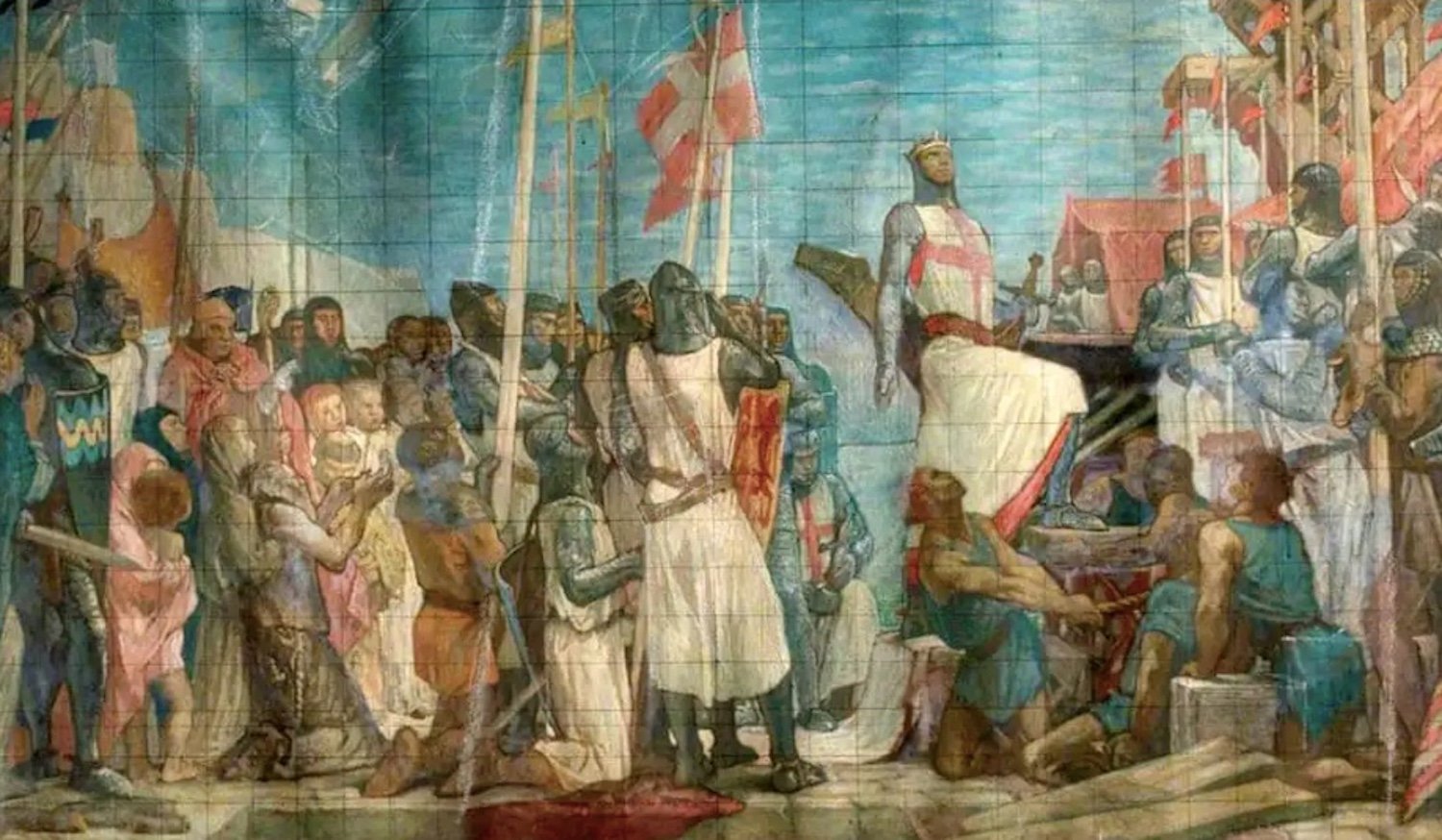
Richard the Lionheart Embarks on Crusade, mural by Glyn Warren Philpot (1927). Image from here: https://www.thecollector.com/king-richard-i-the-lionheart/ (accessed 7/20/2022).
It almost worked. His party raced west, covering 50 miles a day, but exhaustion finally won out just outside Vienna. A servant boy, sent into a village for supplies, raised local suspicions.
When confronted, Richard refused to surrender to anyone but Leopold V of Austria. The two had been together at Acre a year prior, but Leopold harbored a bitter grudge; Richard had reportedly insulted the Duke by throwing down his flag. That act of pride would cost Richard—and England—dearly.*

View to the modern village of Dürnstein. The castle where Richard the Lionheart was imprisoned sits on the ridge above.
Betrayed, the Lionheart was whisked away to a secret location for an enormous ransom. The place? Dürnstein Castle. Who could find him there? Who would pay the price for his freedom?
For Richard, darkness fell across the cold stones. For us, the cabin door opened. Vicki and I emerged from our berth, ready to ride like the wind toward Dürnstein. Our bicycles were waiting.
*There is more to the story than this insult. Rumor has it that Richard also may have helped arrange the murder of his Leopold’s cousin Conrad of Montferrat. But this is just a dirty rumor.

Our journey on the Romantic Danube was made possible by Educational Opportunities (EO), the parent company of the Jerusalem Center for Biblical Studies (JCBS). Many of our trips to the biblical Heartland are facilitated by JCBS. If you are interested in exploring the place where faith begins, check out our travel schedule here or email me at BibleLandExplorer@gmail.com.