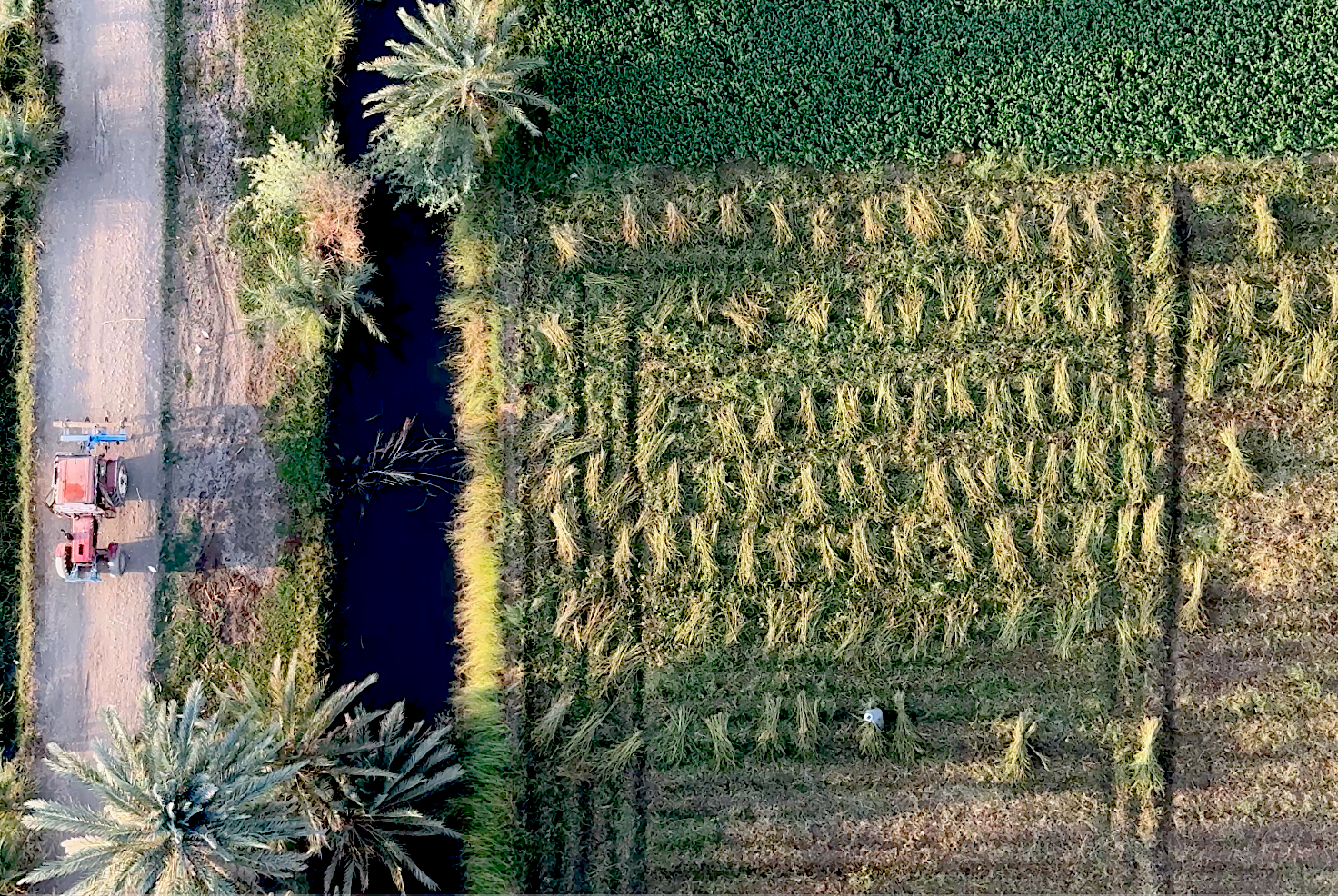
The difference-maker is water from the Nile, distributed by means of earthworks and canals.
Egypt as a land of opposites
For the Ancient Egyptians, the world wasn't a gradient; it was a study in opposites—between the desert and the sown. They viewed their environment not just as terrain, but as a balanced universe of two domains:
Kemet (“The Black Land”): This was the fertile ribbon of soil bordering the Nile. Each year, the river’s floods deposited dark, nutrient-dense silt, creating the foundation for their entire society. Kemet was the domain of life, stability, and divine favor—the place where people lived, loved, labored, and grew.
Deshret (“The Red Land”): Only a short distance from the river, the landscape transformed into the unforgiving Sahara. Though brutal, this "Red Land" served as a protective shield against invasion and a source of the raw materials for their monuments. Because it was static and timeless, it became the sacred ground for their tombs and the afterlife.
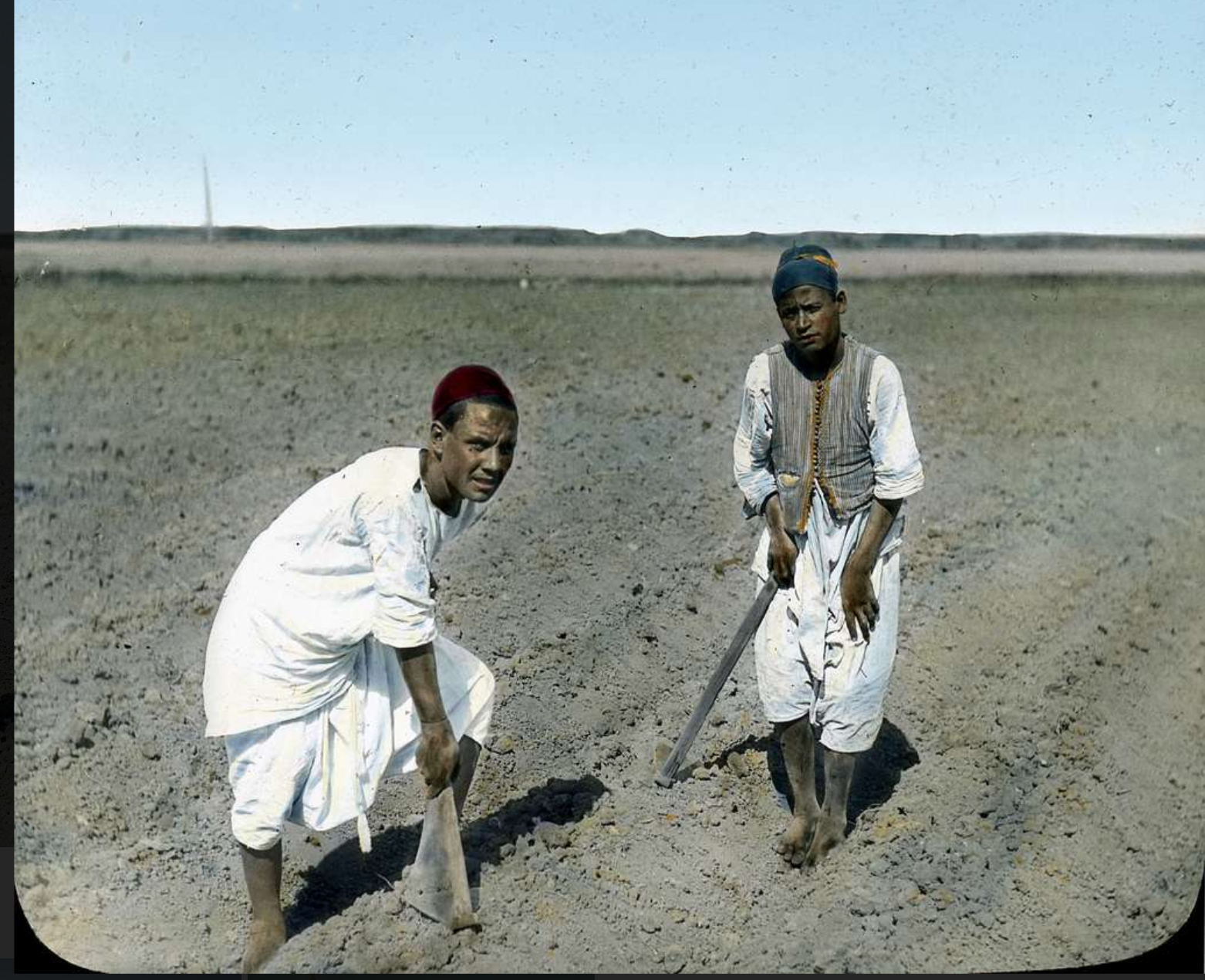
Egypt, Fellahin in the Fields, Cairo. (ca 1900). Public domain.
The Bottom Line
Egyptian existence was defined by this duality. While they built their daily lives upon the fertile black earth, they prepared for eternity among the red sands. This split didn't just dictate where they lived; it shaped their entire worldview, from their faith to their grandest architecture.
Watch the video
To see an expression of this duality, click on the panel below to see “Black land, Red land: Landuse in Ancient Egypt.”