
Bob studies the advertisement.
Arriving Early: Avoiding the “Wicked Combination” of San Fermín
The festival of San Fermín takes place annually in Pamplona, Spain, between July 6 and July 14. Its most infamous event is the running of the bulls (encierro), which thunders through the streets each morning.
Bob and I plodded into town on July 1, five days early. In retrospect, this was perfect.
My springs aren’t what they used to be, and with a million visitors descending on a city of 200,000, Pamplona quickly becomes a logistical nightmare. Lodging is impossible, prices are outlandish, and the atmosphere shifts from spiritual pilgrimage to a wicked cocktail of blood sport, alcohol, and machismo. It’s a volatile combination—much like college administration.
The Physics of the Encierro: 1,000 Pounds of Bovine Olympian
The encierro is a 400-year-old tradition that began as a practical necessity: transporting fighting bulls from the fields to the arena. As the beasts were driven through the narrow streets, young men began attempting to sprint ahead of them, weave among them, or even leap over them. It is a dance with death that persists to this day.
A modern Spanish fighting bull is a half-ton of pure muscle tipped with horns. These toros bravos (“angry bulls”) can hit 35 mph, turn on a round peseta, and are bred for maximum aggression. Think of them as bovine Olympians—ripped, fast, and dangerous. After their dash through the city, the bulls (and occasionally a horse or a matador) meet their end in the ring amidst the heavy cultural pageantry of the corrida de toros.
It is a primal and deeply human activity.
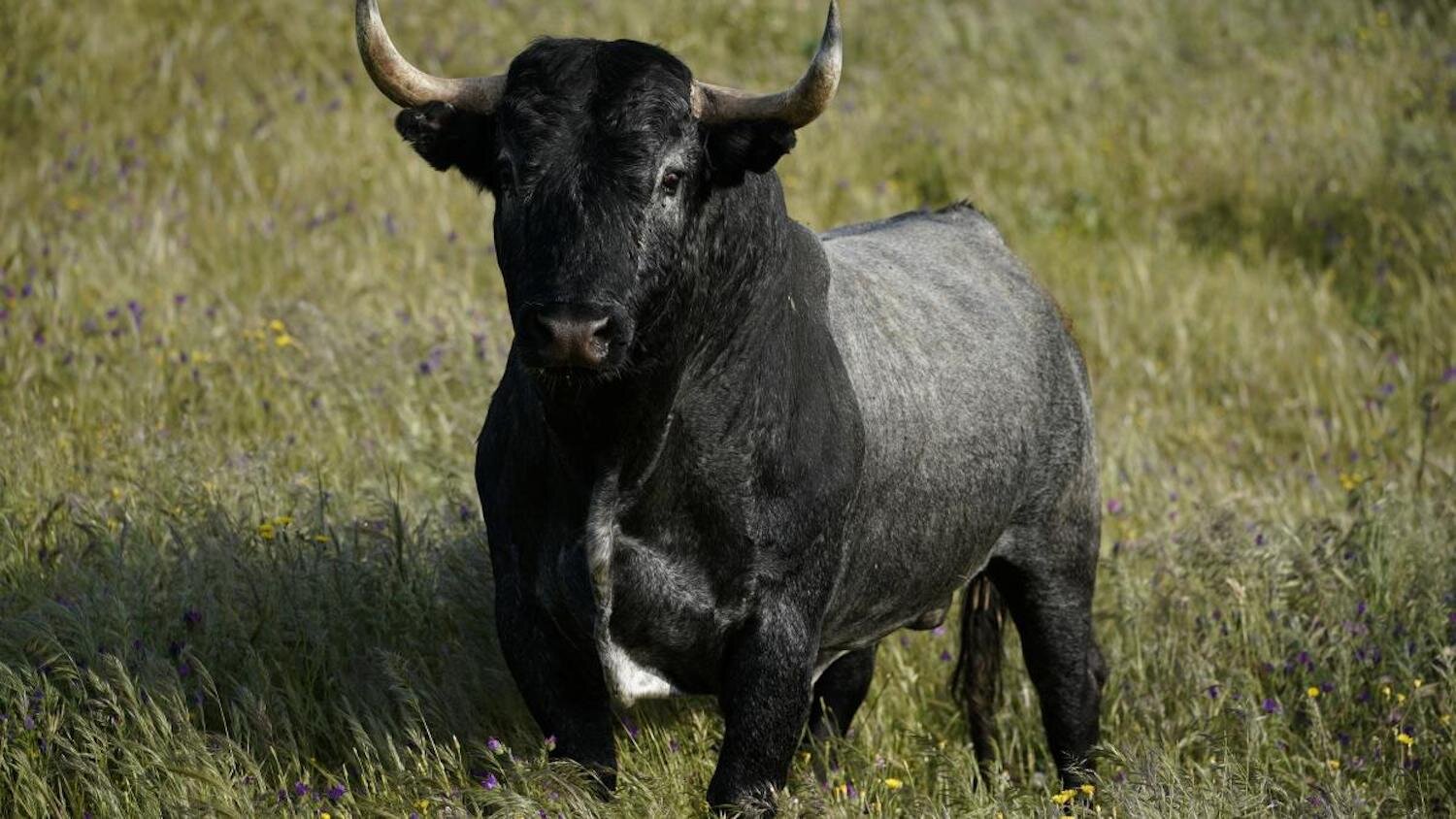
The Spanish fighting bull is ripped and tipped. Image from here (accessed 10/8/2021).
From Minoan Frescoes to Modern Pamplona: An Ancient Dance with Death
I’m reminded of a visit to the Heraklion Archaeological Museum in Crete. I stood before a restored fresco from the Minoan palace at Knossos, depicting three youths cavorting around a massive bull in mid-gallop. One grips the horns; another flips breathlessly over its back; a third sticks the landing in the wake of the charge. This Mediterranean madness is older than Moses.

Young Minoans demonstrate the art of bull leaping. Risk it for the biscuit? Image from here (accessed 10/8/2021).
Peering Through the Keyhole: The Geometry of the Bullring
In modern Pamplona, the 875-meter runway to the bullring is fixed, featuring three treacherous corners—including one nicknamed “Dead Man’s Curve,” where bulls often lose their footing and plow into the barricades. The first 200 meters are a slight uphill, giving every advantage to the animals as they blast out of the gate, terrorized by fireworks and the roar of the crowd.
I fiddle with the math. How long would it take me to cover 800 meters? How fast could the bulls close the gap? How much of a lead would I need before being swallowed by the herd? And what about the wall of panicked people clogging the path ahead? No. No. NO! It’s sheer madness.
A heavy wooden fence keeps the chaos focused, with gaps just wide enough for an emergency exit.
When we arrived, much of the barrier was already up, each timber numbered for a quick assembly. Bob and I followed the fence all the way to the bullring. The metal doors were locked, but through a keyhole, we saw the sun bleaching the arena floor. It felt like peering into a functioning Roman amphitheater.

The wooden fence leads the runners from the streets to the bullring. Here at a place known as the Callejon the route narrows to only 3.5 meters. Even though the bulls have slowed by this point, it is still quite dangerous because of the compression. Runners and bulls pile up trying to squeeze through the gap.
Hemingway’s Red Door: A Literary Echo of the Running of the Bulls
The encierro was immortalized by Hemingway in The Sun Also Rises. Standing before that red door, his words carry a chilling weight:
“The stretch of ground from the edge of the town to the bull-ring was muddy. There was a crowd all along the fence that led to the ring, and the outside balconies and the top of the bull-ring were solid with people. I heard the rocket and I knew I could not get into the ring in time to see the bulls come in, so I shoved through the crowd to the fence. . . Then the people commenced to come running. A drunk slipped and fell. Two police-men grabbed him and rushed him over to the fence. The crowd were running fast now. There was a great shout from the crowd, and putting my head through between the boards I saw the bulls just coming out of the street into the long running pen. They were going fast and gaining on the crowd. . . . There were so many people running ahead of the bulls that the mass thicked and slowed up going through the gate into the ring, and as the bulls passed, galloping together, heavy, muddy-sided, horns swinging, one shot ahead, caught a man in the running crowd in the back and lifted him in the air. Both the man’s arms were by his sides, his head went back as the horn went in, and the bull lifted him and then dropped him. The bull picked another man running in front, but the man disappeared into the crowd, and the crowd was through the gate and into the ring with the bulls behind them. The red door of the ring went shut.”

The bull ring of Pamplona was inaugurated on 7 July 1922. Image from here (accessed 10/7/2021).
Five days before the festival of San Fermín was a wonderful time to be in Pamplona. It gave us exactly four days to get out.
¡Buen Camino!
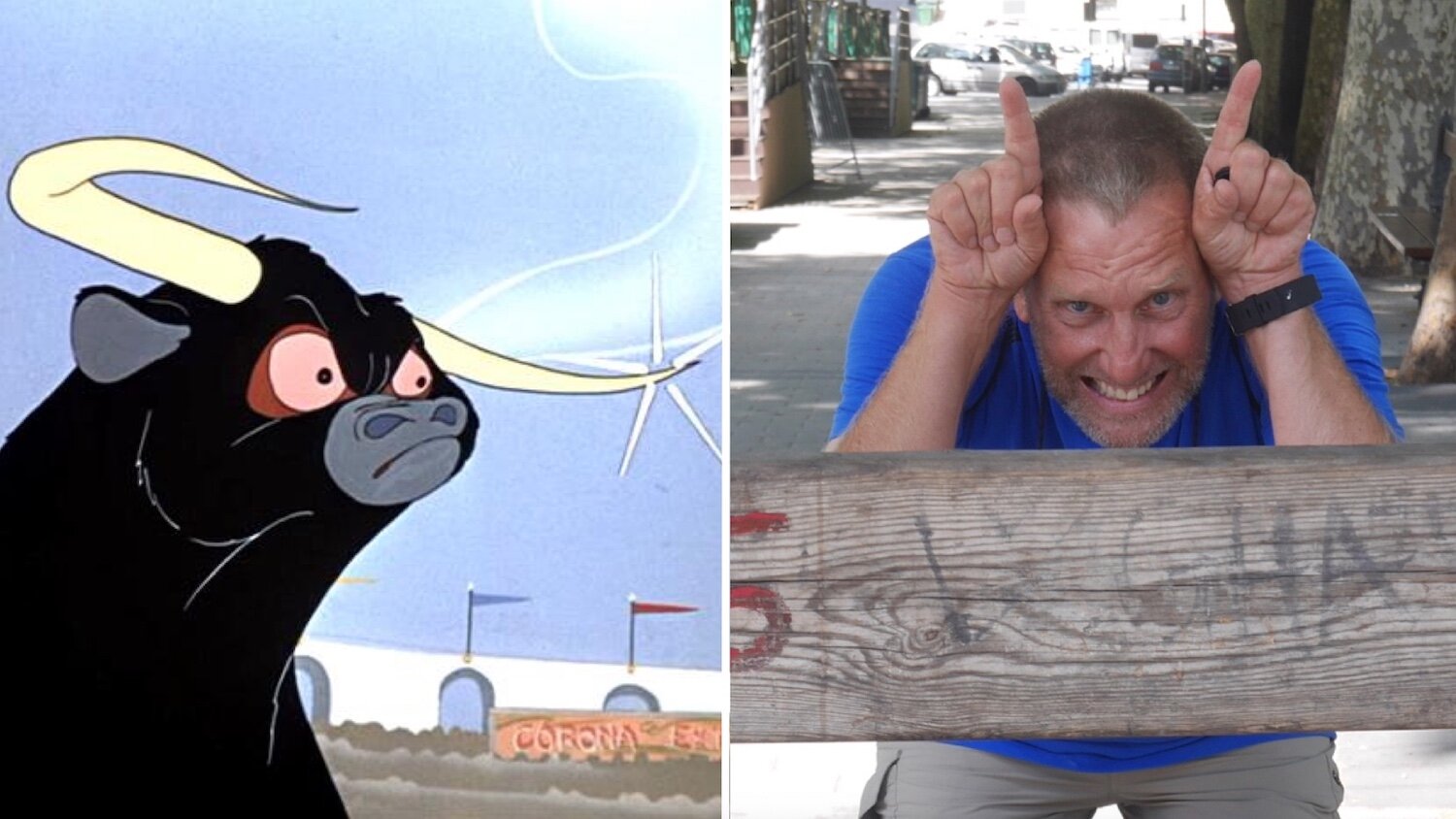
Hmmmmm.
*Saint Fermín was a Christian who was killed in a Roman persecution. One story of his martyrdom suggests that his feet were tied to a bull and he was dragged to death. This act, in part, stands behind Pamplona’s running of the bulls.
For details and a correction to this legend, see the post here (accessed 10/7/2021).

This bronze bust of Hemingway was executed by Luis Sanguino in 1968. It stands on the sidewalk just outside Pamplona’s bull ring.
For future Bible Land Explorer trips (that do not include the encierro), see the website here.