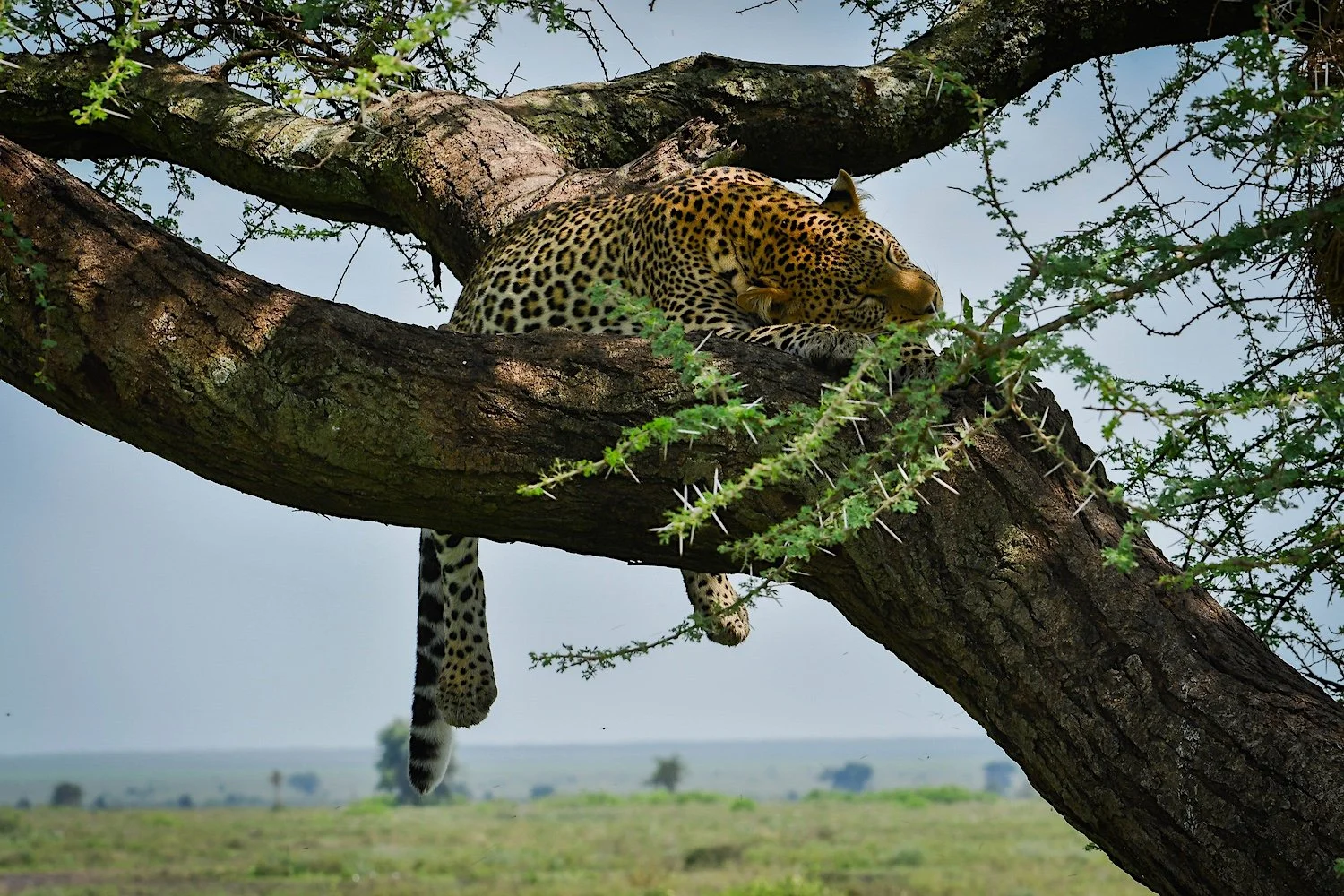
African leopard dangling legs while sleeping in an Acacia tree.
Understanding Leopard Behavior
Ever wondered why a sleeping leopard looks like he’s been draped over a tree branch? This iconic pose isn't just about comfort—it’s a display of feline engineering.
the physics of the Dangle
When these predators enter deep sleep, like humans, their muscles go limp. To prevent a catastrophic fall, leopards intentionally hang their heavy legs over the sides of a branch. This positioning shifts their center of gravity downward, ensuring they stay securely “locked” onto the limb via passive weight distribution rather than active, muscular gripping.
Furthermore, this draped posture doubles as a cooling system on scorching savanna days. By exposing the maximum surface area of their inner legs and belly to the open air, leopards catch the breeze to help regulate their body temperature.
Other benefits of the dangle
Beyond personal comfort, sleeping high in the canopy is a good strategy for safety and protection. Elevated branches keep the leopards safely out of reach from ground-dwelling rivals like lions and spotted hyenas. This tree-hugging lifestyle also allows them to protect their hard-earned groceries. Leopards often hoist their kills into the canopy and nap nearby. But not any tree will do for this high-altitude perch. Leopards are notoriously picky, specifically seeking out tree species like the sturdy Acacia or the leafy Marula, which naturally offer the perfect wide, horizontal “hammock” branches required for a secure and comfortable rest.
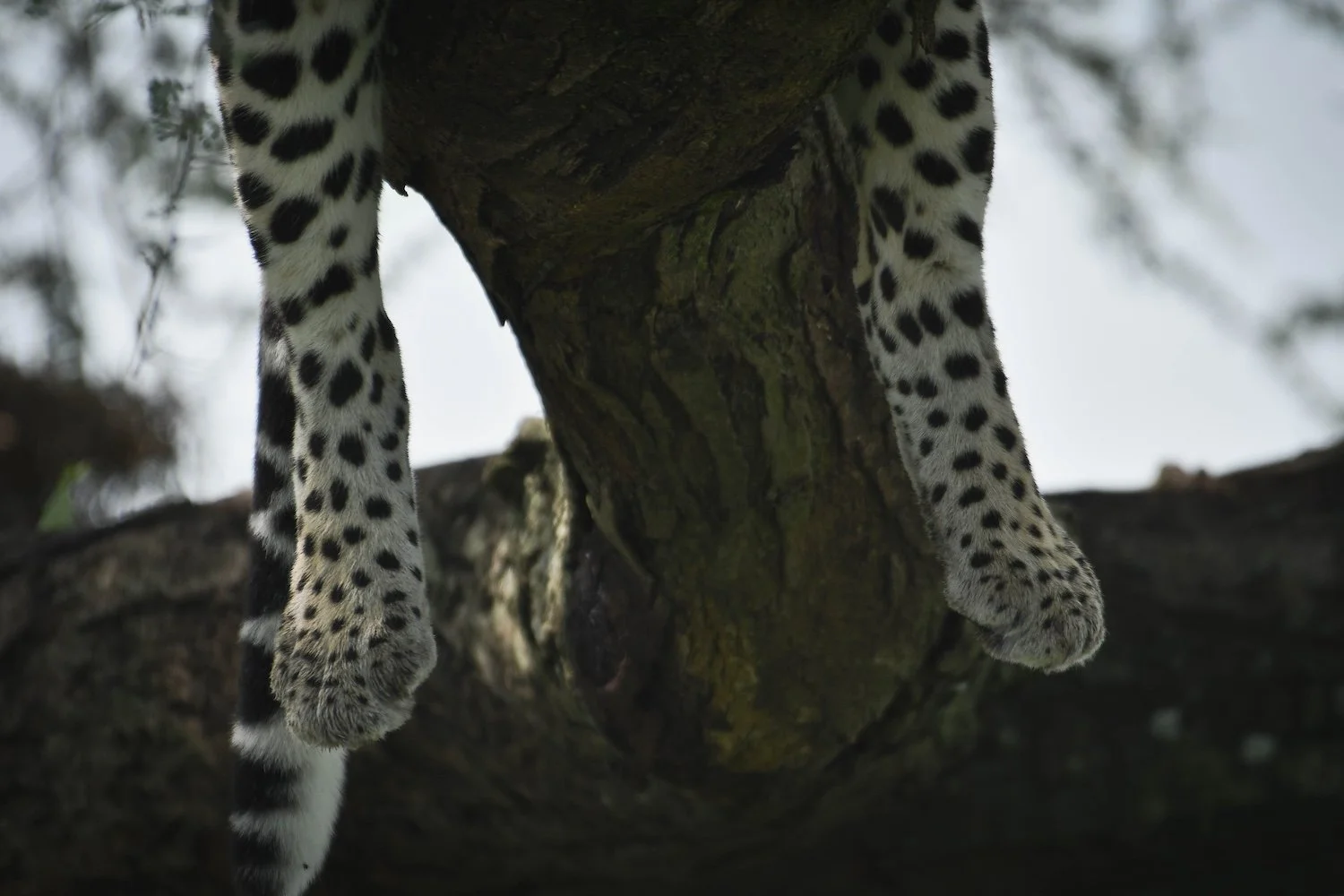
Dangling leopard legs and tail in the Central Serengeti.
If you want to read more about leopards, check out our post, “The Trembling Leaf.”

Want to see a dangling leopard?
Finding one is not easy. But we will try.
Join our Tanzanian safari scheduled for June 3-13, 2027. Click here for information about this and other 2027 travel opportunities.