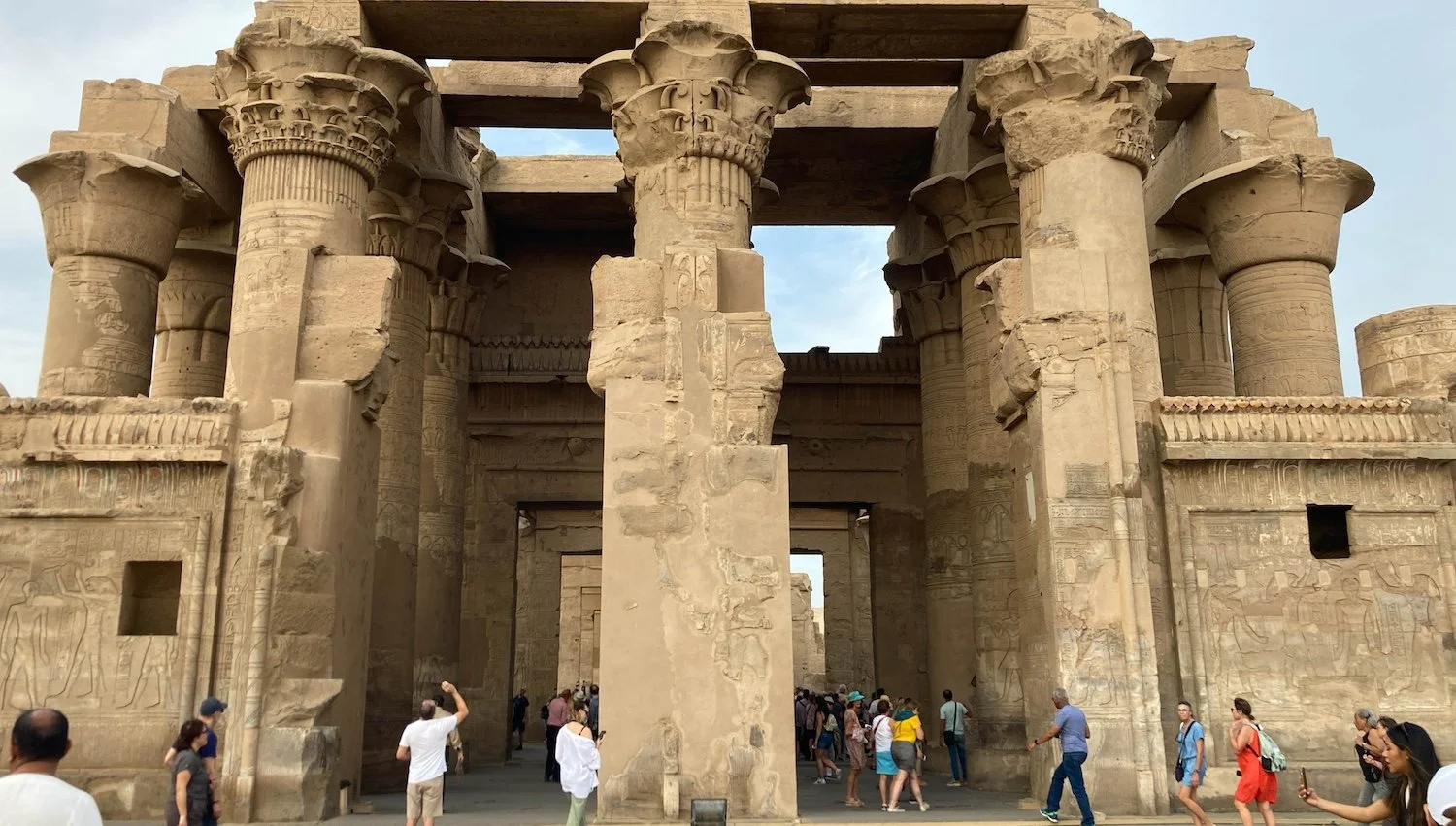
Entrance to the double temple at Kom Ombo.
A Double Temple
Perched on a high bend of the Nile, the Temple of Kom Ombo is unlike any other in Egypt. It is a double temple, perfectly symmetrical and dedicated to two rival gods: Horus (the falcon) and Sobek (the crocodile).
While the ruins are famous for their medical carvings and ancient Nilometer—a stone structure once used to predict floods—a deeper, reptilian mystery links this site to the biblical book of Exodus.
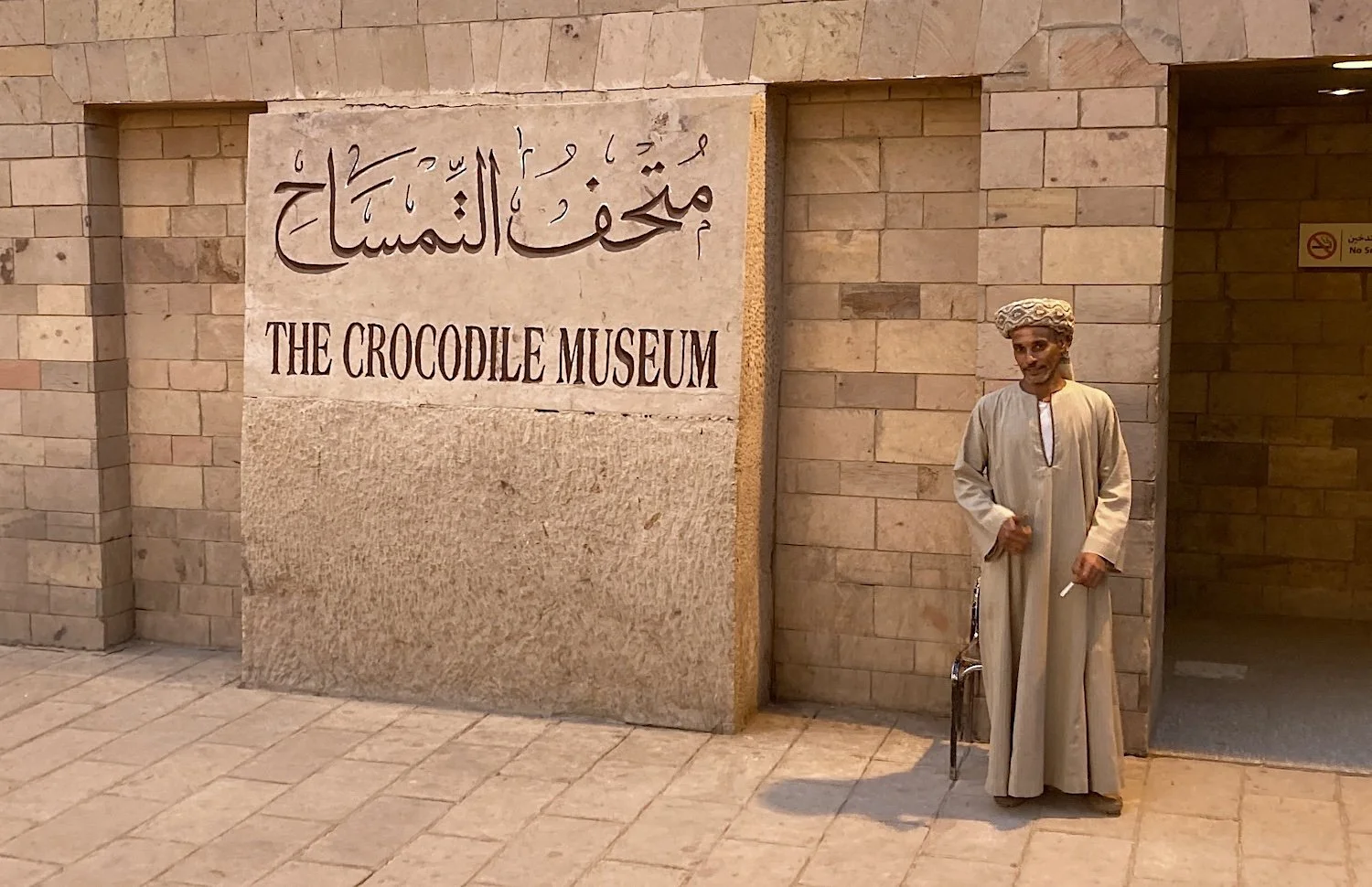
The entrance to the Crocodile Museum at Kom Ombo.
The Mystery of the “Tanin”
To truly understand the “throwdown” at Kom Ombo, we have to look at the original Hebrew text of Exodus 7:10. While most Sunday school lessons describe how Aaron’s staff turned into a snake (nakhash), the Book of Exodus uses a much more specific and formidable word at Pharaoh's court: tanin.
In the ancient Near East, tanin didn't just mean a common garden snake. It referred to a “great sea monster” or a “giant reptilian creature.” When Aaron threw down his staff in the heart of Egypt, he wasn't just performing a magic trick; he was manifesting the very predator the Egyptians worshipped at Kom Ombo—the Nile Crocodile.
By having Aaron’s tanin swallow the sorcerers' creatures, the biblical text delivers a powerful theological blow. It demonstrates that the God of Israel held absolute sovereignty over Sobek, the crocodile god of fertility and military prowess. Reading this account at Kom Ombo—“Sobek Central”—this linguistic detail has the power to transform a simple miracle into a direct challenge to Egyptian religious power.
Watch the video
Click on the panel below to see “Reptilian Throw-Down: Snakes and Crocodiles.”