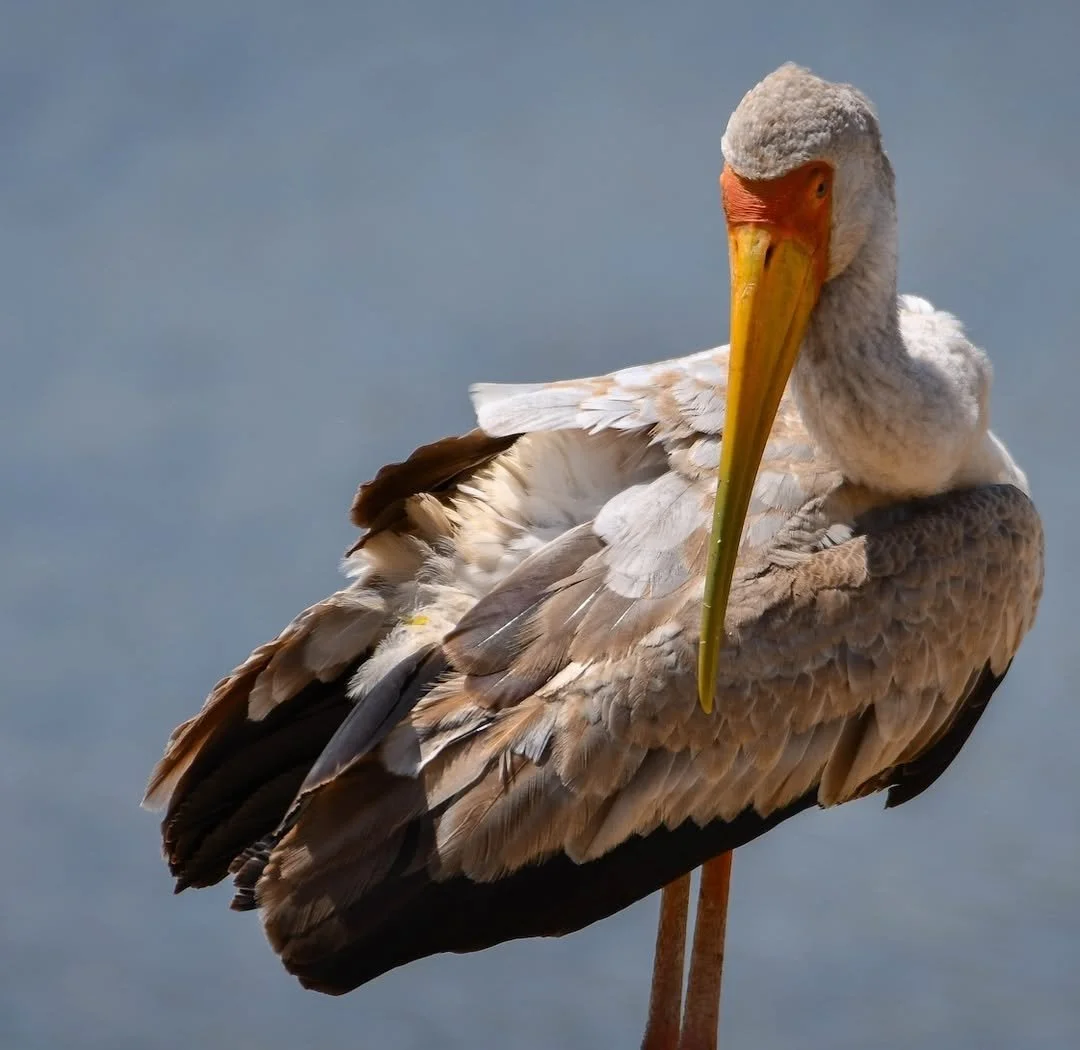
Close-up of a Yellow-billed stork in Tanzania showing its red facial skin and specialized yellow bill.
Designed for the Wild: The Secrets of the Yellow-Billed Stork
Have you ever wondered why some birds have featherless skin around their faces? This striking feature in the Yellow-billed stork (Mycteria ibis) is a tutorial in functional design, serving three critical purposes:
Hygiene: Bare skin is far easier to keep clean for wader-hunters and carrion-eaters. For a bird frequently probing muddy wetlands, avoiding matted feathers is a vital health advantage.
Communication: During the breeding season, the stork undergoes a dramatic transformation. Its facial skin deepens to a rich red, the yellow bill intensifies in color, the legs turn bright pink, and even the feathers take on a subtle rosy tinge.
Thermoregulation: Featherless skin helps dissipate heat. While perhaps less significant on a small face, this heat-dumping strategy is a well-documented factor in the bare skin of their long legs.
All in all, it is a brilliant design that allows this bird to thrive in the heat of the East African savannah.
Spot the Yellow-Billed Stork in Tanzania
I photographed this vibrant specimen in Tanzania, where they are a staple of the local wetlands. If you want to witness the "pinkish tinge" and brilliant red faces of these birds for yourself, we invite you to join us on the trail.
2026 Safari: Our current schedule is fully booked, but we are maintaining a waitlist.
2027 Expeditions: We are officially accepting reservations for a 2027 Tanzania Safari. Email us here.
And of course, if you want to read more about the Yellow-billed stork, check out our posts on The Facultative Nomad: Birdwatching in Tanzania and Yellow-billed Storks: Falsetto Screamers.