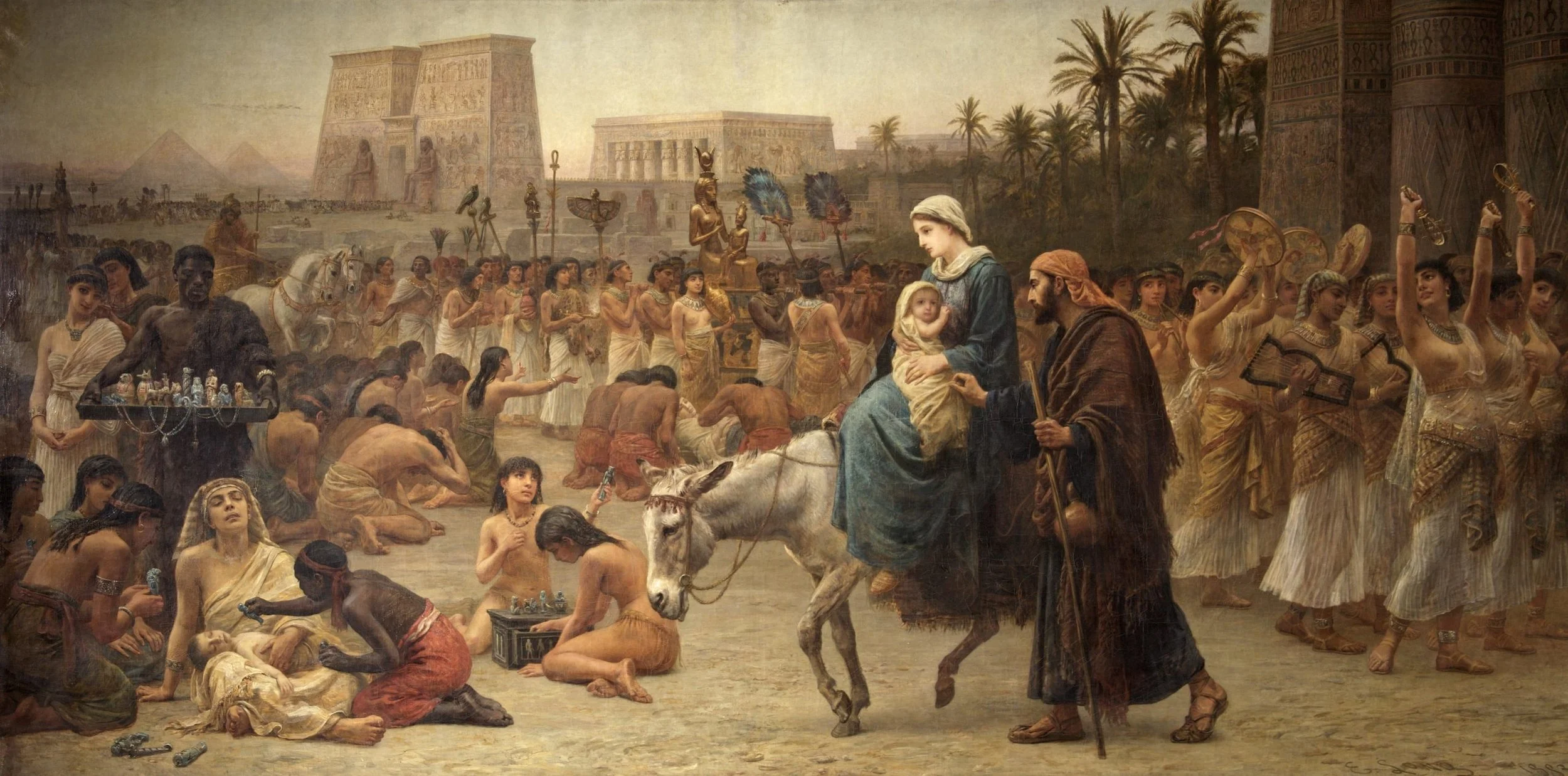
Edwin Long, Anno Domini (Flight into Egypt) (1883). Image from here (accessed 3/29/26).
When reading the New Testament, we often hear “echoes”—intentional repetitions of Old Testament themes that signal a deeper connection. One of the most powerful examples is the phrase “out of Egypt,” which links the prophet Hosea to the Gospel of Matthew.
The Original Voice: Hosea 11:1 and the First Son
In its original context, Hosea 11:1 is a backward-looking reflection on God’s love for Israel: “When Israel was a child, I loved him, and out of Egypt I called my son.”
The “Son”: Here, the “son” is the Old Testament People of YHWH.
The Calling: It refers to the Exodus event, where God rescued His people from slavery under Pharaoh.
The New Testament Echo: Matthew 2:15
Fast forward to the Gospel of Matthew. After Joseph flees to Egypt to protect the infant Jesus from King Herod, Matthew writes that they stayed there until Herod's death to fulfill what was spoken: “Out of Egypt I called my son.”
Why Typology Matters: Jesus as the True Israel
At first glance, this might seem like Matthew is misquoting a historical verse as a future prophecy. However, a better reading suggests Matthew is using typology—a pattern where Jesus relives and completes the history of Israel.
Reading them together reveals a profound “Redemptive Replay.”
Jesus as the “True Israel”: Just as the nation (the first “son”) was called out of Egypt, Jesus (the “ultimate Son”) is called out of Egypt.
Victory Over Failure: Hosea 11 goes on to describe how Israel was unfaithful despite God's love. By applying this to Jesus, Matthew signals that where the first “son” dropped the ball, Jesus—the obedient Son—would succeed.
A New Exodus: Jesus' journey mirrors the Exodus, marking the start of a new deliverance, not from physical slavery, but from sin and death.
By weaving bits of the Old Testament into the New, Matthew shows us that Jesus isn't just a new character in the story—He is the completion of the story in search of an ending.
Watch the video
To hear more, consider “Out of Egypt: Bits of OT in the NT.”