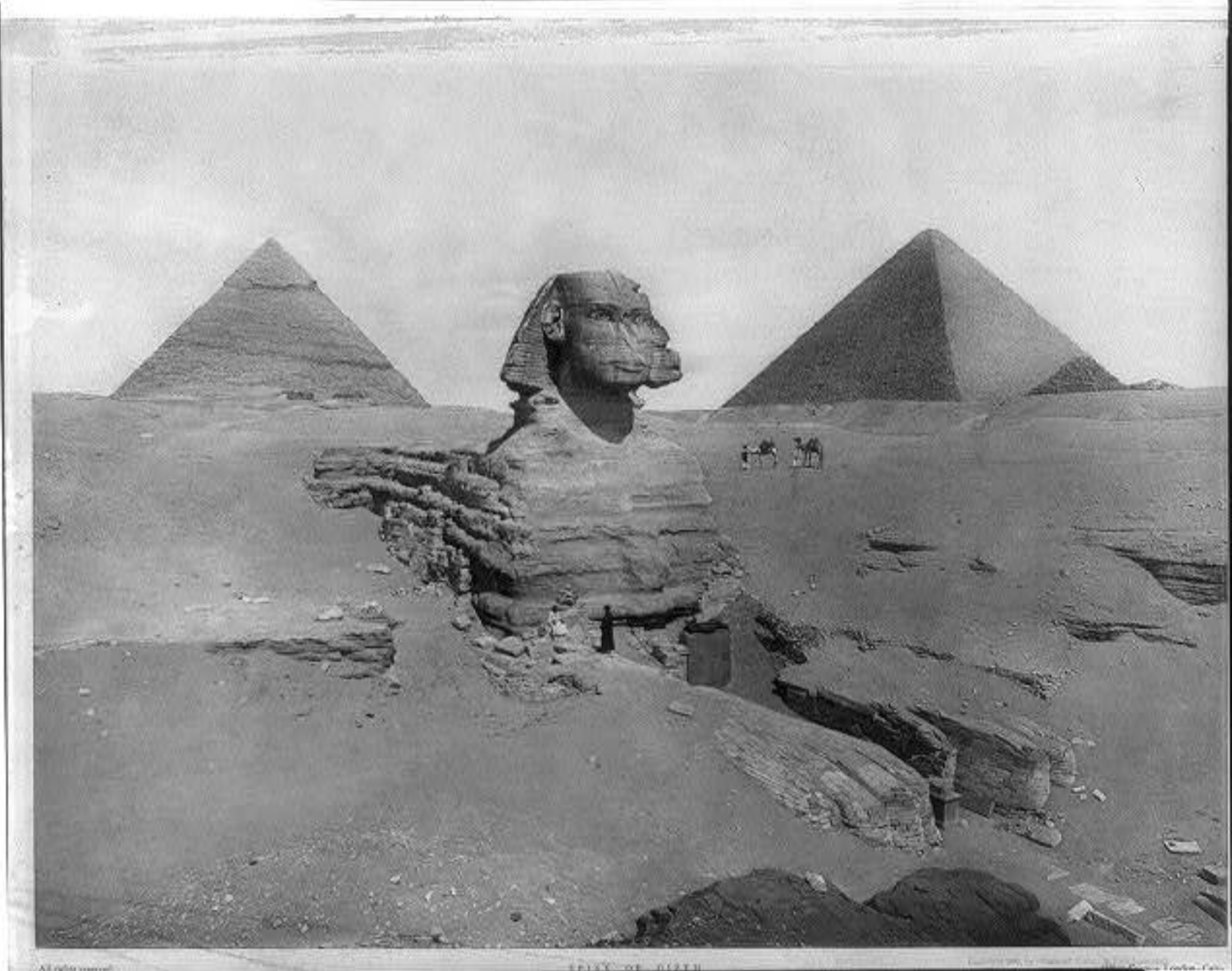
“The Sphinx of Giza” (1893). Public domain.
Is it a smile or a snarl?
The Great Sphinx of Giza has sat in eternal silence for millennia, watching the sun rise over the desert. But don’t let its calm expression fool you. In the world of ancient myth and archaeology, that faint smile might actually mask a far more dangerous persona.
The Guardian Who Never Sleeps
In Egyptian tradition, the Sphinx was known as a Shesep-Ankh, or “Living Image.” It wasn't merely a statue; it was a cosmic sentry tasked with physically and spiritually barring the way to the sacred pyramids. While it appears peaceful today, it was a “dangerous guardian” to those who approached with ill intent, embodying the raw, predatory power of a lion combined with a king's divine authority to judge.
The “Interrogator” and “Strangler” of Legend
The concept of the Sphinx as a lethal interrogator stems from its later evolution in Greek mythology. While the Egyptian Sphinx was a protector, the Greek version was a monster that waylaid travelers.
The very name “Sphinx” carries a dark linguistic secret: scholars believe the Greek word sphingo means “to strangle.” This paints a terrifying new picture of the “smiling” monument—not as a serene observer, but as a predator that not only bites, it crushes the breath out of its victims.
To hear more about these ancient mysteries, check out our video by clicking the panel below.