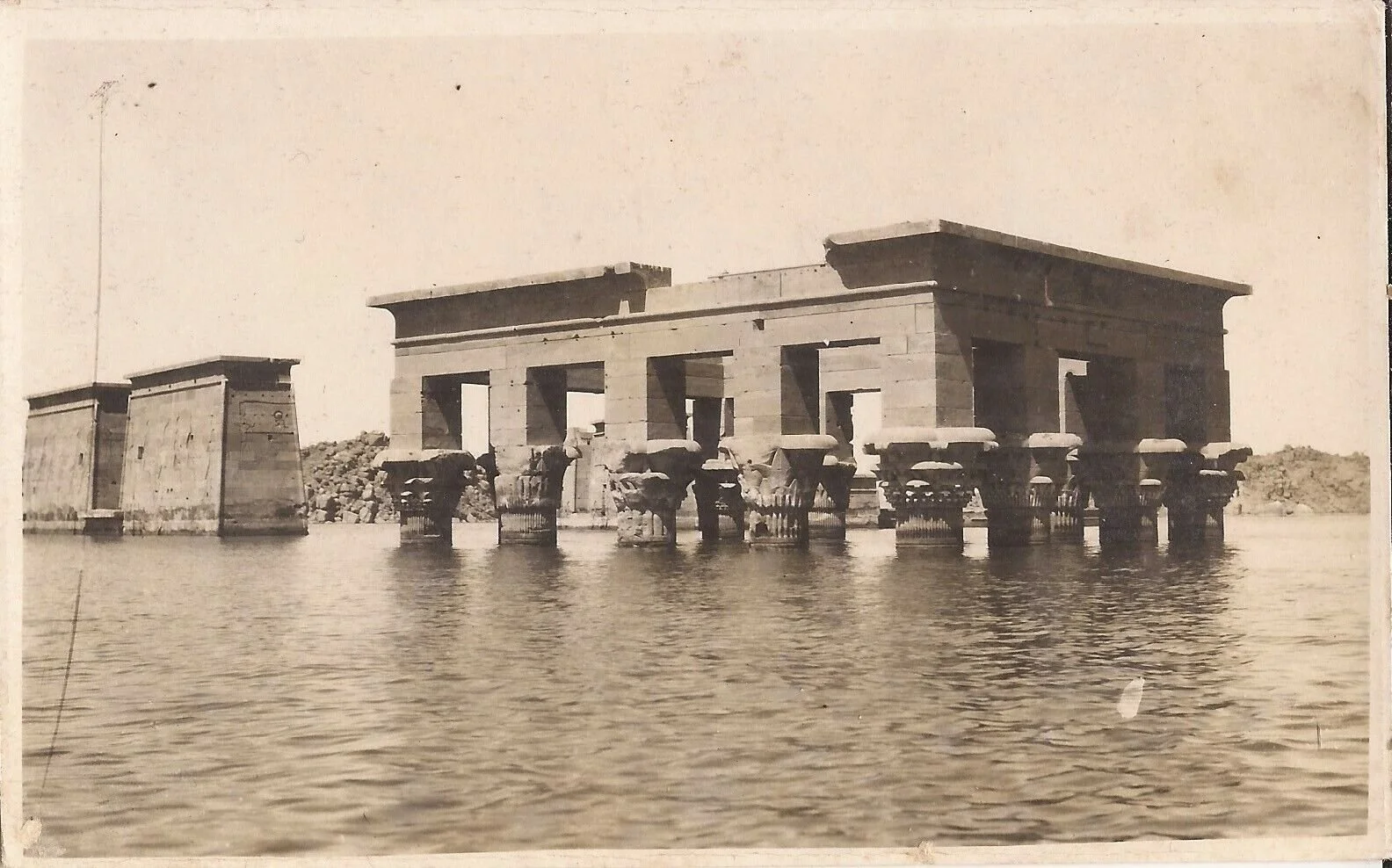
The inundated Temple of Isis at Philae Island. Vintage photo taken from here (accessed 3/27/26).
The Sacred Relocation
The story of Philae Temple is a legendary tale of two islands and a race against time. Dedicated to the goddess Isis, the temple originally sat on Philae Island in Lower Nubia, where it served as one of the last bastions of ancient Egyptian religion, remaining active long after the rest of the empire had converted to Christianity.
However, the 20th century brought a watery threat. With the construction of the Aswan Low Dam in 1902, the temple began to flood seasonally; by the time the Aswan High Dam was planned in the 1960s, the site was destined to be lost forever beneath the Nile. In a miraculous international effort led by UNESCO, the entire complex was dismantled into 40,000 blocks and moved to the nearby, higher Agilkia Island, which was painstakingly reshaped to look exactly like the original.
Today, when you walk through the Temple of Isis or the iconic Kiosk of Trajan, you aren't just seeing ancient architecture—you're seeing a modern masterpiece of preservation. It is a place where the "edited history" of the Pharaohs met the engineering might of the modern world to ensure the goddess's home would never truly go underwater.
Watch the video
Click the panel below to watch the video: “An Egyptian Temple Almost Underwater.”