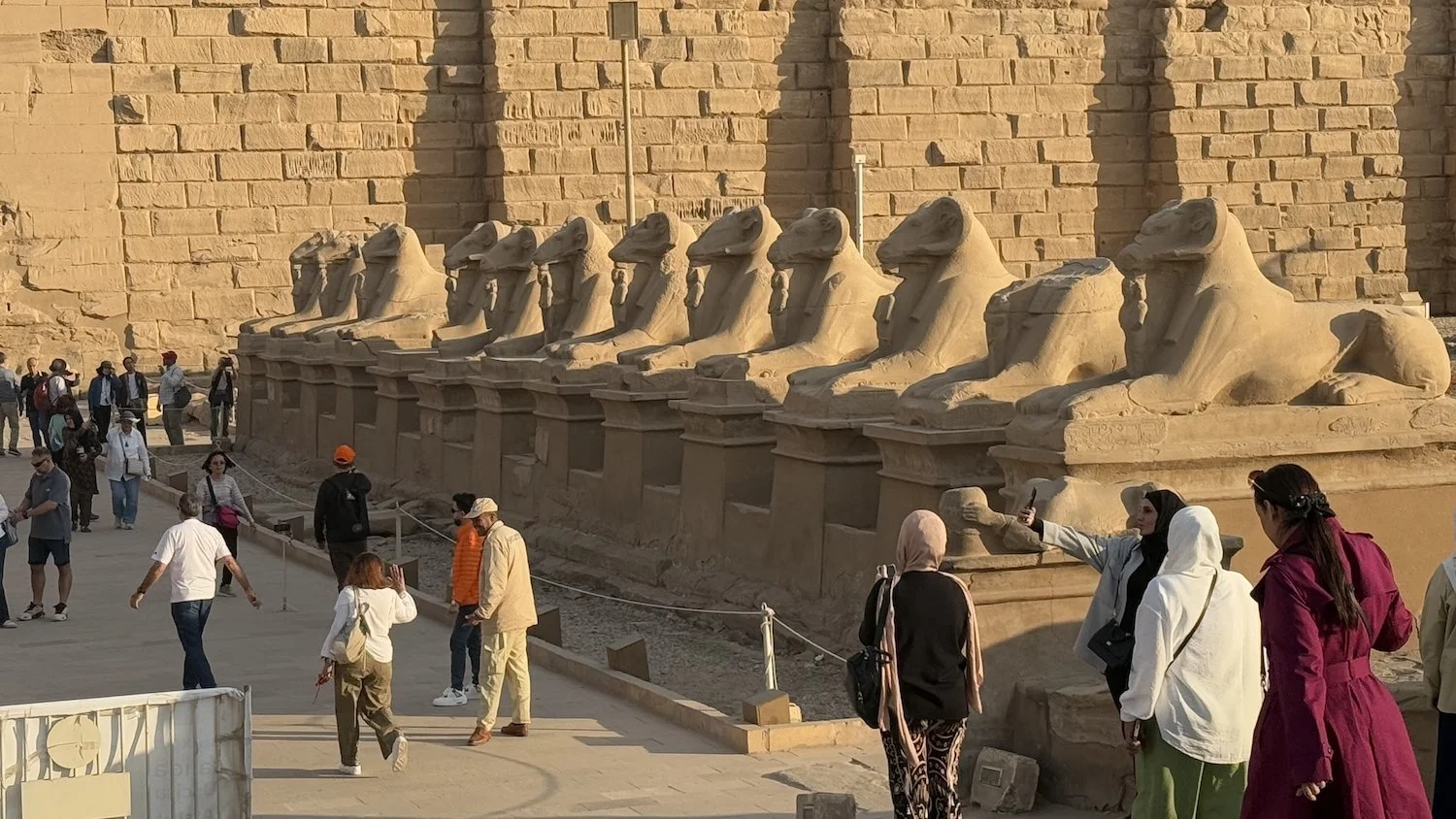
The Processional Way between the Karnak and Luxor Temples in ancient Thebes (Egypt) is lined with over 1,00 sphinxes, both ram-headed and human-headed.
An Echo of Ruin
The fall of the Assyrian capital, Nineveh, in 612 BC was more than a military defeat; it was a haunting echo of the destruction of Egyptian Thebes decades earlier. The prophet Nahum even pointed to the ruined Egyptian city as a warning, asking the Assyrians if they truly believed they were any more invincible than the great "No-Amon" (Thebes) had been.
The Illusion of Invincibility
Both cities represented the absolute pinnacle of ancient power, wealth, and architectural splendor. Yet, their sudden collapses prove that even the most formidable walls and vast empires have a shelf life. When power is built on the exploitation of others, the foundations eventually crumble under the weight of their own ambition.
The Limitations of Power
Ultimately, the rubble of Nineveh and Thebes serves as a timeless reminder that military might and monumental stone cannot grant eternal security. These ruins suggest that true endurance isn't found in the height of a city’s walls, but in the justice and stability of its rule. History shows us that when a giant falls, it leaves behind a lesson in humility for everyone that follows.
Watch the video
Click to watch the video: “Echoes from Thebes to Nineveh.”