We descended from the mountains and San Juan de Ortega; the forest drew back. A plain opened up, lush with knee-high grass. The trail deposited us on a blacktop road. It angled toward a distant ridge. We followed the blacktop, bridged the small Río Vena), and approached the masonry buildings of Atapuerca.

Sites and features in Spain mentioned here. Map courtesy of Google Earth (accessed 1/14/2022).
Today, Atapuerca is a quiet village along the Camino Francés, but in the 12th century, it was a royal gift from the Spanish king to the Hospitallers of Saint John of Jerusalem. The Order’s mission was two-pronged: protect the region from Moorish threats and care for the pilgrims trekking toward Santiago de Compostela (for more on the Hospitallers and their Spanish mission, see our post here).
However, Atapuerca’s significance stretches far beyond the medieval moment. Along the nearby limestone ridge of the Sierra de Atapuerca, archaeologists have unearthed some of the earliest and most robust evidence of humankind—finds so extraordinary they earned the area a UNESCO World Heritage designation in 2000.*
As an Old World digger, I was pumped. With his background in the sciences, Bob was pumped too.

We met a new friend in Atapuerca.
The sun was overhead when we walked into the village. Drops of perspiration hung from our faces. We steered toward the first open café we could find. A beaded curtain served as a door and gave reason for the flies to pause before entering. A puppy, delighted by our arrival, met us at the portière, parted the curtain, and led us inside.
We parked our walking sticks and shed our packs. The host made a perfect proposal: ice-cold Coca-Cola with lemon. We added two ham and cheese sandwiches to the order and asked about visiting the dig. To our dismay, we learned the site was effectively closed—partially due to ongoing excavations and partially because it was Monday, the site's weekly closing day. Unless we stayed the night, we would have to settle for the view of the Sierra and the local signage.
Deflated, we fetched the guidebook and sat down with our sandwiches.

Images of Atapuerca from Wikipedia. The image on the left shows the arcing railway cut and some of the features of the site. The image on the right shows the 2008 excavations in the Gran Dolina. Both of these images and fuller explanations may be found here (accessed 1/16/2022).
The world first took notice of Atapuerca in the 1970s, when a deep railway cut through the ridge exposed a network of caves and burial pits (see map above). Within these chambers lay thousands of hominin remains, including nearly intact skulls, artifacts, and painted panels.**
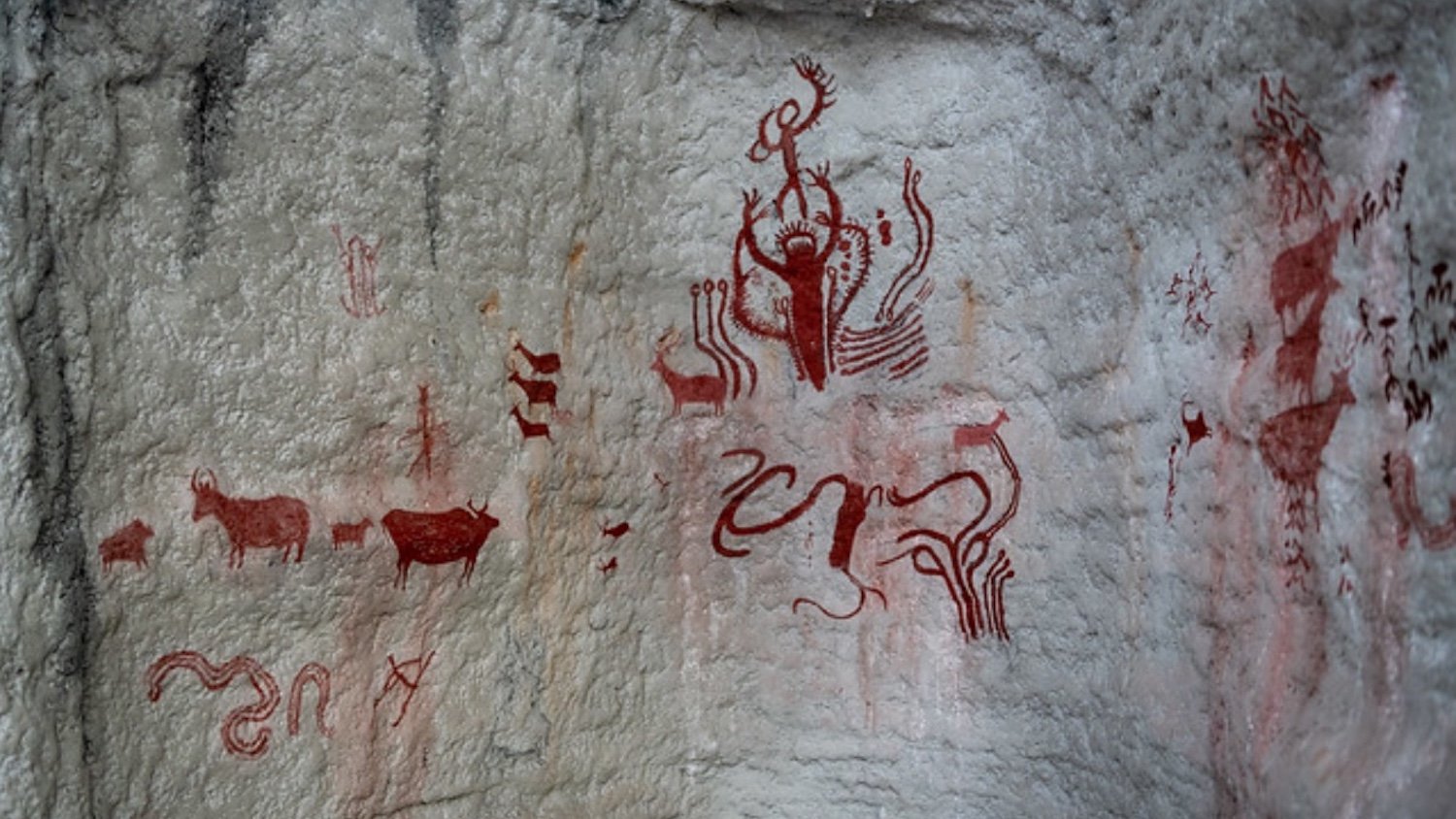
Graffiti found underground at Atapuerca suggests the presence of imaginative minds. One day I would like to see this paleoart with my own eyes. In the meantime, I appreciate photographs like this one posted by xiquinhosilva here (accessed 1/17/2022).
According to excavators, some of these remains predated the Neanderthals typically found across prehistoric Spain. This "pioneer man" was dubbed Homo antecessor. Analysis suggested they lived deep in the Early Pleistocene, potentially making them the first humans to call Europe home over a million years ago.
Such numbers are staggering.
The academic debate over H. antecessor’s place in the human family tree remains lively. Their faces appear surprisingly modern, yet other traits echo Neanderthals or H. heidelbergensis. Consequently, some researchers propose that H. antecessor may be the last common ancestor shared by modern humans and Neanderthals.***

An artistic representation of the ancient folk of Atapuerca. Image from here (accessed 1/14/2022).
If paleoanthropologists struggle to categorize these finds, the debate is even more complex for those holding to alternative origin stories.
For "Young Earth" creationists, a timeline of 10,000 years or less often precludes a conversation about Atapuerca entirely. For "Old Earth" creationists, the initial chronological hurdle is cleared, but a deeper question remains: How does one maintain the orthodox claim of a "special creation"—the Imago Dei—while making room for biological developments in deep time?
Is it possible that the term “human” is more multivalent than we once believed?
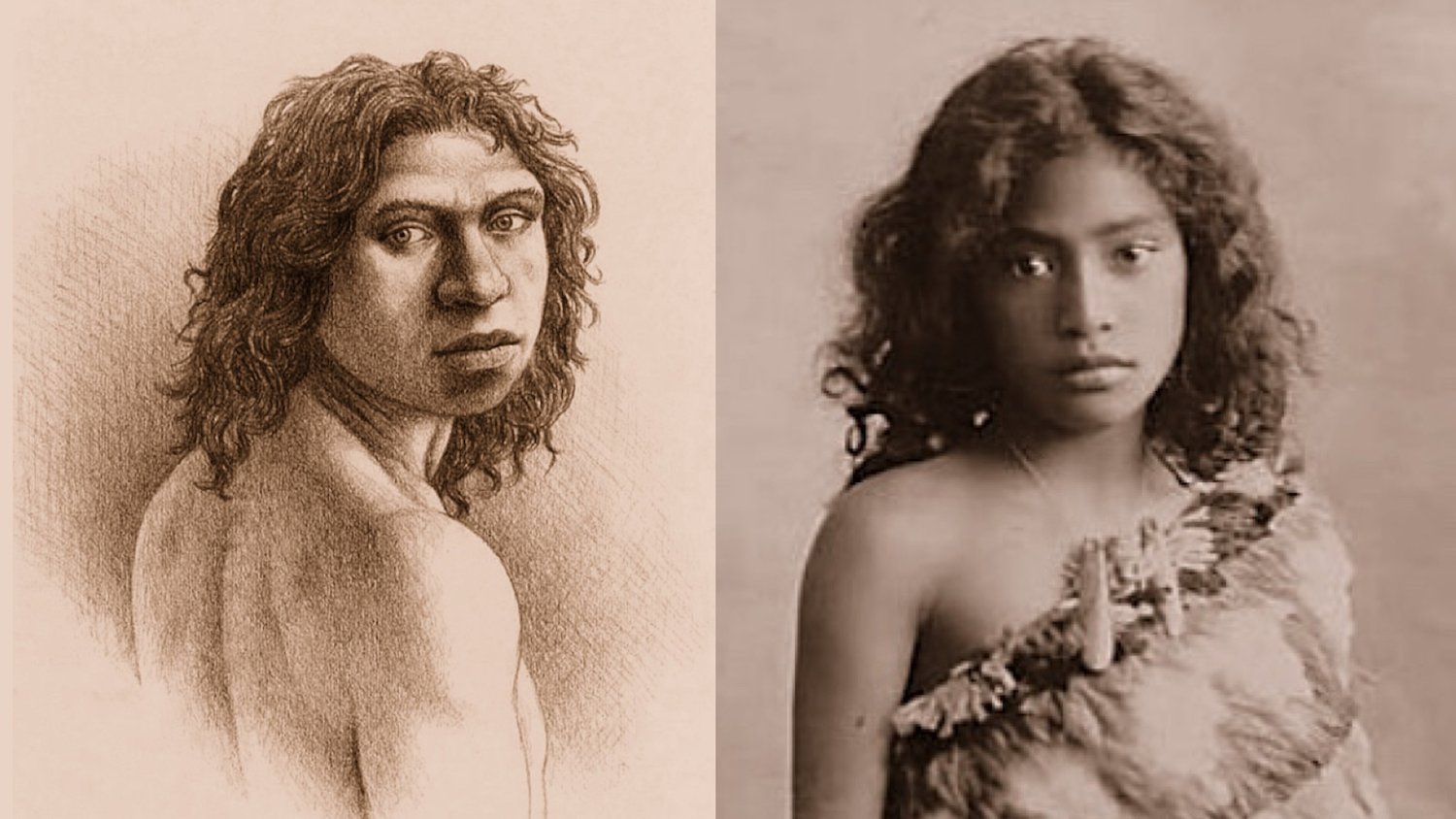
Artistic reconstruction of H. antecessor, ca. 1 million years B.P. (left); Photograph of a Polynesian girl, ca. 1910 (right).
The debate of the past decade or so suggests that it is possible, thanks to the work of researchers like Francis Collins (The Language of God, 2006), John Walton (The Lost World of Adam and Eve, 2015), and most recently, J. S. Swamidass (The Genealogical Adam and Eve, 2019). While different from each other in many ways, the conclusions of these believers are united in offering a paradigm that dismisses the false choice between science and faith. This is helpful. The “either-or” arguments are the real enemy here.
The debate over human origins marches on. As must we.
Bob and I pocketed our guidebooks, thanked our host for lunch, and rejoined the trail to Santiago.
¡Buen Camino!
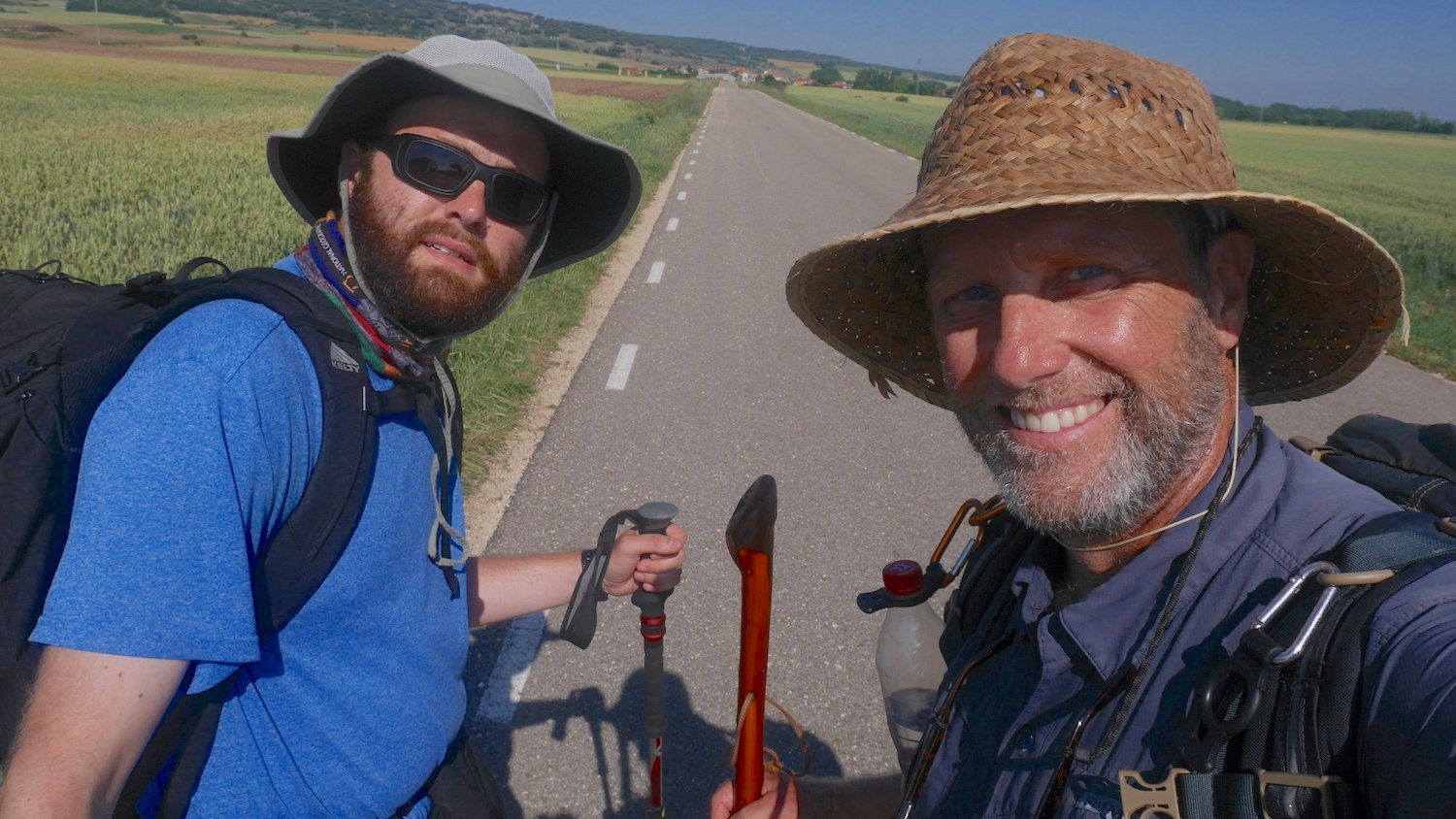
The blacktop took us across a plain. The Sierra de Atapuerca rises in the distance.
*See the UNESCO description of Atapuerca here (accessed 1/18/2022).
**A report in the Spanish paper Diario de Burgos dated January 18, 2022 suggests that the excavation team, directed by Juan Luis Arsuaga, Eudald Carbonell and José María Bermúdez de Castro, is unstoppable. The youngest of the three will soon turn 70 years of age. The group has worked together now for 42 years without interruption (including these covid years!) and describe Atapuerca as an “infinite deposit.” See the link here (accessed 1/18/2022).
***A recent (1/4/2020) study of dental enamel from H. antecessor and published in the journal Nature has underlined this conclusion. See the article here (accessed 1/18/2022).
Want to see Greece? Bible Land Explorers will have an opportunity to visit the cradle of Western Civilization in the Spring of 2023. In a sweep that moves from north to south, we trace the arrival of the gospel in the region. Thessaloniki, Philippi, Corinth, Mycenae, and Sparta are featured stops. We conclude this grand tour in Athens, the classical center of it all. Click here for the brochure or email me at markziese@gmail.com with your questions.
