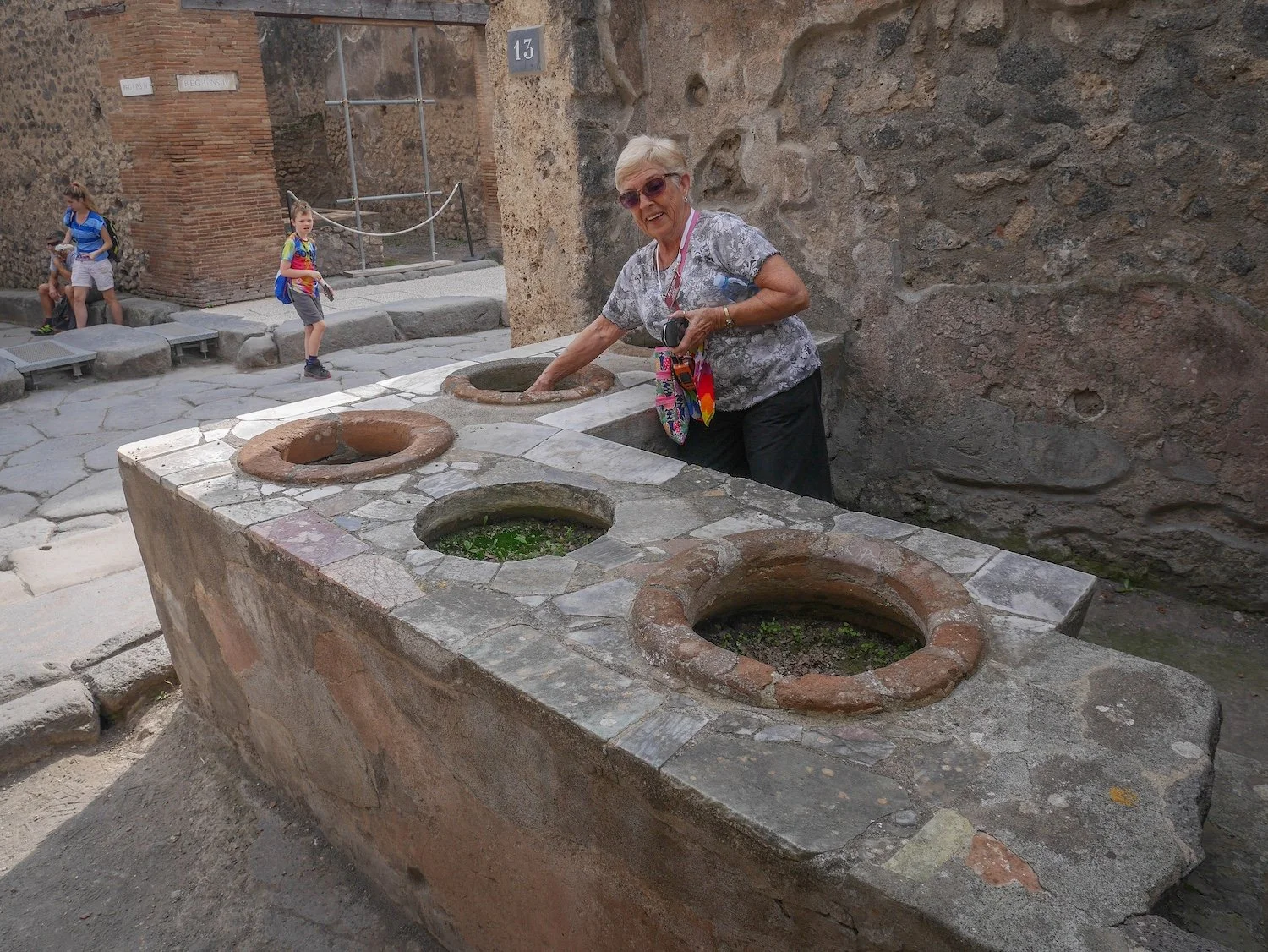
Linda hunts a hearty stew in Pompeii.
Fast Food, First-century style
If you’re hungry and hunting fast food along the streets of Pompeii (and you happen to be around before the volcano smothered the town in AD 79), you might swing by a thermopolium (Greek for “cook-shop”). Pray the line is short.
“L” shaped food counters like this one faced the street and featured built-in clay jars. The jars were filled with food and drink, kept warm by the terracotta. Hearty stews and soups (consisting of pork, seafood, goat, and snails) could be purchased as a entrée, with sides of bread, cheese, and nuts. Of course, no good Mediterranean meal would be complete without condiments, and there was no finer dipping sauce than a pungent garum (made from fish mash).
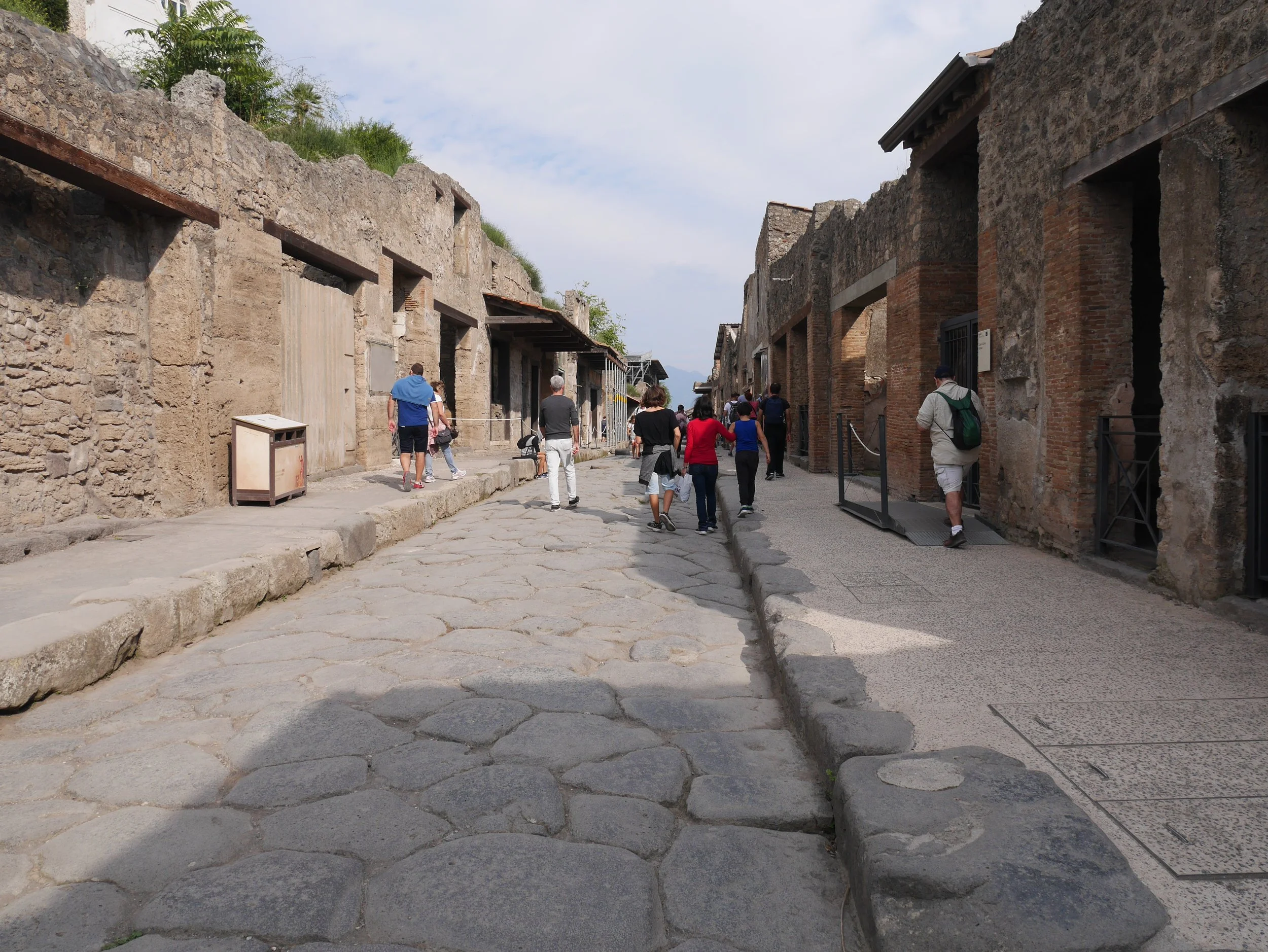
A well-preserved street in Pompeii.
fast food was A lively industry at PompeiI
In urban areas of the New Testament world, many residential apartments (insulae) lacked cooking facilities. Meals could purchased for take-away in places like this—and incidentally, the more well-to-do residents scorned the thermopolia. Scoff if you will, you McDonald’s-haters; more than 150 soup counters were found here, suggesting that take-away was a lively industry.
Try to imagine the aroma wafting down the street on a cool winter evening.
Do you think the Apostle Paul ever asked for extra cheese?
Linda Baines, one of our Bible Land Explorers, slipped behind the counter to stir the pot, a role she relishes.
Is Italy in your future?
We have a couple of Italy trips on tap this year and next. Here’s a link to a May 28 - June 6, 2026 excursion that has open seats right now. Will you join us? Email your questions here.
Here’s another post on Pompeii you might enjoy. Click the link here.