Exploring Jordan

Felines and Fountains: The Hellenistic Grandeur of Araq al-Amir

Ron Wakeman (Tell Jalul excavations, 2004?) photographs a lion/leopard carved on the exterior wall of the palace at Araq al-Amir (Jordan).

Nestled in the lush Wadi al-Seer, the 3rd-century BC palace at Araq al-Amir once stood as the crown jewel of a sprawling estate. Originally surrounded by a shimmering man-made lake, the palace featured striking architectural details—including a "feisty feline" sculpture that likely functioned as a fountain, with water cascading directly from its fauces (jaws).

This was the seat of the Tobiads, a formidable Jewish family whose influence is captured in both Biblical texts and the writings of Josephus (Antiquities XIII 230–233).

Beyond the Demoniac: Exploring the Decapolis City of Umm Qays

Amy Deeds (Barr) stands beside the seated goddess of Gadara (Umm Qays), Jordan.

The Seated Goddess of Gadara

In this 1986 slide, Amy Deeds (Barr) stands alongside a larger-than-life white marble statue of Tyche, the Greek goddess of fortune and the patron deity of Gadara

  • Symbolism: The goddess holds a cornucopia (horn of plenty) in her left hand, a classic attribute representing the prosperity and fertility she bestowed upon the city.

  • The Setting: The statue was famously discovered in the western theater, a stunning structure built of black basalt.

  • Placement: Its original position was in the lowest row of the orchestra, likely placed between the seats of honor (the proedria) for city dignitaries and councillors.

A City of the Decapolis

Gadara was a intellectual and cultural powerhouse, once dubbed a "new Athens" for its famous poets and philosophers. It was a key member of the Decapolis, a league of ten Hellenized cities that served as centers of Greco-Roman culture in the region.

The Miracle of the Swine

Gadara is most famous in the New Testament for the healing of the demoniac (Matthew 8:28-34).

  • The Narrative: Jesus encountered a man (or two, per Matthew) living among the tombs on the outskirts of the city. Upon healing him, the demons were cast into a herd of swine, which then rushed down a steep bank into the Sea of Galilee.

  • The Geography: While the modern site of Umm Qays is about 6 km from the shore, the "country of the Gadarenes" likely encompassed the steep slopes leading down to the lake.

Archaeological Roots: Abila 1986

This 1986 trip took place in a significant era for Jordanian archaeology. That summer, the Abila Archaeological Project conducted its third major season of excavation at Abila of the Decapolis (Quweilbeh). Amy Barr, now a co-founder of The Lukeion Project, spent over a decade excavating sites like these across the Mediterranean.

Vast Horizons: 4x4 Adventure in the Wadi Rum

Desert Drive

Driving through the vast, terracotta-colored sands of Wadi Rum feels like traversing the surface of another planet. Your 4x4 kicks up plumes of dust as you navigate between towering sandstone monoliths and hidden desert canyons. It is an exhilarating experience where the silence of the wilderness is broken only by the engine's hum and the shifting desert wind.

Watch the video

Check out our recent experience. View “Desert Drive—Wadi Rum” below to see the adventure for yourself.

A Compelling View: The Summit of Mt Nebo

View to the summit of Mt Nebo. The structures hidden in the trees include the Memorial Church of Moses.

A View Worth More Than the Climb: Standing Atop Mount Nebo

In the world of trekking, Mount Nebo (or Siyagha) might not win awards for its elevation. Standing at roughly 800 meters above sea level, it isn't much as far as mountains go. But what it lacks in height, it more than makes up for in biblical gravity and a view that has stirred souls for millennia.

The Edge of the Promised Land

Mount Nebo is famously identified as the place where Moses was granted a final, panoramic look at the Promised Land before his death. From the summit, you aren't just looking at scenery; you are looking at the culmination of a 40-year journey. On a clear day, the horizon reveals:

  • The shimmer of the Dead Sea.

  • The greenery of the Jordan River Valley.

  • The hazy silhouettes of Jericho and Jerusalem.

The Memorial Church of Moses

The summit is crowned by the Memorial Church of Moses, a sanctuary that houses some of the most intricate and well-preserved 6th-century mosaics in the Middle East. The site is a layered history of devotion, featuring:

  • The Interpretive Center: Where you can trace the archaeological evolution of the summit. [2]

  • The Monastery: A blend of ancient ruins and the modern Franciscan monastery that has guarded the site since the 1930s. [4, 5]

  • The Brazen Serpent: The iconic cross-like sculpture by Giovanni Fantoni that stands as a modern sentinel overlooking the valley. [4]

Whether you come for the archaeology or the quiet spiritual reflection, the summit of Siyagha proves that you don't need a massive peak to find a compelling perspective.

Nerium Oleander: A Man-killing Bloom

Tarsus: Where Ancient Medicine and Ministry Met

When speaking of Tarsus, the birthplace of the Apostle Paul, voices instinctively takes on a tone of reverence. In the first century, this wasn't just a bustling trade hub; it was a sophisticated center of scholarship and intellectual rigor that rivaled Athens and Alexandria.

To understand the intellectual air Paul breathed, one need only look at his contemporary: Pedanius Dioscorides.

The Man Who Defined Medicine for 1,500 Years

A physician and botanist from Tarsus, Dioscorides lived a life that overlapped significantly with Paul’s. Between AD 50 and 70—the very decades Paul was traversing the Roman Empire—Dioscorides was authoring De Materia Medica.

This five-volume encyclopedia became the undisputed gold standard for herbal remedies and pharmacology for the next 1,500 years. While Paul was writing letters that would shape the spirit, his neighbor was writing the manual that would heal the body.

The "Man-Killer" of the Wadi

One of the plants Dioscorides meticulously described is the Nerium oleander. The name itself may be derived from the Greek for "man-killer"—a fitting title for a plant that is as lethal as it is lovely.

In his writings, Dioscorides warns that:

  • Eating the plant or drinking its broth will “kill most four-footed creatures.”

  • Curiously, he suggests it could be diluted with wine as an antidote against “the bites of venomous creatures.”

I recently captured a shot of this infamous Nerium oleander (pictured above) in the rugged Wadi ath-Thamad in central Jordan. Its vibrant pink blooms look innocent enough against the desert stone, but the ancient warnings still ring true.

A Second Opinion

As for using this “man-killer” as an antidote for snakebites? Personally, I’d want a second opinion from Dr. Luke before taking that prescription! Fortunately, during my trek through the Wadi, I didn't see any snakes to put the theory to the test.

Madaba, Jordan: A Border Town Steeped in History

Rooftop panoramic view of the Madaba acropolis in Jordan, showing modern city buildings over ancient archaeological ruins.

Above and Below: Madaba’s Hidden History

At first glance from a rooftop, Madaba, Jordan, looks like a bustling modern city of concrete and steel. Located just south of Amman, it hums with the energy of 21st-century life. But look closer, and you’ll realize you are standing on a “veneer” of modernity that sits atop thousands of years of human history.

A Biblical Border Town

Madaba isn't just a dot on a contemporary map; it is a storied landmark mentioned in Numbers 21:30 and Joshua 13:9. This ancient city served as a vital border town with deep Moabite roots, marking the edge of empires and the intersection of cultures.

Beyond the Bible

Its significance is etched in more than just scripture. The famous Mesha Stele (also known as the Moabite Stone), an ancient basalt monument dating back to the 9th century BC, confirms Madaba’s importance in the non-biblical record.

Today, the city is most famous for its stunning Byzantine-era mosaics, but far more remains hidden in the layers of the acropolis—a silent witness to the rise and fall of civilizations.

Heart Attacks & Garlic Sauce: A Love Letter to Jordanian Shawarma

I shudder with delight when presented with a grilled Jordanian chicken shawarma.

My heart thumps

My heart convulses every time I return to the Middle East and finally lay eyes on that first plate of shawarma.

Is it pure excitement? Is it a looming heart attack?
The answer is: Absolutely.

For the uninitiated, a true shawarma is a culinary masterpiece built around slow-roasted, spit-turned meat—usually chicken—marinated to perfection. It’s a delicate balance of tangy, garlicky, and savory elements, all wrapped tightly in flatbread. The flavor, much like the experience of eating it, just goes on and on and on.

The Jordanian Twist

While you might find variations across the region, the Jordanian version has its own distinct personality. Much like the Turkish döner, it is often pressed on a griddle to give the exterior a satisfying crunch. However, in Jordan, the bread is thinner, allowing the charred, juicy meat and potent garlic sauce (toum) to truly take center stage.

It’s more than just a meal; it’s the official taste of arrival. Whether you're navigating the bustling streets of Amman or resting after a day at the ruins, that first wrap is a rite of passage.

Hungry for Adventure?

If your stomach is growling for authentic flavors and ancient sites, it’s time to pack your bags. We handle the logistics; you handle the shawarma.

Email BibleLandExplorer@gmail.com to see our upcoming food-and-history-filled itineraries.

“Four Corners,” Middle East Style

There is a unique spot on Earth where you can stand in one country and simultaneously gaze upon the shores of three others. Located at the northern tip of the Gulf of Aqaba (Red Sea), the coastlines of Egypt, Jordan, Saudi Arabia, and Israel converge in a dramatic display of geography and history.

Have a look in the video below.

The Pulse of the Desert: Driving Jordan’s Iconic Highway 15

Spanning the vast, sun-baked interior, the Desert Highway (Highway 15) is the lifeblood of Jordan. This high-speed artery connects the bustling capital of Amman to turquoise waters at the port of Aqaba, the country's only gateway to the Red Sea.

Driving this route is an immersive journey through Jordan's industrial and natural heart. You’ll share the road with colorful cargo trucks hauling goods from the port, all while passing the shifting silhouettes of the southern desert. It’s more than just a transit route; it’s a panoramic window into the vast scale of the Jordanian landscape.

Watch the video.

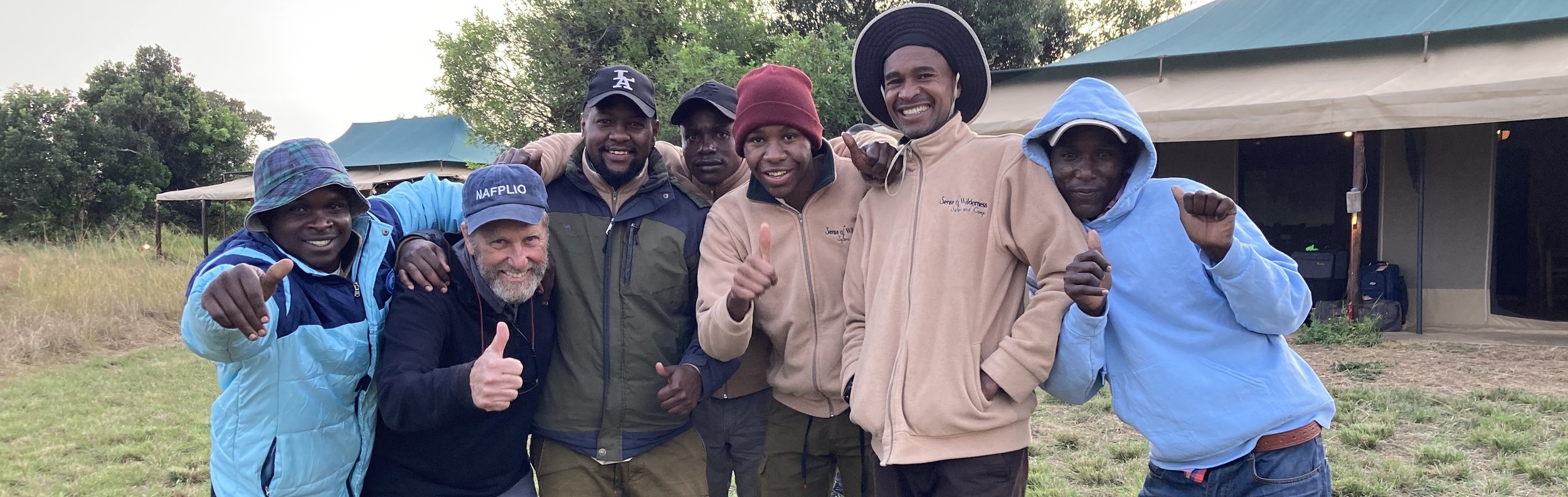
A team effort

A team effort

The bus was nearly at capacity with 47 persons when we rolled into the airport. In a similar way, our hearts and minds were full. Old friendships had been enriched and new friendships had been forged over the course of the past two weeks. We hugged and shared goodbyes, knowing that as we returned home, we did so as changed people.

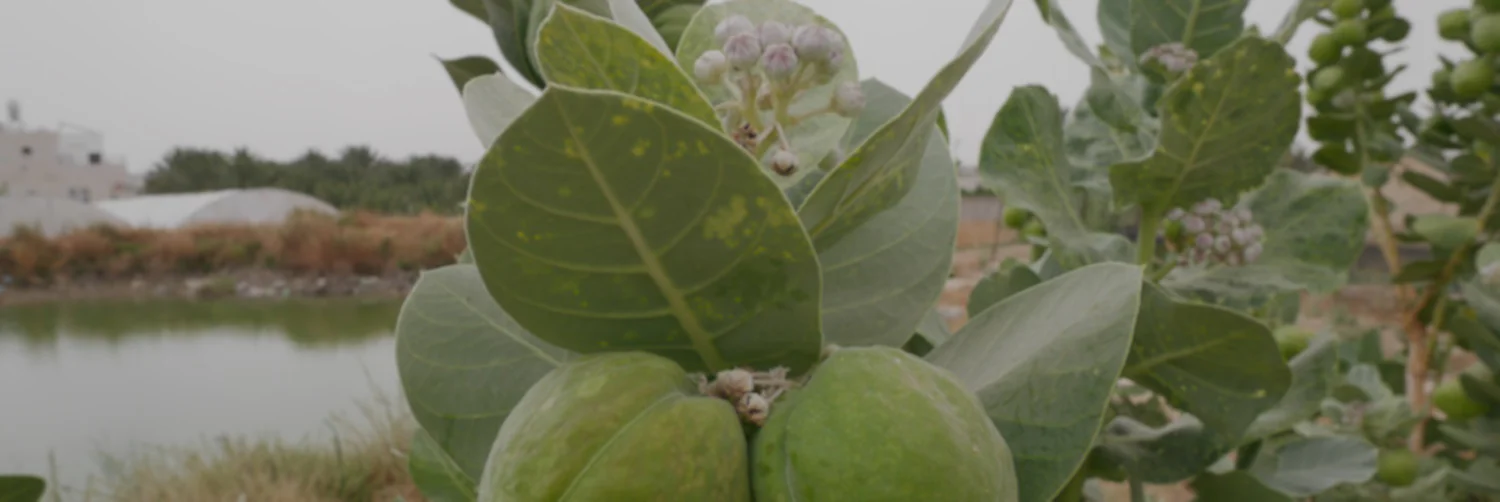
Sodom apples

Sodom apples

With Sodom burning up my newsfeed right now, I can’t think of a better time to think botanical thoughts.

The Bells of Madaba

Madaba, Jordan, sits astride the ancient path known as the King’s Highway. The city itself sprawls this way and that from the slopes of an ancient tell. The highest point of the city is topped by a church dedicated to the Martyrdom of John the Baptist. For some, the memory of John is reason enough for a visit.  My focus, however, is the bell tower. The tower is visible for miles and miles around. Obviously if one could climb it, it would be the best place from which to get the “big picture” of the region. But is it possible?

The Cincinnati - Jordan Connection

I made a quick run through Jordan this summer. Along the way, I stopped by some familiar places, visited with some dear friends, and even captured a new site. Let me take a moment to share the site. I’ve been driving by it for years and didn’t even know it! Go ahead and chuckle.