We glided into Passau, Germany—the Dreiflüssestadt, or “City of Three Rivers.” The sky was spitting, but we remained dry as I sorted through the ship’s planned excursions. While the official tours were tempting, I had a specific target in mind: Das Römermuseum Kastell Boiotro.
I consulted Jelena, our cruise manager, who seemed to stand even taller in her red high heels. She hadn't heard of a Roman museum in Passau and quickly pulled up her iPhone to investigate. The map showed it tucked away on the banks of the Inn River, on the far side of the “Old City.”
“I don’t think it will be open by the time you get there,” she said, shaking her head.

Modern Passsau is located at the junction of three rivers: the Danube (or Donau) is joined by the Inn from the north and the Ilz from the north. This place was strategic and heavily fortified in the Roman period. Roman-era findspots marked by circles. Image from signage in the Römermuseum.
Undaunted, Vicki and I pulled on our raincoats, grabbed an AmaWaterways umbrella, and disembarked into the gray afternoon.
Our quest for directions began at a nearby shop. The shopkeeper, equally unsure, consulted her own iPhone. “Ah,” she said in a thick accent. “Go down the street. Turn right at City Hall. Go over the hill.” She traced a dizzying series of lefts and rights in the air before sensing the futility of it all. “Then... ask someone else,” she laughed.
“Danke schön!” we chirped.
“Tschüss!” she sang back.

A bridge crossing the Danube (Donau) River.
We found City Hall exactly where she said. Inside, we traded digital uncertainty for a sturdy paper map. With it in hand, we navigated the “hill” and a maze of narrow, slick cobblestone streets until we reached the banks of the Inn. It was a massive waterway, nearly rivaling the Danube in scale.
“Now,” I said, “we just need a bridge.”
The crossing appeared shortly, and in less than a kilometer, we stood before a late-medieval, salmon-colored house. We had reached Römermuseum Kastell Boiotro—with a full hour to explore.

The gate was open.
It was part of a larger network of defensive positions at the junction of the three rivers—military camps known collectively as the Roman limes. These outposts were often manned by locals who enforced imperial policy in exchange for a salary, housing, and the ultimate prize: citizenship.*
Vicki and I wandered the small grounds, photographing the foundations and imagining the original view of the river, now blocked by modern construction. The museum itself was a hidden gem—organized, informative, and staffed by a friendly fellow who was the only other soul on the property.

Vicki standing near a corner tower of Fort Boiotro.
The artifacts were splendid, spanning from the Late Stone and Iron Ages to the Roman settlement. I was particularly fascinated by a bronze plate—a “diploma” for a soldier who had completed a 25-year commitment to the Roman Army. In addition to pay and housing, he and his family were granted citizenship. It was a high reward for someone likely considered a “barbarian.”
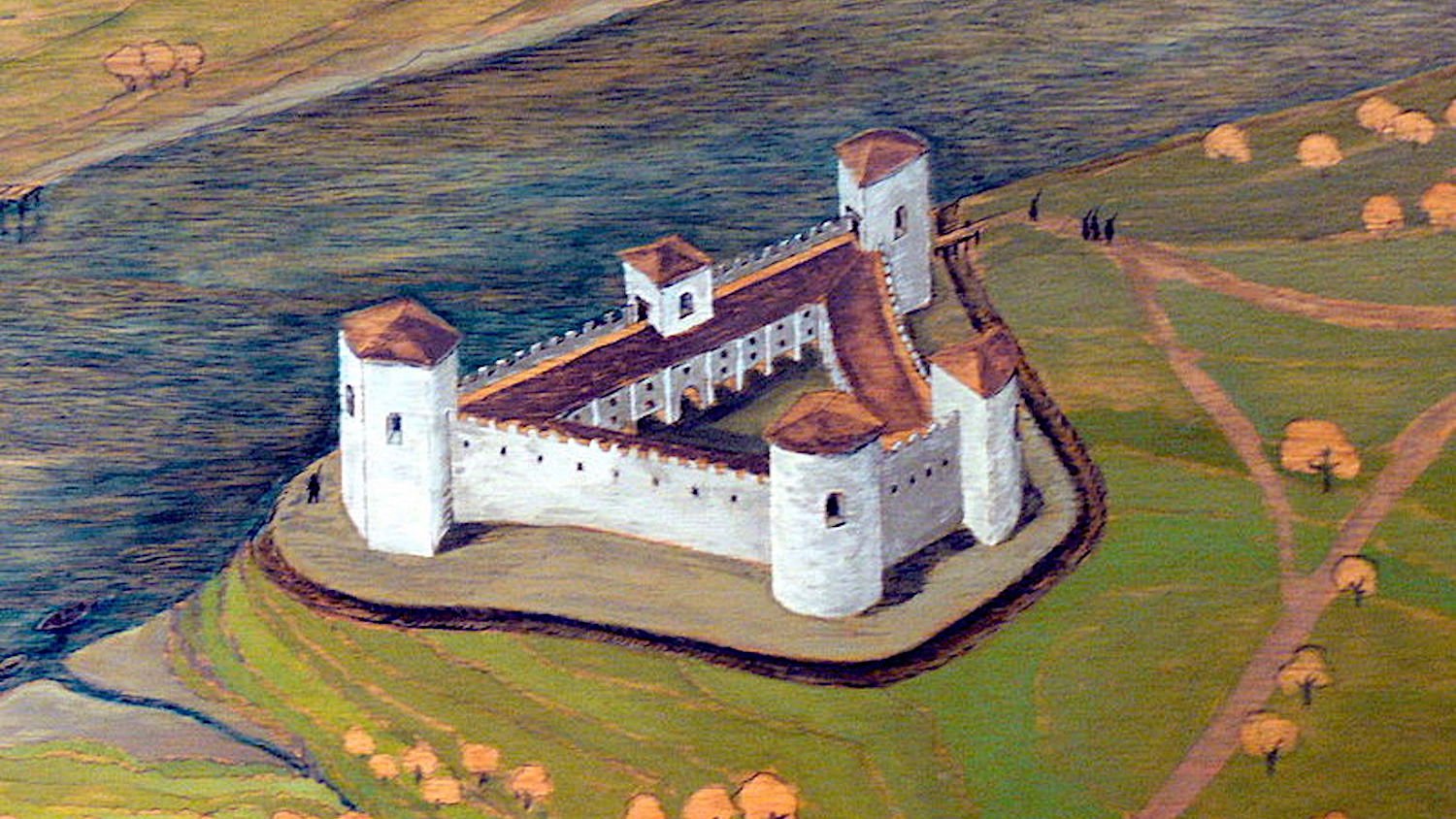
An artist’s reconstruction of the Roman fort along the River Inn in modern Passau, Germany. The fort had an irregular trapezoidal shape and was surrounded by a moat.
This find brought to mind a passage from the Book of Acts. When the Apostle Paul stood before a Roman officer (chiliarchos) who claimed he had paid a great sum for his citizenship (politeia). Paul countered, “I was born a citizen” (22:28). Seeing that bronze plate made those New Testament privileges feel remarkably tangible.**
The sky was still spitting as we made our way back to the ship. We were wet and tired, but deeply grateful we had chased the Romans to the far side of the Inn.

The location of Fort Boiotro. The Danube marked the northern limit of the empire.
*These irregulars were paid less that legionnaires, but if they fulfilled a 25-year service career, they could earn their citizenship. Jörg-Peter Niemeier, Passau-Teil des Römischen Reiches (Passau, 2014: 68).
**If you are interested in learning more about Roman citizenship on the northern boundary of the empire, see the popularly-written article by Douglas Boin, “An Empire of Immigrants,” in Lapham’s Quarterly (June 15, 2020). You may find the article here: https://www.laphamsquarterly.org/roundtable/empire-immigrants.
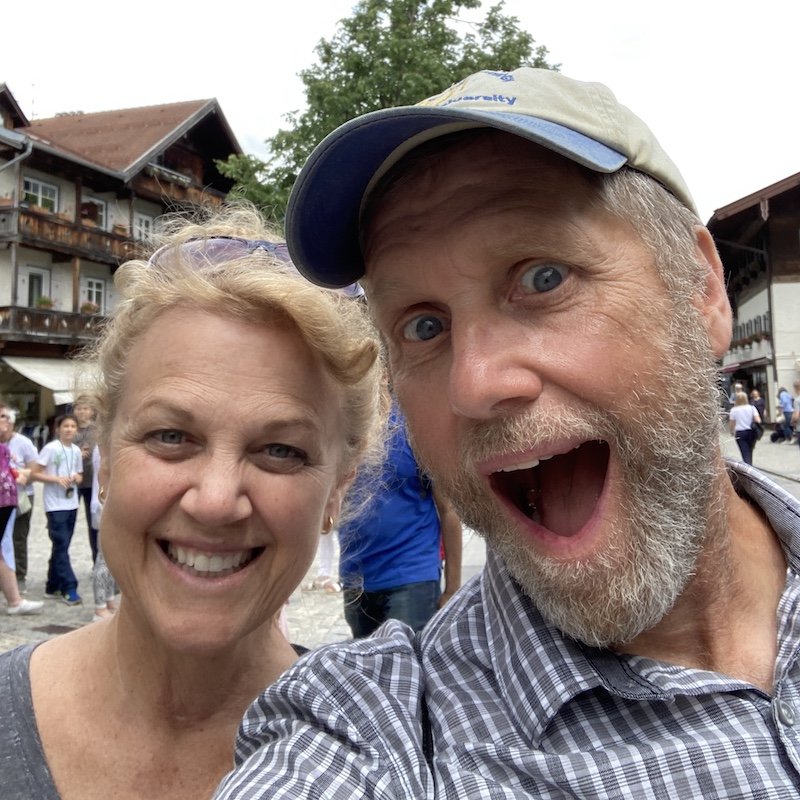
We are having a relaxing time river cruising on the Danube. We are traveling from Vilshofen, Germany to Budapest, Hungary. Bus rides to Salzburg, walking adventures in Passau, bicycling in Vienna and other excursions fill in our days on the water. If this sounds like the kind of trip that you would be interested in, contact me at BibleLandExplorer@gmail.com.