
Fishing huts appeared along the banks of the Danube.
The AmaVerde slipped quietly out of Vienna.
The captain willed her from her mooring, skillfully using the current to align her with the bank before throttling forward. We moved east with the flow of the Danube. In short order, the “City of Dreams” faded, replaced by a dense corridor of green. Tree limbs dipped down to tickle the wetlands, and tiny fishing huts on stilts emerged from the shadowed woods. These cabins were armed with netting systems—poles and mesh leaning over cocoa-colored water where nase and barbel swim. Between these fish camps, creeks darted in and out, suggesting a certain indecision as the river chose its course through the flatlands east of the Alps.
I checked the map on my phone. Austria had nearly run its course; soon, the Danube would etch the border between Slovakia and Hungary. We were entering the gateway to the Balkans.

The Balkans form the third and the most eastern of Europe’s three southern peninsulas (the Iberian and the Italian are the other two). It is framed by the Adriatic, Aegean and Mediterranean Seas. The term “Balkan” is regularly used by historians but frowned upon by some moderns. Its name was drawn from the Balkan Mountains once believed to dominate the region. The label “Southeast Europe” may be preferred.
It brought to mind a quip from a famous Austrian of old:
Östlich von Wien, fängt der Orient an.
(“East of Vienna, the Orient begins.”)
Klemens von Metternich was a skillful 19th-century statesman who helped Austria navigate the “Concert of Europe”—a complex political dance between the Napoleonic Wars and World War I. A recurring theme of this era was how the Great Powers dealt with the vacuum left by the crumbling Ottoman Empire, the "sick man of Europe." In this context, the question of where the Occident ended and the Orient began was a matter of fierce debate.
Metternich had his opinions, as did the rest.
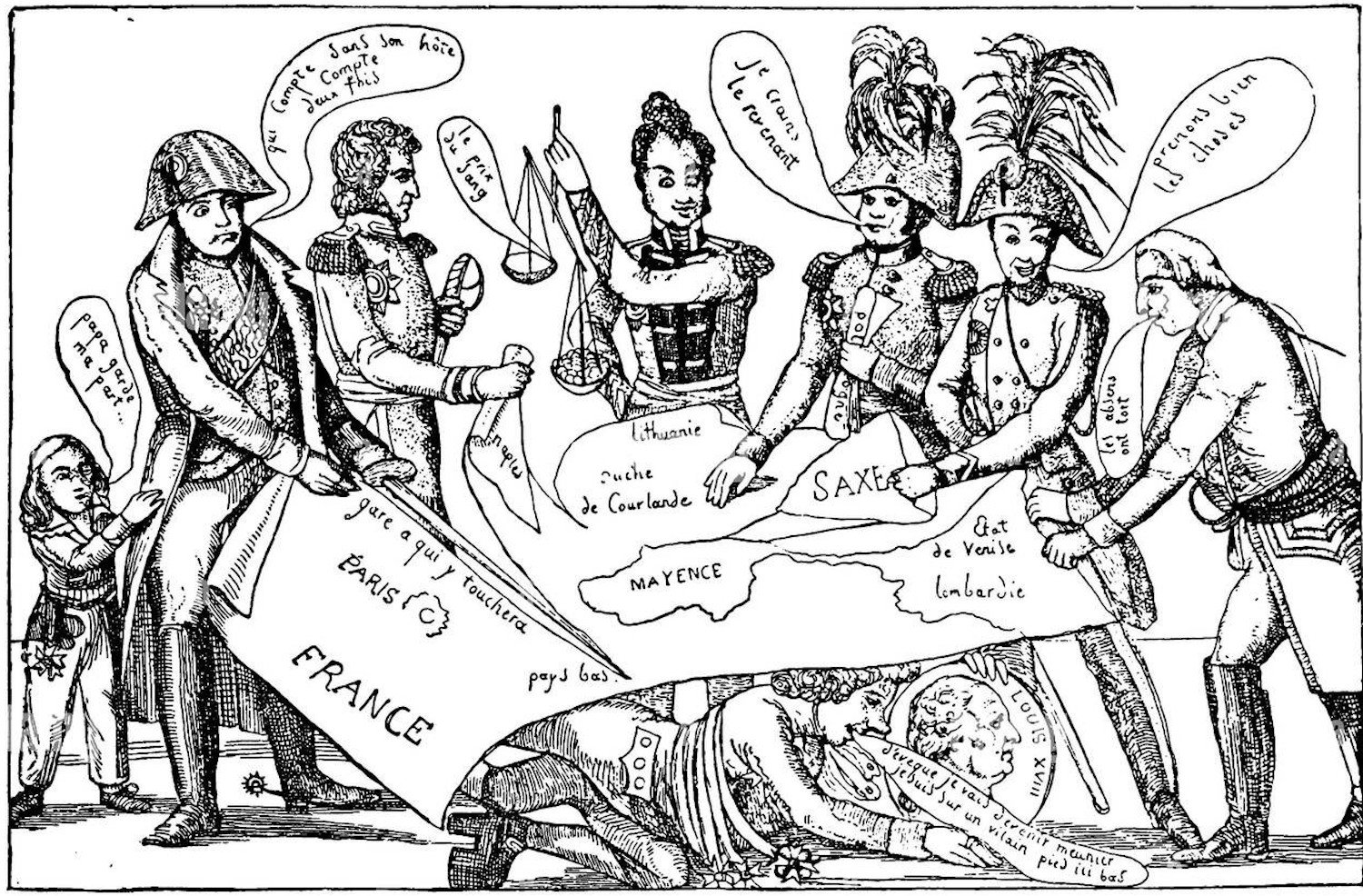
Concert diplomacy in the 19th century. Image from here: https://typelish.com/b/the-concert-of-europe-as-an-example-of-concert-diplomacy-in-the-19th-century-102433 (accessed 7/15/2022).
Such a line, whether drawn softly or sharply, existed long before the imperialists and remained long after their departure. The boundary between the Roman West and the Byzantine East ran through the Balkan Peninsula in the fourth century; under very different circumstances, the “Iron Curtain” of my childhood ran through this same region. For centuries, the Balkan Peninsula has been a geopolitical watershed—the place where East meets West.
I looked up as we cruised slowly past Hainburg an der Donau. The Roman army was once here, too, watching the frontier. During the reign of Caesar Augustus, the site was known as Carnuntum (or Carnous). In more recent history, this town served as the final stop before the Iron Curtain.
We were now east of Vienna, moving into Metternich’s “Orient.”

Hainburg an der Donau, Austria. The ruins on the distant hill are all that remains of a castle built in the AD 1050 by Henry III, leader of the Holy Roman Empire. Hainburg is near the junction of the modern countries of Austria, Slovakia, and Hungary.
A note on terminology: like the term “Balkans,” the words “Orient” or “Oriental” have largely fallen from favor. Some find them obsolete or too sweeping to be useful. Yet, etymologically, these descriptors are rooted in the natural world. Both find their source in Latin: oriens refers to the “east” or the rising sun, while occidens refers to the “west” or the setting sun.
In Metternich’s day, the “Orient” was a vast designation including the Near East, the Far East, the Balkans, and the lands of the Ottoman Empire. It is why the archaeological society focused on Israel, Jordan, and Palestine was originally called the “American Schools of Oriental Research,” and why Agatha Christie’s famous train, steaming toward Istanbul, was dubbed the Orient Express.

Postcard. “The Orient Express near Constantinople.” Image from here: https://assets.atlasobscura.com/article_images/lg/24565/image.jpg (accessed 7/15/2022).
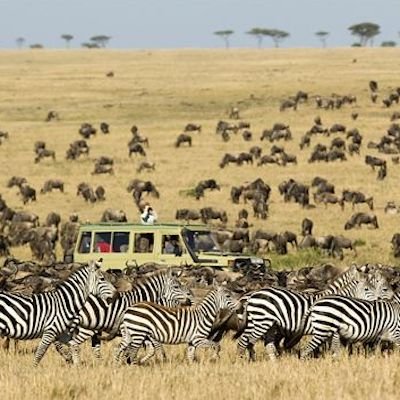
Bible Land Explorer is adding a new adventure to our offerings. We will be hosting an African safari in 2023. Between July 27 and August 5 we will return to the big game parks in Tanzania, including the Serengeti, Ngorongoro Crater, and Tarangire. We will four-wheel drive and tent camp (or “glamp,” really!) in the Serengeti and follow the Great Migration of the wildebeest. It is one of the wonders of the natural world. This expedition is already half-full. If you are interested in signing on for a wild time, click here or contact BibleLandExplorer@gmail.com.