African Buffalo Horns: Nature’s Most Formidable Helmet.
A Discovery at the Water’s Edge
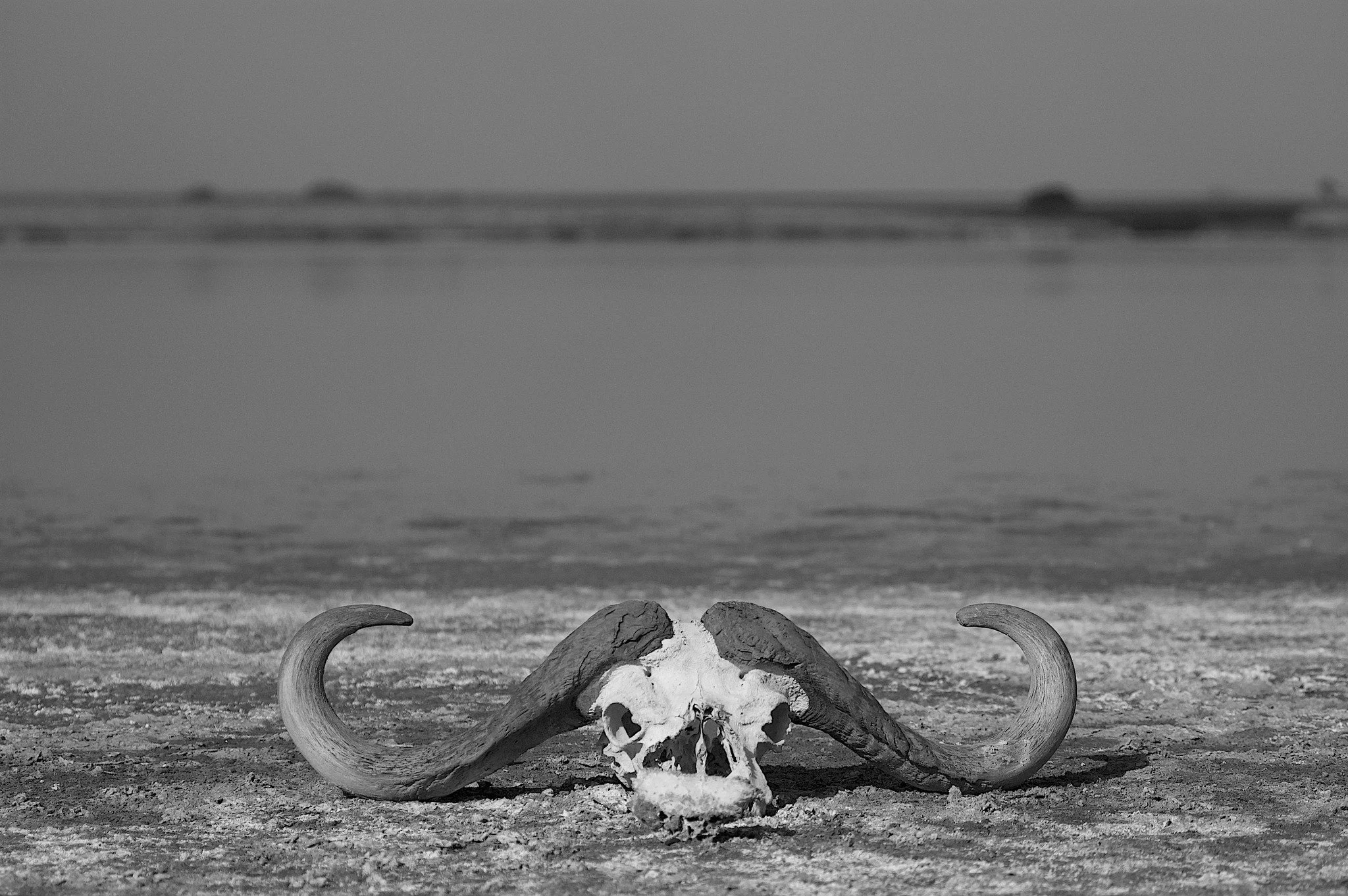
We came upon a small pond during an evening game drive, and there on the shore lay the bleached skull of a Cape buffalo (Syncerus caffer). While our guide, Mr. Nixon, stood on high alert, Vicki and I hopped out of the truck to capture the image. Little was left of this cantankerous bovid, yet its massive horns still commanded absolute attention.
The “Boss”: Nature’s Built-in Helmet
In the wild, African buffalo horns are the ultimate in defensive engineering. They grow on both bulls and cows—rising, drooping, and curling into sharp points. In mature males, the horns often fuse together at the base, forming a thick, bone-shield known as a “boss” across the top of the skull.
You can see a slight gap on this particular skull, but in the oldest bulls, that shield becomes an impenetrable helmet used for infighting or repealing predators like lions. With a point-to-point spread that can reach a full meter, it is a formidable weapon. As I stepped close for the shot, I caught the scent of the approaching night air and couldn't help but wonder what exactly managed to take this giant down.
The Untamable Giant
Unlike its cousins—the Asian water buffalo, the yak, or the American bison—the Cape buffalo has never been tamed or domesticated by man. It remains one of the most unpredictable and dangerous members of the Big Five. Standing over a skull like this is a sobering reminder of the rawness that defines the African savanna.