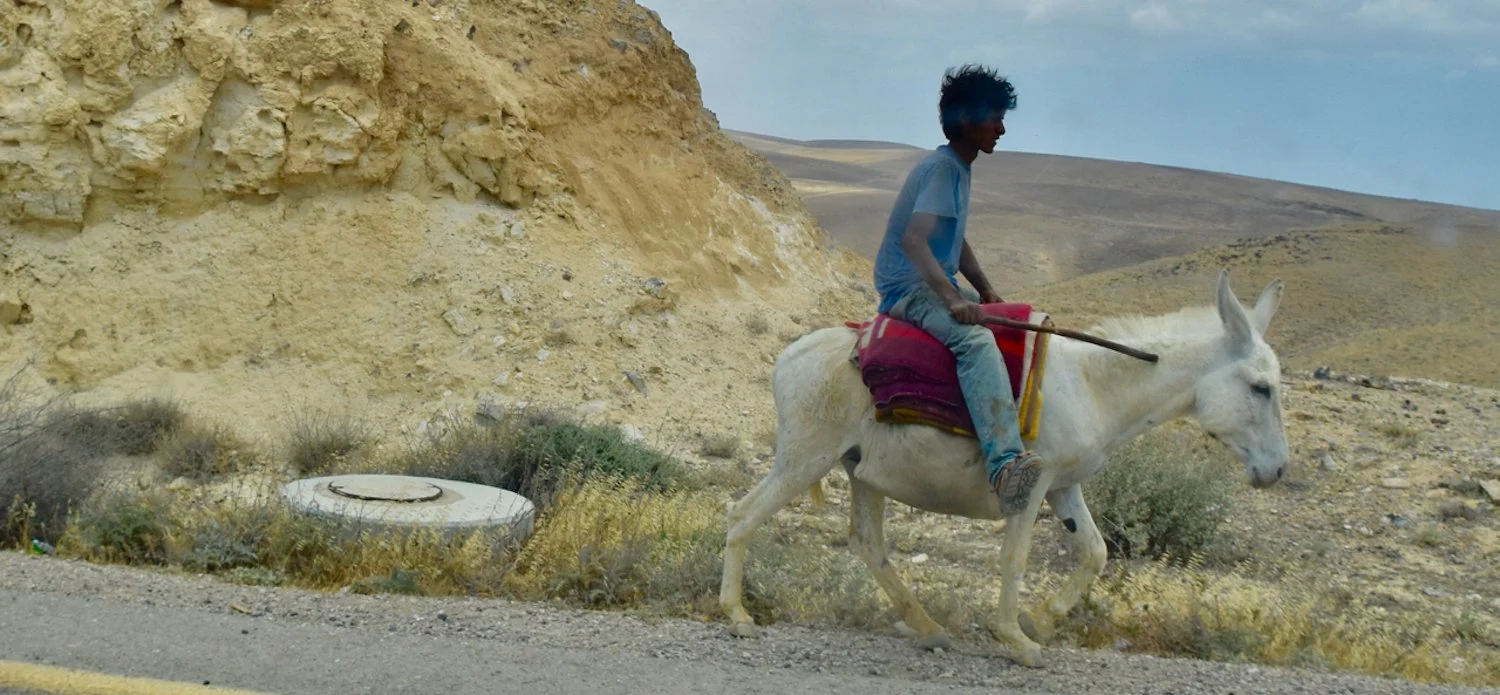
Few locations carry as much weight as the Road to Damascus. It wasn't just a physical trade route between Jerusalem and the ancient Syrian capital; it was the site of the most famous turnaround in history.
Check out the video below.
People, like novels, have themes.
Our Stories
Few locations carry as much weight as the Road to Damascus. It wasn't just a physical trade route between Jerusalem and the ancient Syrian capital; it was the site of the most famous turnaround in history.
Check out the video below.
Ever felt lost trying to piece together the Bible? You aren’t alone. Because the biblical books are grouped by type—like poetry, history, or prophecy—rather than a straight timeline, the chronological order can be a total maze.
But what if you had a “mental map” to keep the story straight? Enter the ultimate memory hack: BeeP SLoWLy JaKe CaRRieS CoCoa.
This quirky phrase is your key to unlocking the major eras of the biblical narrative in the exact order they happened. From the dawn of creation to the birth of the early church, this tool helps you see how every person, place, and event fits into one seamless, transformational story.
Watch the video to crack the code.
Perched on the eastern slope of the Mount of Olives, the modern Arab community of Bethphage stands directly above the ancient village that witnessed one of the most famous processions in history. In the biblical narrative, this was the starting point of the Triumphal Entry, where Jesus sent his disciples to find a colt before descending toward Jerusalem.
Walking the downslope from the modern village, the atmosphere shifts from bustling community to silent history. Tucked among the olive trees and terraced gardens, ancient rock-cut tombs remain as quiet witnesses to the generations who lived and died on this sacred hillside. These burial sites provide a grounded, immersive look at the reality of life in the first century, bridging the gap between the modern skyline and the ancient stone.
Check out the video below.
After two weeks of pushing through the mud of Galilee and the silt of the Judean wilderness, our tour bus wears the landscape. In Jerusalem, a high-pressure wash isn't about aesthetics—it’s about visibility and survival. You don't just “wash” a bus; you blast away the Heartland grit to prepare for a group of pilgrims.
Busses sparkle for a reason. It’s no accident!
Watch the video.
Let’s be honest: if you’re on a study tour in the Biblical Heartland, the struggle for good caffeine is the real “wilderness wandering.” Most Israeli hotel rooms and breakfast buffets feature a mysterious, bubbling vat of something best described as “hot, brown disappointment.”
If you want a cup that actually wakes up your brain for a day of biblical history, you need to be self sufficient.
Find out how in this video.
For centuries, the Pool of Siloam was a site of memory and tradition, hidden beneath layers of Jerusalem’s soil. But twenty years ago, a routine sewer repair changed everything. Workers struck wide, ancient stone steps, leading to the discovery of the original massive reservoir where Jesus famously healed a blind man (John 9:7).
Where are we today? Watch the video below to find out.
The winter rains have “greened” the area around Khirbet Qumran. It’s a perfect moment for a group shot, taken on a trail just below Cave 1 where the first set of the Dead Sea Scrolls was found. Among that set was “the Great Isaiah Scroll,” the oldest complete copy of the book of Isaiah (ca. 100 BC).
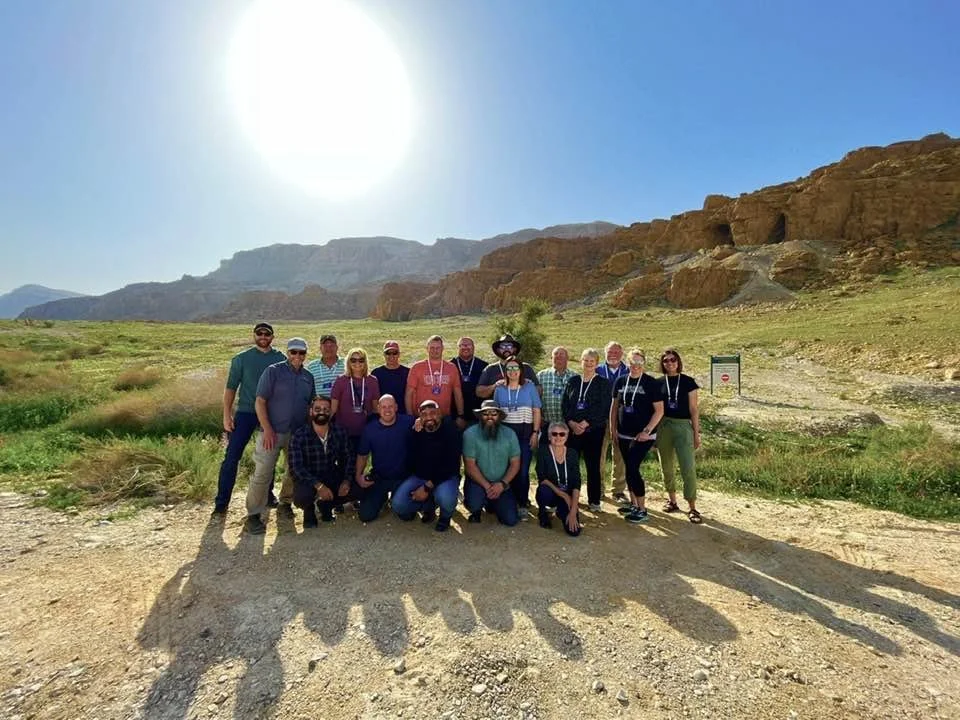
Pilgrims below Cave 1 near Khirbet Qumran where Dead Sea Scrolls were first discovered.
Friends for life: Ibrahim and Maha Abu-Rakabeh (and Barbara Serago too!)
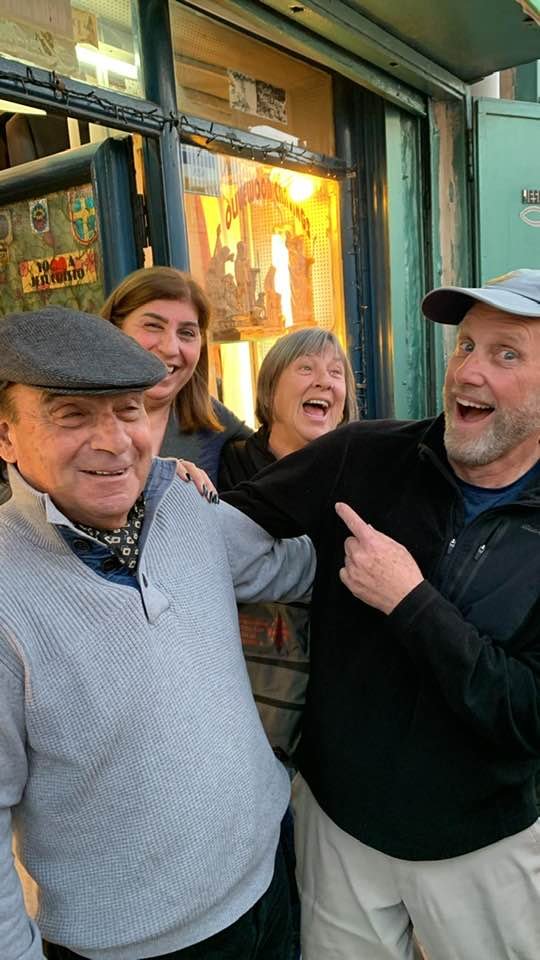
I love this guy!
Tucked into the emerald hills of southwest Jerusalem, Ein Kerem is more than just a picturesque village of stone houses and hidden gardens. According to tradition, this tranquil valley is celebrated as the birthplace of John the Baptist.
Stepping into Ein Kerem is a journey into the quiet beginnings of the New Testament. As the traditional home of Zechariah and Elizabeth, it’s here that the “voice crying in the wilderness” was first heard. Whether you’re climbing the steep, narrow paths to the Church of the Visitation or pausing at Mary’s Spring, the village offers a peaceful contrast to the bustling limestone corridors of the Old City.
See the video below.
Discover the Mediterranean Sea, the ancient “center of the earth.” Experience its coastal vibe, massive scale, and place in the biblical story.
See the video below.
If these stone walls could talk, they’d probably ask for another slice. Tucked away in the heart of the Christian Quarter, just steps from the Via Dolorosa, sits Basti Pizza—widely celebrated as the oldest pizzeria in Jerusalem’s Old City. Since 1927, the Basti family has been serving up comfort food to weary pilgrims, local shopkeepers, and curious explorers.
Eating here is an immersive history lesson. While the world outside has shifted through empires and eras, Basti has remained a constant, family-run sanctuary. The vibe is gritty, authentic, and exactly what you need after a long morning of navigating the limestone labyrinth of the Holy City.
Check out the video below.
If you want to understand resilience, look no further than the Acacia tree. Scattered across the scorched valleys of the Negev and the Sinai, these thorny, flat-topped silhouettes are the only things that thrive where everything else withers. In the biblical narrative, the Acacia (or Shittim wood) isn't just a plant—it’s a symbol of endurance under pressure.
Come sit under the tree with me! Watch the video below.
“Burgerim: Always More than One.”
Sigh.
Hey, that Rami Assali!

Mark and Rami hunting Burgerim.
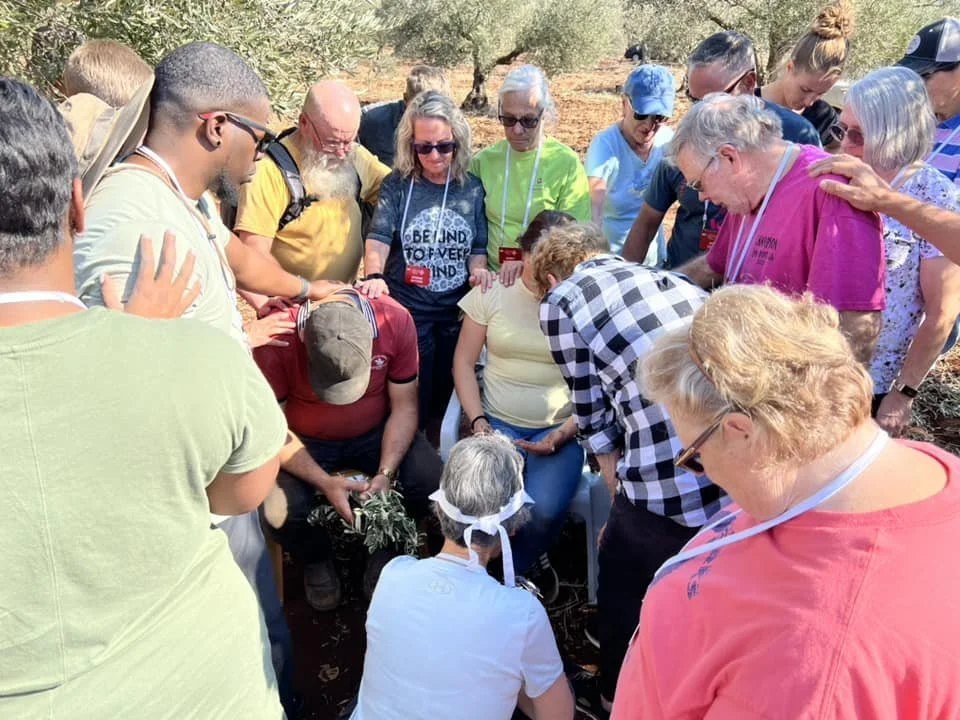
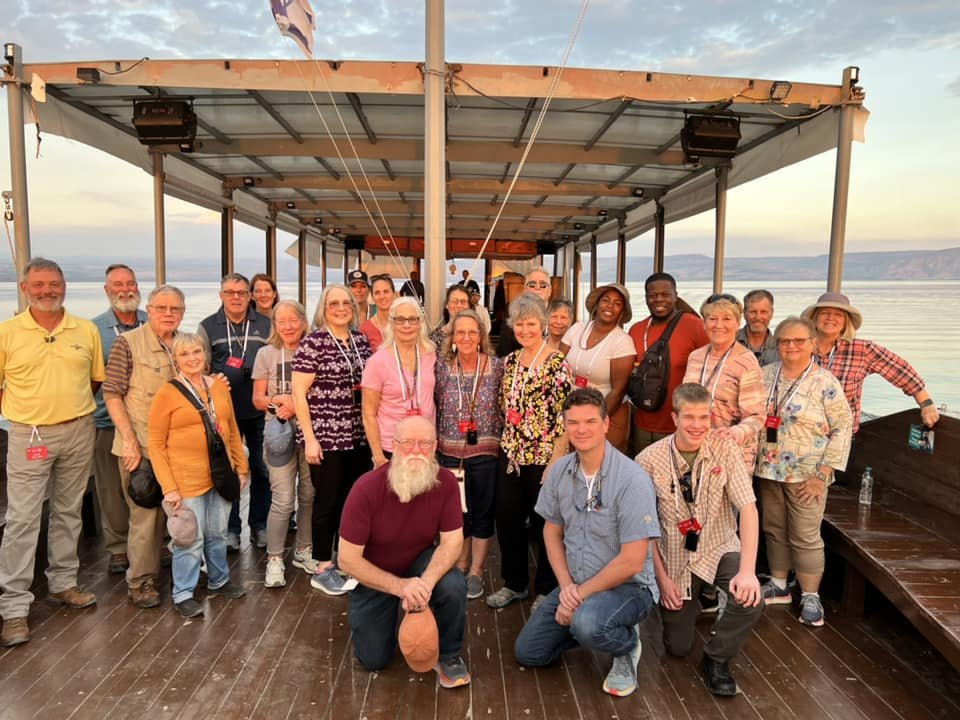
Note from Matt Nance, Director of the Christian HolyLand Foundation:
I‘ve been home for 3 weeks and can’t stop thinking about our amazing Holy Land Pilgrimage! I teamed up with David Mullins for pastoral support and Mark Ziese for amazing archaeological and biblical scholarship, this was the dream team with myself just paying the bills, making sure all the coffee was drank, and walking in the back to catch the stragglers.
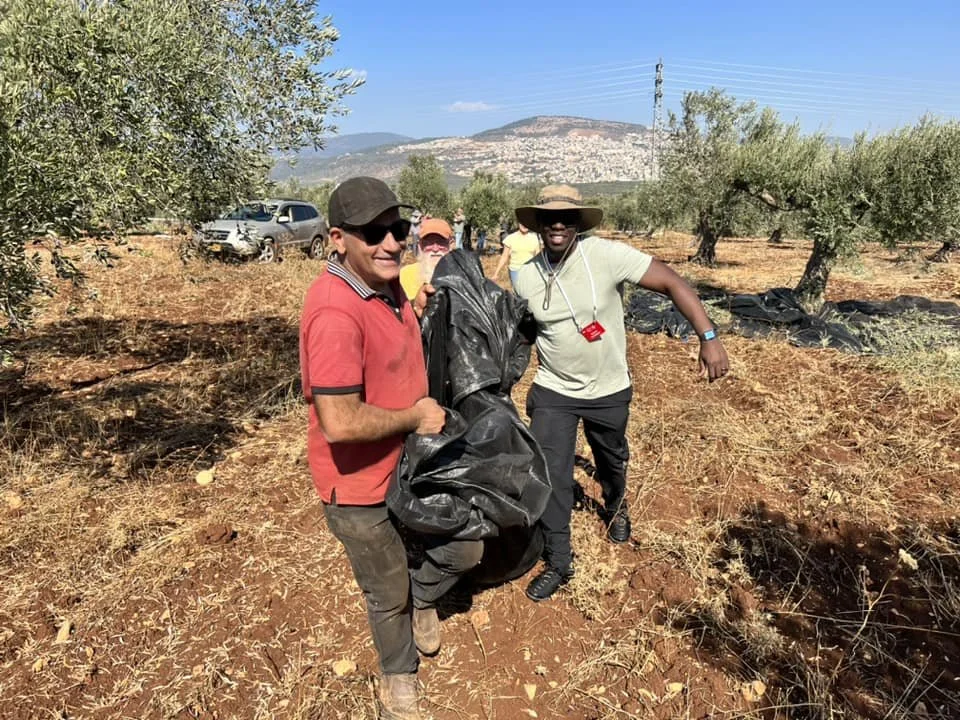
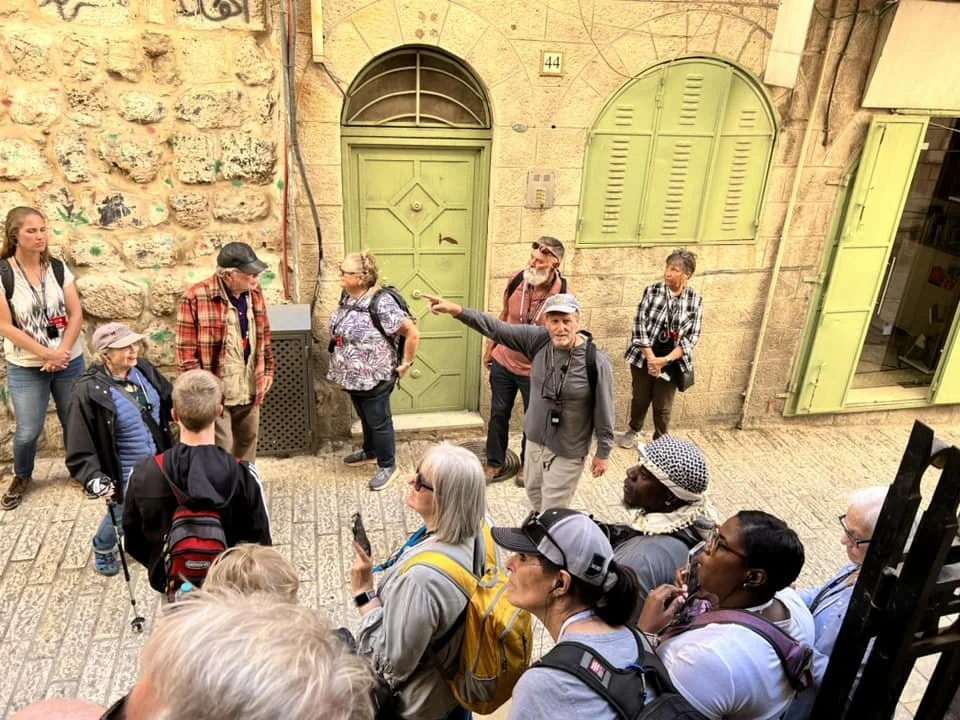
For many, a trip to the Holy Land is the ’Trip of a Lifetime,’ but sadly not all trips are the same, many just churn through tourists for the money.
We really try to do things right.
1. Firstly our trips don’t make money. Missional Pilgrimages are an essential part of our ministry strategy.
2. We keep groups small to allow for genuine relationships to form and not overwhelm interactions with local folks.
3. Instead of rushing from site to site to see as much as we possibly can, we follow a more relaxed itinerary that seeks to soak experiences in.
4. We combine world-class teaching with authentic cultural experiences and transformative missional engagement with local believers.
5. We get off the ’tourist trail’ and engage everyday life alongside the folks who live in the land today.
Our Jesus Trail group on the last hill of the day. The Galilean village of Kfar Cana is in view.
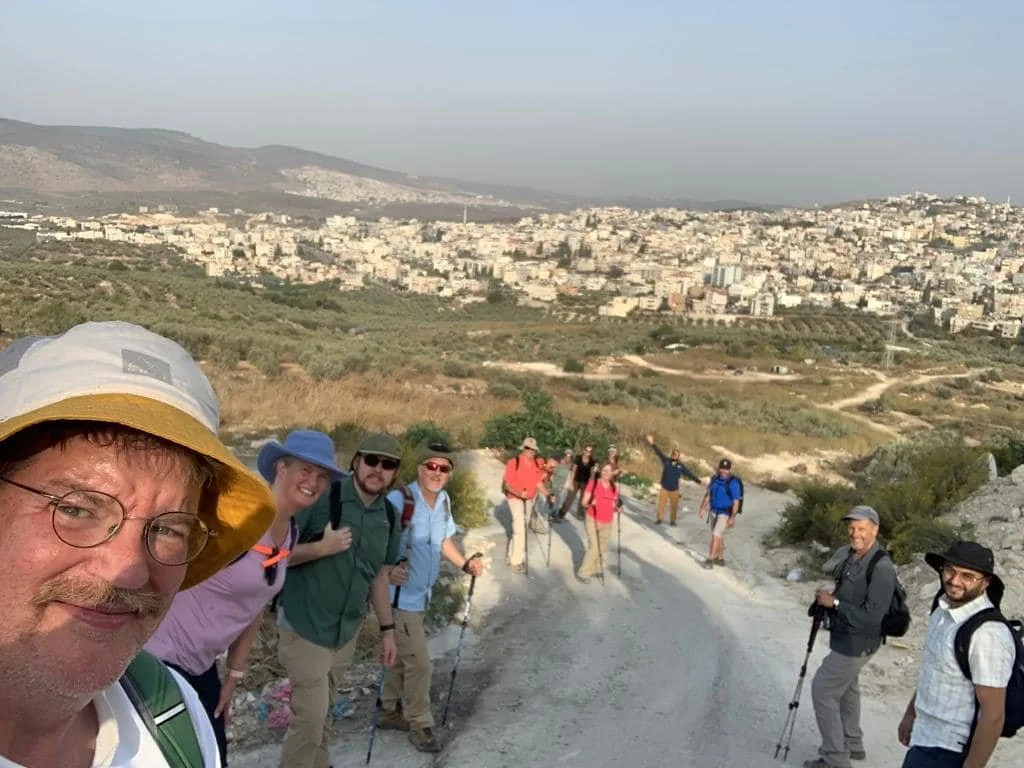
Hiking across Galilee on the Jesus Trail. The trail above Kfar Cana. Photo by John Christy.
Villa action. Our gang visiting Herod’s bath. Herodion, Palestine.
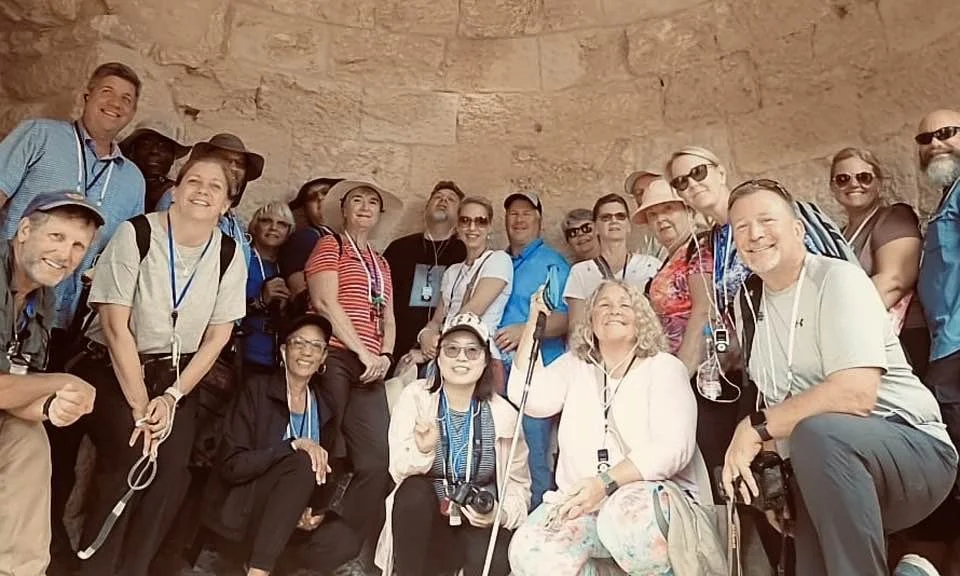
Pilgrims in the bath.
Forget the standard tourist fare; some of the best comfort food in Bethlehem comes with a side of monastic charm. At the Casanova Guest House, located just steps from the Church of the Nativity, we sat down for a legendary Italian lunch that felt like a bridge between two worlds.
The star of the show? Nun-crafted, homemade spaghetti. This isn't just pasta; it’s an immersive culinary tradition brought to the hills of Judea by the Franciscan community. Perfectly al dente and served with a rich, authentic sauce, it’s the ultimate “soul food” for a weary group of explorers.
To top off the meal, we were served a basket of tiny Jericho bananas. Grown in the tropical microclimate of the world’s lowest city, these miniature fruits are famous for being incredibly sweet and creamy. It was the perfect, sun-ripened finish to a Mediterranean feast.
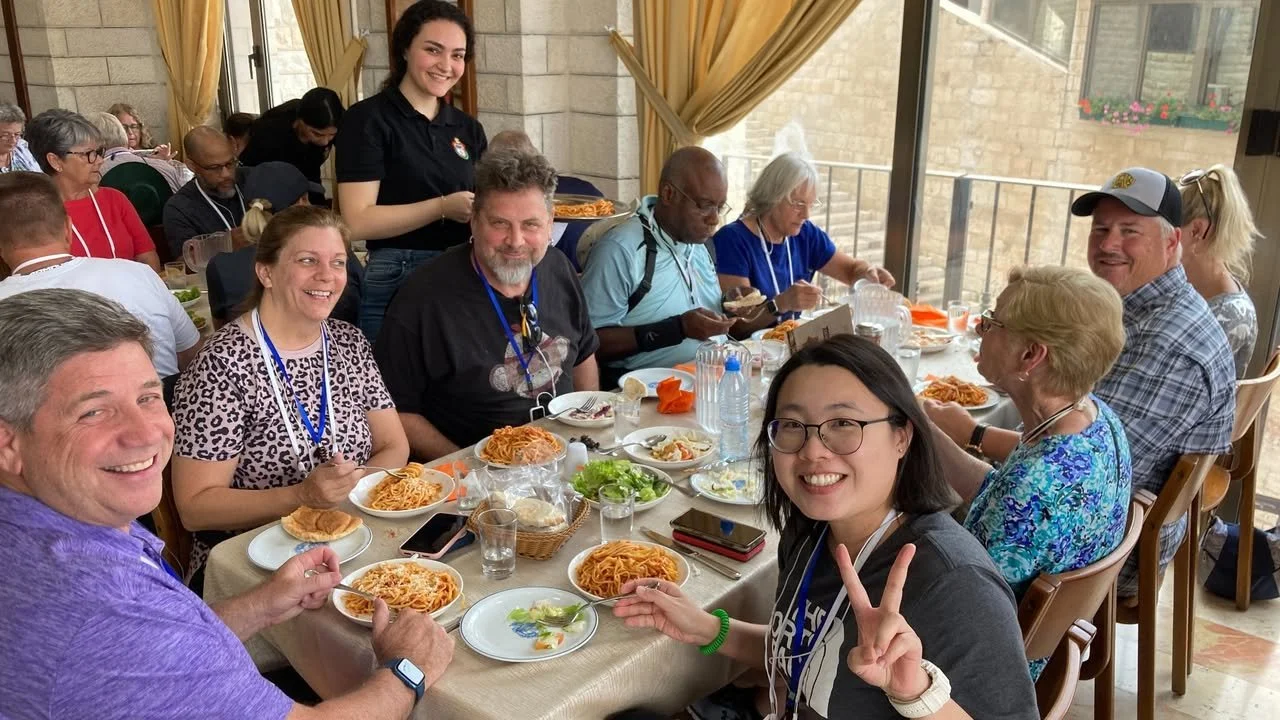
The historic dining room of the Franciscan Casanova Guest House near Manger Square and the Church of the Nativity.
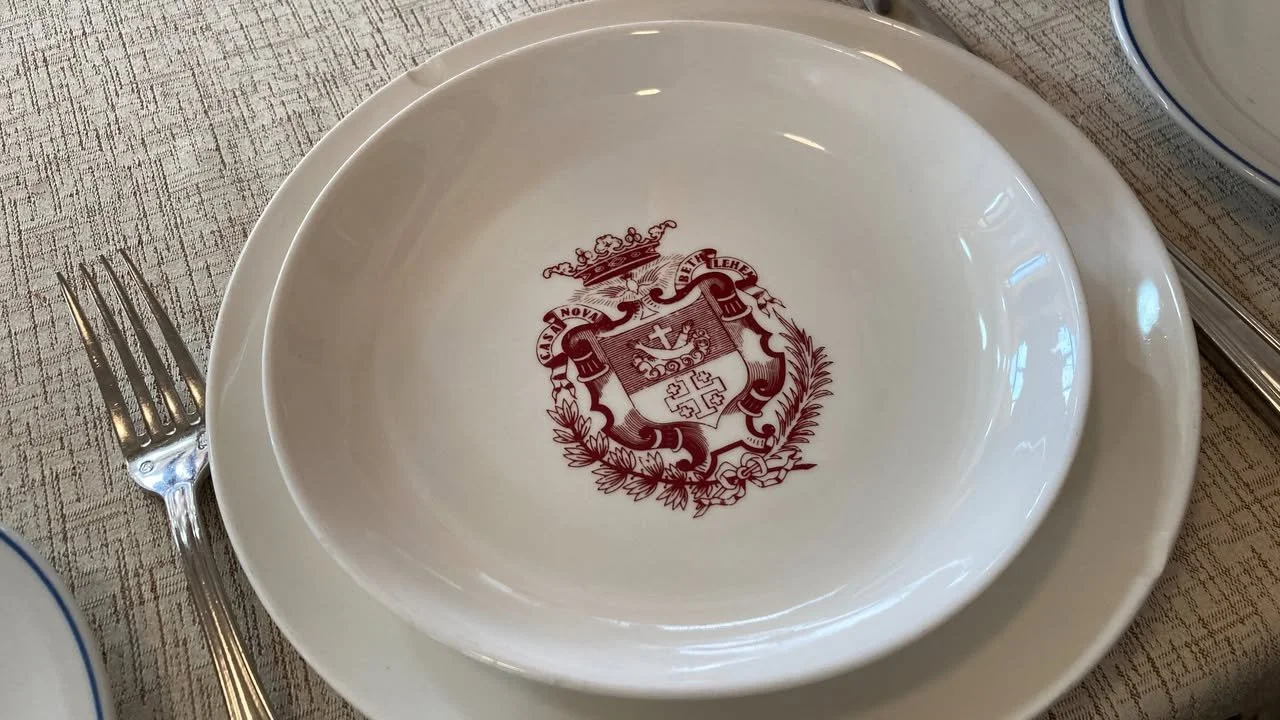
Dine on fine china featuring the coat of arms of the Custody of the Holy Land.
When you’re navigating the world’s oldest city, you need a pit stop that hits as hard as the heritage. Al Rawda in Jericho is our go-to for a reason. Tucked away in this low-altitude oasis, it’s the perfect place to drop the gear and recharge.
The undisputed king of the menu? The skewered meat. Whether it's the perfectly seasoned lamb or the succulent chicken, these skewers are flame-grilled to perfection and served with that authentic Palestinian char. Paired with fresh hummus and warm flatbread, it’s an immersive culinary experience that is favored by the locals (and perfect for pilgrims).
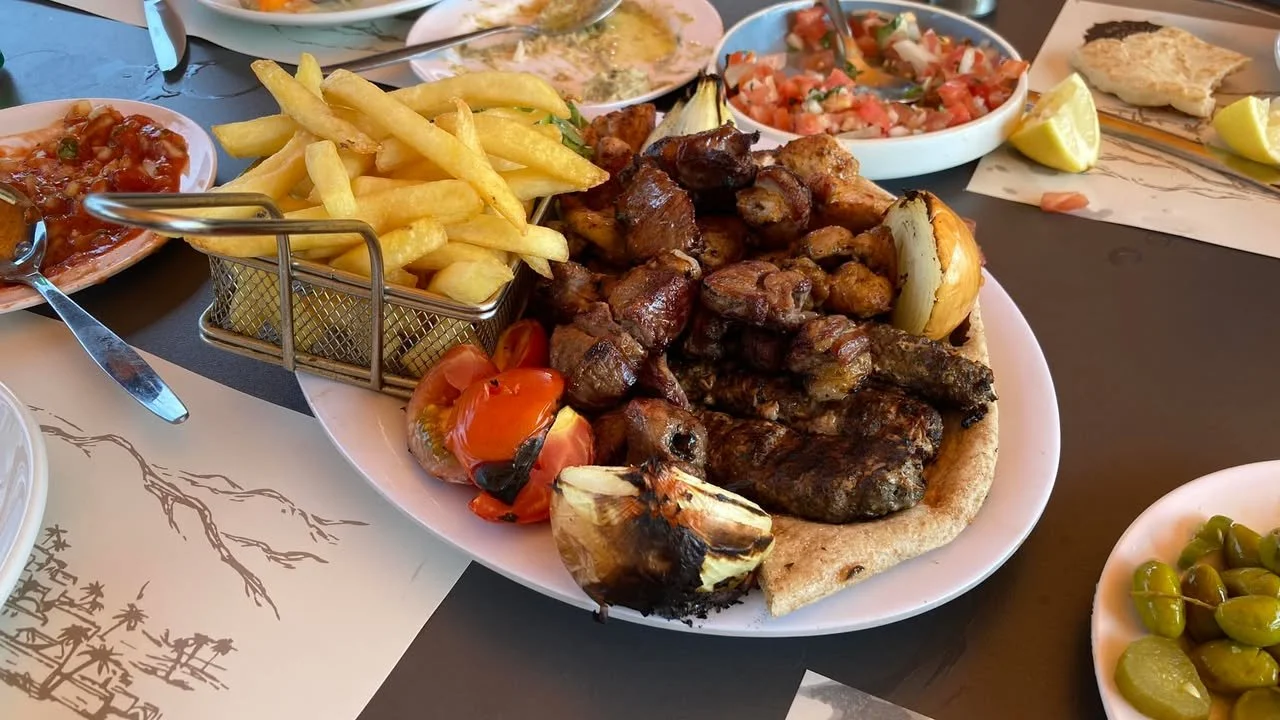
Family style serving plates.
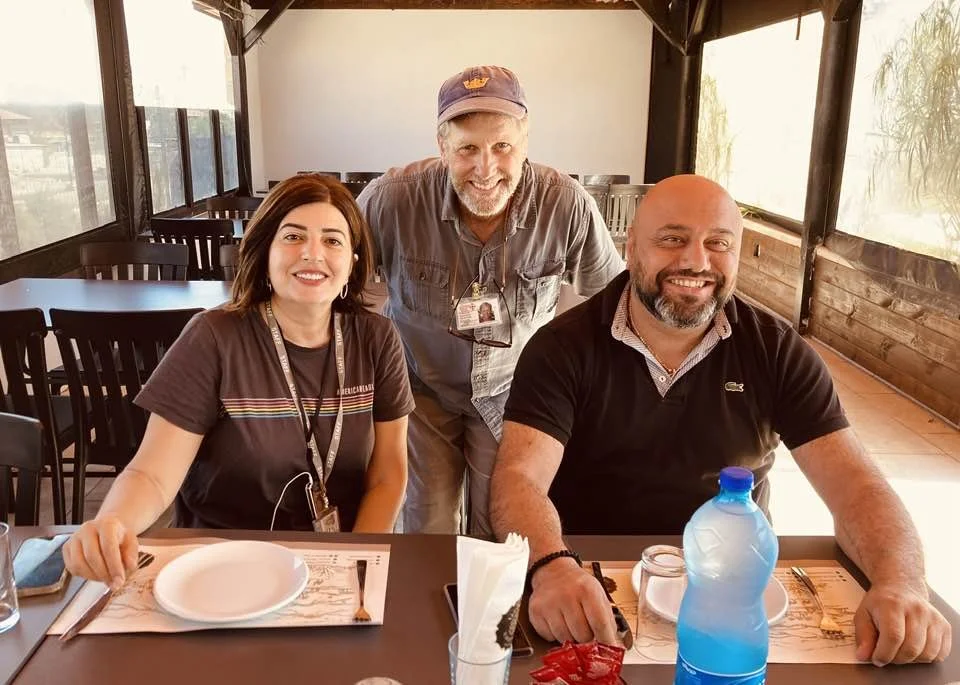
In the fine company of Claire and Rami.
Joe Wilson and friends arrived in the Heartland last night. Today we captured the view from Mt Arbel! I think they're gonna be a good bunch.
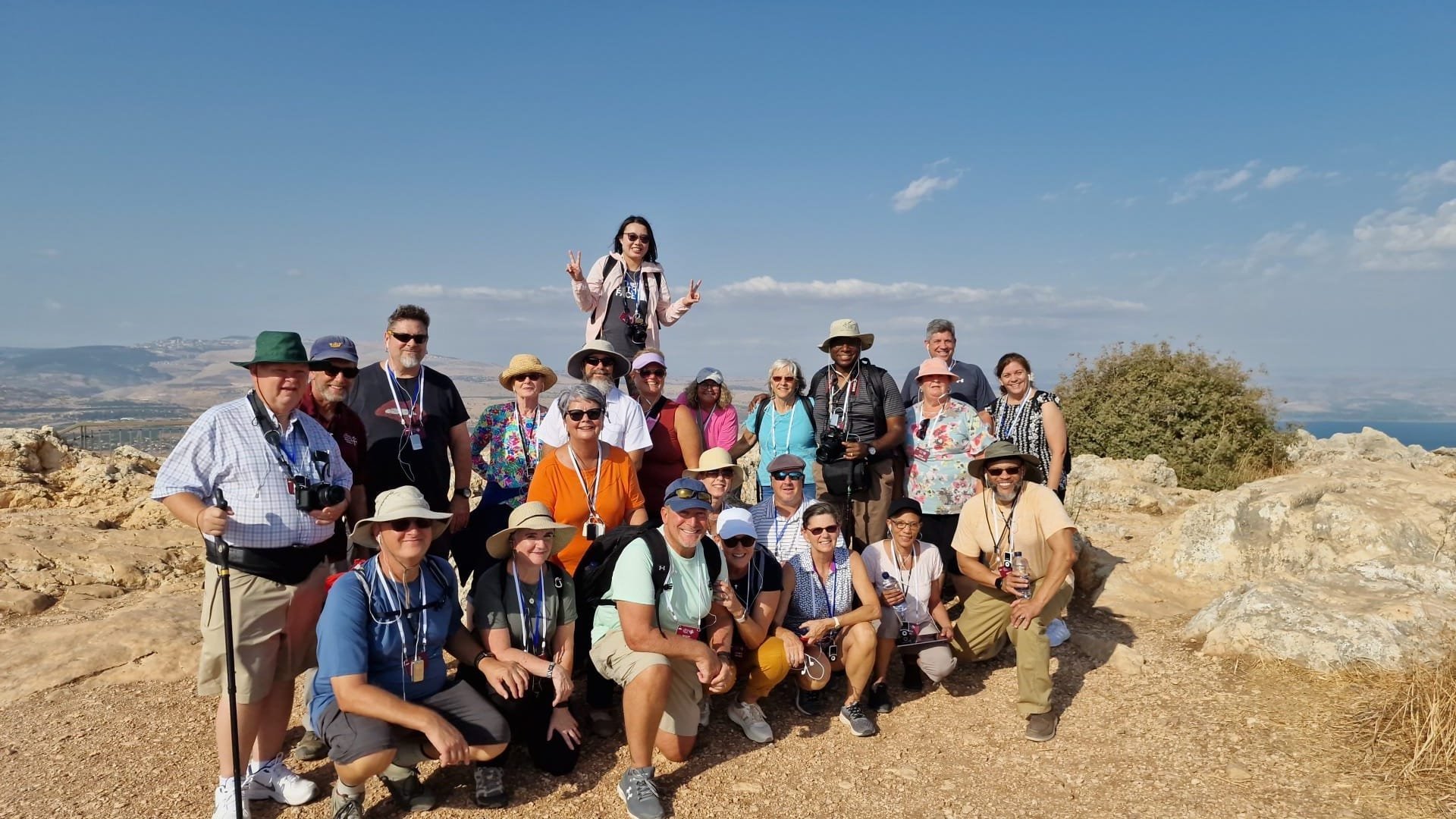
The vista on Mt Arbel is stunning!
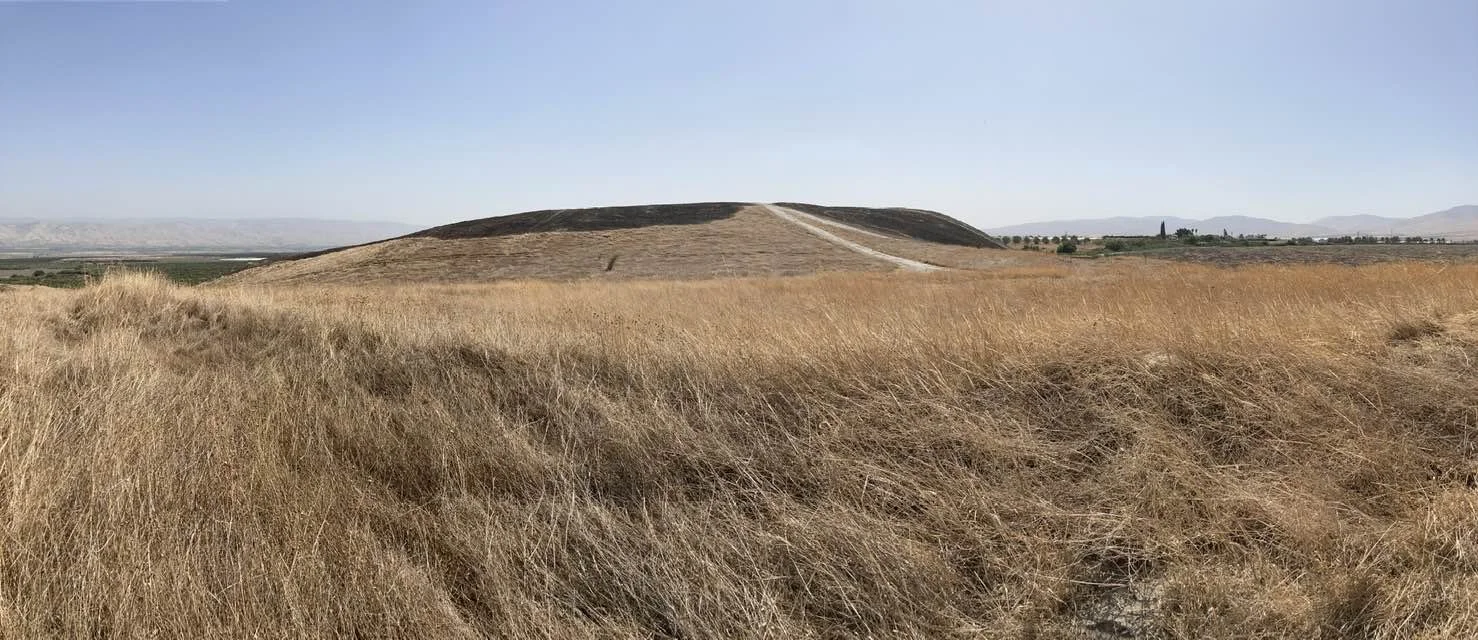
The steep, grassy slopes of the ancient Tell Rehov mound rising 20 meters above the surrounding fertile plain in the Lower Jordan Valley.
After landing in the Heartland and overnighting in Jerusalem, I pointed my rental car north toward Galilee. The drive up Highway 90 was steady, but the archaeology was calling too loudly to ignore. I pulled off at Tell Rehov (Tel es-Sarem) to stretch my legs and see what the summit had to offer.
Standing on that mound, you realize why it was a powerhouse for centuries. The view overlooking the Lower Jordan Valley is simply unmatched—a strategic vantage point that once controlled the pulse of the region.
But there’s more to this pile of rocks than a good view. The Hebrew University in Jerusalem excavated here between 1997 and 2012 and revealed many aspects of life from the Old Testament, including
The Ancient Apiary: This site yielded the oldest known beehives in the world, dating back nearly 3,000 years
The Anatolian Connection: Scientists found that these ancient beekeepers actually imported “gentler” bees from Turkey to boost their honey production (“designer bees”?).
Prophetic Clues: A pottery shard found here bears the name “Elisha,” leading many to wonder if this was a home base for the biblical prophet himself.
It was the perfect stop before hitting the Sea of Galilee. What would these stones say if they could speak? So many memories!