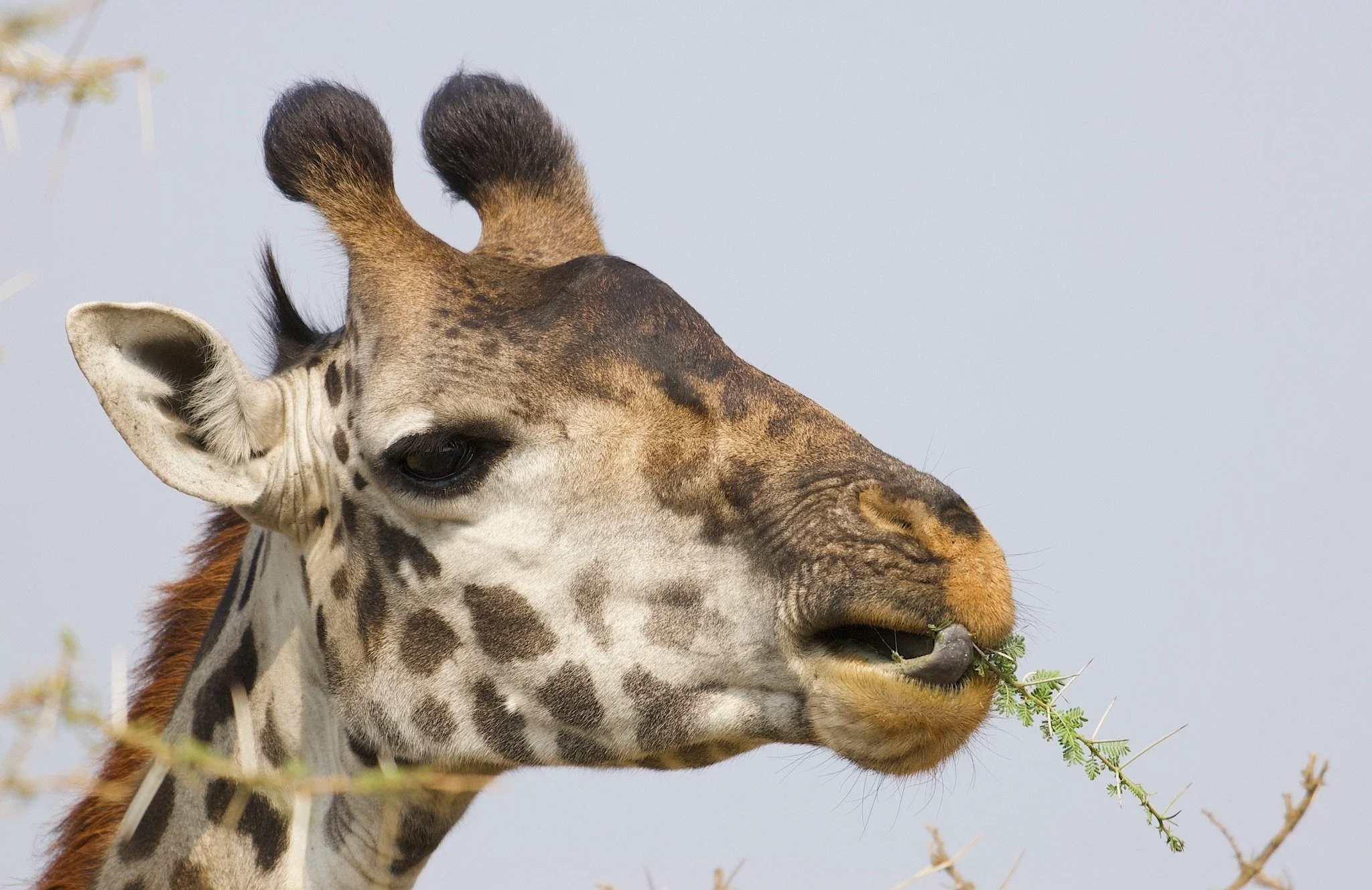
A giraffe uses its long tongue to eat leaves from a thorny Acacia tree in the African savanna.
A Battle is raging
Can you see it? On the plains of East Africa, an arms race is raging between the “muncher” and the “munched.”
The Acacia tree is the prize. Its umbrella-shaped crown is packed with tiny leaflets that serve as precious reservoirs of moisture in an arid landscape. The Giraffe, with its towering neck and constant need for hydration, is the ultimate invader. But the Acacia isn't going down without a fight.
The Battle of the Thorns
The Acacia’s first line of defense is obvious: sharp, intimidating spines designed to thwart browsers. But the giraffe is equipped with a prehensile, 18-inch tongue capable of delicately stripping leaves from between the thorns. It also possesses a tough, leathery mouth and "gooey" saliva that coats the thorns, allowing it to swallow them safely. (Imagine how miserable a sore throat would be for a creature with a six-foot neck!)
Chemical Warfare & Silent Alarms
When the Acacia senses an attack, it switches to chemical warfare.
The Poison: Internally, it releases tannins that make the leaves bitter and, if eaten in large quantities, toxic.
The Gas: Externally, the tree releases an ethylene gas into the air. Other Acacias downwind “smell” the signal and proactively release their own tannins, turning an entire grove inedible for up to two weeks.
But the giraffe is smart. It uses its long legs to move upwind, seeking out unsuspecting trees that haven't received the “silent alarm.”
The Tiny Bodyguards
The Acacia’s final defense is perhaps the most fascinating: Biting Ants. Some species of Acacia grow hollow, swollen spines that provide sweet nectar and shelter for colonies of aggressive ants. In exchange for room and board, these ants act as bodyguards, swarming the giraffe’s sensitive mouth and lips the moment it takes a bite.
The giraffe shakes off the insects, moves on, and the cycle begins anew.
It’s life and death on the Serengeti.