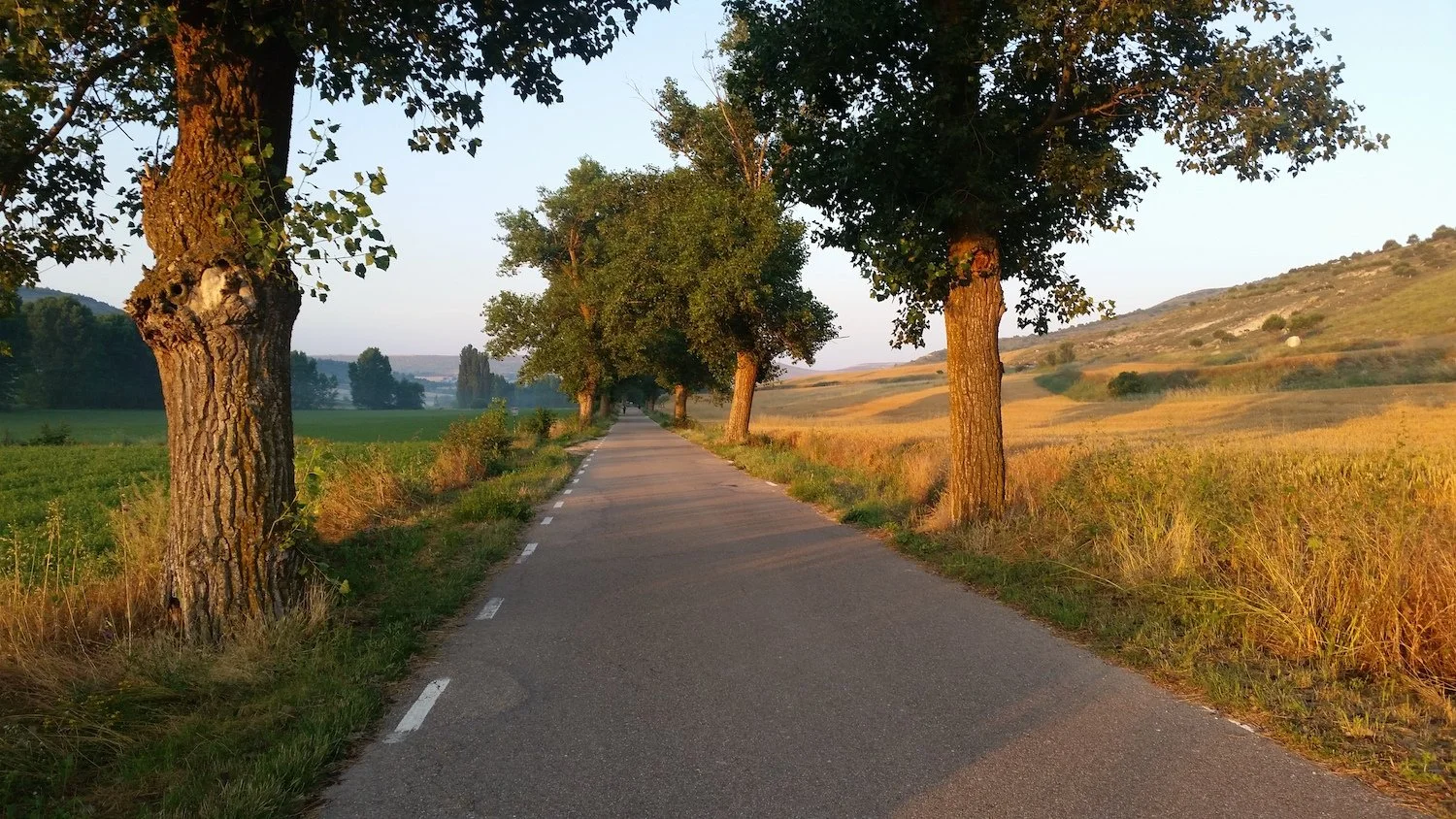
The road near the ruins of San Antón.
The peregrino does not walk across Spain without losing blood. Rashes, sprains, blisters, and bruises are par for the course—a rigor some might call self-mortification. It is a physical toll that has defined the pilgrim experience for more than a millennium.
Yet, modern ailments pale in comparison to the horrors of the past. One of the most terrifying was Saint Anthony’s Fire or ignis sacer (holy fire), a condition that made the skin feel as though it were being consumed by invisible flames. Tracking the namesake of this disease, its multiple identities, and the effort to treat it reveals a thin line between suffering and healing.
The Ruins of San Antón
Loaded with coffee and tortilla, Bob and I left our auberge in Hontanas under a sky washed clean by the night’s rain. The trail followed the Arroyo del Garbanzuelo ravine. It was a gorgeous morning on the Spanish Meseta.
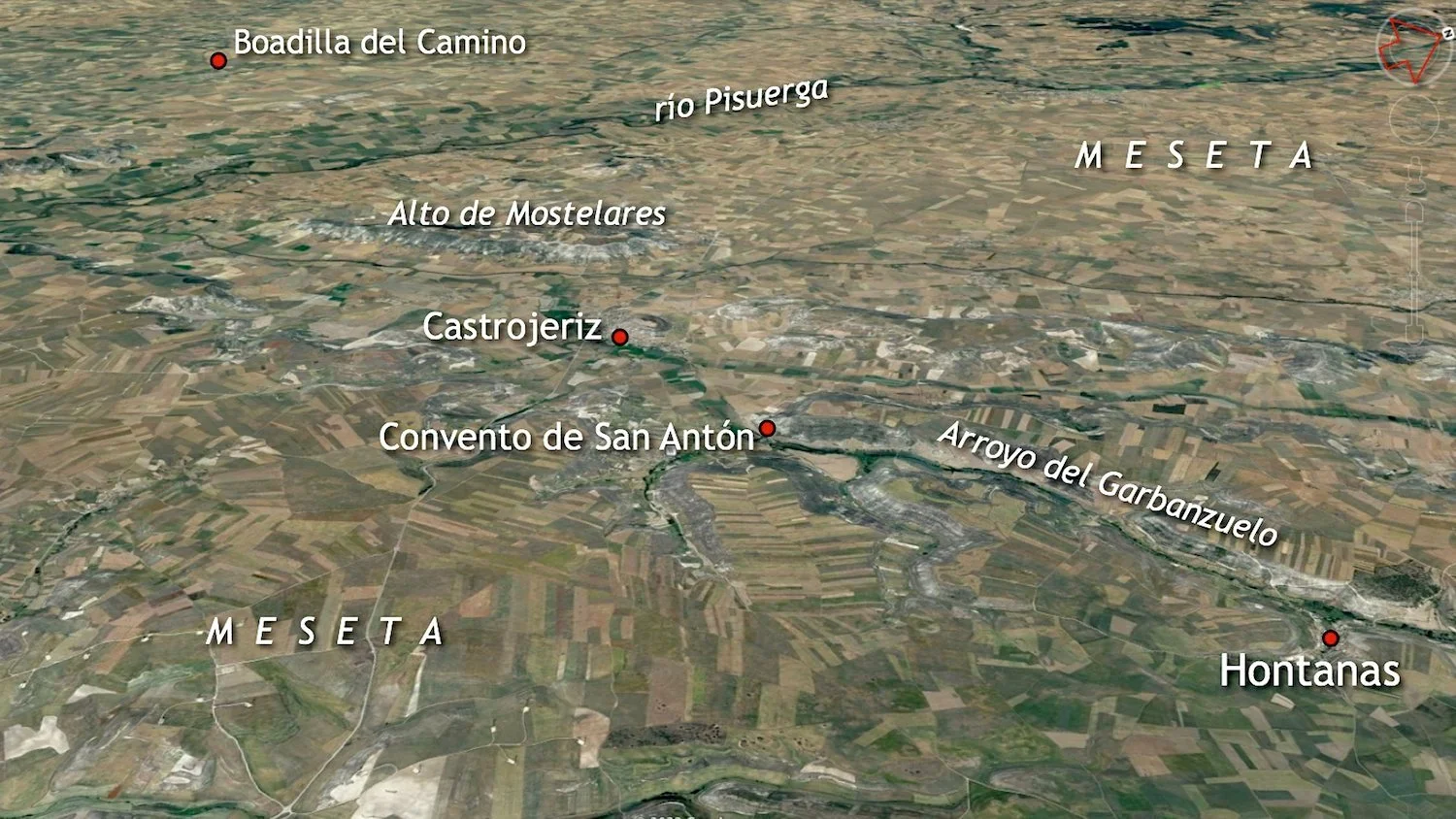
Map of places mentioned, courtesy of Google Earth.
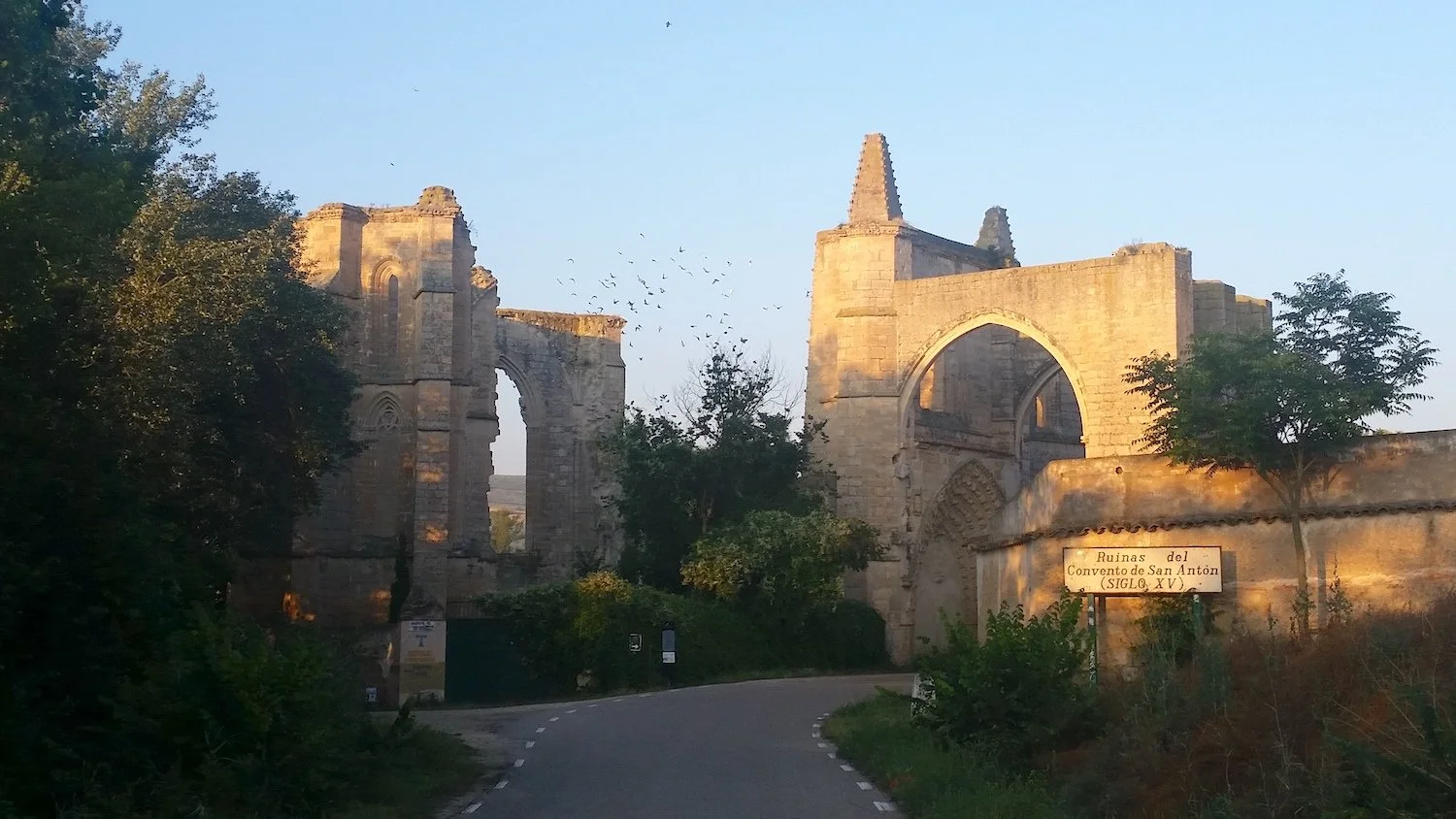
The path eventually carried us to the Ruinas del Convento de San Antón. These 14th-century ruins literally straddle the road, forming a gothic archway that pilgrims still walk through today. In its prime, this was a massive hospital and monastery dedicated to those suffering from the “fire.” Standing amidst the stone, one can almost feel the weight of the thousands who came here seeking a miracle for their burning limbs.
The Desert Father and the Namesake
The namesake of this center was St. Anthony of Egypt (born AD 251). At age twenty, he famously sold his possessions, gave the money to the poor, and retreated into the desert to live as a hermit. His life of intense prayer, isolation, and grueling fasts—which often led to vivid spiritual visions and “temptations”—made him a pioneer of Christian monasticism. Because he was credited with numerous healings and exorcisms, his name became a beacon for those seeking a cure for the "holy fire."
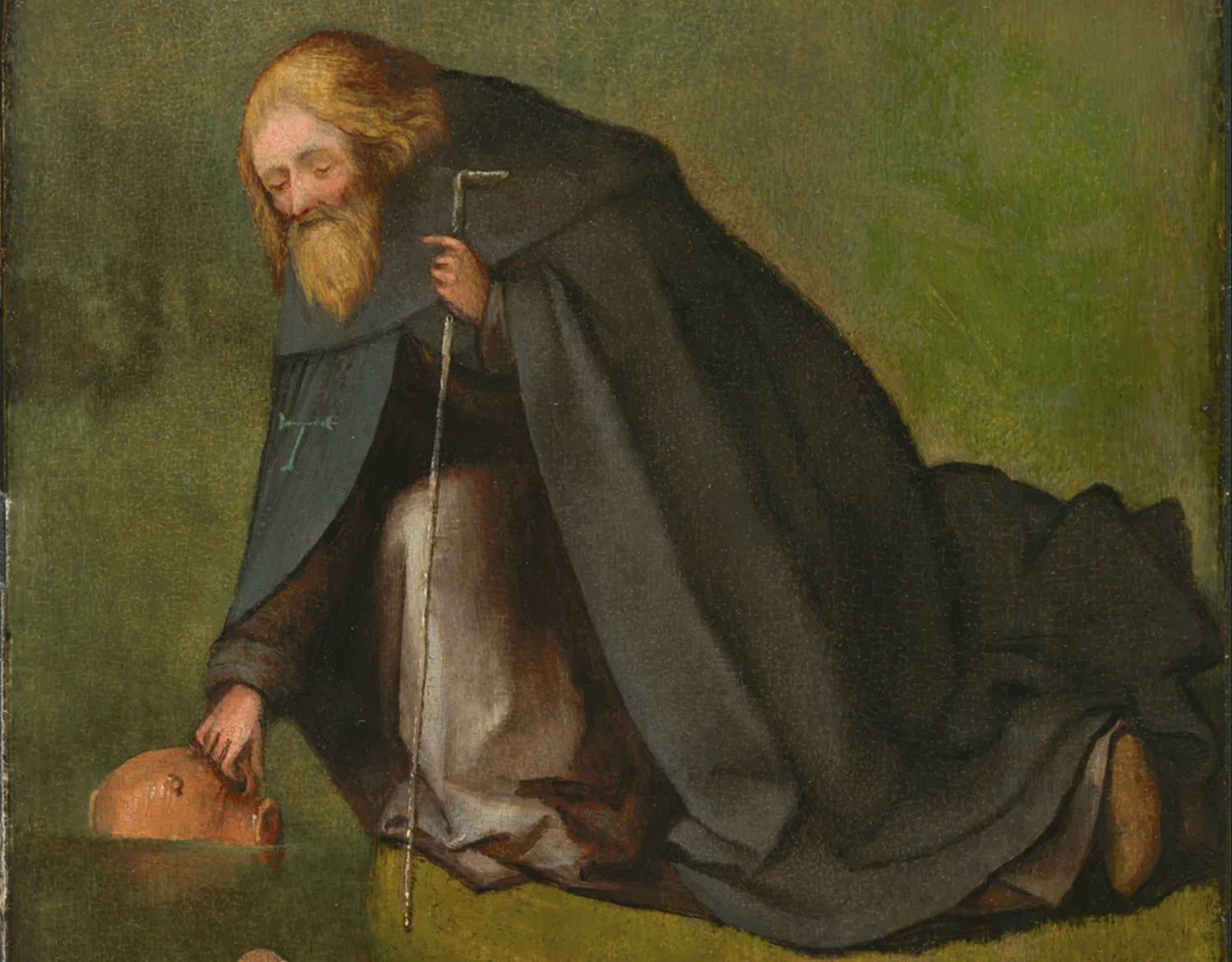
Detail from The Temptation of Saint Anthony by Hiëronymus Bosch (1500-1510). Image from here (accessed 4/7/2026).
A Disease of Many Identities
In the medieval period, Saint Anthony’s Fire was often interpreted as divine punishment. The excruciating burning sensation was likened to the fires of Hell, while the accompanying hallucinations and convulsions were seen as demonic possession.
Modern medicine now attributes these symptoms to two primary culprits:
Ergotism: Caused by fungal poisoning from eating rye grain contaminated by the Claviceps purpurea fungus. In its gangrenous form, blood vessels constrict, prompting fiery pain followed by numbness as extremities turn black and shrivel. In its convulsive form, victims suffer from spasms and seizures.
Erysipelas: An acute bacterial skin infection caused by Streptococcus (strep). It presents as a bright red, swollen, and warm rash, often accompanied by fever and chills.
Healing on the Camino
The effort to treat those suffering along the Camino was led by the Order of Hospitallers of St. Anthony. In the 15th century, they built sanctuary spaces like the Convento de San Antón where pilgrims received care under the Saint’s banner.
Treatment involved a combination of spiritual intervention, topical balms, and dietary changes. Prayer and communal support was rooted in Christian faith and practice. Balms soothed itching and inflammation. Wine infused with analgesic herbs helped with blood flow and pain.
But ironically, much of the “miracle healing” in places like San Antón was simply the result of changing diet. The monks fed pilgrims clean, wheat-based bread, which removed the contaminated rye from their systems.
In the shadow of these gothic arches, science and faith met in a loaf of bread, stopping the fire before it could consume the traveler.
¡Buen Camino!
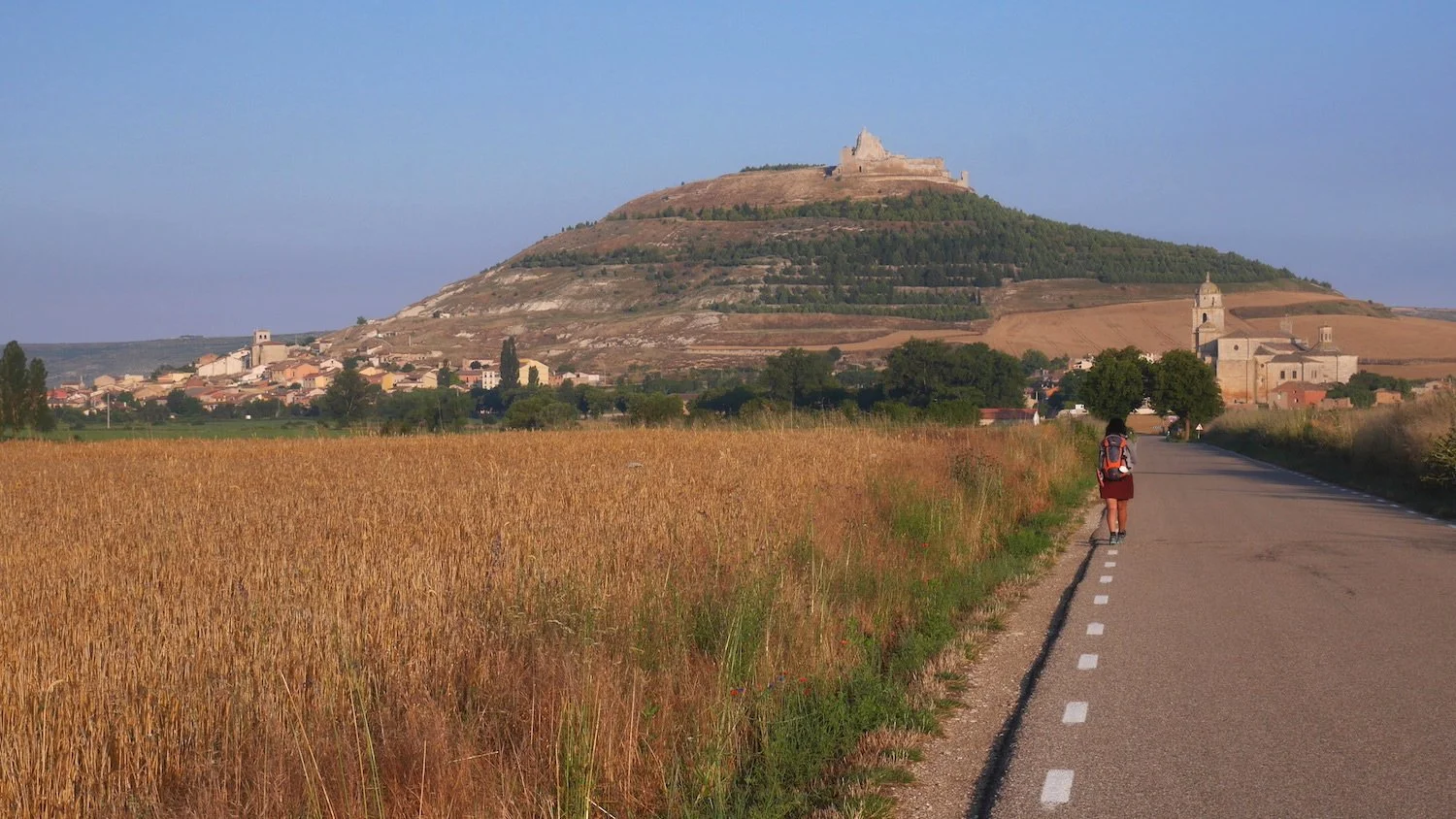
Approaching the site of Castrojeriz, surrounded by fields of cereal. On a hill above the village rest the remains of a ruined castle (castillo) from the 9th c AD.
*For an overview, see the work by Alessandra Foscati, St Anthony’s Fire from Antiquity to the Eighteenth Century. Francis Gordon, translator (2020).
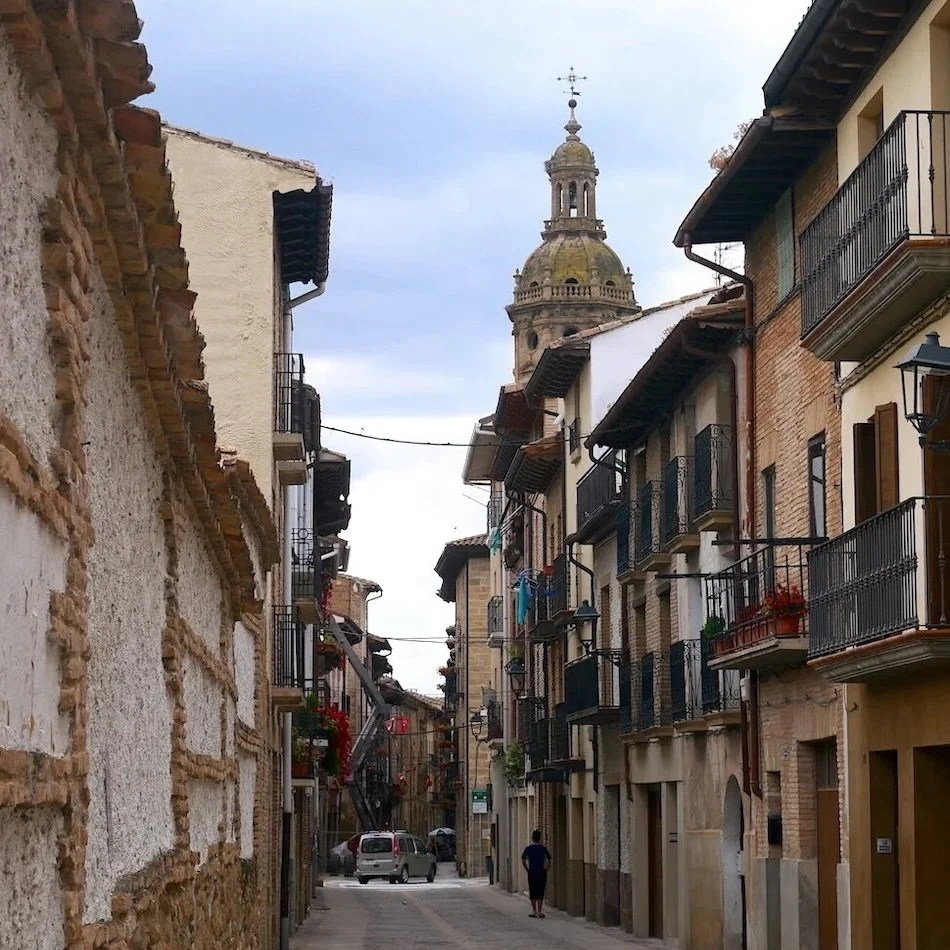
Bob and I walked the Camino Francés in the summer of 2018. The stories posted here were reconstructed from my notes, photographs, and memories.