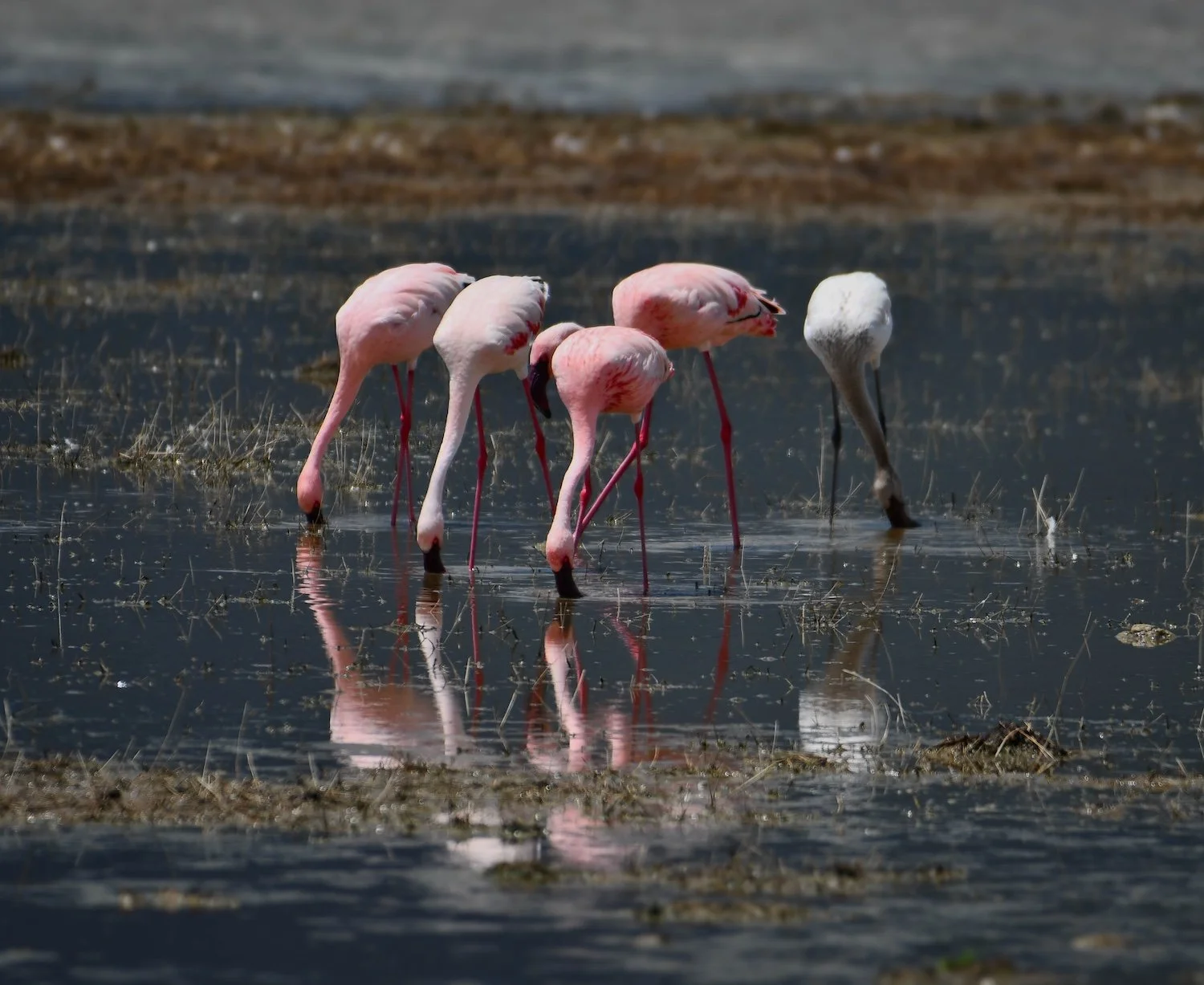
Flamingos appear in a living watercolor of pale whites, soft pastels, and fiery corals. These individuals are feeding in the alkaline waters of Lake Magadi.
When you lean back to watch Lesser Flamingos (Phoeniconaias minor) feeding in Lake Magadi inside Tanzania's Ngorongoro Crater, your eyes are treated to a gradient of color.
While we think of flamingos as bright pink—blame the plastic yard variety?—this shot reveals the truth: a single flock is a watercolor of pale whites, soft pastels, and deep, fiery corals. Flamingos are actually born with gray, fluffy feathers. Their pink transformation only happens over time as these long-legged waders process pigments from their diet of algae and brine shrimp thriving on the mineral-rich crater floor.
The variation in shade among flamingos tells a fascinating story of life inside the caldera. Younger, immature birds sport muted, off-white tones because they haven't yet consumed enough pigments to turn pink. Meanwhile, the most vibrantly colored ones are healthy adults in their prime. You might even spot a few washed-out, pale adults; these may be dedicated parents that have literally pumped their own color reserves into "crop milk" to feed their chicks.
For African birdwatchers, it is easy to see this stunning spectrum as a reflection of intentional design, where even a simple biological process is woven into a visual masterpiece.
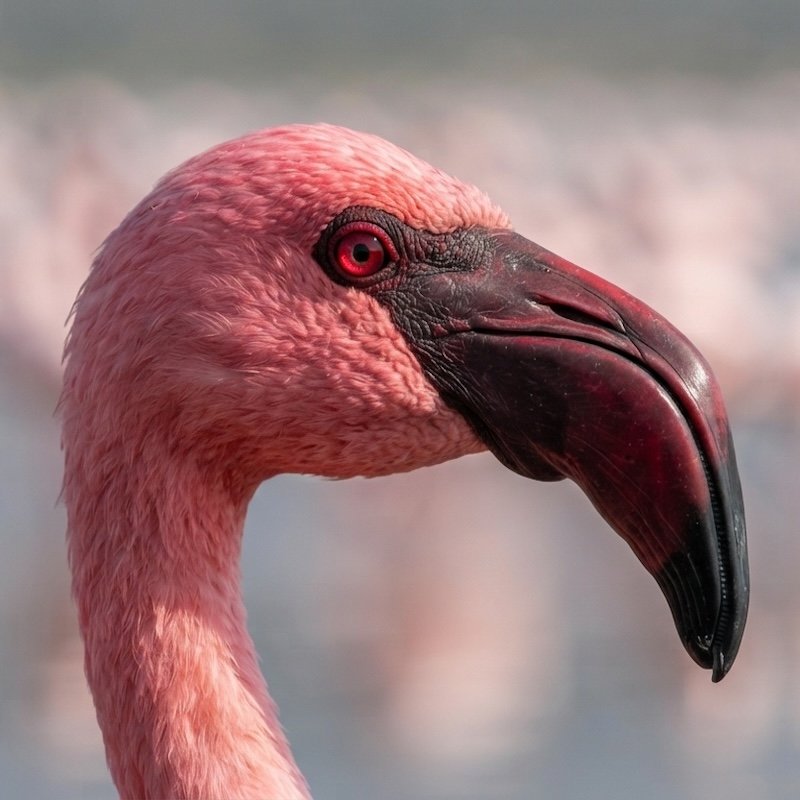
Want a real surprise? Discover the sophisticated feeding mechanism of the flamingo. See our post: “Filtration Experts: How Flamingos Eat.”
Time is running out! If you’d like to participate in our Tanzanian safari scheduled for June 3-13, 2027, we need to hear from you. Lake Victoria, the Serengeti, and Ngorongoro Crater, are on our agenda as we photo-hunt big cats, small birds, and everything in-between. See the link here for brochure and more information or email us at BibleLandExplorer@gmail.com.