My last day in Aswan was quiet.
Across Egypt and the Muslim world, today is the Day of Arafah, the prelude to the feast known as al-Adha. It is a time of collective stillness. Millions are abstaining from food and water in what is considered the most virtuous voluntary fast of the Islamic calendar. This is a single day of devotion believed to grant forgiveness for both the year past and the year to come. Because of this, the usual chaotic rhythm of the city has slowed to a crawl. Traffic is sparse, voices are low, and people are saving their strength for the massive celebrations awaiting them tomorrow.
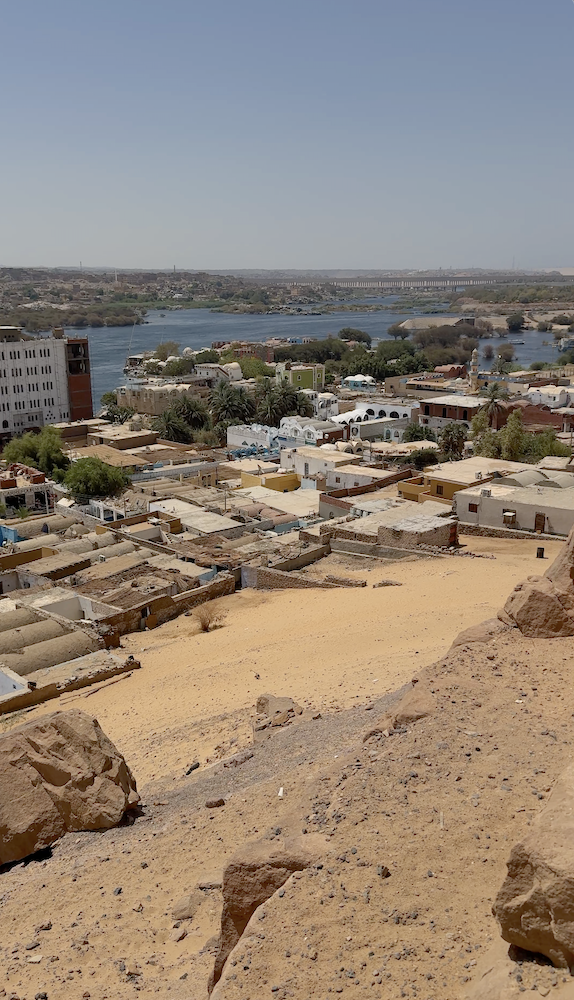
Gharb Suheil sits on the bank of the Nile under the Low Dam.
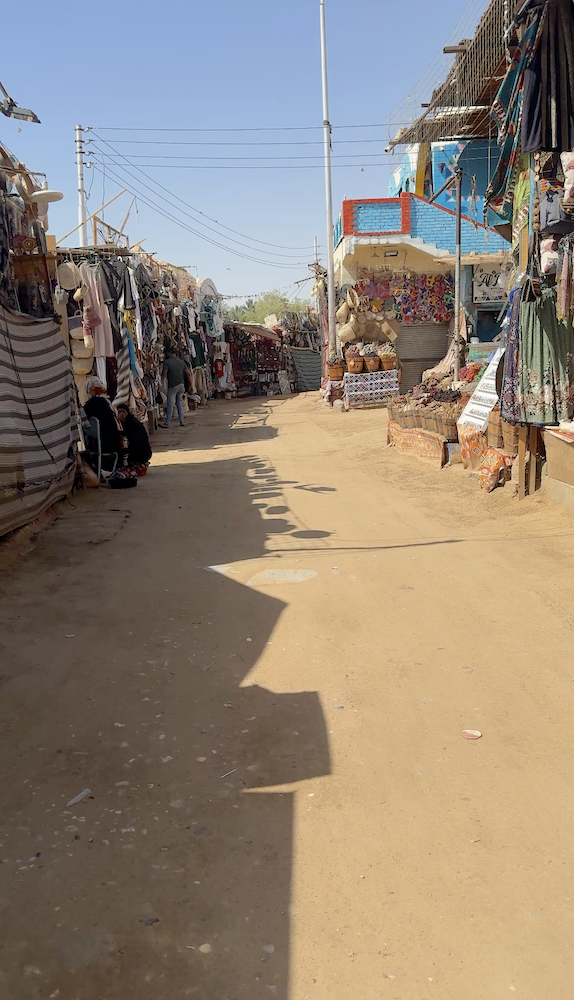
The market of Gharb Suheil, often crowded and boisterous, was closed. The streets were empty.
I traveled up the Nile by small motor boat to Gharb Suheil, a Nubian village sitting under the shadow of the Aswan Low Dam. The community is a throwback to traditional life; houses are built of stone, clay, and sand. Arched roofs are often covered with reeds or built in shapes that are “sun resistant.” I had come to meet the family of my friend and local Nubian guide, Farid.
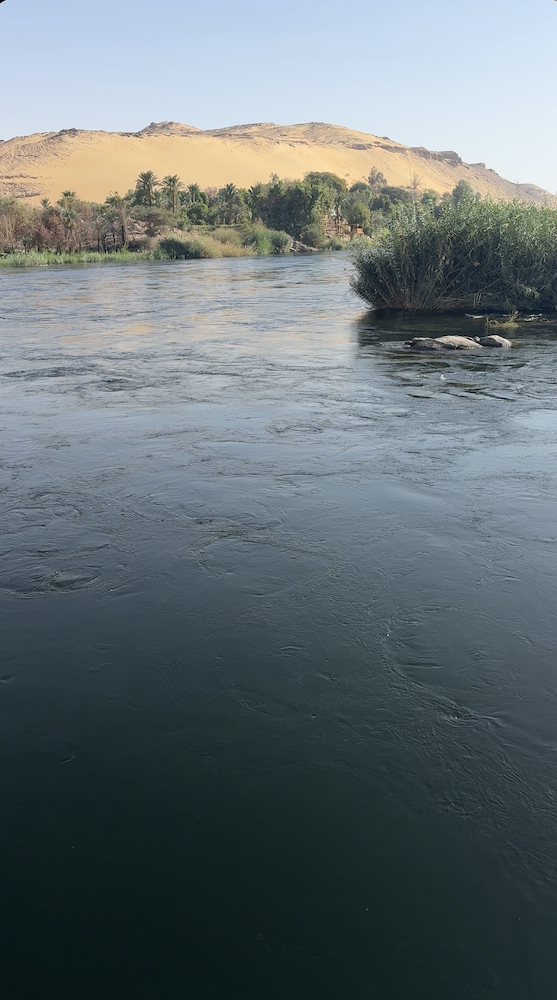
I passed again through the boulders that once marked the first cataract of the Nile.
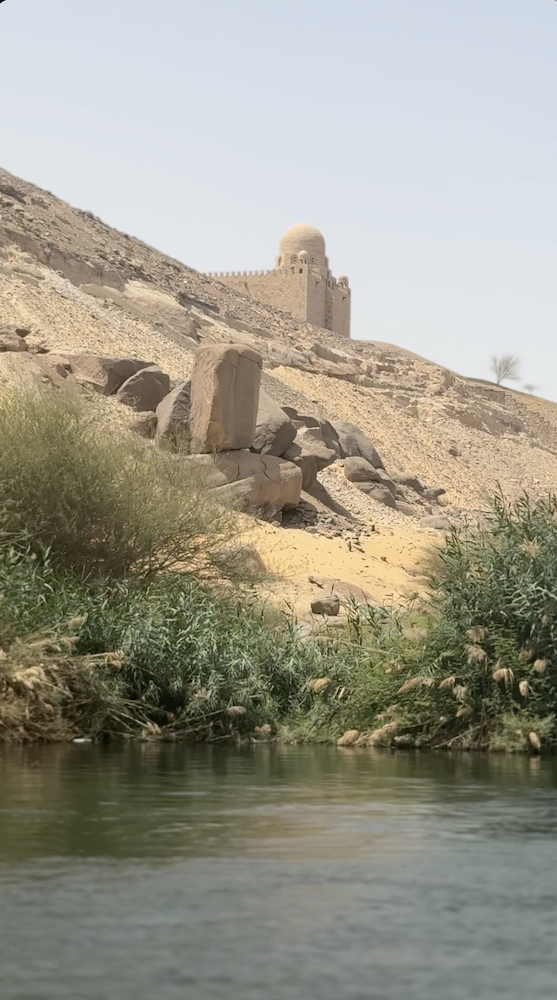
The desert confronts the river directly in Aswan. Here, the Mausoleum of Aga Khan looms upslope.
At the home of Farid’s uncle, we sat together and listened to stories of Nubian life before the great dams permanently altered the landscape. There was a bittersweet beauty to the visit; his uncle's house is isolated and ancient, but has a limited future. It is slowly being swallowed by desert sand. A shifting dune has filled all but a single room. Despite this, his spirit seemed content. He prefers living alone on the edge of the world, net-fishing the waters of the Nile, watching the camels pass by, and resting in the stillness.
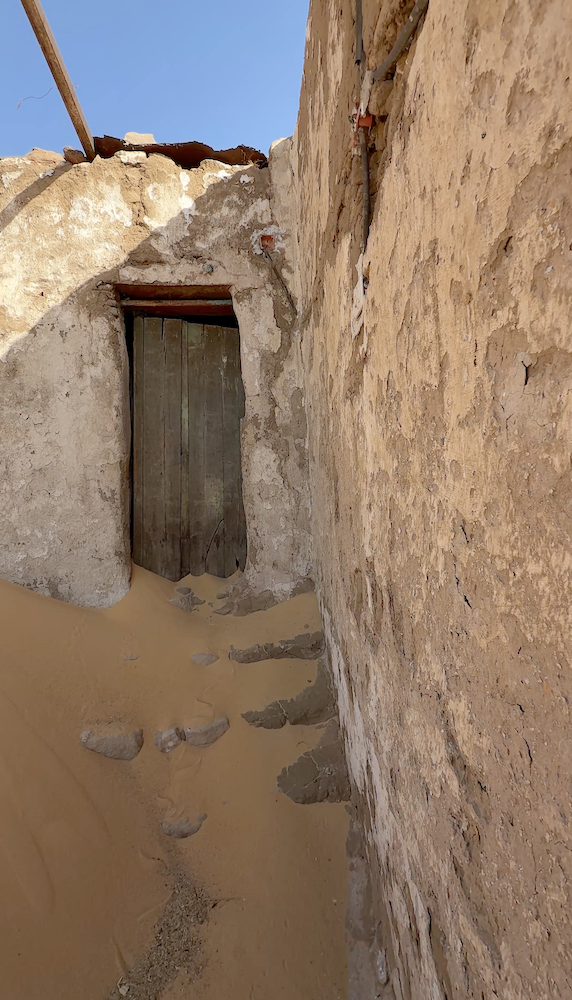
His house of stone and mud. Loose sand tumbling down from above has filled all the spaces but one.
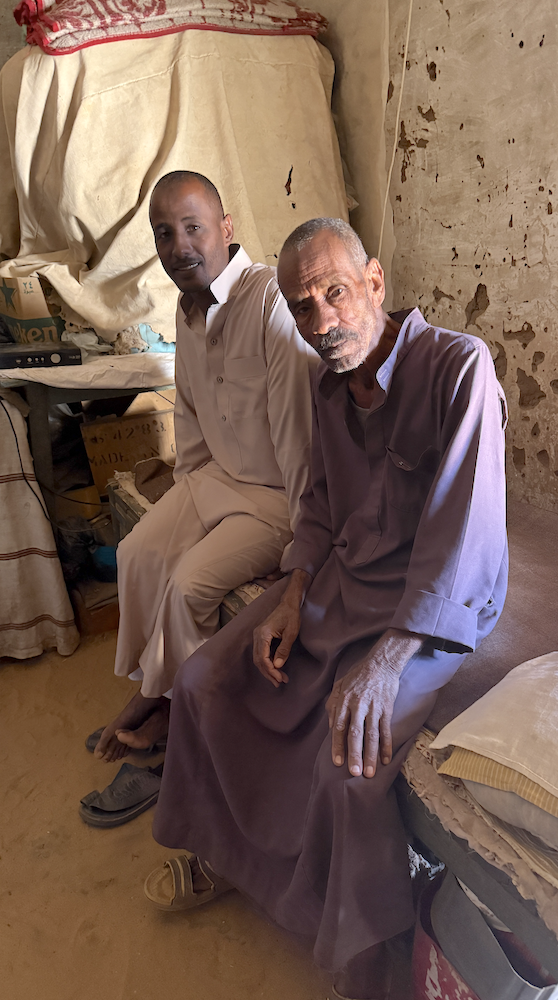
Farid and his uncle in his single-room home.
The atmosphere shifted from nostalgic to anticipatory at the home of Farid’s grandmother. The women sat on the ground outside, in the shadow if a tree. One was washing clothes in a bucket. Inside the courtyard the air was warm with the scent of kabed, a traditional Nubian bread being baked in massive quantities for tomorrow's feast. I learned its sacred purpose: immediately following the early morning holiday prayers, family groups will slaughter sheep and cows. The first breakfast of the holiday will feature fresh offal—liver, kidneys, and heart—seared with local spices and caramelized onions. The hot, freshly made kabed will serve as vehicle, used to scoop up that celebratory first meal.
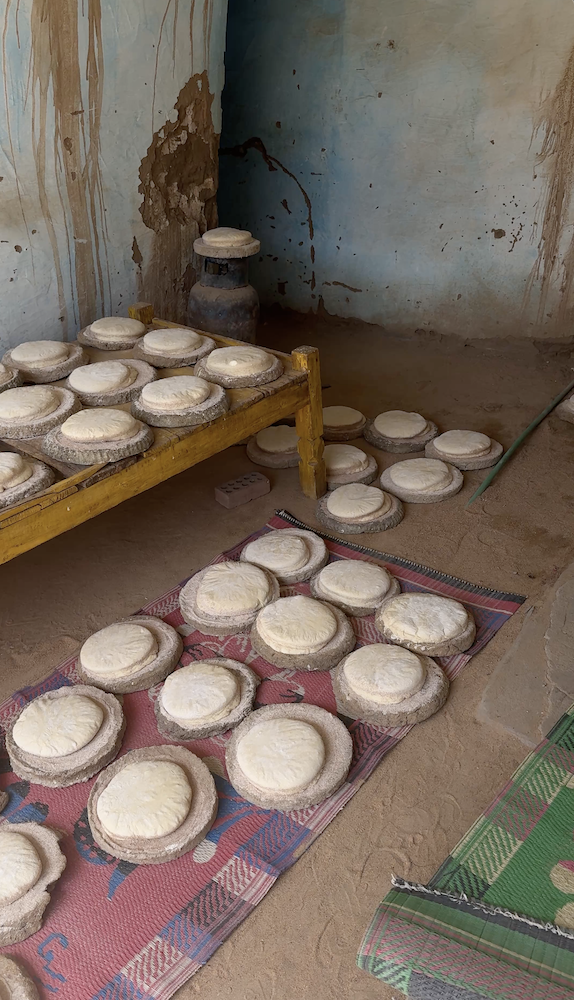
Loaves of Nubian kabed are prepared for baking. It is a thick, rustic flatbread.
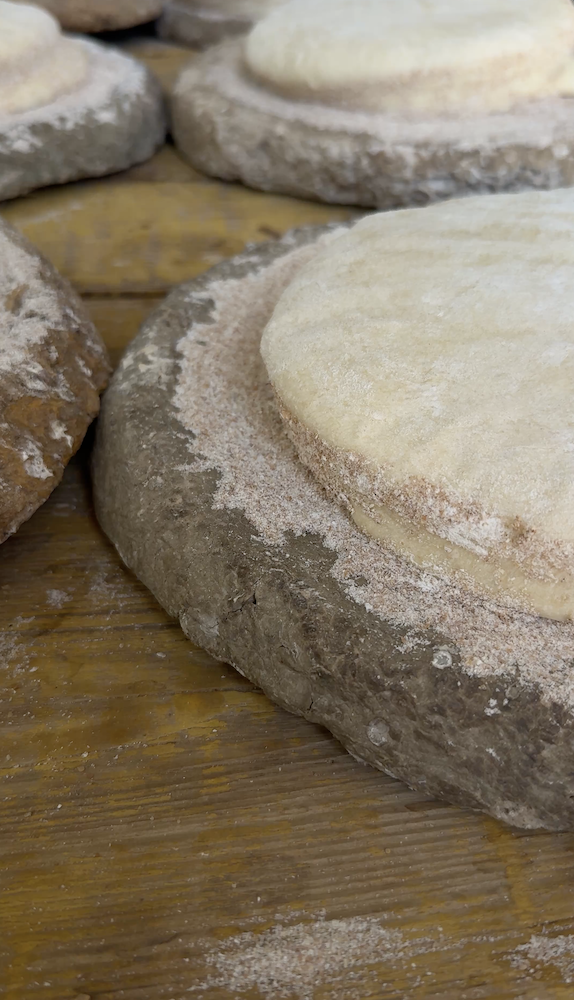
Kabed is traditionally cooked on a dokah or disk of dense clay.
Farid drove me back to my hotel, navigating the streets of Aswan in his own version of a time machine: a beautifully weathered 1981 Peugeot. It was the perfect, slow end to a day—like this town—suspended between yesterday and tomorrow.
I washed my own clothes in the sink and rested.
As I write this note, darkness has fallen. I sit on a wicker chair outside my door. I listen to the call of prayer drifting across the Nile.
We visited Gharb Soheil with a group on a busy day last week. On that occasion, everyone had the opportunity to touch or hold a baby crocodile. Check out that experience here, “Hold a Baby Crocodile.”
We plan to be back in Egypt in 2027. Seats are available. To learn more about these or other trips with Bible Land Explorer, follow the link here. Discover the place where faith begins!