Yesterday, we had the opportunity to wander through the Greco-Roman Museum of Alexandria, Egypt. Closed for renovation for nearly two decades, its recent reopening was met with widespread applause. In this case, the meal was worth the wait.
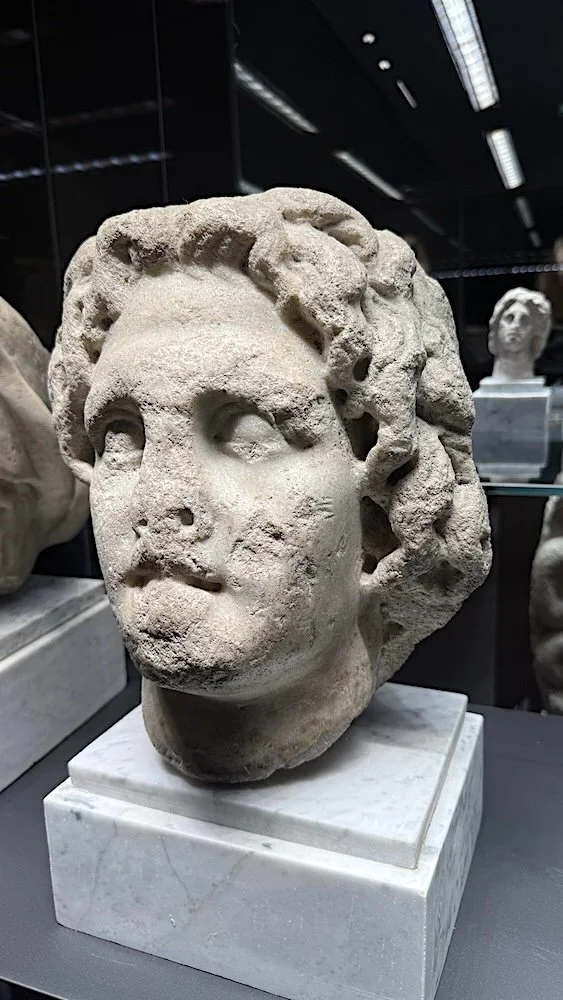
Alexander the Great is featured large in the city that bears his name.
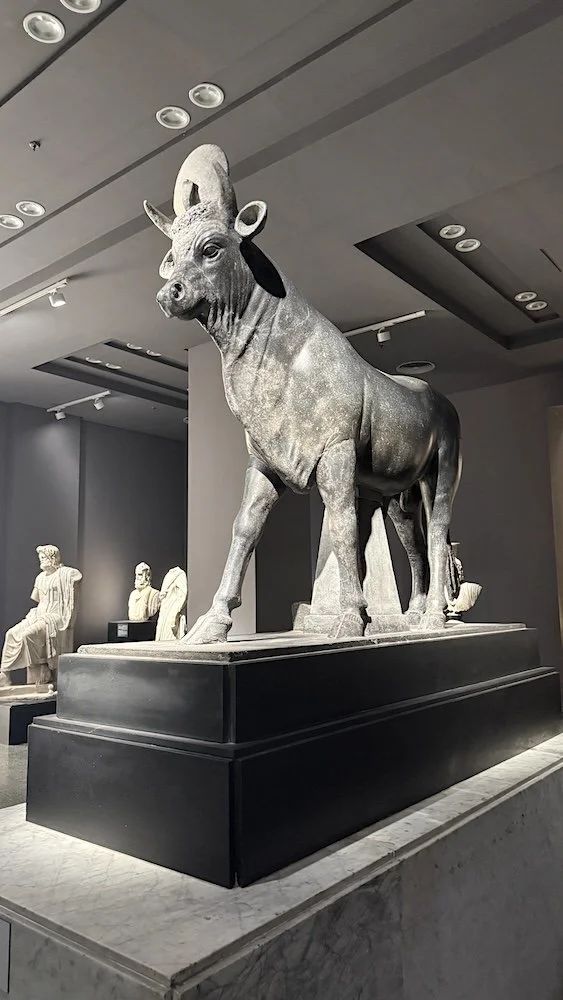
This sculpted Apis Bull is a fusion of Egyptian, Greek, and Roman traditions.
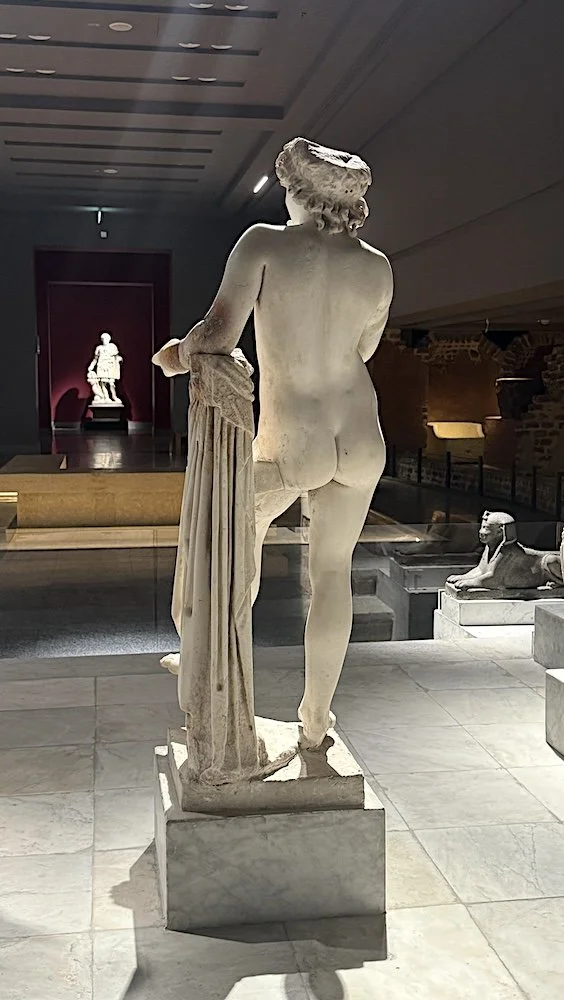
A statue of Dionysus stands in a characteristic pose, leaning against a draped support.
The Mosaic Floor of Berenike II
Out of the thousands of artifacts on display, nothing caught my eye quite like the Mosaic Floor of Berenike II. This 2,200-year-old masterpiece defines ancient royal propaganda.
Discovered in 1918 in the ancient city of Thmuis (modern Tell Timai) within the Nile Delta, this vibrant circular mosaic (emblema) was crafted around 200 BC. Today, a two-by-two-meter section of the floor hangs on the museum wall. The detail is so incredibly fine that it resembles an oil painting rather than stone artistry.
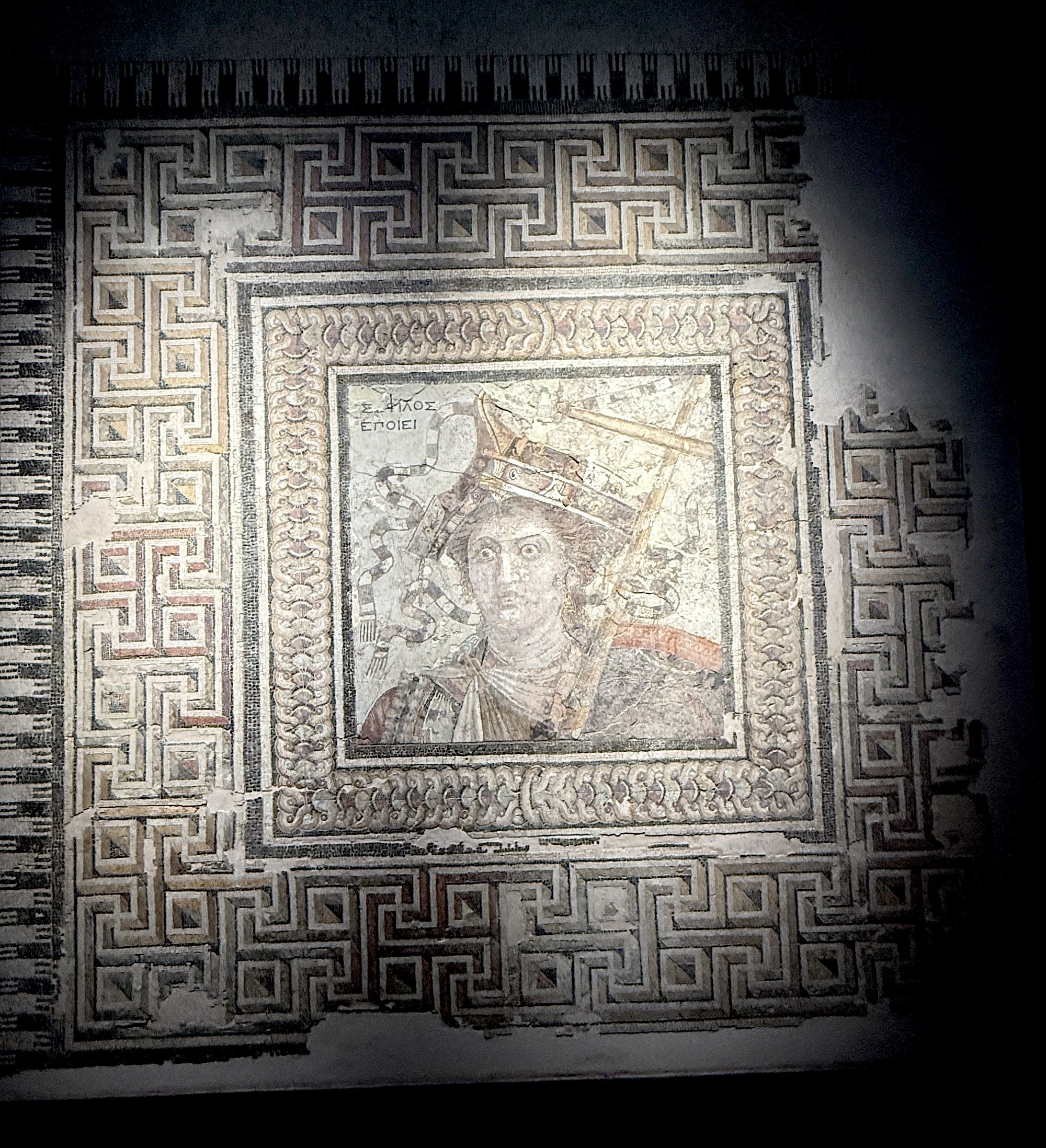
The portrait of Berenike II in the center of the floor.
Artistry in Micro-Tiles
The mosaic is a prime example of opus vermiculatum—a sophisticated technique using tiny, custom-shaped stone tiles. The artist used these miniature stones to capture realistic shadows, the soft drape of fabric, and a fierce, striking expression on the queen's face. Just look at her eyes! Wowzer!
To ensure his genius wasn't forgotten, Sophilos did something incredibly rare for ancient craftsmen: he signed his work. The words Sophilos epoiei, meaning “Sophilos made it,” are clearly set in the upper left corner of the portrait square.
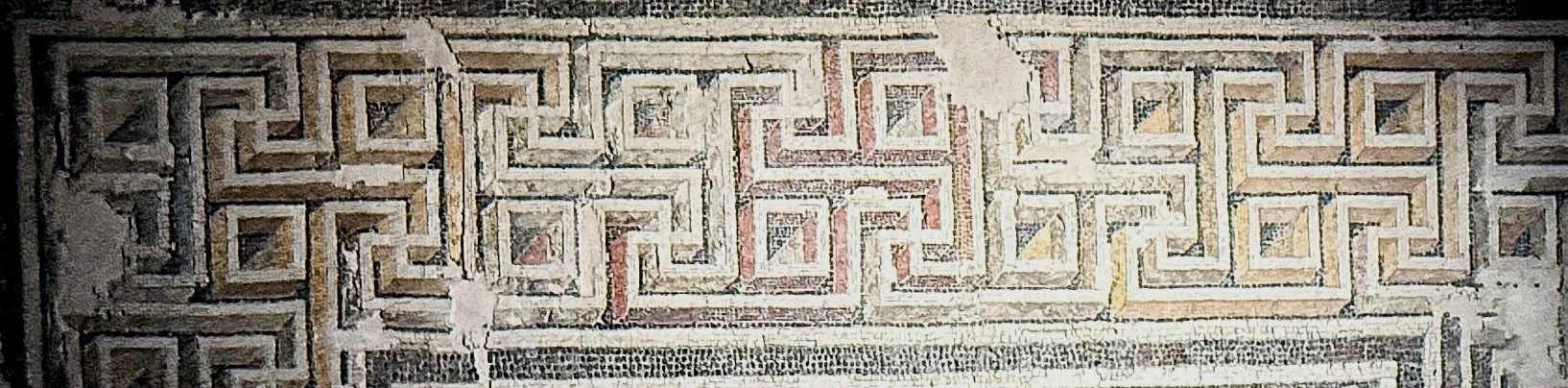
Even the framing geometric meander offers detail and depth. Shaded squares are nested inside swastika stripes.
The Ultimate Power Dressing
Queen Berenike II didn't just rule Egypt alongside her husband; she was a formidable force in her own right. The mosaic captures her not in traditional royal robes, but packed with intense military and maritime symbolism:
The Battleship Crown: She wears a crown shaped like the prow of a warship.
The Anchor Brooch: Her military cloak is pinned with a distinct anchor-shaped brooch (on her right shoulder).
The Message: She is portrayed as the literal personification of Alexandria’s naval dominance over the Mediterranean.
The panel was originally found in the villa of a wealthy individual, likely someone closely connected to the ruling Ptolemaic dynasty. Scholars believe it commemorates the Third Syrian War (246–241 BC). When King Ptolemy III left Egypt to fight, he left the entire kingdom in the capable hands of his firm queen.
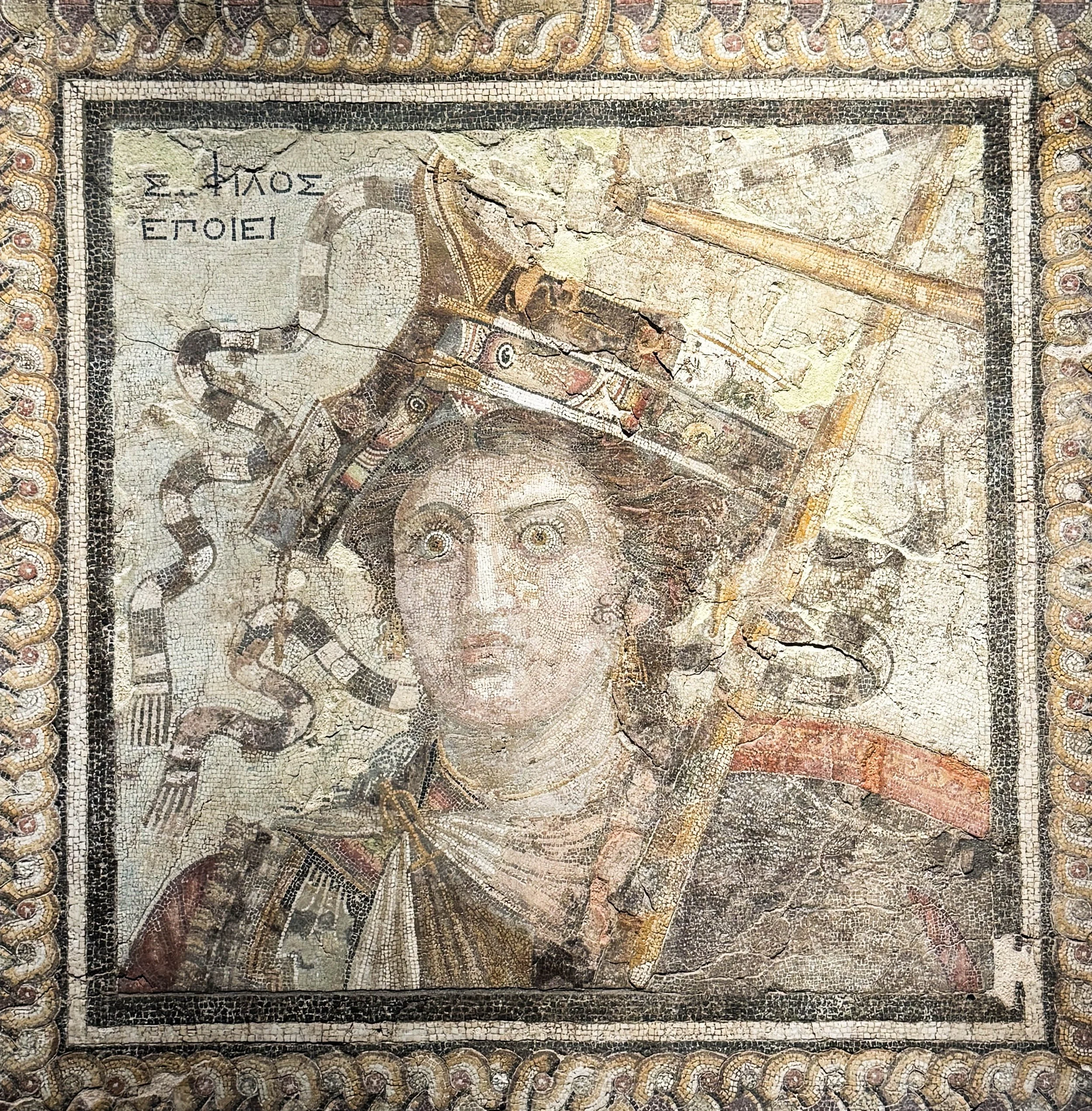
She has a battleship on her head and cannons for eyes!
A Luxury Plot Twist
While this image projected raw military might to the ancient world, modern research suggests a clever local twist. The city where it was unearthed, Thmuis, was a global center for the luxury perfume industry. To the locals, Berenike's absolute control of the seas wasn't just about winning wars—it was about protecting the vital trade routes that brought exotic ingredients to their factories.
epilogue
In her lifetime, Berenike II was both powerful and popular. She gave birth to four children. Among them was her son, remembered as Ptolemy IV. After ascending the throne, he killed her with poison.
*I distinctly remember this image from the cover of F. W. Walbank, The Hellenistic World (1981). It was a standard grad-school text back in the day. A copy still sits on my shelf.
Egypt’s museums may be great, but this one is grand! Check out our video review of the opening: “Egypt’s New Museum: It’s Grand!”
We plan to be back in Egypt in 2027. Group excursions are planned for Jan 1-9, Jan 22-Feb 3, Mar 30-Apr 8, and Oct 19-28. Seats are available. To learn more about these or other trips with Bible Land Explorer, follow the link here. Discover the place where faith begins!