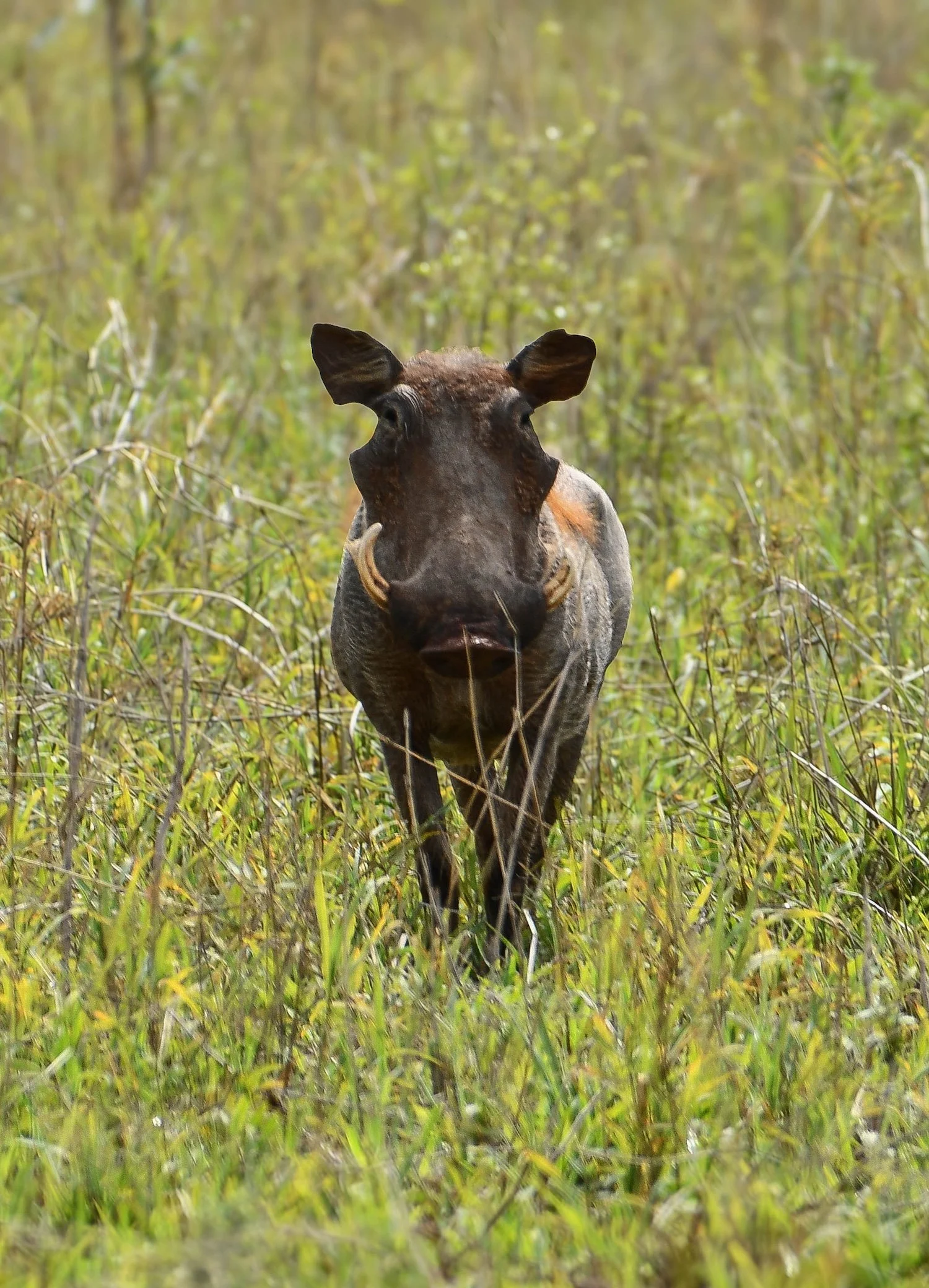
Meet one of the savanna’s sharpest residents! Captured in the Serengeti, this common warthog uses its upper and lower tusks for everything from digging roots to fending off predators.
How These Little Tuskers Work
Did you know that the common warthog’s tusks are the multi-tool of the African savanna? These continuously growing canines come in a double set: a sweeping upper pair that looks like a handlebar mustache, and a razor-sharp lower pair tucked underneath.
When a warthog chews, the teeth rub together like a built-in sharpener, keeping the bottom tusks ready for serious business—like fending off hungry lions. And when these chompers aren’t on bodyguard duty, they double as garden shovels for digging up tasty roots and renovating old aardvark burrows into cozy bedrooms.
Oh, and by the way, the common warthog (Phacochoerus africanus) is remarkably clever by animal standards. These wild pigs are sharp in more ways than one!
See a Warthog for Yourself
I captured this shot in the Serengeti earlier this year, and we will be returning to Tanzania from June 3–13, 2027. We’ll four-wheel through the iconic parks of the safari circuit—tracking big mammals—and then enjoy some incredible bird-watching on the waters of Lake Victoria.
If an African safari is on your wish list, you won’t do better than this. We travel in small four-wheel-drive vehicles with local guide-drivers and glamp in style out in the bush. It’s a unique blend of luxury travel and 19th-century adventure!
What truly sets us apart, however, is our foundation in Creation Care, the belief that protecting the natural world is an Christian act of obedience, worship, and love.
Wake up! Our period of registration is coming to an end. Find a full description of our 2027 safari itinerary, costs, and registration forms at the link here.