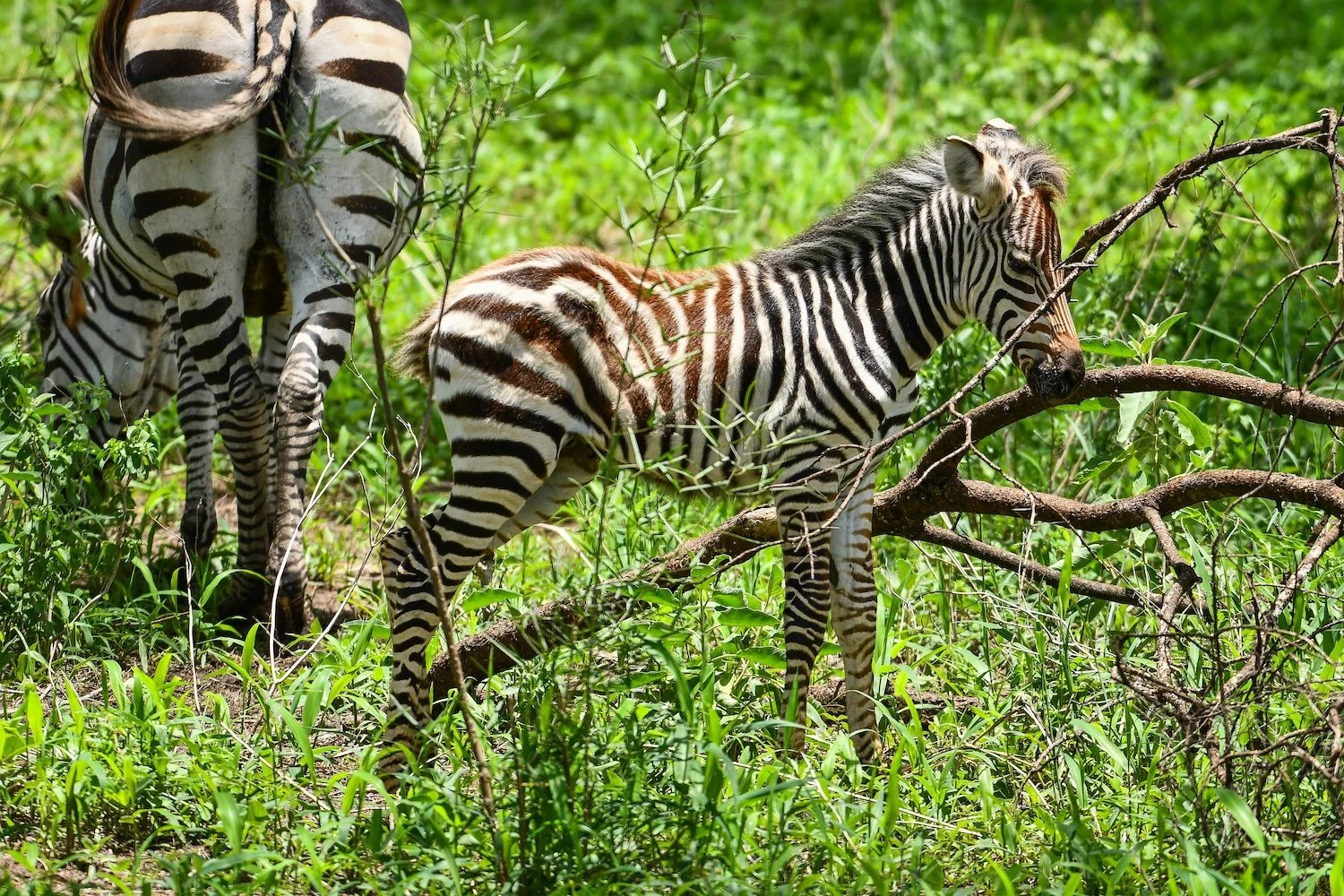
Born to run. Within an hour of hitting the ground, a precocial zebra foal is already standing tall, alert, and ready to keep pace with the herd.
Precocial, Defined
First off, let me save you a trip to the dictionary.
In the biological world, precocial describes animal offspring that are born relatively mature, mobile, and capable of independent activity almost immediately after birth or hatching. The opposite strategy is altricial—referring to babies that are born entirely vulnerable and completely dependent on parental care. As any mum or mamaw can testify, human babies are a very altricial. They require lots of help to get going! Zebra foals, on the other hand, are amazingly precocial. Here’s how they manage it.
Born with Wheels Down
To survive on the open African savanna alongside predators like lions and hyenas, these incredible animals undergo a long 12- to 13-month gestation period so they can hit the ground running—literally. Zebras are born with their eyes wide open, have sharp sensory awareness, and legs that already reach nearly 90% of their adult length (which is why, incidentally, the young ones look so disproportionally rangy and cute!).
A newborn zebra foal can stand within 10 to 20 minutes of birth. In one hour, they can run at full speed and keep pace with the moving herd. They are even born with the immediate mental sharpness to recognize their mother's unique stripe pattern, allowing them to instantly pick her out from a crowded, chaotic stampede.
The Payoff
This rapid readiness is a brilliant trade-off. While a zebra mother invests massive amounts of energy into a year-long pregnancy, the payoff happens the moment the foal hits the dirt. By shifting the heavy lifting of development to the safety of the womb, zebras minimize the time their newborns spend as helpless targets. It’s an upfront investment, but one that gives these vulnerable animals the fighting chance they need to survive from day one.
It’s a pretty good design, don’t you think?
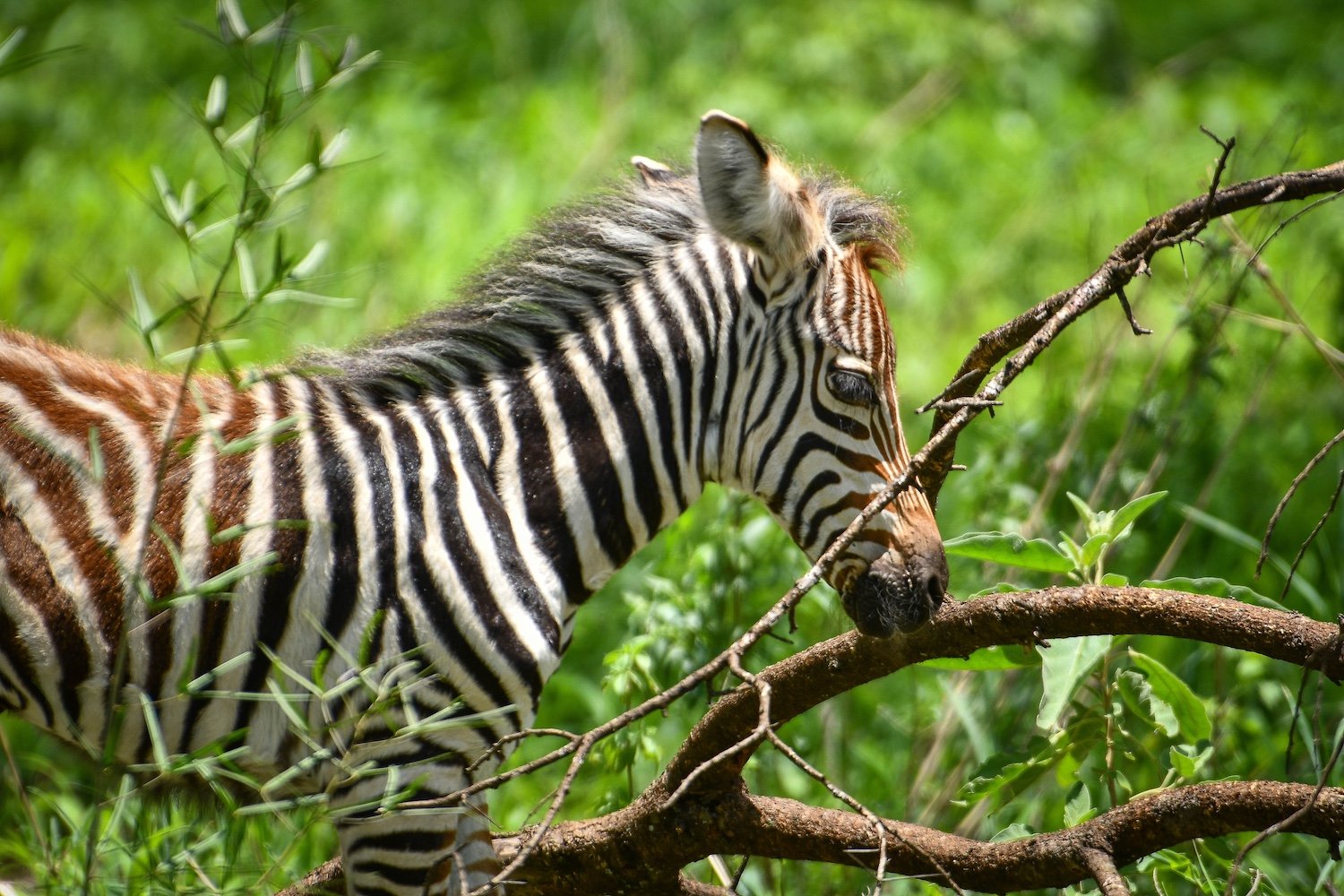
A zebra foal's face is adorned with soft, fuzzy stripes that start out a warm brownish color before darkening to black as it grows.
If zebras facinate you, check out this post: “The Biological Barcode: Why No Two Zebras Are Alike.”
Bible Land Explorers are headed back to Tanzania June 3-13, 2027. Lake Victoria, the Serengeti, and Ngorongoro Crater, are on our agenda as we photo-hunt big cats, small birds, and everything in-between. We are now receiving early registrations for this exclusive small-group adventure. See the link here for brochure and more information or email us at BibleLandExplorer@gmail.com.