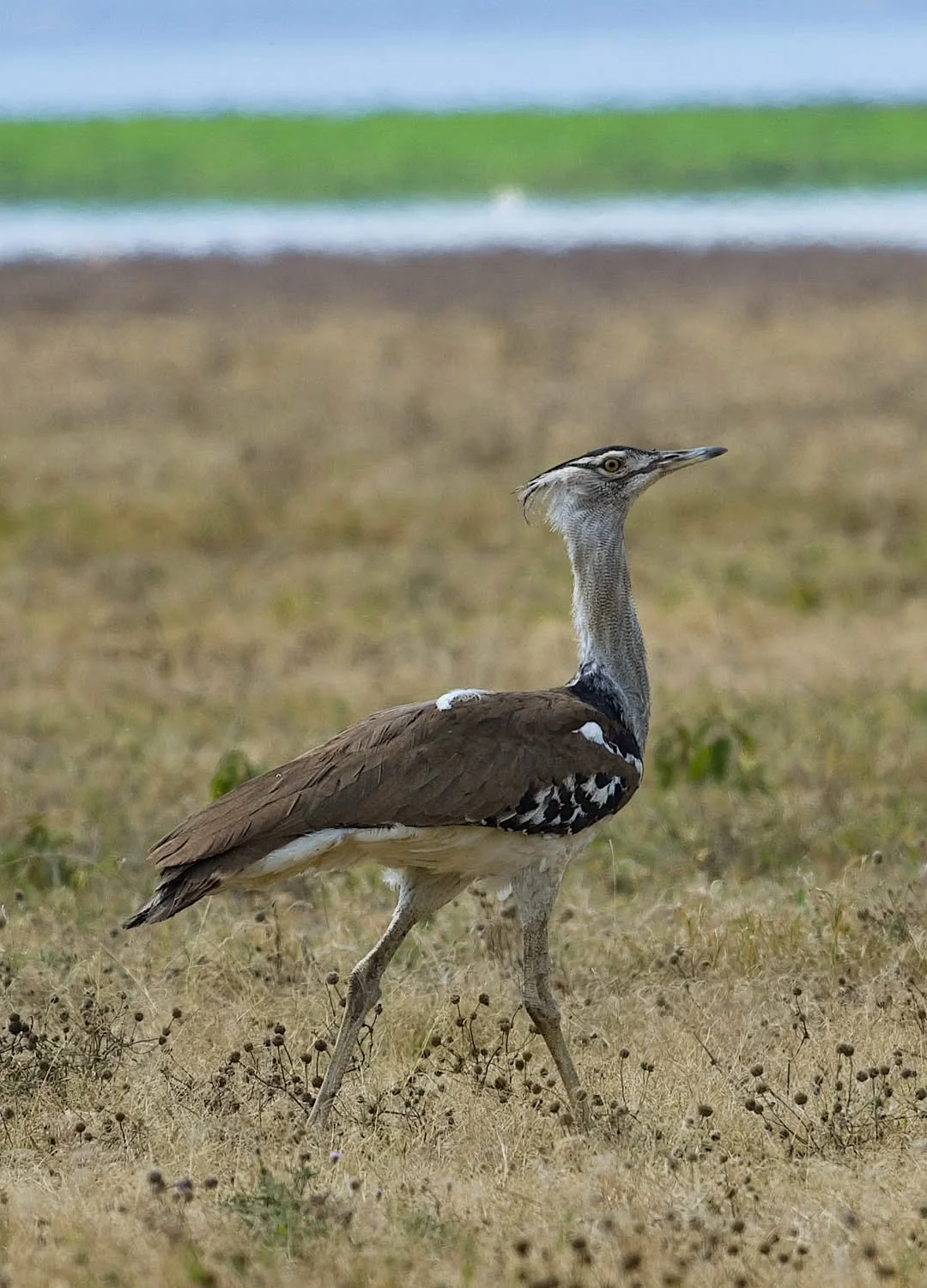
A large Kori Bustard (Ardeotis kori) walking along the edge of Lake Magadi in the Ngorongoro Crater, Tanzania.
Easy there, big boy!
While this photo might not immediately offer a sense of scale, make no mistake: this bird is a giant. Standing over a meter tall, the Kori Bustard (Ardeotis kori) holds the title of the largest flying bird in Africa. While the ostrich is technically larger, it is flightless; the Kori Bustard, weighing in at an incredible 40 pounds, is arguably the heaviest creature capable of powered flight on Earth today.
The T-Rex of the Ngorongoro Crater
I was delighted to find this individual striding along the mineral-rich edge of Lake Magadi in the Ngorongoro Crater, Tanzania. Watching a Kori Bustard move is like watching a scene from the Jurassic period—they have a slow, deliberate gait that looks remarkably like a T-Rex searching for a meal. They are opportunistic omnivores, scouring the ground for everything from insects and lizards to seeds and berries.
A Vulnerable Treasure
Despite their size, Kori Bustards are increasingly rare outside of protected wildlife areas. Currently listed as “vulnerable” on the IUCN Red List, they face threats from habitat loss and poaching. Seeing one in the wild is a true privilege and a reminder of why conservation in places like the Ngorongoro Conservation Area is so critical.
Join Us in Tanzania
There is nothing quite like the prehistoric sight of a Kori Bustard crossing the crater floor. If you want to see the heavyweights of the avian world for yourself, join us on safari. Discover our future travel offerings at the link here: Find your Trip.
For more on the Kori Bustard, see our post, The Kori Bustard is a Bruiser.