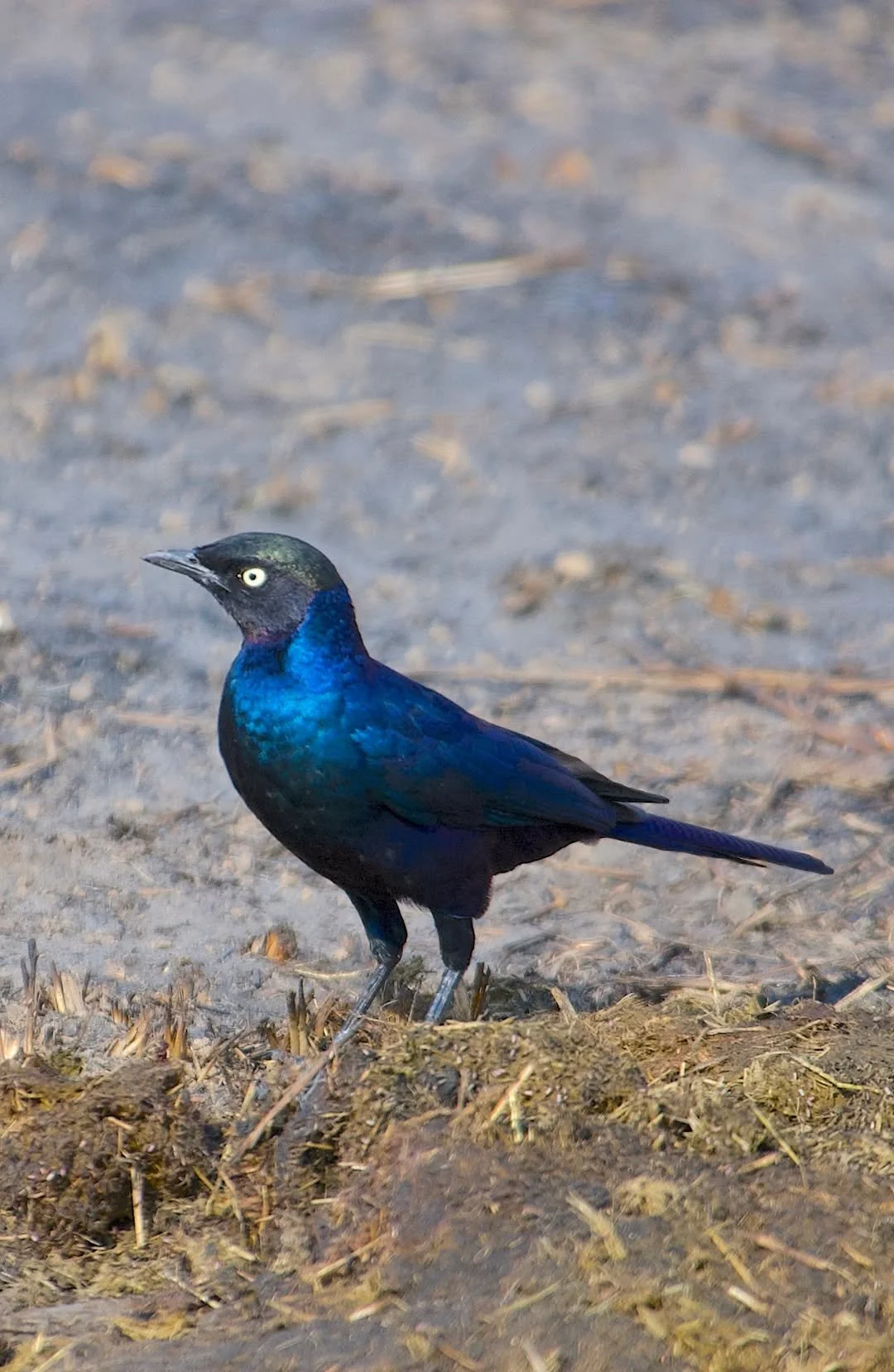
The light bounces off of this Rüppell's glossy-starling and suggests a metallic sheen.
Iridescent Beauty in Unexpected Places
They say beauty is in the eye of the beholder, but sometimes, it’s just in the middle of a mess.
Check out this Rüppell's Long-tailed Glossy-starling (Lamprotornis purpuroptera). Standing there, perched right in the middle of large animal dung, he is absolutely magnificent. Those deep, shimmering iridescent purples and blues look like spilled oil or polished jewels against the dusty earth.
It’s a vivid reminder that Creation doesn't need a pedestal to be stunning. Finding joy in the extravagance of nature—even in the “plain” or the “dirty” spots—can be a profound act of worship. It’s about seeing the intentionality in every feather and every wingbeat.
Why Poop?
Foraging in animal poop—a behavior known as coprophagy—is something that starlings do for several reasons. Starlings are highly adaptable, opportunistic omnivores that often exploit unconventional food sources. This bird may be driven by nutrition needs (poop can be a concentrated source of phosphorus and calcium), foraging efficiency, or its just searching for a particular kind of insects/larvae. One thing is true: this scene is not an accidental meeting!
Have you ever found unexpected beauty in the middle of your mess?
Join us on safari! Click this link for Bible Land Explorer tour dates and destinations: Find my Trip.