We travel by boat to visit the site of Akrotiri on the island of Santorini.
Gnu-uuu-uuuu!
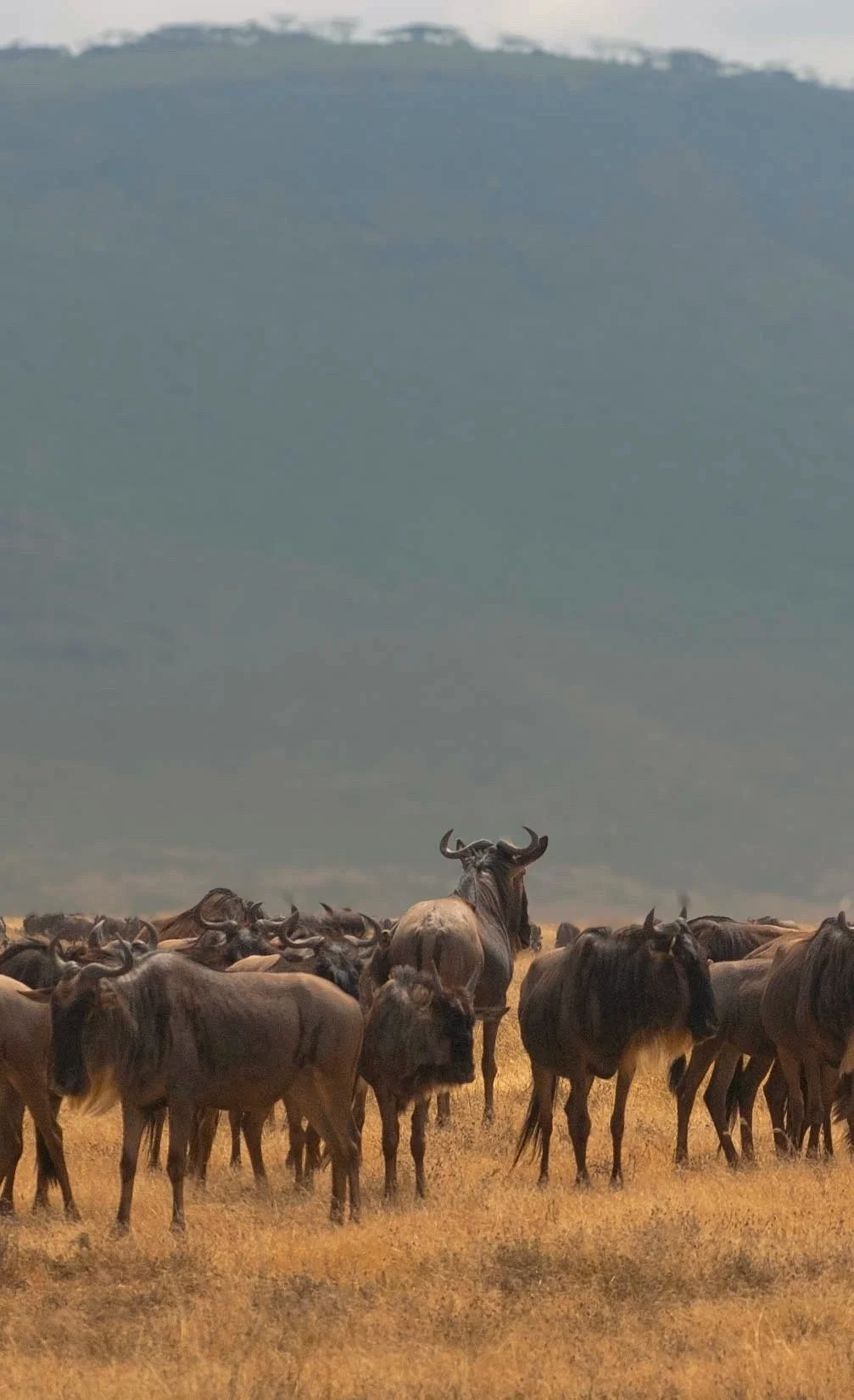
Herds of blue wildebeest or brindled gnu (Connochaetes taurinus) spread across the floor of Tanzania’s Ngorongoro crater. Although they look like a frankinstein of animal parts, the wildebeest is a member of the antelope family.
During the rut (at the end of the rainy season) the bull will tirelessly protect his herem of cows, preventing other would-be suitors from approaching. Bellows and snorts (which sound like “gnuuuu”) are issued, ground is plowed with hooves or horns, and if all that display doesn’t work, charges and horn thrusts are exchanged.
There’s never a dull moment in Africa.
How do get down Santorini
The quickest way down to the water at Santorini is not the easiest!
The Pleasure of God
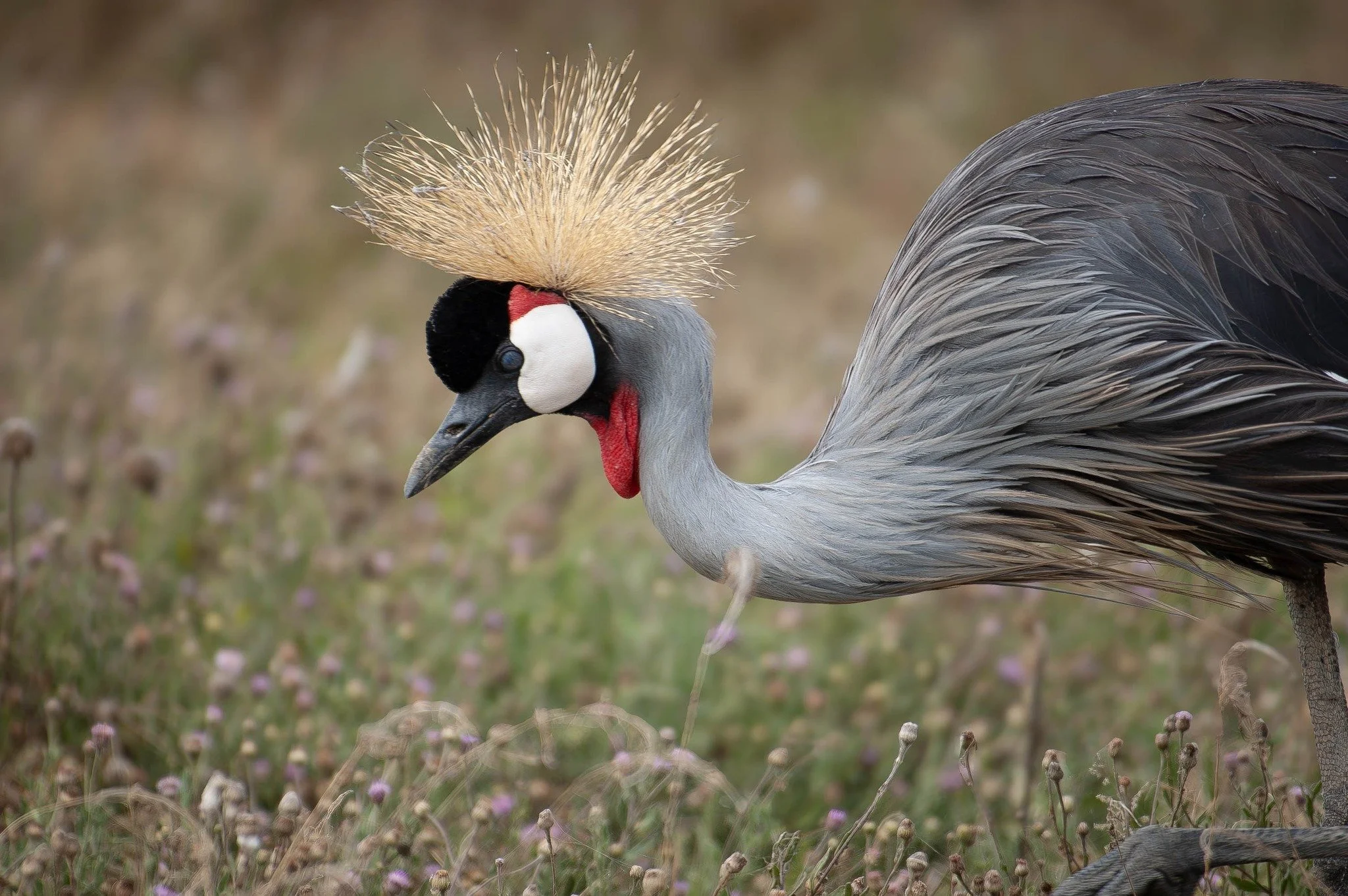
The grey crowned crane (Balearica regulorum) has an elegant bearing. Its body has grey, white, and chestnut feathers, common enough, but its head is simply regal. That white cheek patch contrasts its black head and red wattles. Topping everything is a stiff gold explosion. What a crown!
Reduction of habitat has had severe consequences for this bird. It is now on the endangered list, with perhaps only 35,000 individuals left in the world. Without intervention, this African treasure could go the way of its American cousin, the Whooping Crane. In the 1930s there were only 15 "Whoopers" in existence. Since that time this crane has made a slow comeback from the brink of extinction. Can the same turnaround happen here?
The grey crowned crane reminds me to live beyond myself today. Beauty—like truth and justice—pull us toward the peaceful pleasure of God.
Help me with this one
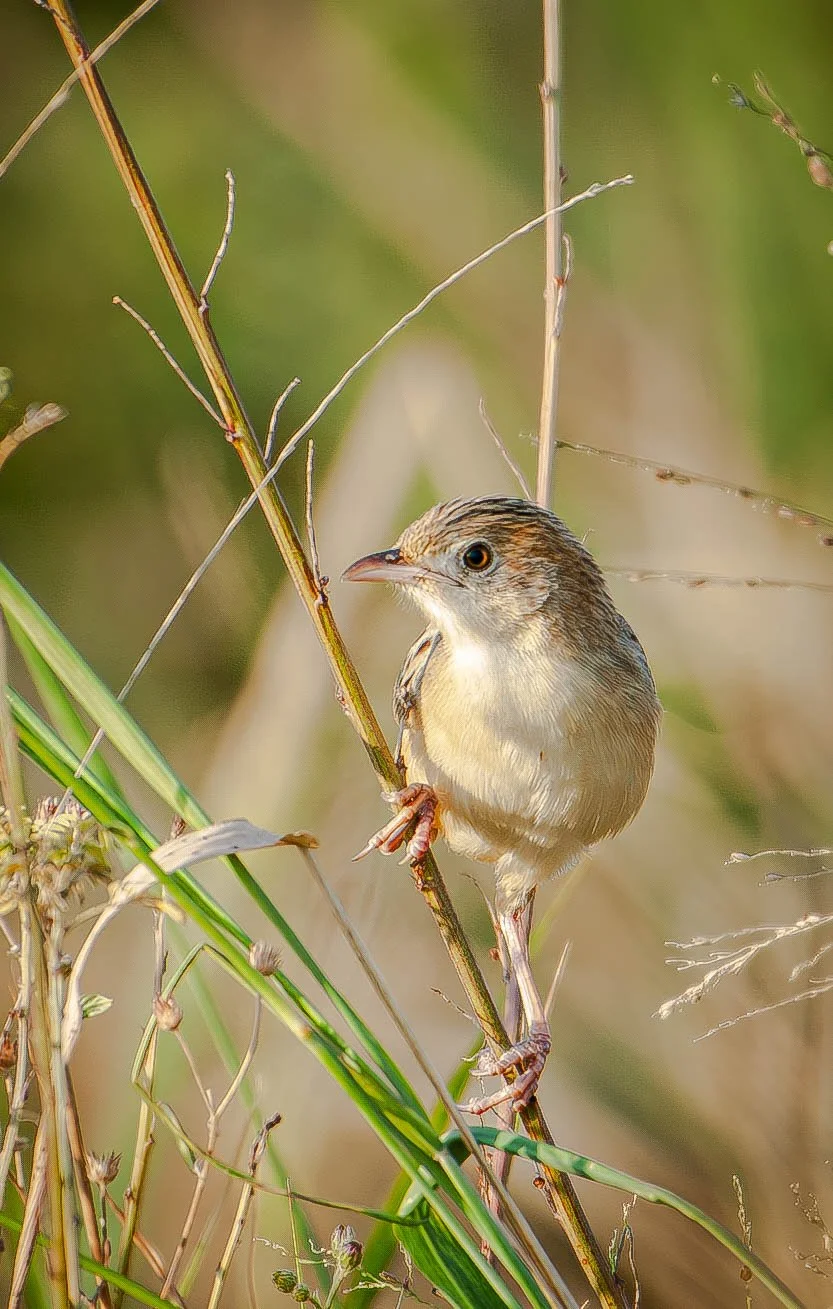
With no less than 1,200 different bird species in Tanzania, identifications can be challenging. A birding novice, I click the shutter, and hope I can figure it out later.
This one is puzzling to me. It has some canary colors, but the bill isn’t short and stout. Weaver family. No, markings not quite right. Maybe a Cisticola (a member of the warbler family)?
One thing is sure. God sure likes birds. And He pulled all the crayons out of the box when He colored them.
Come follow Africa's "Great Migration" with us. We'll be "glamping" in grazing grounds in August of 2025 (dry season) and in birthing grounds in February of 2026 (wet season). Ooohs and aaahs, guaranteed.
At a Crossroads
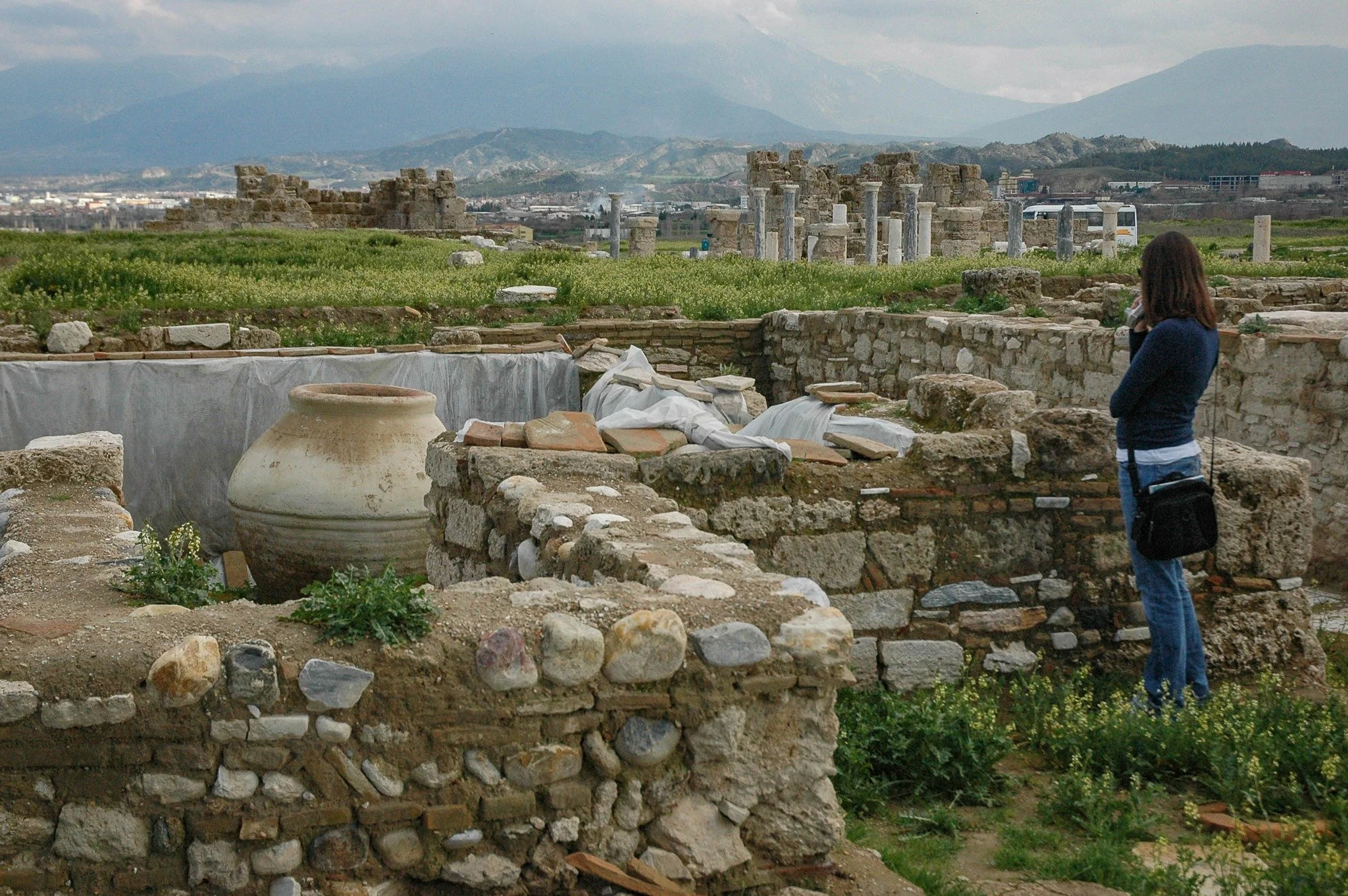
The site of Laodicea (Laodikea) is represented by remains found on a grassy ridge near the Lycus River in modern Türkiye. In the period of the NT it straddled a trade route and grew wealthy. Ongoing excavations here today offer testimony to the wealth of its generous patrons. Views in all directions suggests great fertility and beauty.
Laodicea is mentioned in the NT by the Apostles Paul (Col 4:13) and John. The latter includes it as one of the "Seven Churches of the Revelation" (Rev 3:14-22). Emphasis is placed on its admitted wealth: "You say, 'I am rich'; but the Spirit says "you are wretched, pitiable, poor, blind, and naked." Counsel is given to seek a different kind of company and a wealth that endures.
We will be visiting the site of Laodicea on our Mar 31-Apr 11, 2025 tour of "Türkiye and the Early Church." This unforgettable journey is priced to go. Check out the details.
Let Sleeping Lions Lie
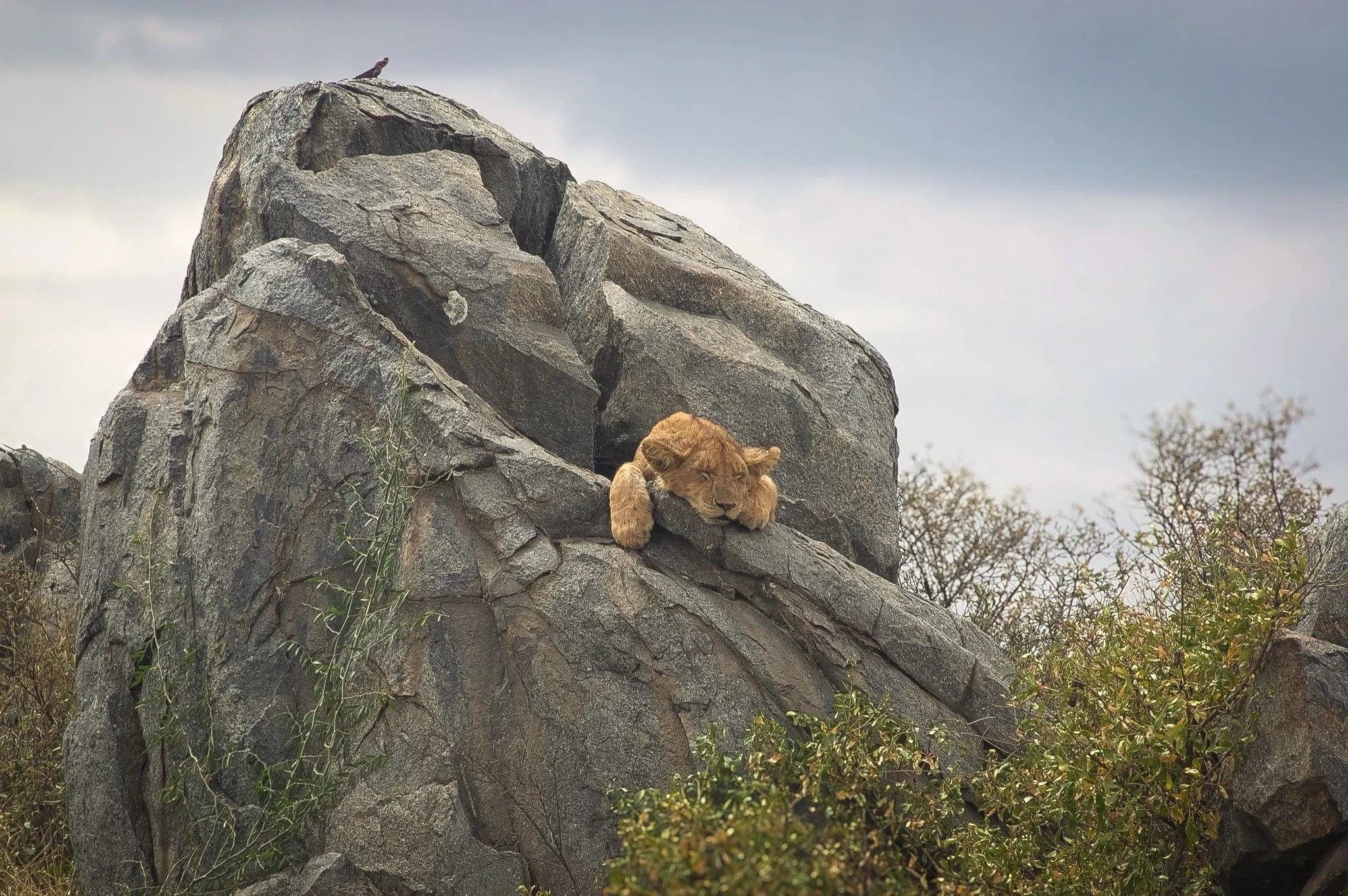
"Let sleeping lions lie" should be a proverb.
I posted a shot of a lioness and a cub on a kopje about a month ago. Here's another for your day.
Like islands in a vast sea, granite kopjes rise above the Serengeti grasslands of Tanzania and provide a special habitat for plants and animals. Just tip-toe when you are around one. You never know who might be sleeping.
Go wild with us on safari in 2025 or 2026.
A Message from Patmos
The New Testament book of Revelation offers a message of hope from Patmos.
Chasing Cheese
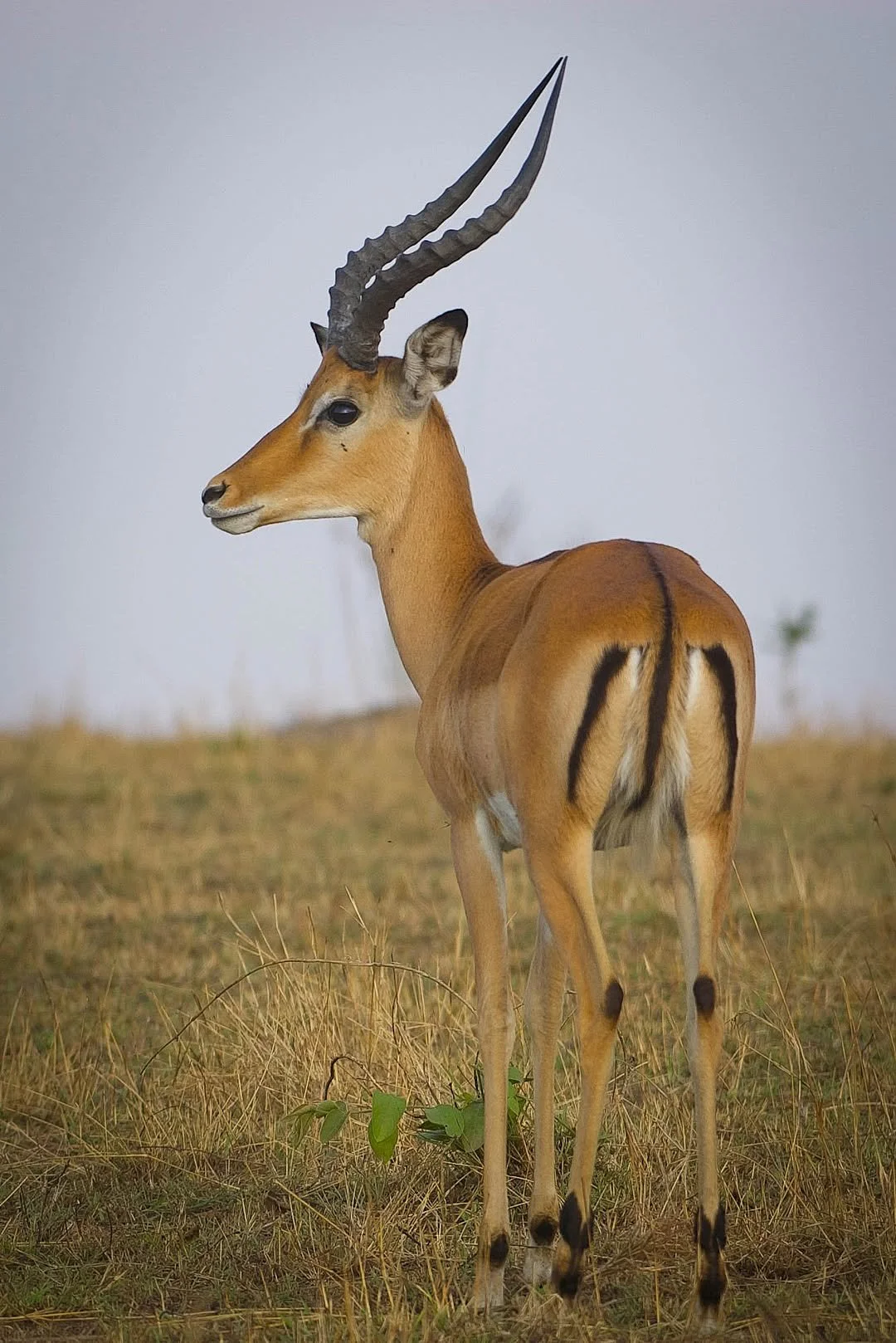
It is hard to imagine a more elegant and agile creature than the common impala (Aepyceros melampus melampus). Long legs give it the ability to sprint up to 55 mph, jump over an obstacles more than ten feet high, and leap a distance of 33 feet.
We often encounter groups of these gregarious creatures in East Africa. They are easily identified due to their medium size, reddish-brown coat, lyre-shaped horns, and black markings on the hind-quarters. Imagine the black marks on the rump advertising the letter "M." See it? Don't blink. That's an iMpala!
Something else that might be of interest: note the black marking on the "ankles" (metatarsals) of the impala's rear legs? Those are scent glands. The impala is the only member of the antelope family that has these features. Some think that the impala leaves a "chemical trail" for others to follow in a chase! What's more, that trail has the smell of cheese! Cheese chase? Of course!
Sunset on the Dardanelles
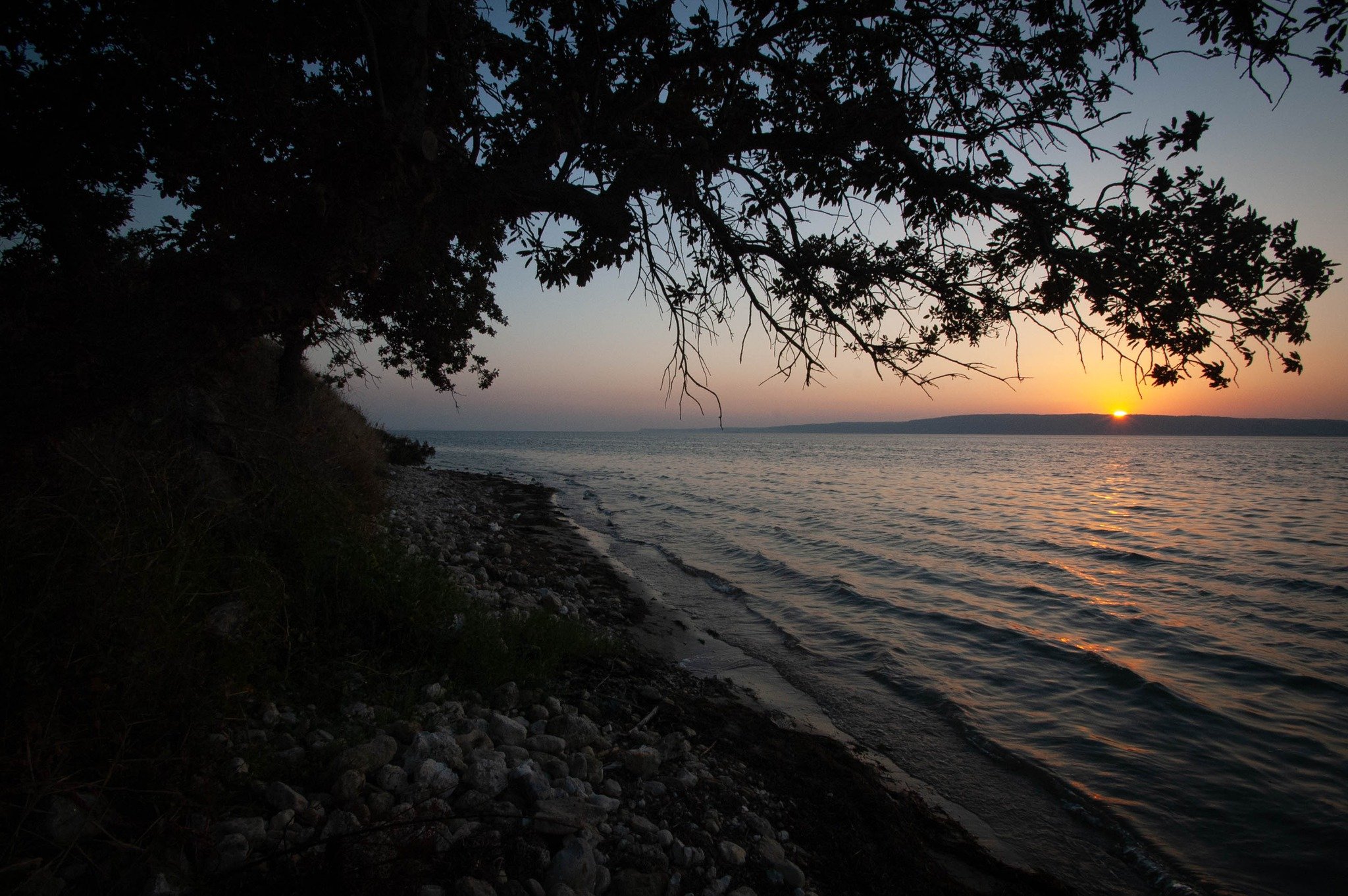
Known by several names, the Dardanelles, the Hellespont, or the Strait of Çanakkale is a narrow body of water separating Europe and Asia. It is narrow but deep and forms a part of a system of waterways connecting the Mediterranean and Black Seas.
History here is deep and colorful as well. The site of Troy guards the western end of the strait, Gallipoli watches the east end. Imagine the traveler Odysseus sailing in the stretch.
My favorite story of the spot, however, comes from the hand of Herodotus. The Persian king Xerxes built pontoon bridges here to invade Greece. When the bridges were destroyed by a storm, he had the water cursed, whipped, and branded. He must have shouted, "That'll learn ya" (or something similar!).
I chuckle at the thought as I sit under an ancient oak tree with my camera and watch this sunset.
Bible Land Explorers are returning to the Dardanelles and Türkiye March 31 - April 11, 2025, to investigate classical, biblical, and modern connections. I would love to have you join us. This special engagement promises to be full of wonder and is unmatched in price ($3,300 land-only). Click below for more details.
Can play Offense or Defense
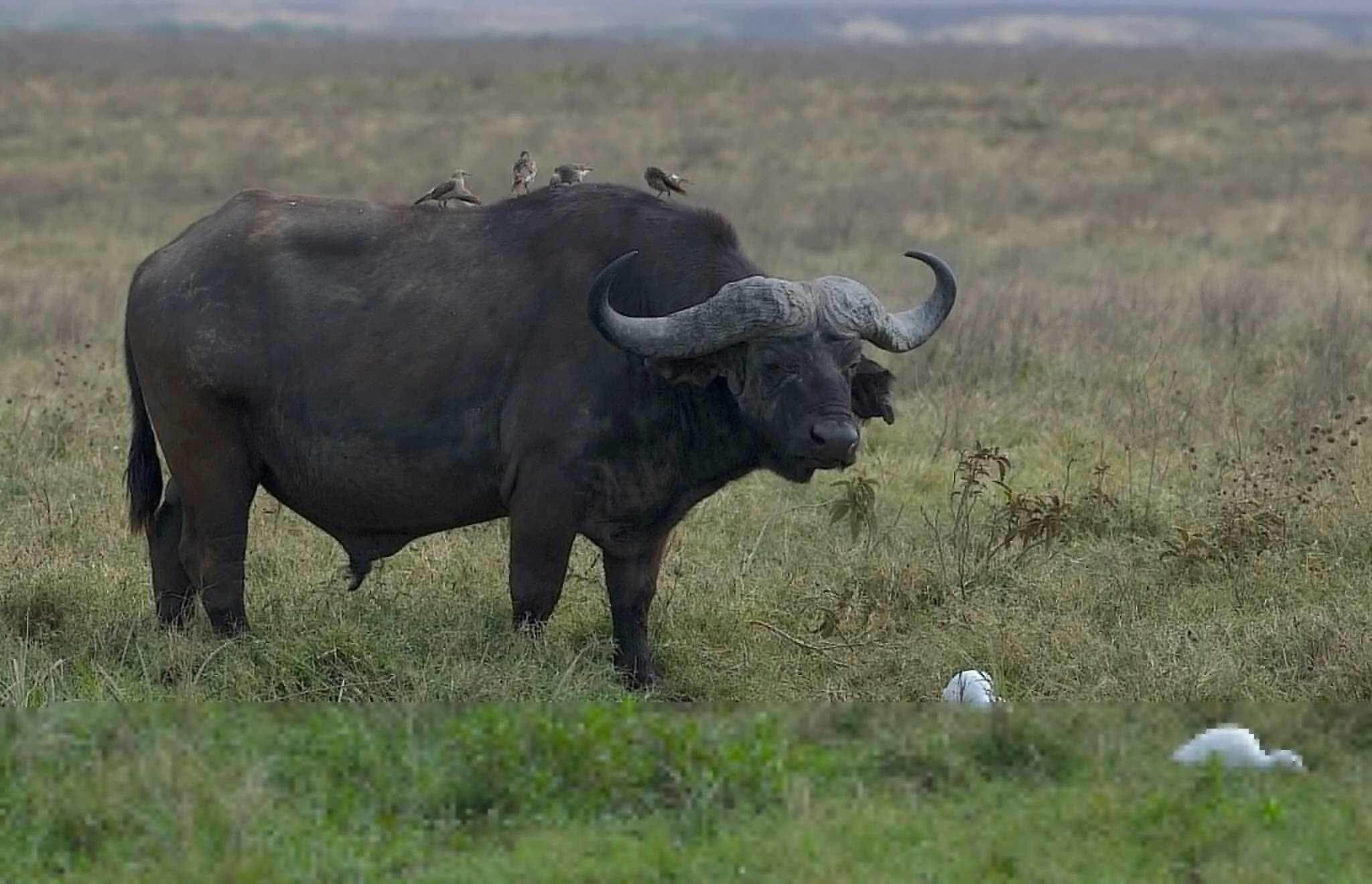
The behavior of the African buffalo (Syncerus caffer) is unpredictable. Unlike its cousins, the American bison, yak, or Asian water buffalo, this animal has never been domesticated. In human whispers, buffalos are called "black death" and may kill more people than lions or hippos.
A big bull, like this one in Ngorongoro Crater, Tanzania, weighs as much as a small car.
To protect themselves from predators, a herd of African buffalo play team defense. The young, elderly, or sick are encircled by the others, butts in, horns out!
Come safari with us in 2025 or 2026! We'll keep our distance from the African buffalo. Promise!
That Vile Spartan
The name of an advisor to Herod the Great is etched on a stone found in Mystras, Greece.
Bestie Beasties
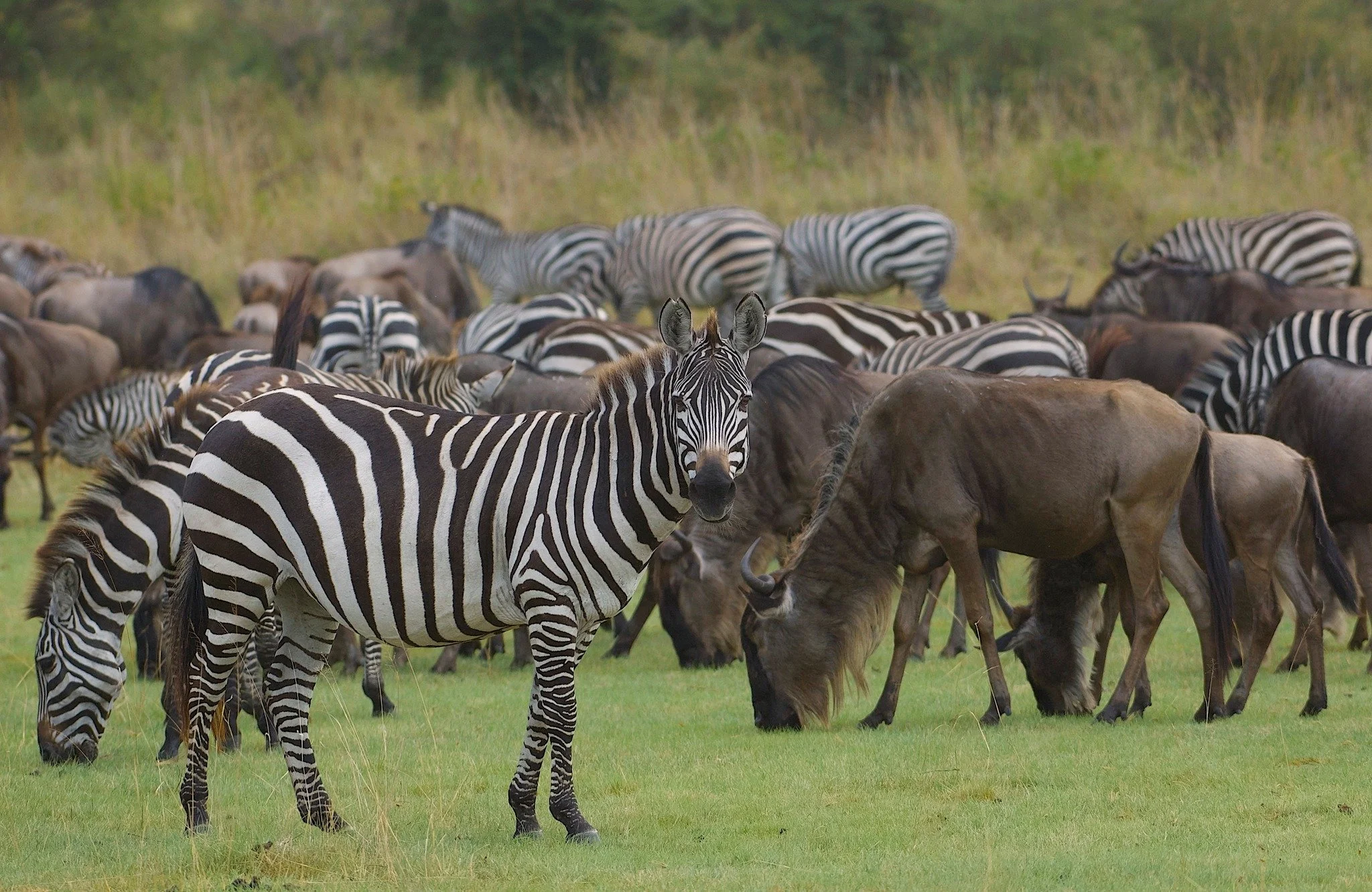
We usually think of the wildebeest (gnu) in the context of "the Great Migration" of the Serengeti. However, mixed in these traveling mega-herds are many other species, including zebras.
The relationship between the wildebeest and the zebra is most interesting. These two animals crop grasses differently, so their grazing is complementary. They also perceive their world differently (helpful for avoiding predators!); the wildebeest's keen sense of smell complements the zebra's keen senses of sight and sound.
Working together, these animals do better than working alone. There's a sermon in there somewhere.
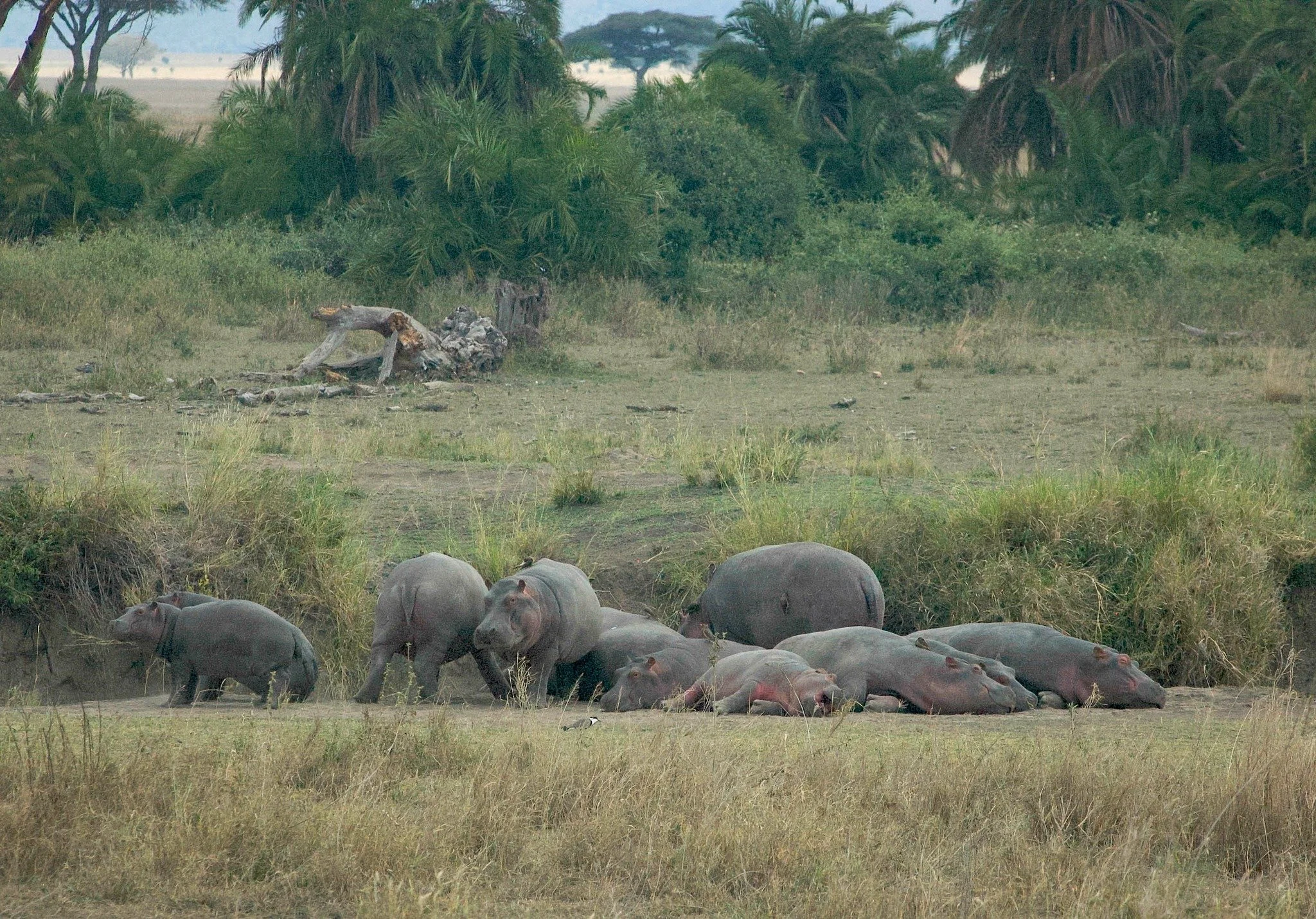
A Bloat of Hippos
Yes, you read that right. A group of hippopotamuseses may be called a bloat. Or a crash. I prefer to save the crash label for rhynos.
For the curious: Many English terms for animal collectives go back to the 15th and 16th centuries. One influential work in this regard is titled the Book of St. Albans (1486). In it was a list of “the compaynys of beestys and fowlys." The book seems to have been popular, offering language tidbits for gentlemen-hunters looking for the right word for beestys to drop while telling storyes at dinner partyes (I'm gust guessing here).
A Straight-tusked Elephant?
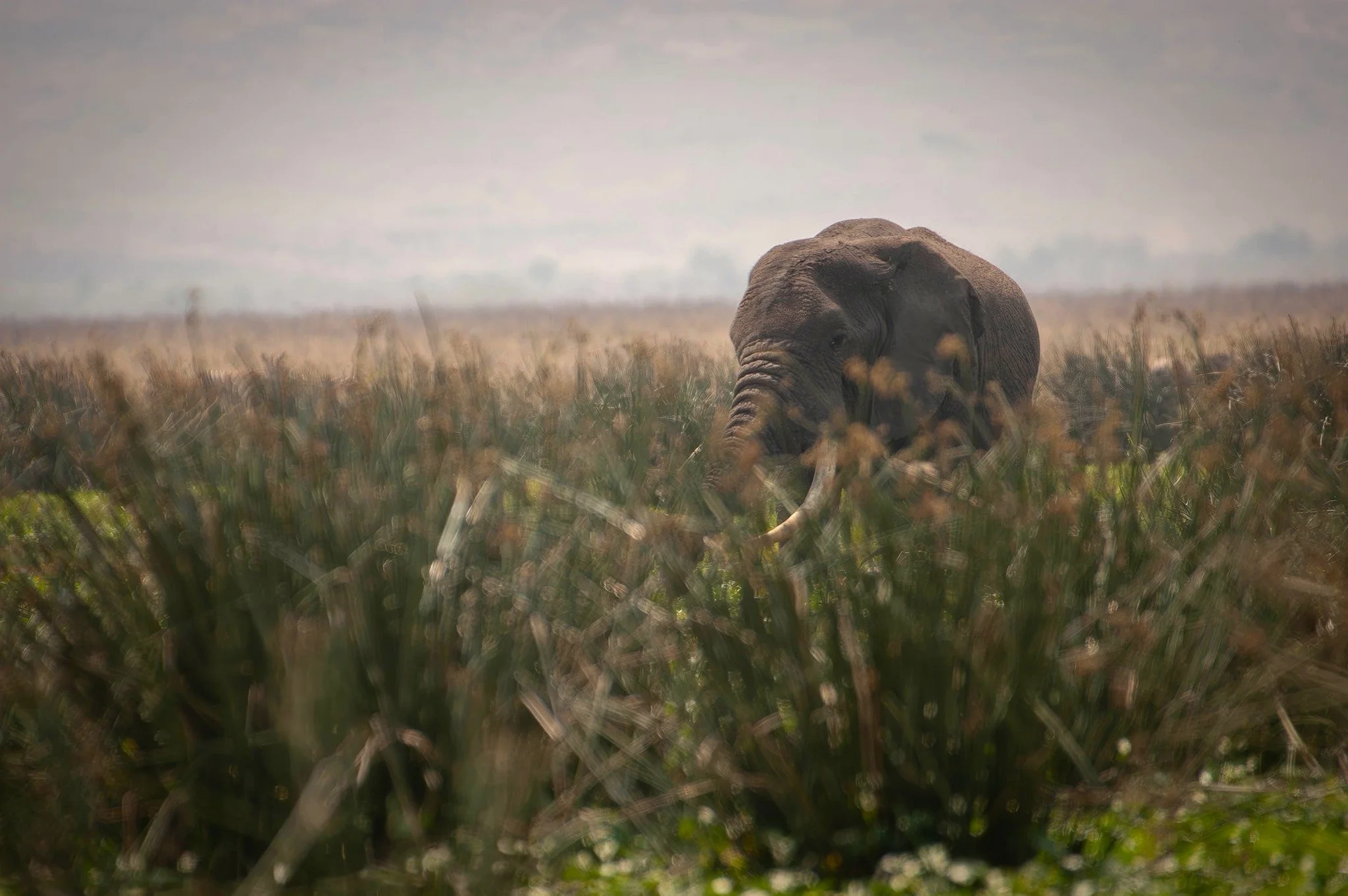
The African savanna elephant (Loxodonta africana africana) is a big animal. Standing ten feet at the shoulder and weighing 13,000 pounds (on average), these tuskers are the largest land animal alive today.
However, do you know that its ancestor, the Straight-tusked elephant (Palaeoloxodon antiquus) was even bigger! Remains of this species suggest that a mature bull measured 13 feet at the shoulder and weighed 29,000 pounds (imagine a semi-truck and empty trailer with knees!).
The Straight-tusked elephant once roamed temperate forests around the Mediterranean sea. The species was likely hunted out by humans and did not survive the end of the last ice age.
Footnote 1: Listen to the sound of creation groaning (Rom 8:22-24).
Footnote 2: an 8' tusk from a Straight-tusked elephant was found in 2022 in southern Israel. It is the largest complete fossil tusk ever found in the Near East. (see the link here: https://www.cbsnews.com/.../straight-tusked-elephant.../)
Caption: My eyes look like this when . . .
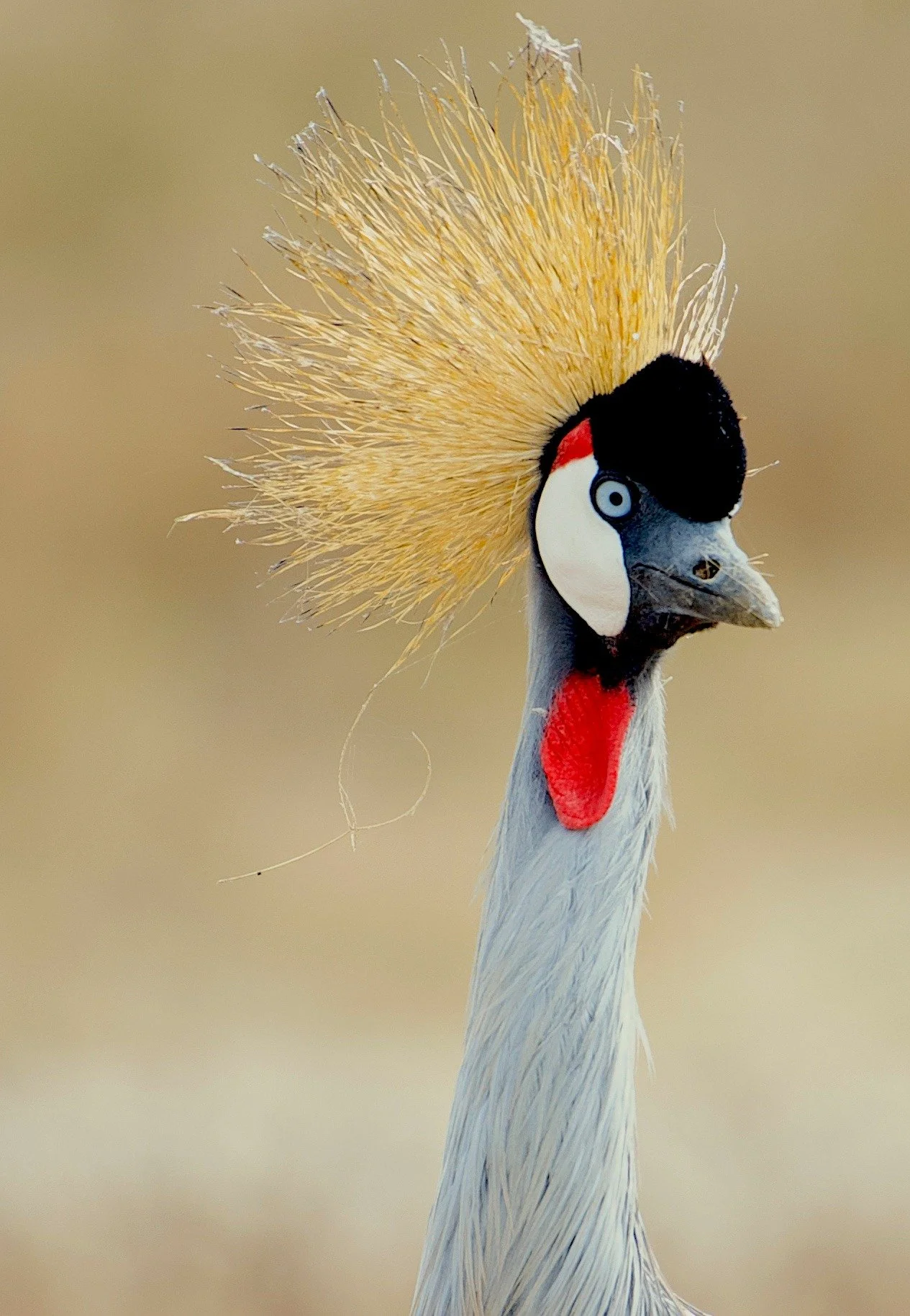
. . . the wife comes at my face with tweezers.
Grey crowned crane (Balearica regulorum).
In Descent
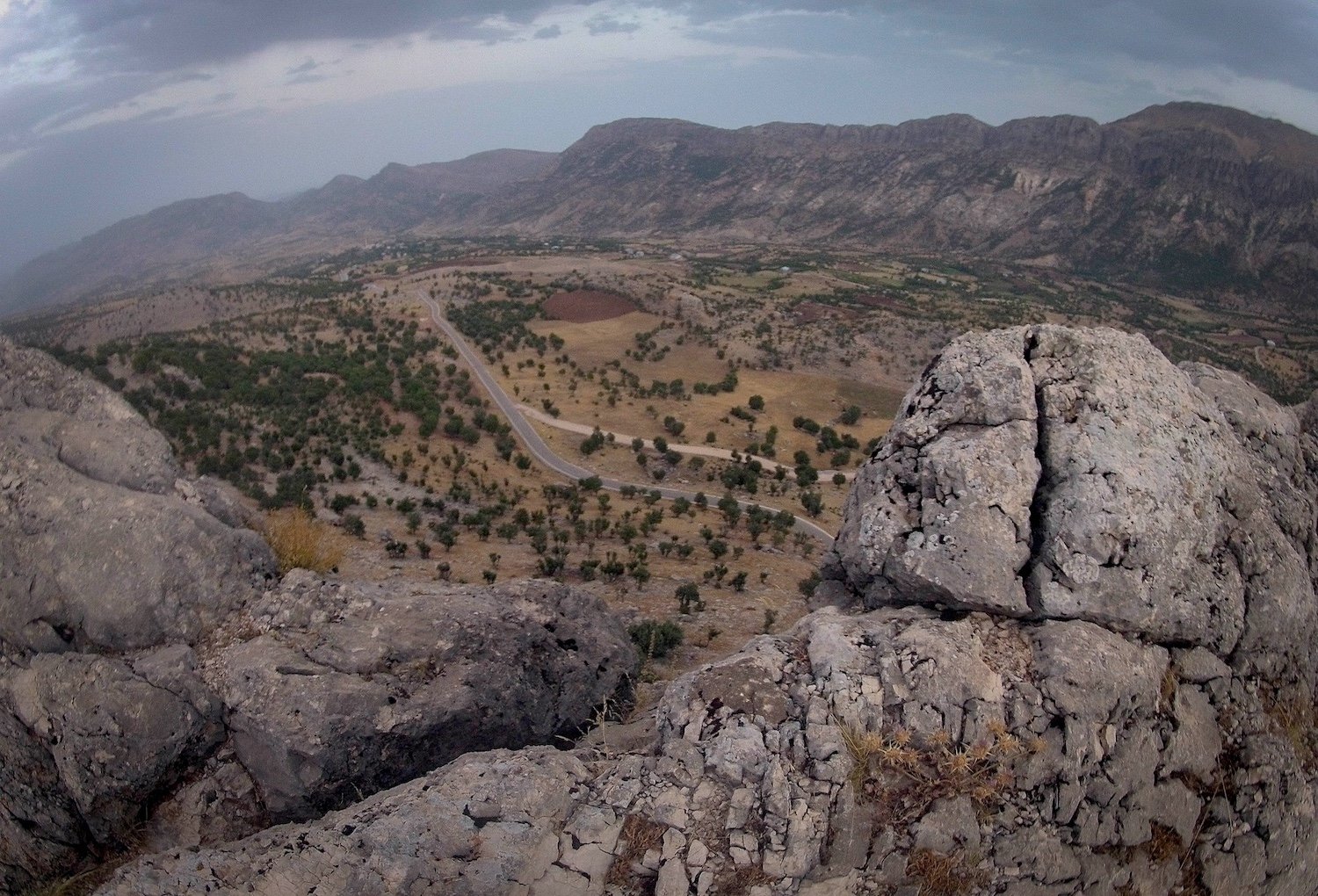
The wild landscape of central Türkiye. Got this shot in descent from Mt Nimrut a couple of years ago.
Curiosity and faith propel us to interesting corners of the world. We are fascinated by expressions of faith and seek to experience places connected with the early Christian movement. Türkiye, or ancient Asia Minor, was a home and a destination for NT-era travelers such as Paul, John, Timothy, and others. We seek to identify with their perspective and values.
We are forming a group to return to Western Türkiye, March 31-April 11, 2025. We won't be climbing any mountains this go-around, but the landscapes and sites will be equally fascinating. Ephesus, Miletus, Istanbul, and Troy will be among our stops.
Land-only price is $3,300. That number covers everything but your souvenirs and your flight. Hotels and food will be exceptional, I promise. Join us!
In Descent from Mt Nimrut
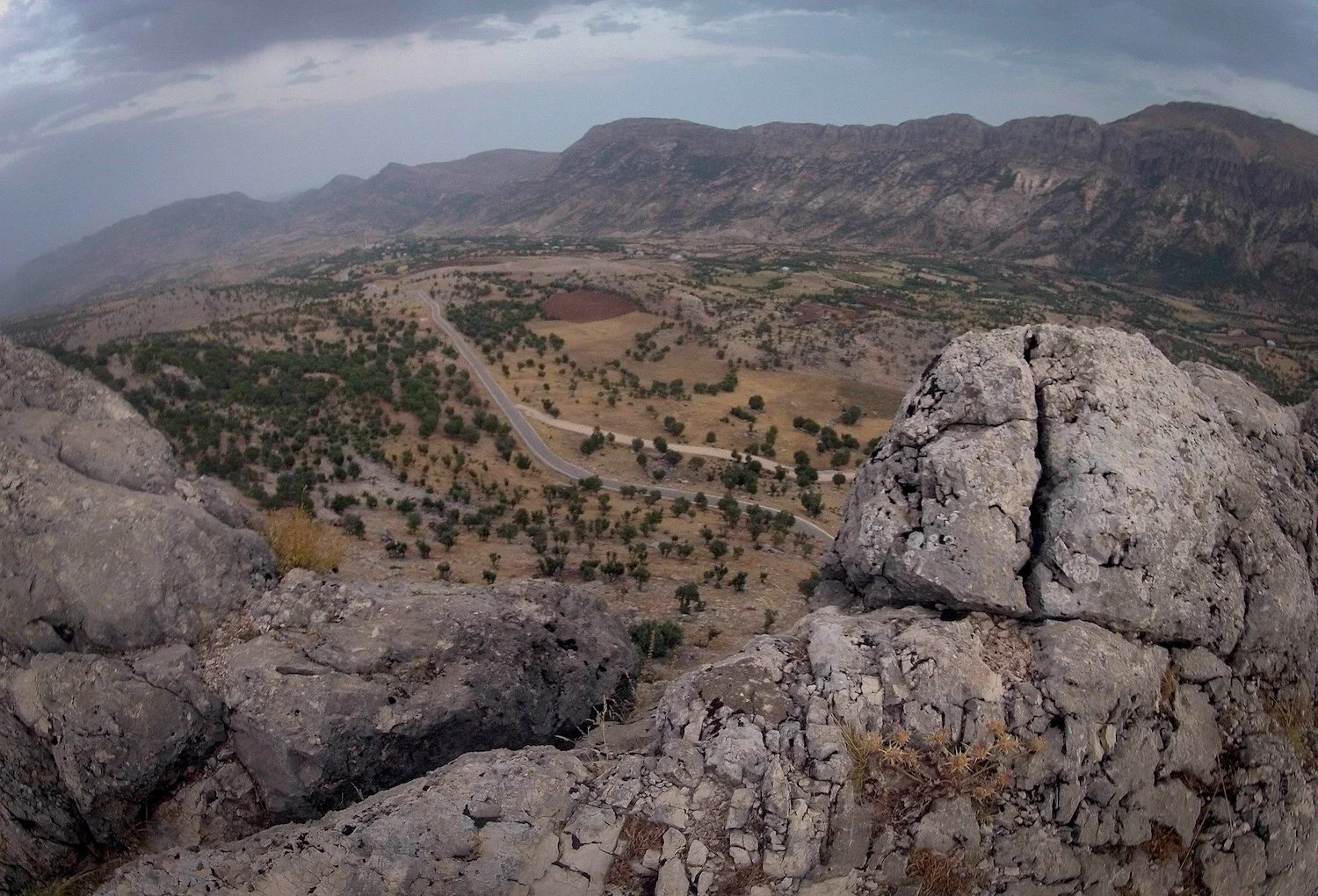
The wild landscape of central Türkiye. Got this shot in descent from Mt Nimrut a couple of years ago.
Curiosity and faith propel us to interesting corners of the world. We are fascinated by expressions of faith and seek to experience places connected with the early Christian movement. Türkiye, or ancient Asia Minor, was a home and a destination for NT-era travelers such as Paul, John, Timothy, and others. We seek to identify with their perspective and values.
We are forming a group to return to Western Türkiye, March 31-April 11, 2025. We won't be climbing any mountains this go-around, but the landscapes and sites will be equally fascinating. Ephesus, Miletus, Istanbul, and Troy will be among our stops.
Land-only price is $3,300. That number covers everything but your souvenirs and your flight. Hotels and food will be exceptional, I promise. Join us!
Home of Hercules
We walk among the ruins at Tiryns, Greece, and remember Hercules.
Fun Facts from an Elephant Nursery
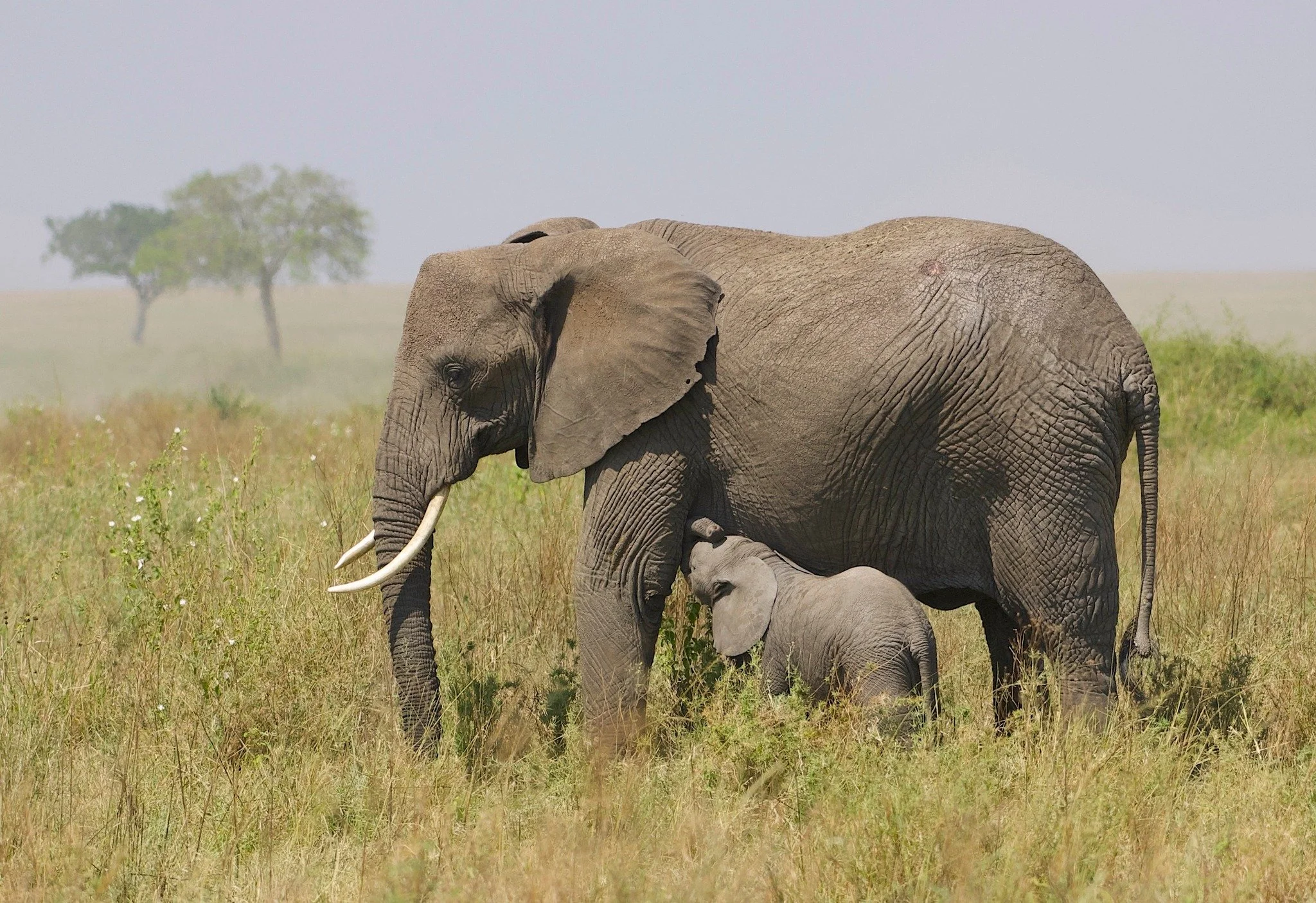
Fun facts from a Serengeti nursery.
1. Elephant calves drink 2 1/2 gallons of milk in a day.
2. Elephant milk has 100 times more protein than cow's milk.
3. Elephant calves are weaned between 2 and 3 years of age.
4. Elephant herds have incredible "social glue." Group behavior is modified to care for both the young and the old.
Come see the elephants! Safari with us in August of 2024 or February of 2025.