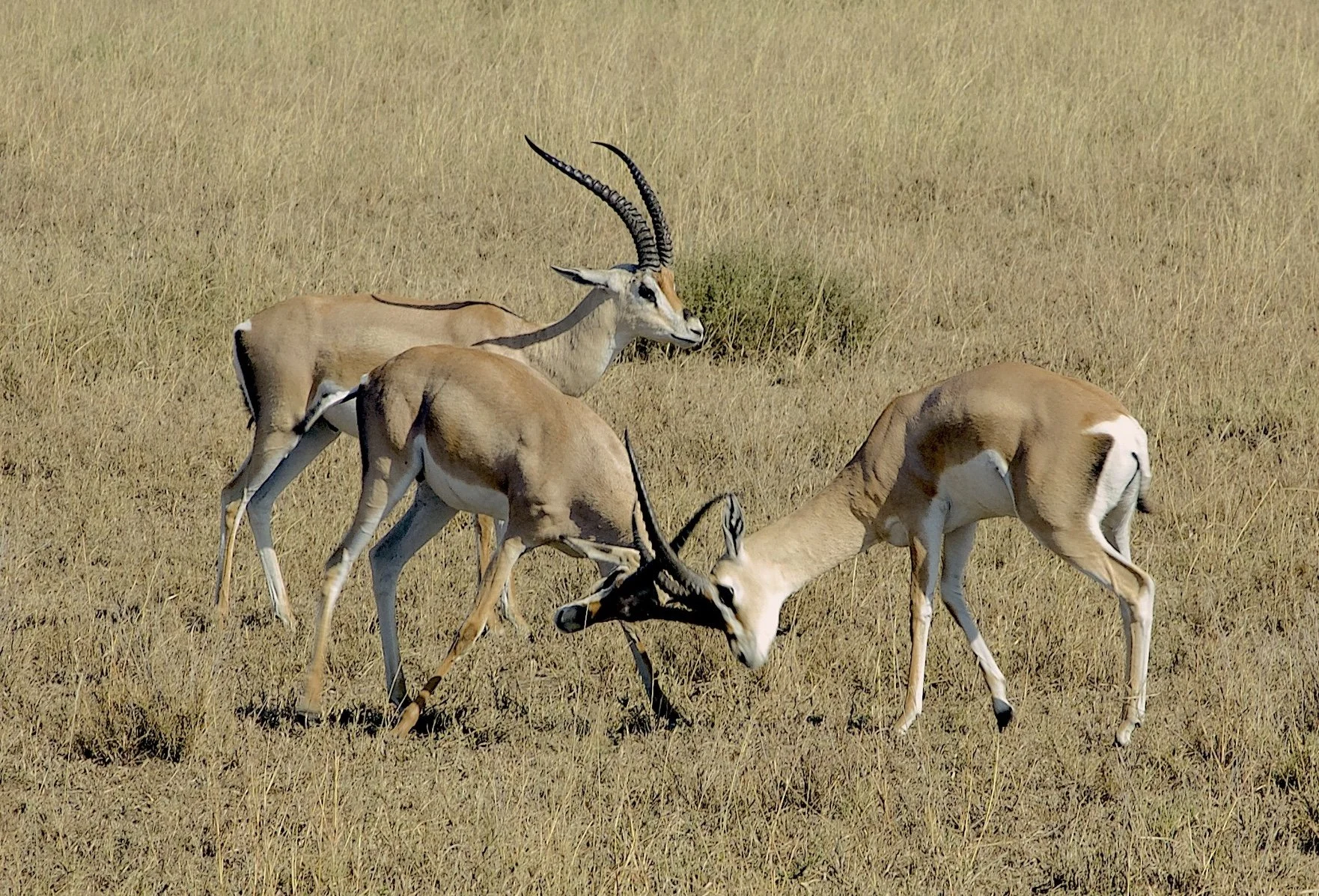
A herd of Grant’s gazelle (Nanger granti) with lyre-shaped horns in the Serengeti National Park.
Sparring partners
A herd of Grant’s gazelle (Nanger granti) is a common and captivating sight on the Serengeti. Known for their impressive stature compared to other gazelle species, these antelopes are perfectly adapted to the Serengeti ecosystem. Their iconic lyre-shaped horns do more than just bequeath a graceful appearance; they are formidable, permanent tools for defense. Unlike antlers, which are shed annually, these corrugated, unbranched horns are a lifelong fixture for the animal.
A Name Rooted in History
This species carries a name that links the savanna to the golden age of exploration. It was named after James Augustus Grant, a Scottish explorer and preacher’s son who journeyed with John Hanning Speke in the legendary quest to discover the source of the Nile.
If you want to dive deeper into the gritty reality of these expeditions, I highly recommend Tim Jeal’s Explorers of the Nile: The Triumph and Tragedy of a Great Victorian Adventure. It is an excellent read for those with a strong stomach and a keen interest in the complex story of East Africa.
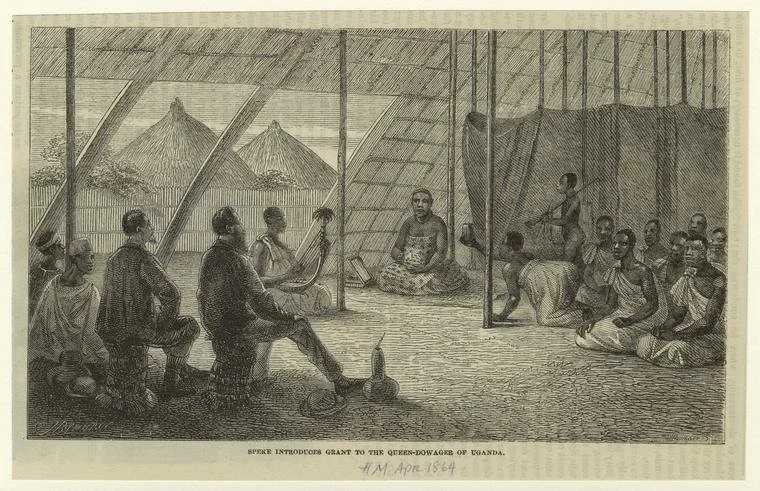
Speke introduces Grant to the Queen-Dowager of Buganda. Image from here (accessed 3/3/2026).
Experience the History of the Serengeti
Seeing these animals in person brings the pages of history books to life. Whether you are drawn by the biology of the Nanger genus or the tales of Victorian explorers, the plains are calling. Witness the legacy of the Serengeti for yourself and discover the place where faith begins.
Check out our future travel offerings at the link here: Find your Trip.
To learn more about Grant’s gazelle, see our post: The Grant’s Gazelle: Lyre-Shaped Horns of the East African Plains.