Exploring Tanzania

Wry Smile

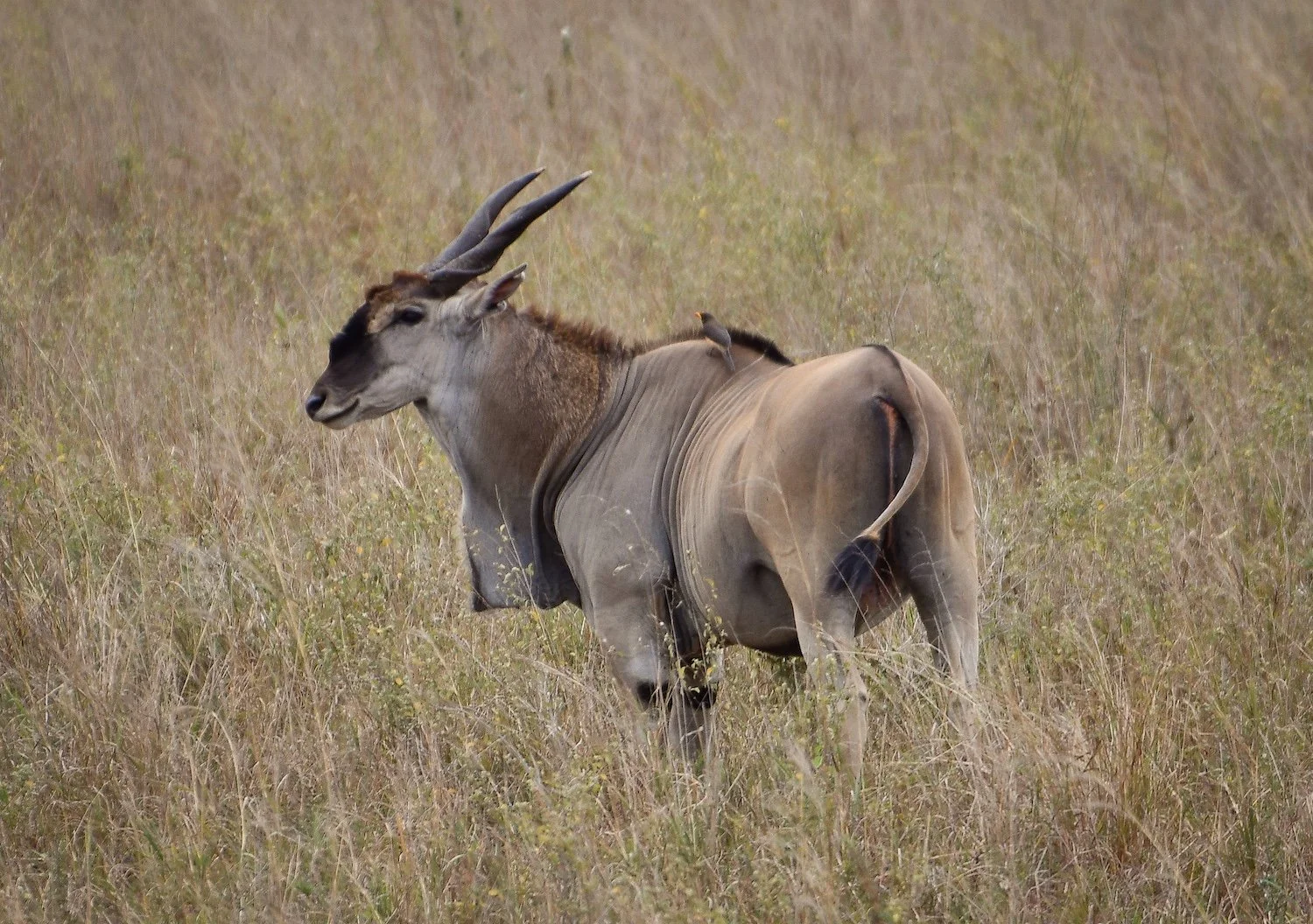
The eland smiles. Does he know a secret?

The eland is the largest member of the antelope family. It is also the slowest. Because of its size and nature, it can be domesticated by humans (just remember, it is still an antelope, a fence jumping specialist!).

Under spiral horns are the eland's "liquid eyes." These are adorned with long lashes. Such observations flow into the whispered conversation as we sit in our jeep and watch these docile creatures munch Serengeti grasses.

(Note the oxpecker on his back.)

Our safari work continues to attract special travelers. Because of this we have scheduled another return to Tanzania. This one is scheduled for late February, 2027. Reserve your seats now. They too will disappear.
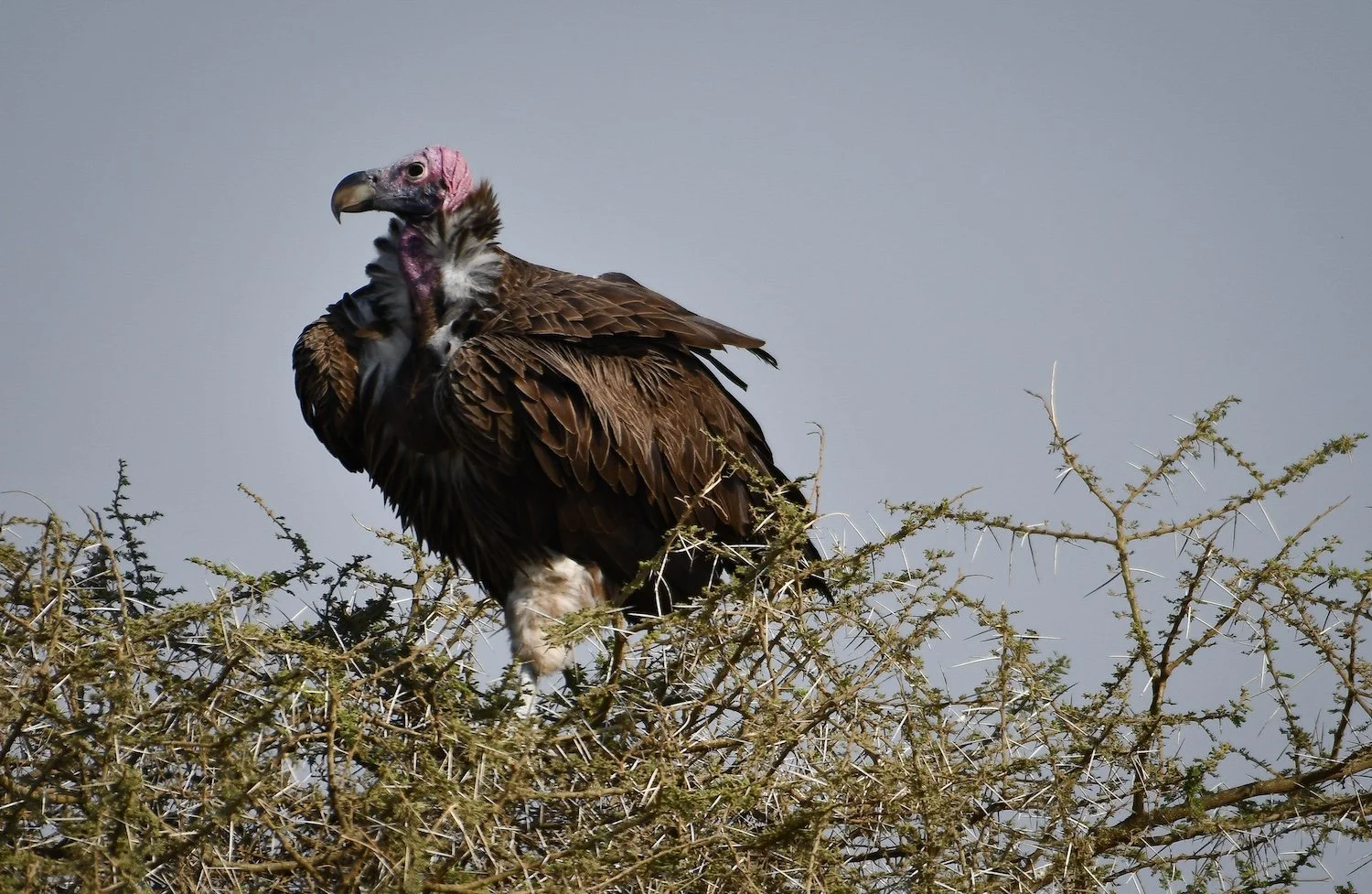
Lappet-faced

It’s almost noble.

When it comes to clothing, a lappet is a fancy fold. It's often seen as a drape in a scarf or head covering.

Check out the folds of skin on the head of this large scavenger. Now you know why it is called a Lappet-faced vulture (Torgos tracheliotos). Fancy-schmancy!

This is Africa's largest vulture. The wingspan of a fully-grown individual can reach 8 or 9 feet!

Unfortunately, this member of the clean up crew is also endangered. Habitat destruction, nest destruction, and pesticide ingestion are problematic. One estimate suggests only 6,500 of these (almost) noble birds survive today. That's a problem.

See a Lappet-faced vulture for yourself. Safari with us in 2026.

Duck-Duck-Goose

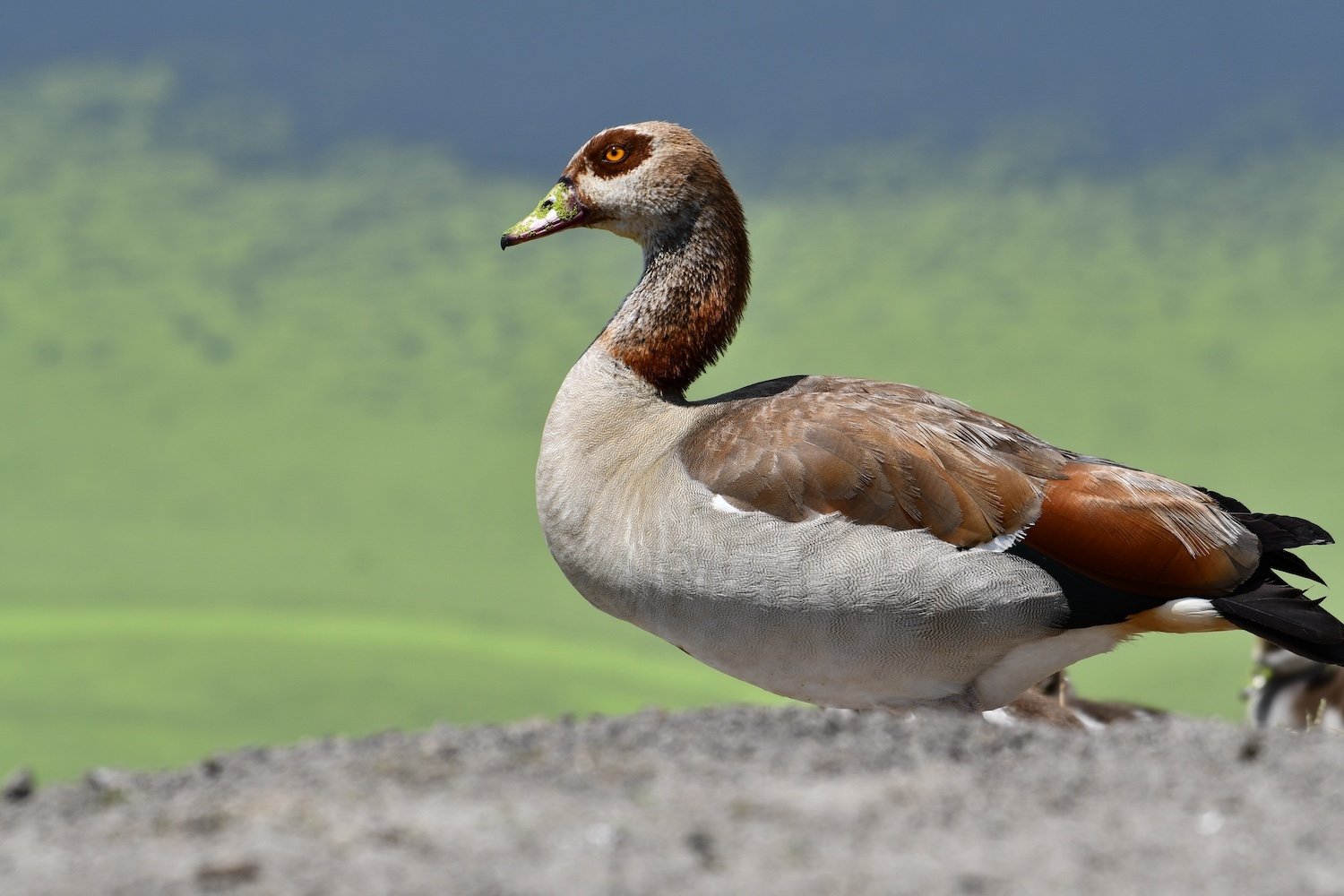
If it looks like a duck, walks like a duck, quacks like a duck, it must be . . . an Egyptian Goose!

Alopochen aegyptiaca is large waterbird common across Africa (and found as an invasive in more than a few British gardens). It is a member of shelduck sub-family, Tadorninae, and not a true goose at all.

Its build is stocky. Its flight is awkward. Its plumage is colorful: brown, red, and white. It looks sneaky with a "bandit mask" around its eyes.

On safari, we often spot the quackers around water-holes, either on the ground or roosting in trees.

Spot an Egyptian goose for yourself! Join us in Africa in 2026.

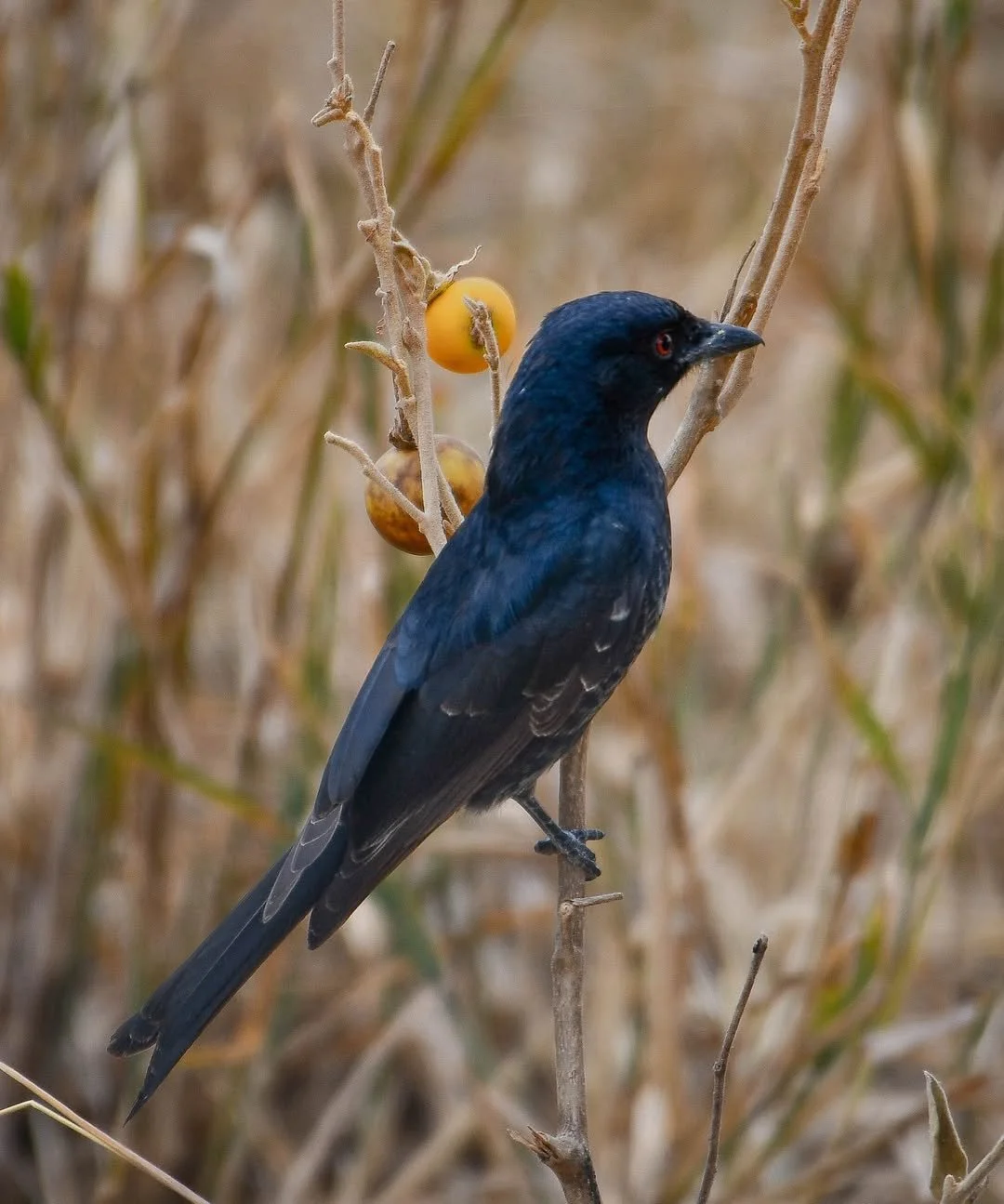
Sneaky Drongo

Kleptoparasite.

That's a word you don't hear everyday. It is used to describe a creature that steals food from another. It appropriately describes the behavior of the Fork-tailed drongo (Dicrurus adsimilis), an African bird that mimics the calls of predators. This false alarm is startling and makes it possible for the drongo to steal dropped food.

We used to do the same sort of thing in Junior High.

(See a sneaky drongo for yourself next year on an African safari!)

Secretarybird

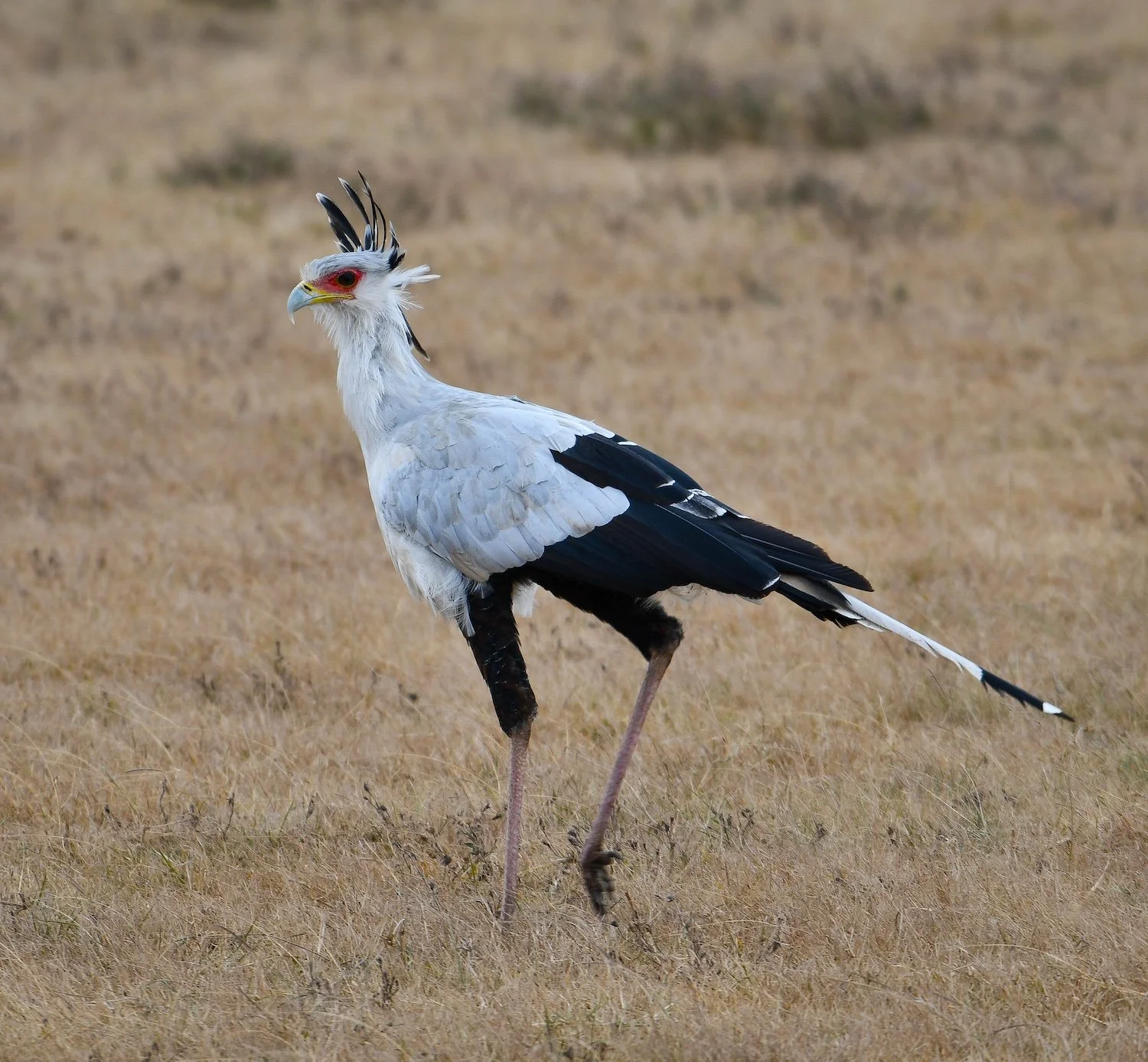
It's the body of an eagle on the legs of a crane!

The secretarybird (Sagittarius serpentarius)is a mishmash of parts, designed for hunting snakes, rodents, and insects. It often captures and kills its prey by stomping. Those legs make it a fierce snake-fighter!

With their ornate feathered headgear, secretarybirds are easily identified. They lope about sub-Saharan grasslands with speed. It also helps that they can stand more than one meter in height.

Sadly, habitat loss is pushing this marvelous creature toward extinction. It was added to the endangered species list in 2020.

See a secretarybird for yourself in 2026. Join us on an African safari.

Red-faced

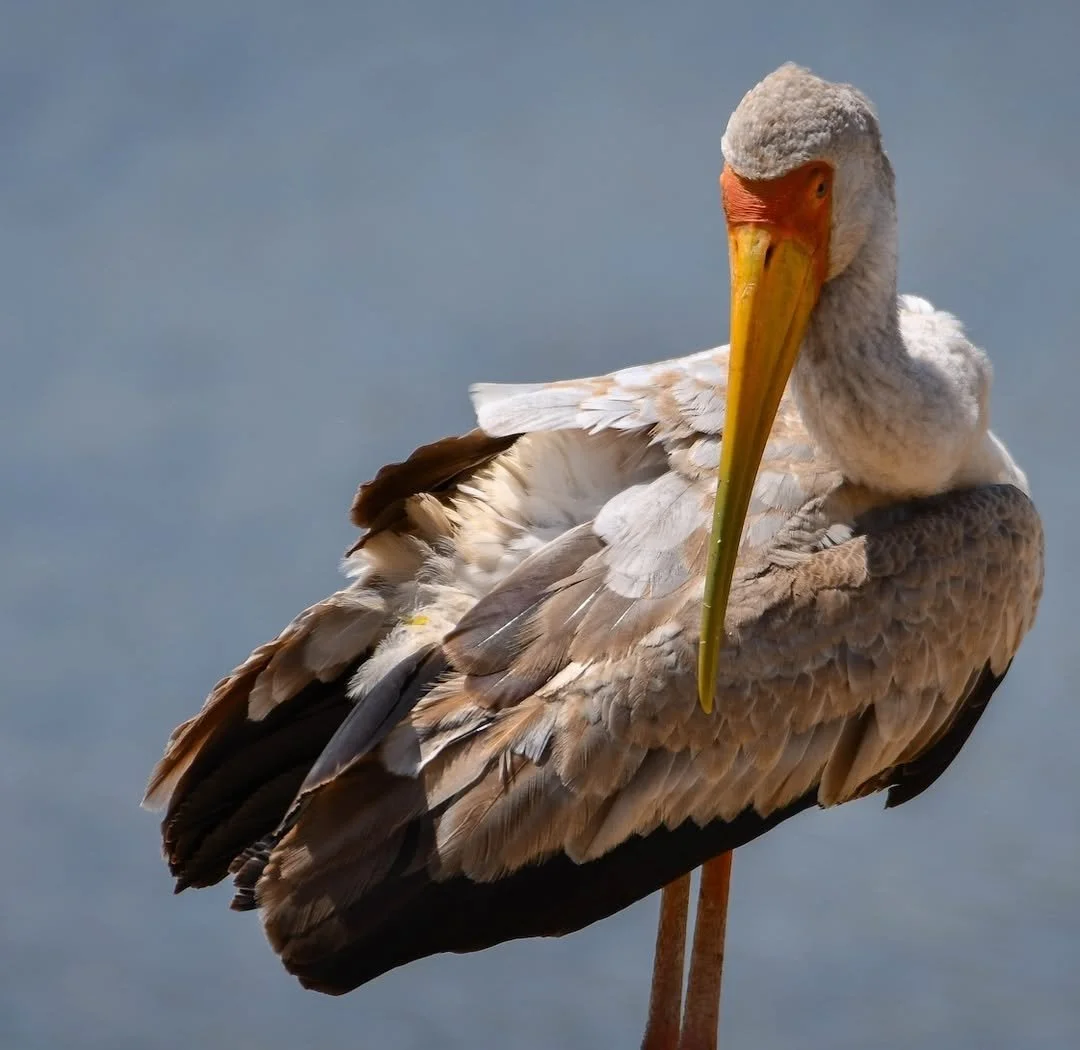
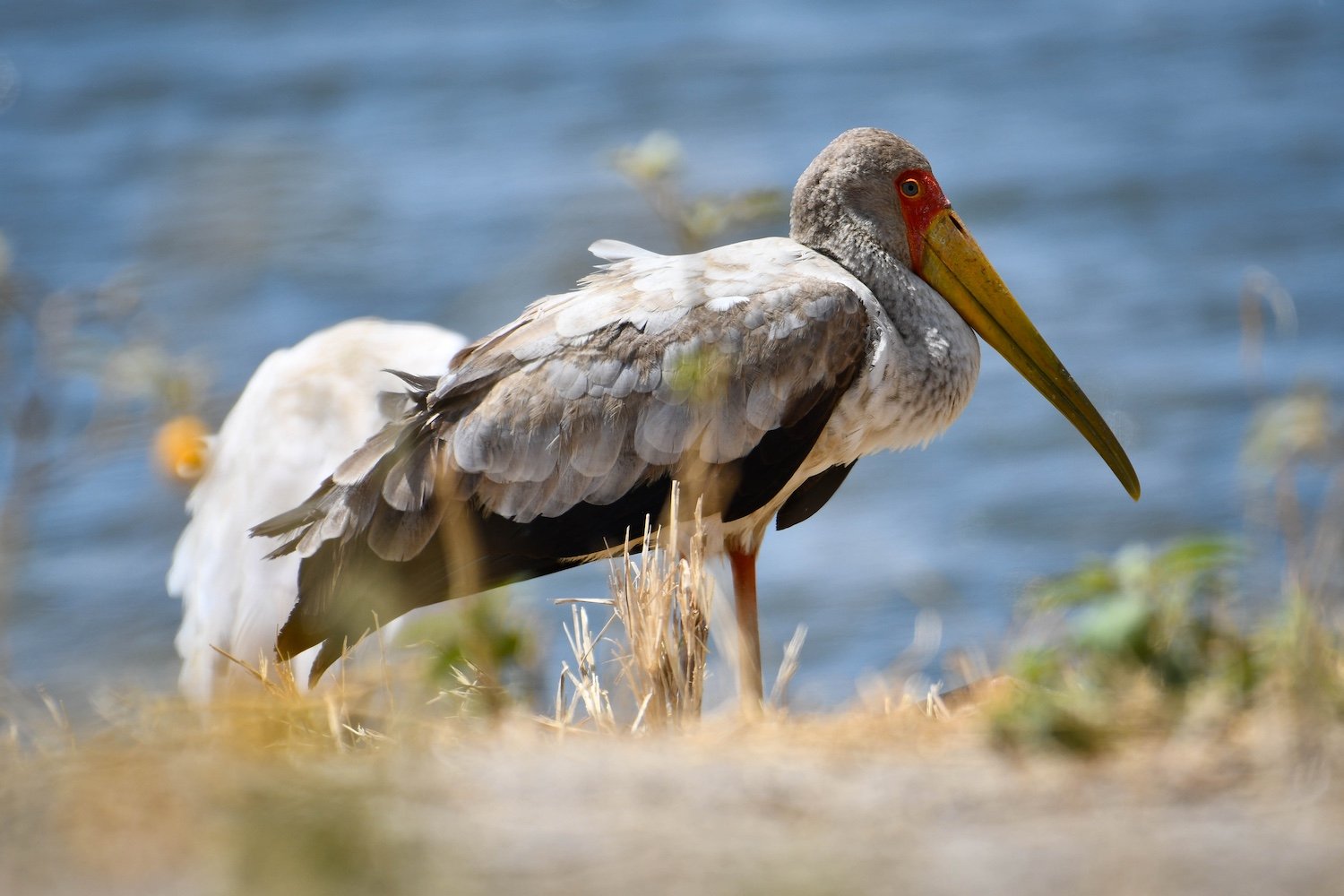
Have you ever wondered why some birds have featherless skin around their faces? This feature serves several purposes. First it is hygienic (and easier to keep clean). This is useful for carrion-eaters (like vultures) or wader-hunters like this yellow-billed stork (Mycteria ibis). Second, it communicates. When it is ready to breed, the facial skin of this stork turns deeper red, the color of the yellow bill intensifies, the legs turn bright pink, and even the feathers gain a pinkish tinge. Third, and finally, featherless skin helps dissipate heat. I'm not sure that's a big deal with stork faces (!), but it has been noted as a factor with their legs.

All in all, it's a brilliant design.

The yellow-billed stork is commonly found in East Africa. I photographed this one in Tanzania.

If you want to see a yellow-billed stork for yourself, join us next year on safari!

Savvy Scavengers

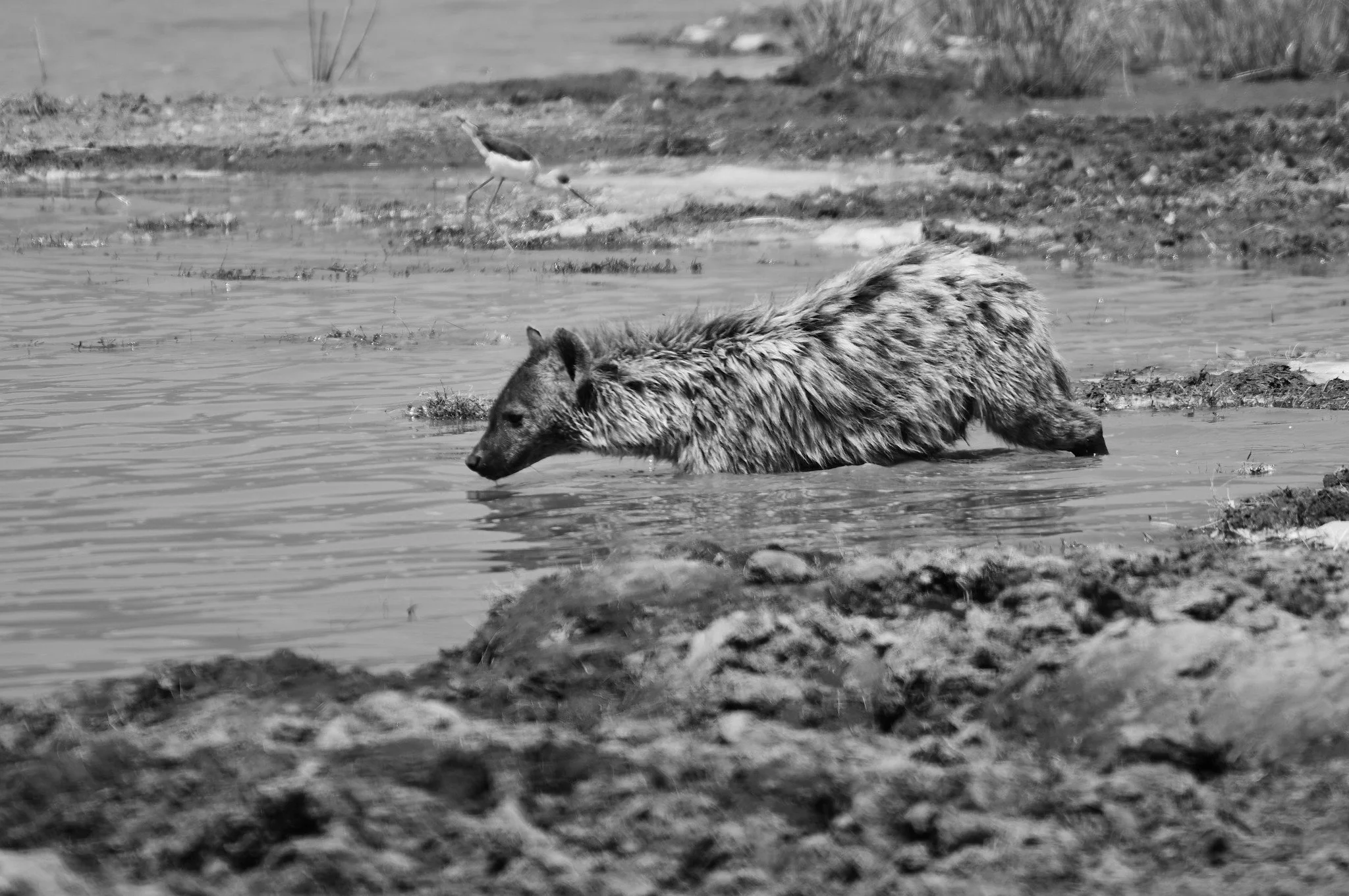
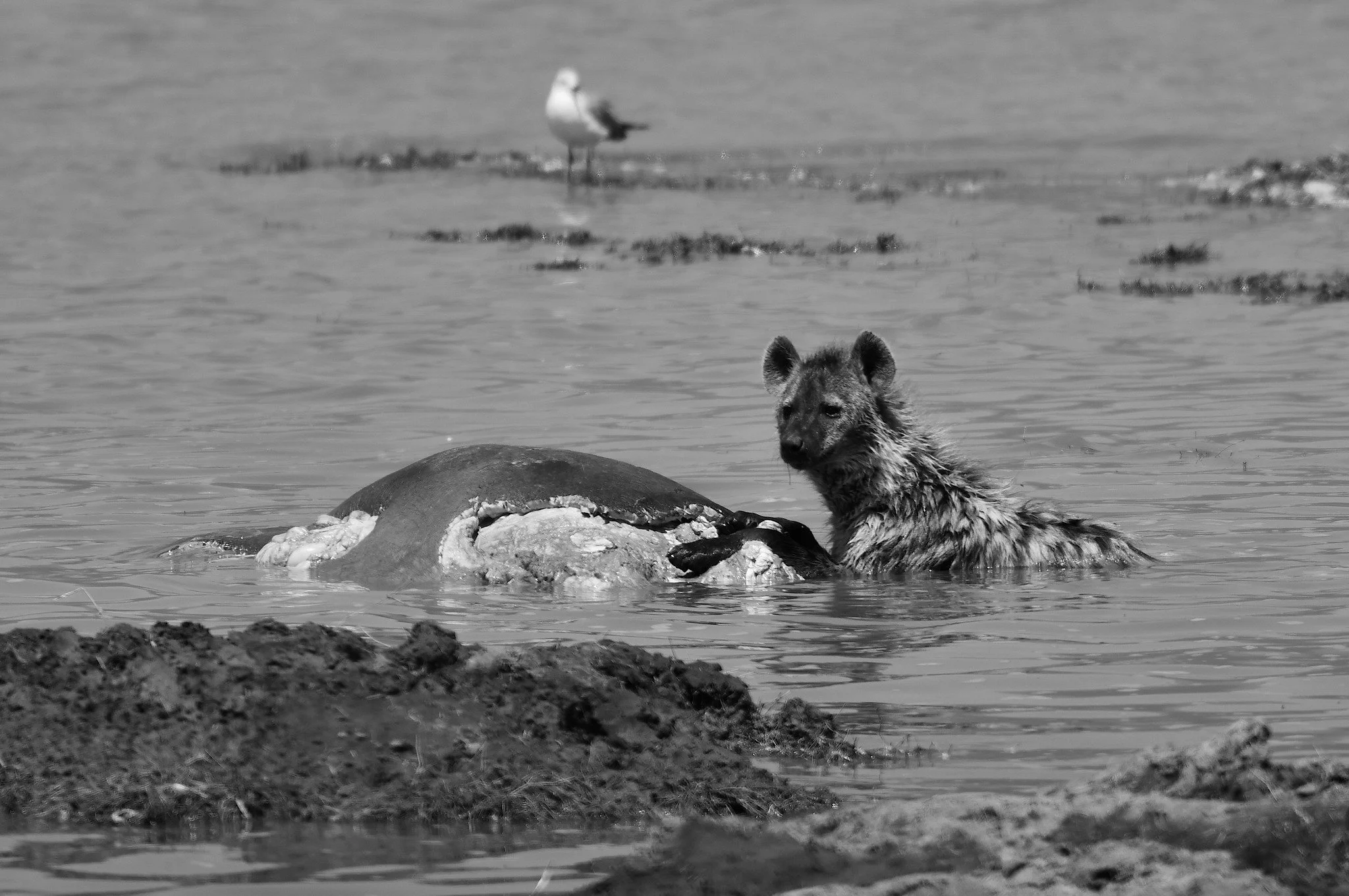
Clean up patrol. A spotted hyena (Crocuta crocuta) finds and feeds on a hippo carcass on the edge of Lake Magadi, Tanzania.

The hyena is a clever and opportunistic scavenger. In fact, did you know that the spotted hyena is capable of outsmarting a chimpanzee in laboratory problem-solving tests?

I guess these creatures just need a better PR representative.

Racing Stripes

They have racing stripes.

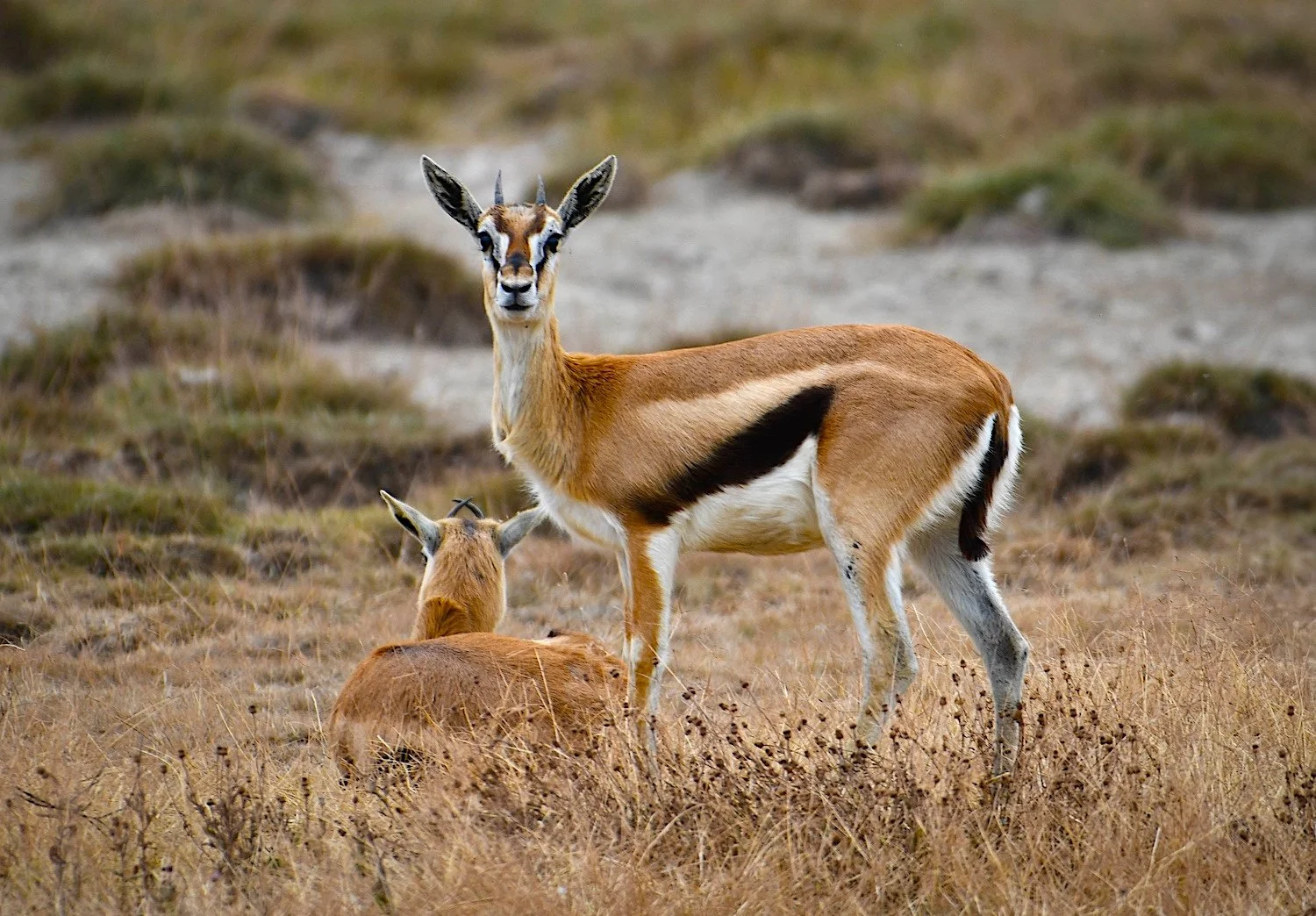
Clocked at 40 mph, Thompson's gazelle (Eudorcas thomsonii) is the fourth fastest animal on the planet. Not surprisingly, these spry antelopes live alongside the cheetah, the fastest animal on the planet (bursts to 65 mph and beyond). A well-timed juke or jump may be the difference between life and death.

I spotted these tommies recharging their batteries in the Serengeti.

Cheer some sprints. Registration for our next African safari closes on Dec 5, 2025. Only a few seats remain.

This Bustard is a Bruiser

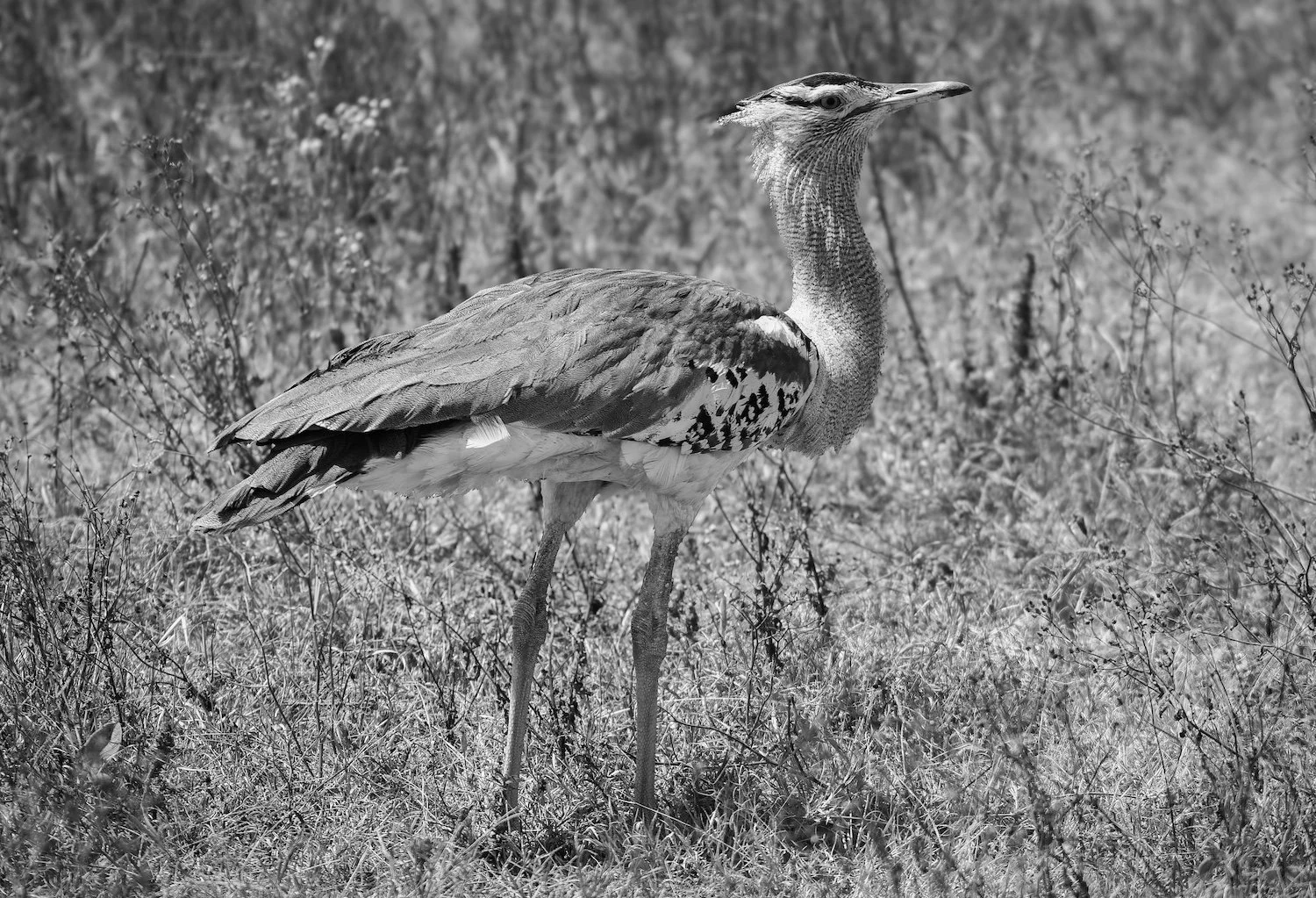
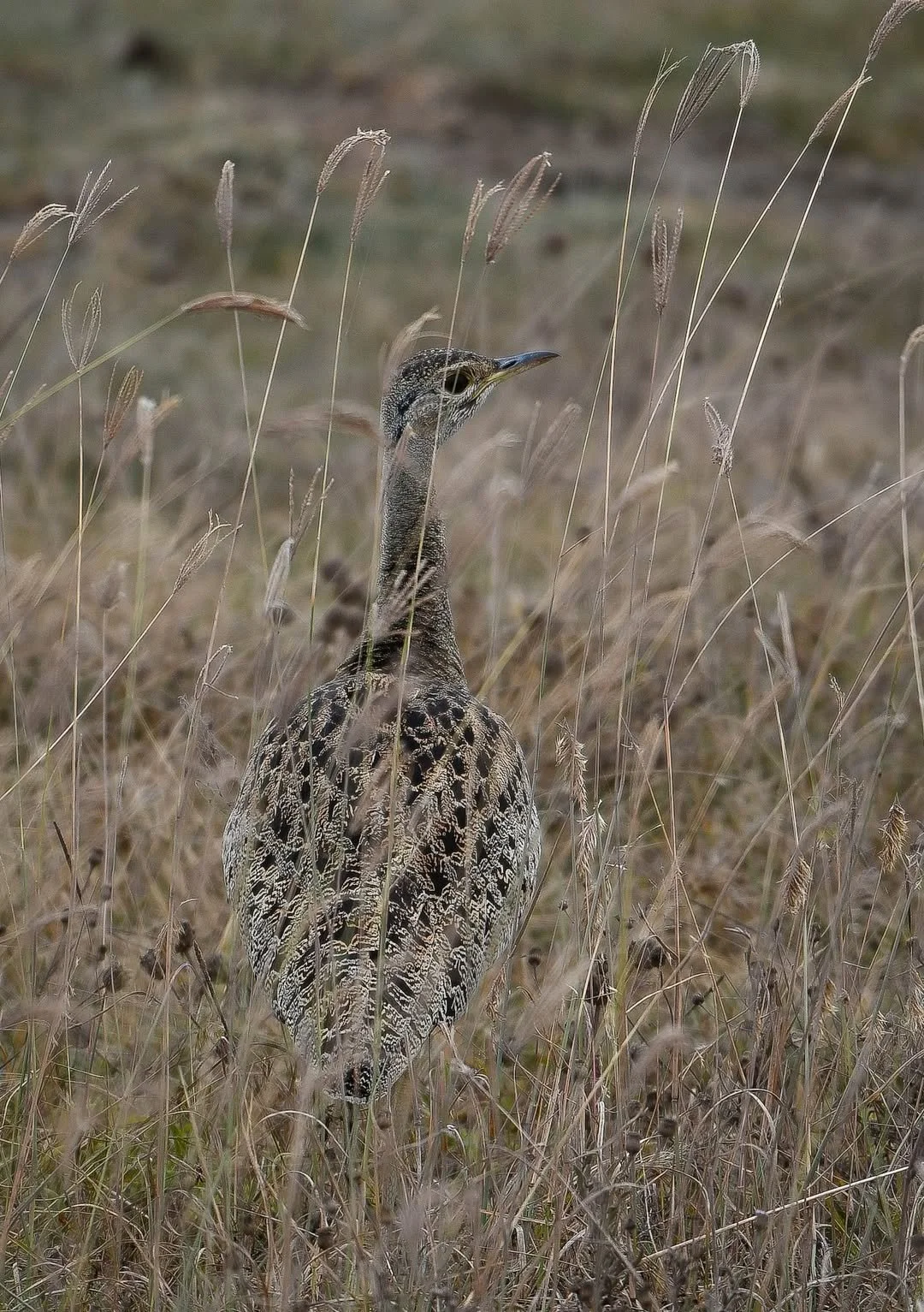
The Kori Bustard (Ardeotis kori) is a bruiser. A mature male can weigh up to 40 pounds, making it the heaviest bird in Africa capable of flight. And like a rumbling C-5, that flight is not pretty. The slow beat of a 9 foot wingspan takes time, but eventually lifts this big boy aloft.

I spotted this specimen in the Ngorongoro crater, Tanzania. Wish I had a scale to show size. I went black and white to highlight its complicated markings.

See a Kori Bustard for yourself. Come with us on an African safari.

A Petite Treasure

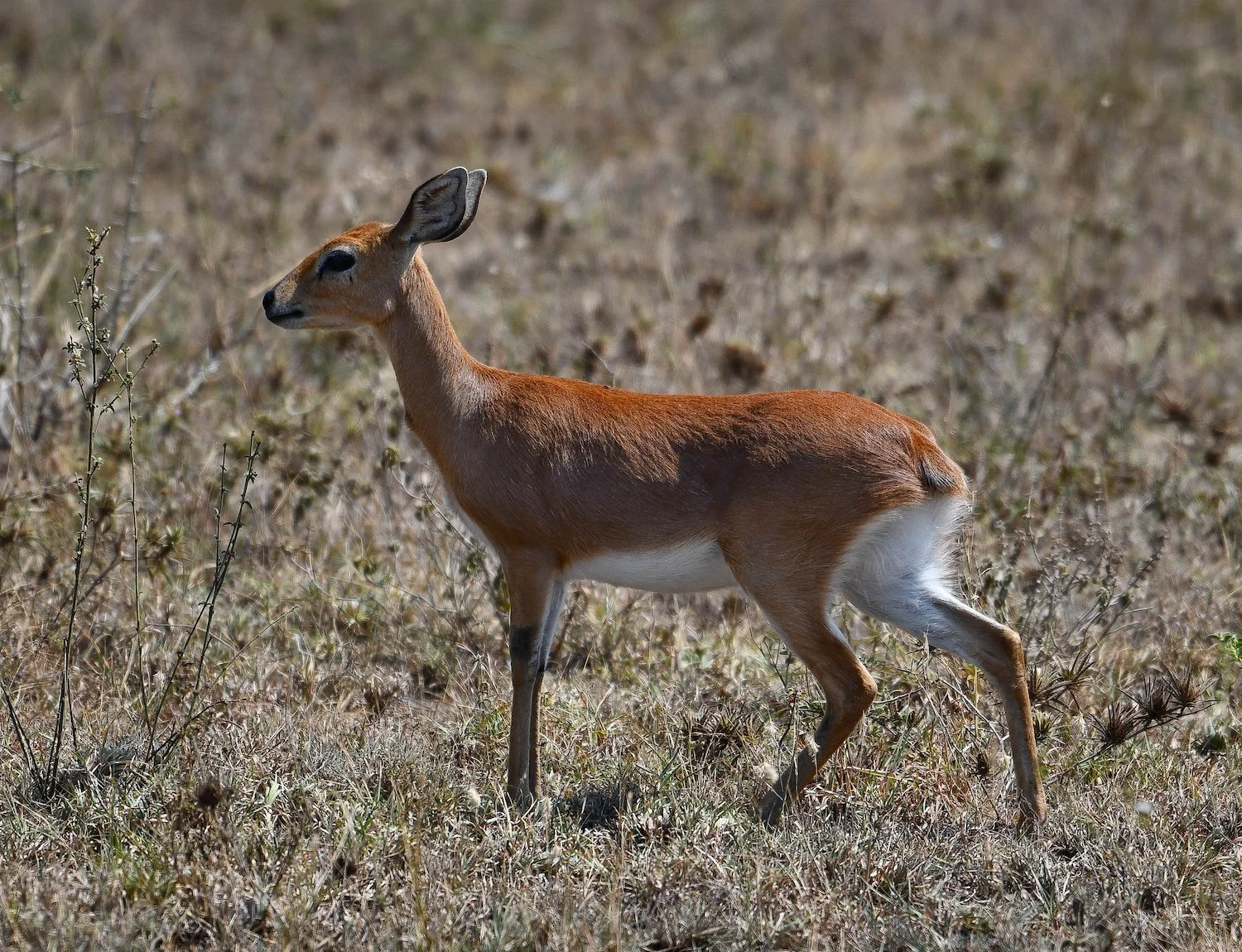
This dwarf antelope (Raphicerus campestris) is one of Africa's petite treasures. Identified as a steenbok (from Afrikaans for "brick," because of its reddish-brown color), a mature adult stands about 20 inches at the shoulder and may weight 25 pounds. Steenboks are known for large ears, and in the case of males, short upright horns.

If threatened, a steenbok will first crouch and hide. If that fails, it sprints in a zig-zag fashion.

We spotted this female in the Serengeti.

Snake Killers

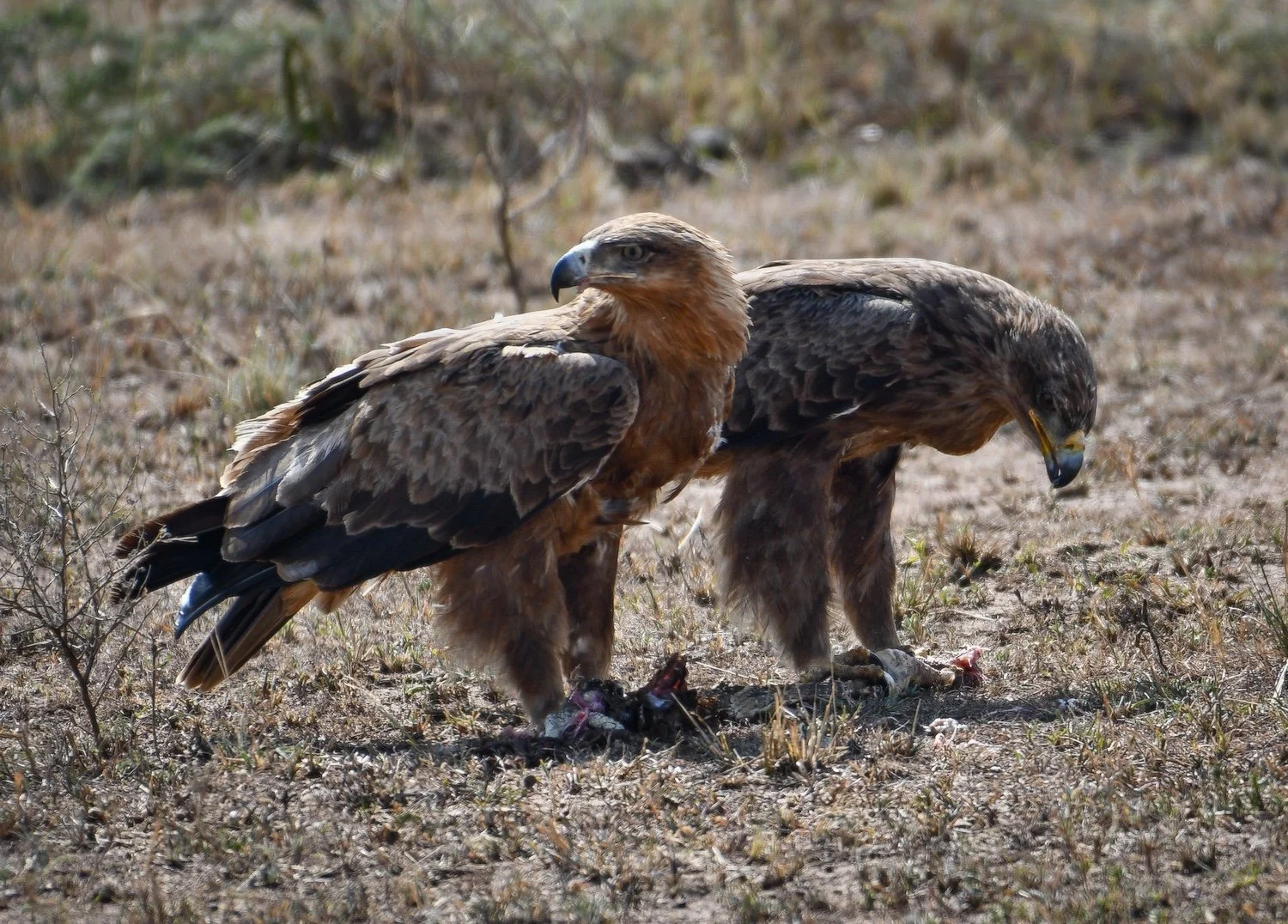
A pair of steppe eagles (Aquila nipalensis) devour a python.

While snakes do not feature largely in their diet, they are powerful and opportunistic eaters who dine on reptiles, small mammals, insects, and even carrion.

Loss of habitat has rendered the steppe eagle an endangered species. They migrate seasonally from Asia to Africa.

This pair was photographed in the Serengeti.

See eagles (or pythons!) for yourself. Safari with us in 2026.

Check out those Horns!

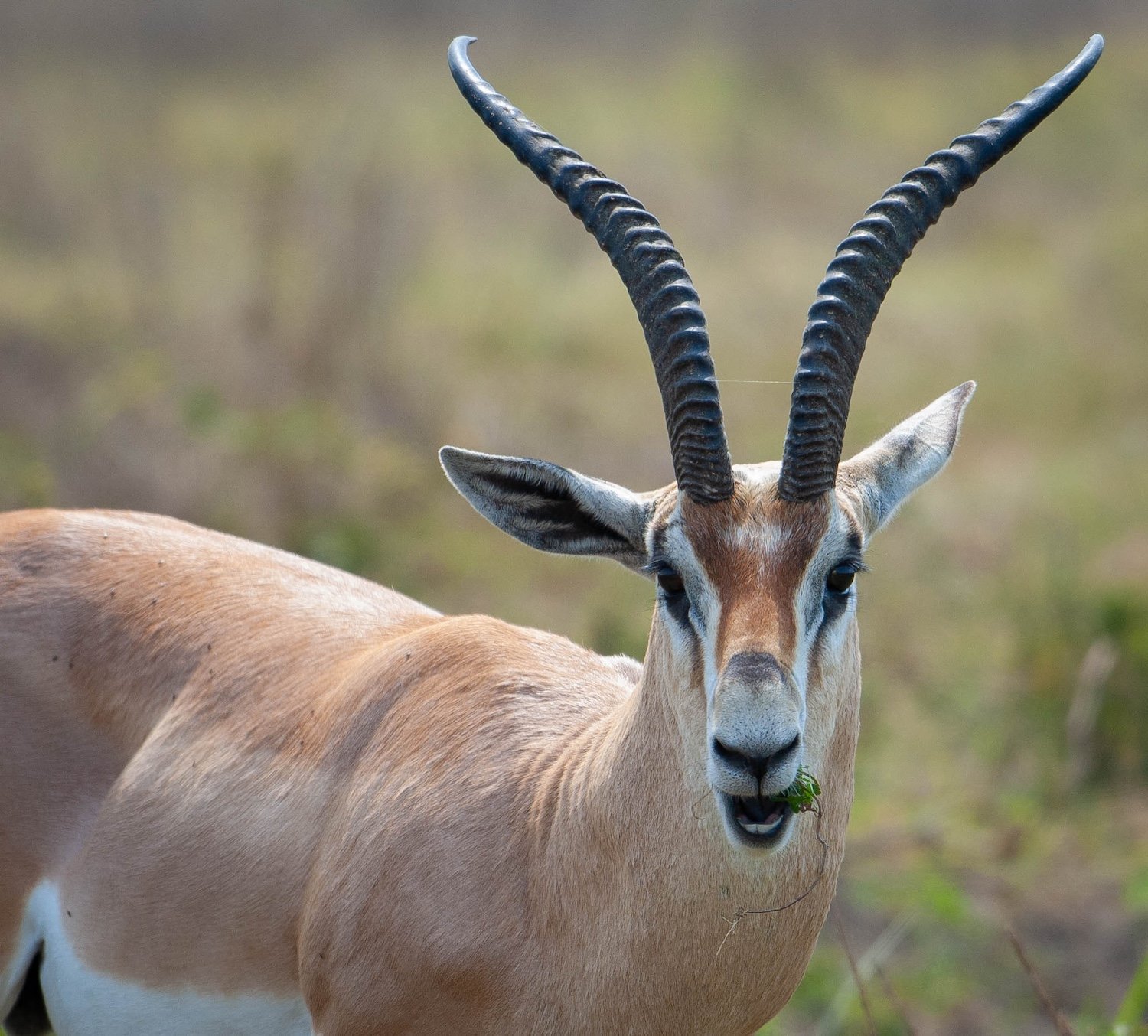
Here's another Grant's gazelle (Nanger granti), a largish antelope often seen in Kenya and Tanzania.

This shot shows off their distinctive horn set. These taper gently from base to point, curving back and outward before tipping in. Distinct rings (or ridges) may be seen along the length of this lyre-shape.

Both males and females of the species have horns. They are used for combat and display.

Clan Behavior

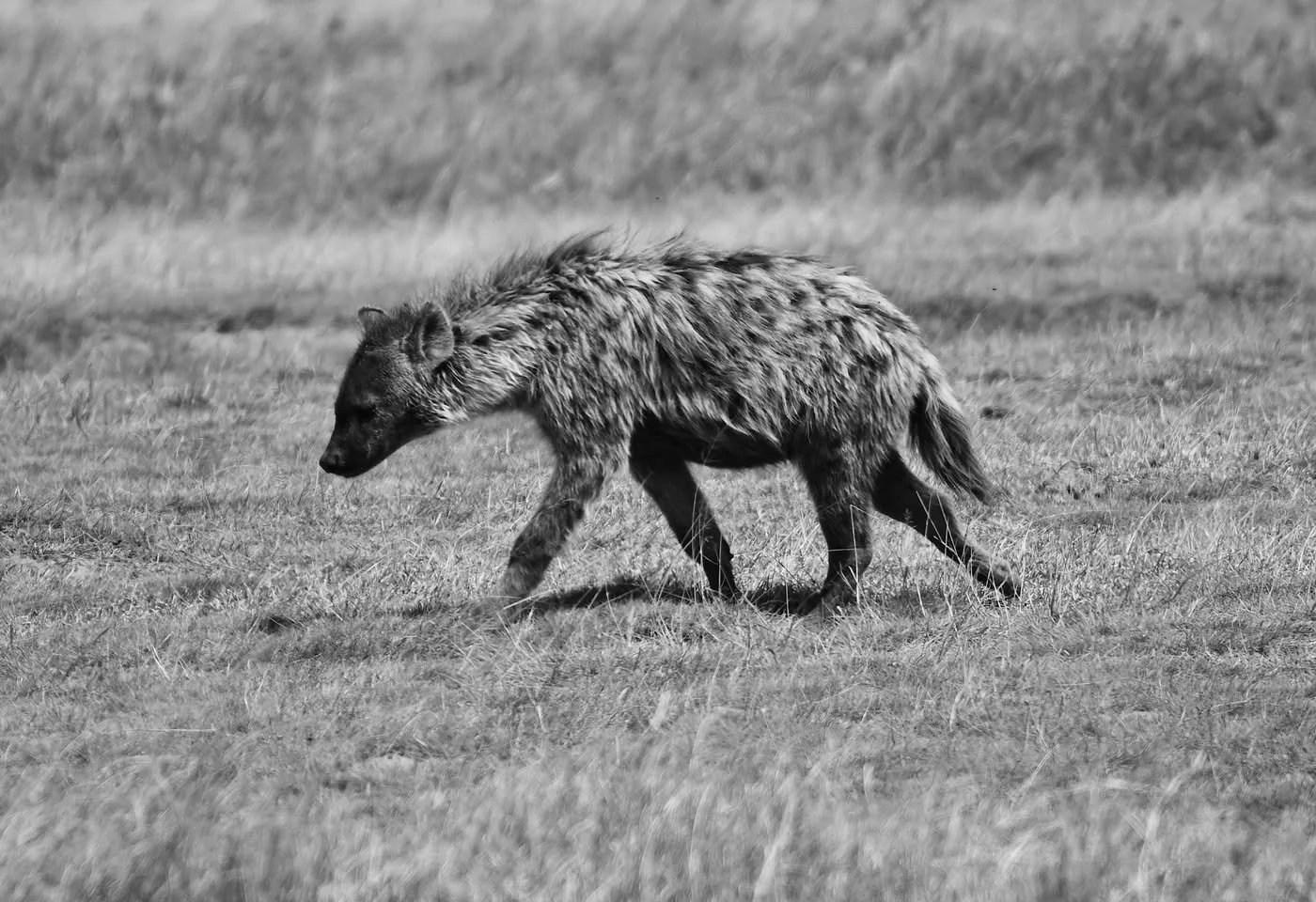
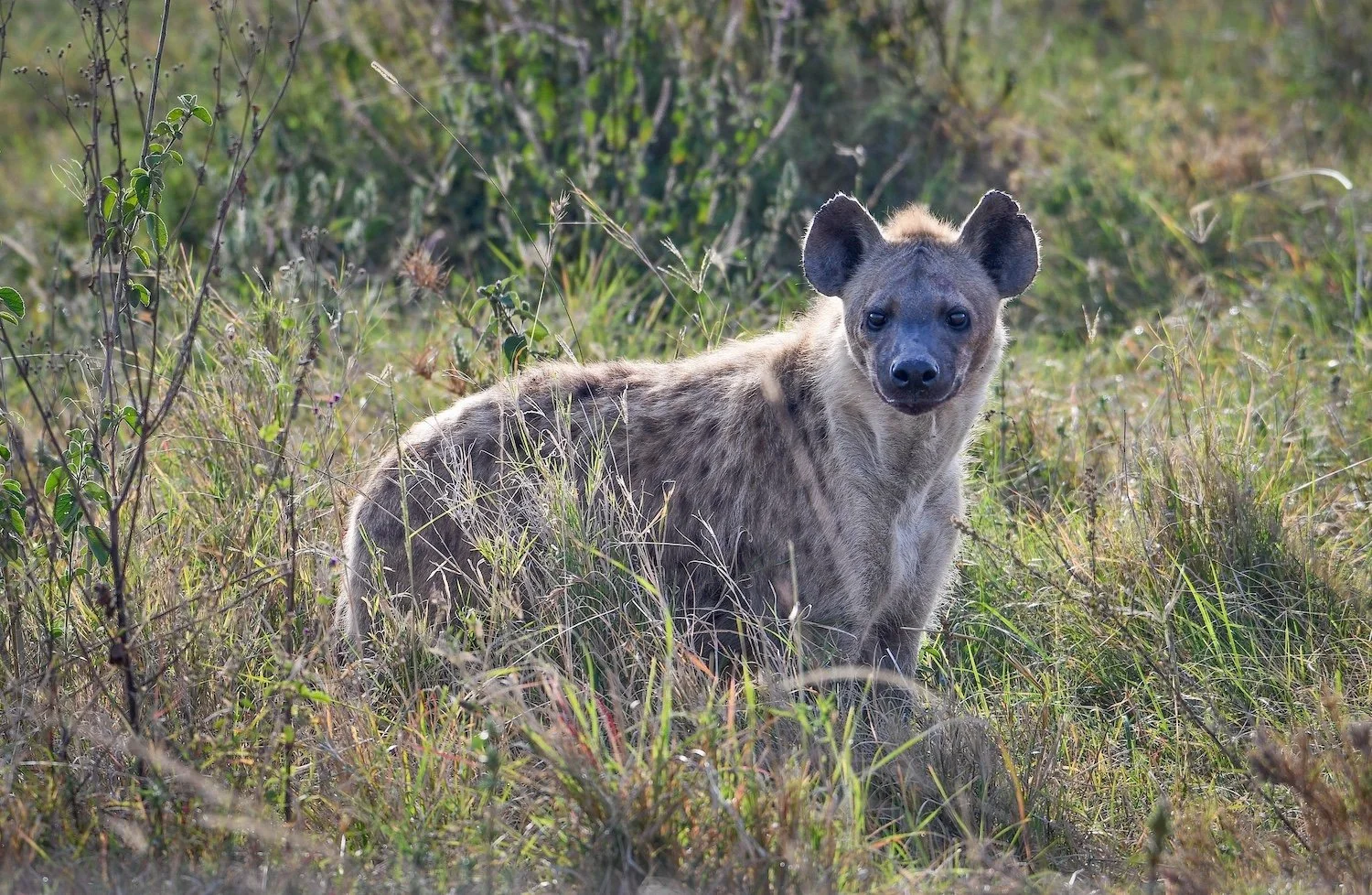
Here's one of about 550 spotted hyenas (Crocuta crocuta) that call Ngorongoro crater (Tanzania) home. These carnivores are organized into eight identified clans with a strict linear hierarchy. At the top each clan? A alpha-female. Yup, hyena society is matriarchal in structure.

Female hyenas tend to remain in their clan for life. Young males often emigrate and join another clan.

See (and hear!) a spotted hyena for yourself. Join us on safari in 2026.!