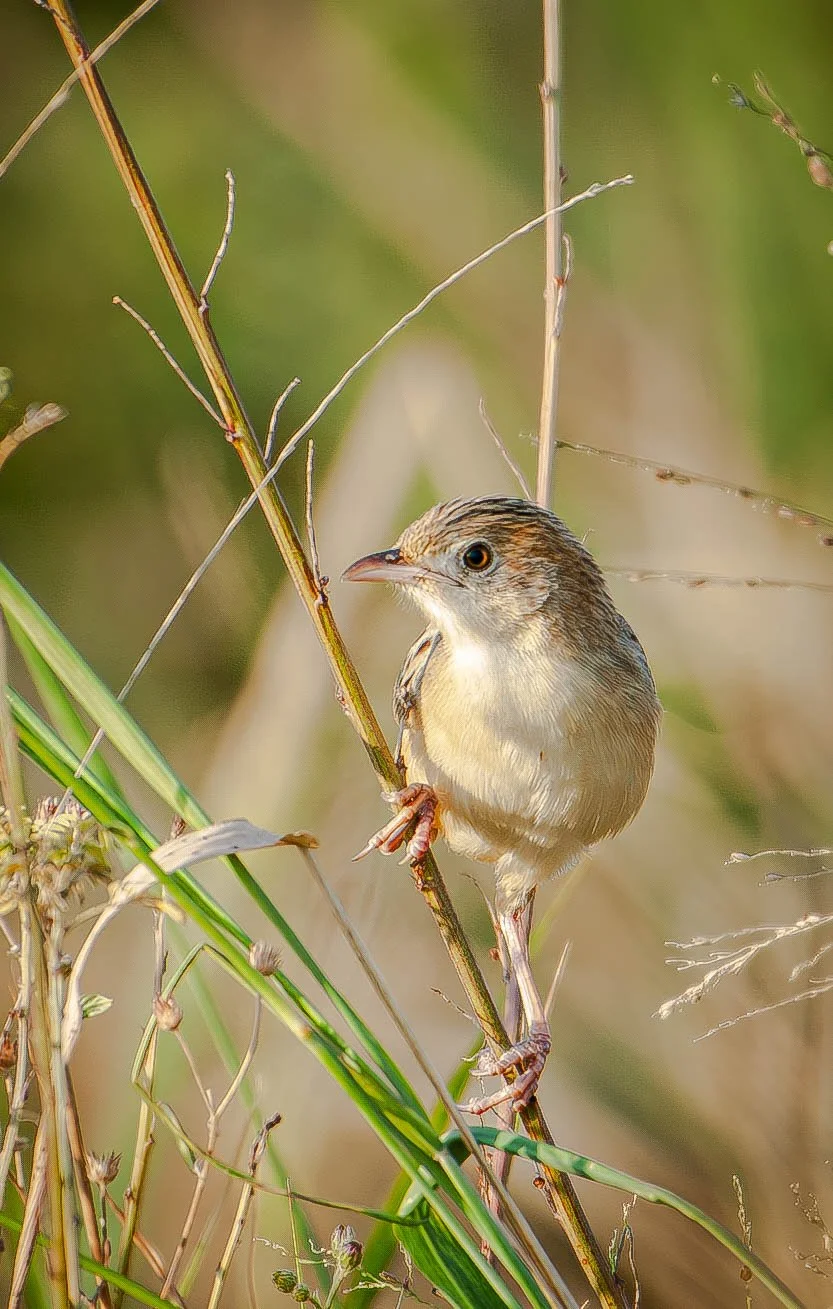
With no less than 1,200 different bird species in Tanzania, identifications can be challenging. A birding novice, I click the shutter, and hope I can figure it out later.
This one is puzzling to me. It has some canary colors, but the bill isn’t short and stout. Weaver family. No, markings not quite right. Maybe a Cisticola (a member of the warbler family)?
One thing is sure. God sure likes birds. And He pulled all the crayons out of the box when He colored them.
Come follow Africa's "Great Migration" with us. We'll be "glamping" in grazing grounds in August of 2025 (dry season) and in birthing grounds in February of 2026 (wet season). Ooohs and aaahs, guaranteed.
Let Sleeping Lions Lie
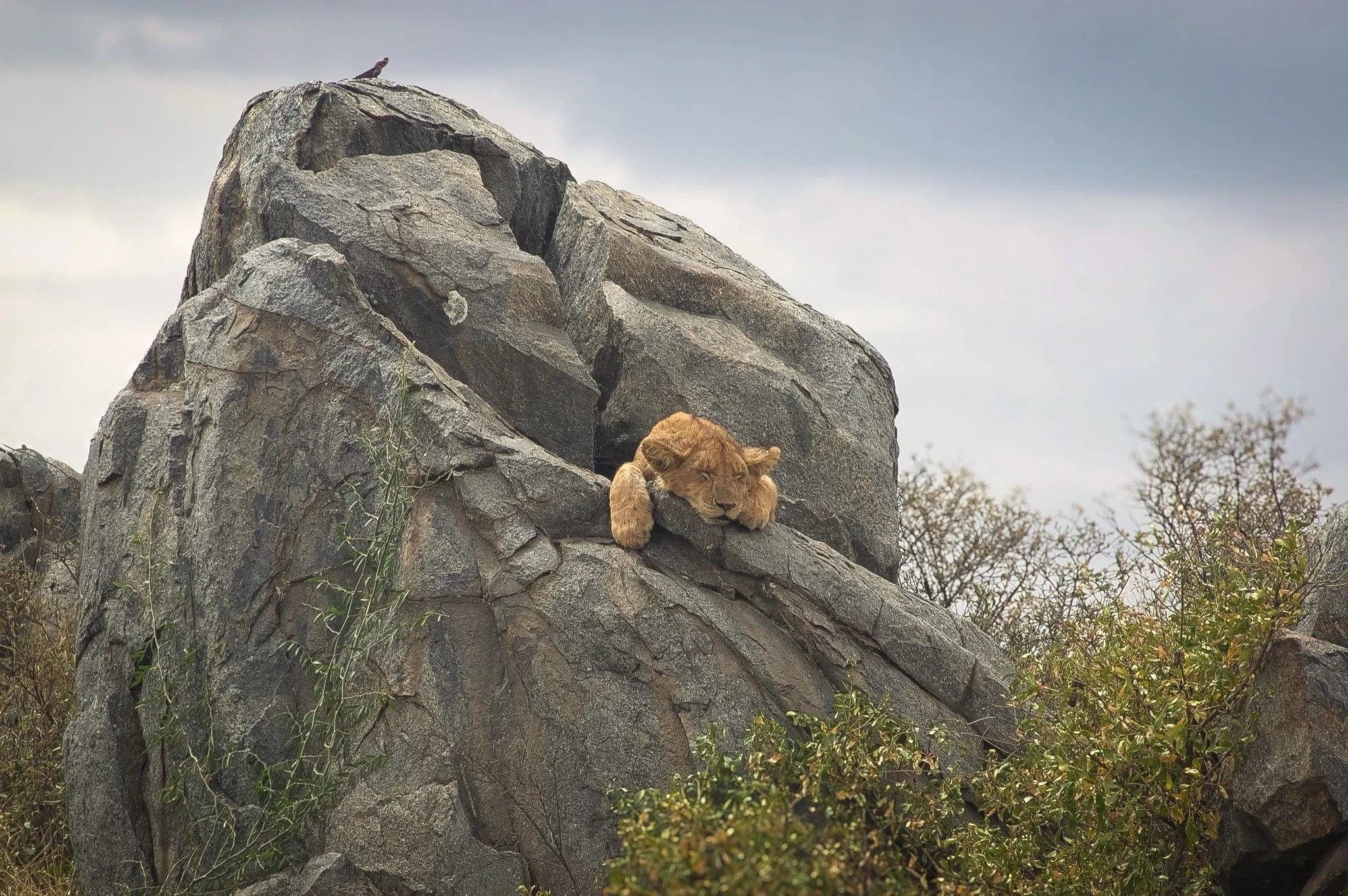
"Let sleeping lions lie" should be a proverb.
I posted a shot of a lioness and a cub on a kopje about a month ago. Here's another for your day.
Like islands in a vast sea, granite kopjes rise above the Serengeti grasslands of Tanzania and provide a special habitat for plants and animals. Just tip-toe when you are around one. You never know who might be sleeping.
Go wild with us on safari in 2025 or 2026.
Chasing Cheese
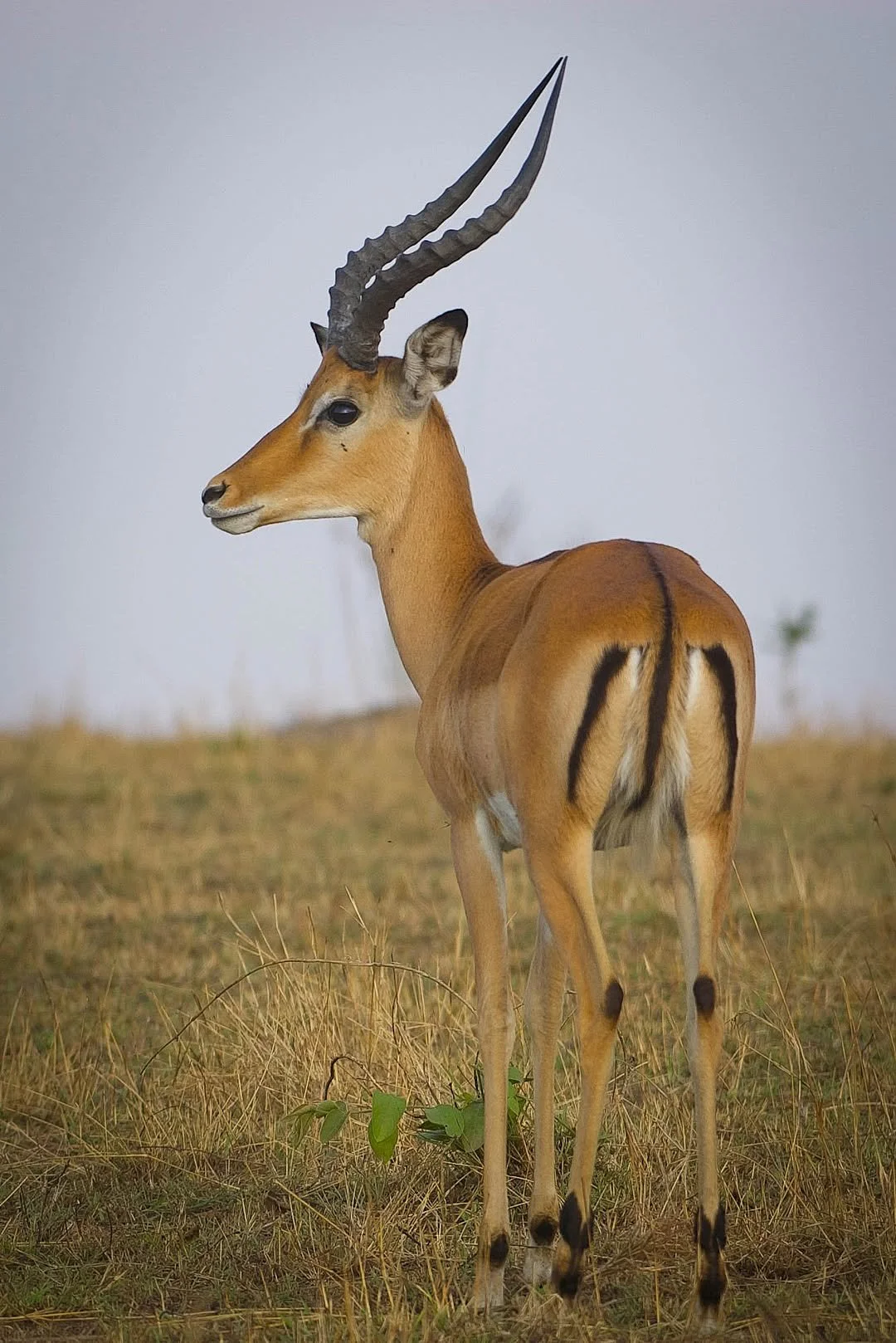
It is hard to imagine a more elegant and agile creature than the common impala (Aepyceros melampus melampus). Long legs give it the ability to sprint up to 55 mph, jump over an obstacles more than ten feet high, and leap a distance of 33 feet.
We often encounter groups of these gregarious creatures in East Africa. They are easily identified due to their medium size, reddish-brown coat, lyre-shaped horns, and black markings on the hind-quarters. Imagine the black marks on the rump advertising the letter "M." See it? Don't blink. That's an iMpala!
Something else that might be of interest: note the black marking on the "ankles" (metatarsals) of the impala's rear legs? Those are scent glands. The impala is the only member of the antelope family that has these features. Some think that the impala leaves a "chemical trail" for others to follow in a chase! What's more, that trail has the smell of cheese! Cheese chase? Of course!
Can play Offense or Defense
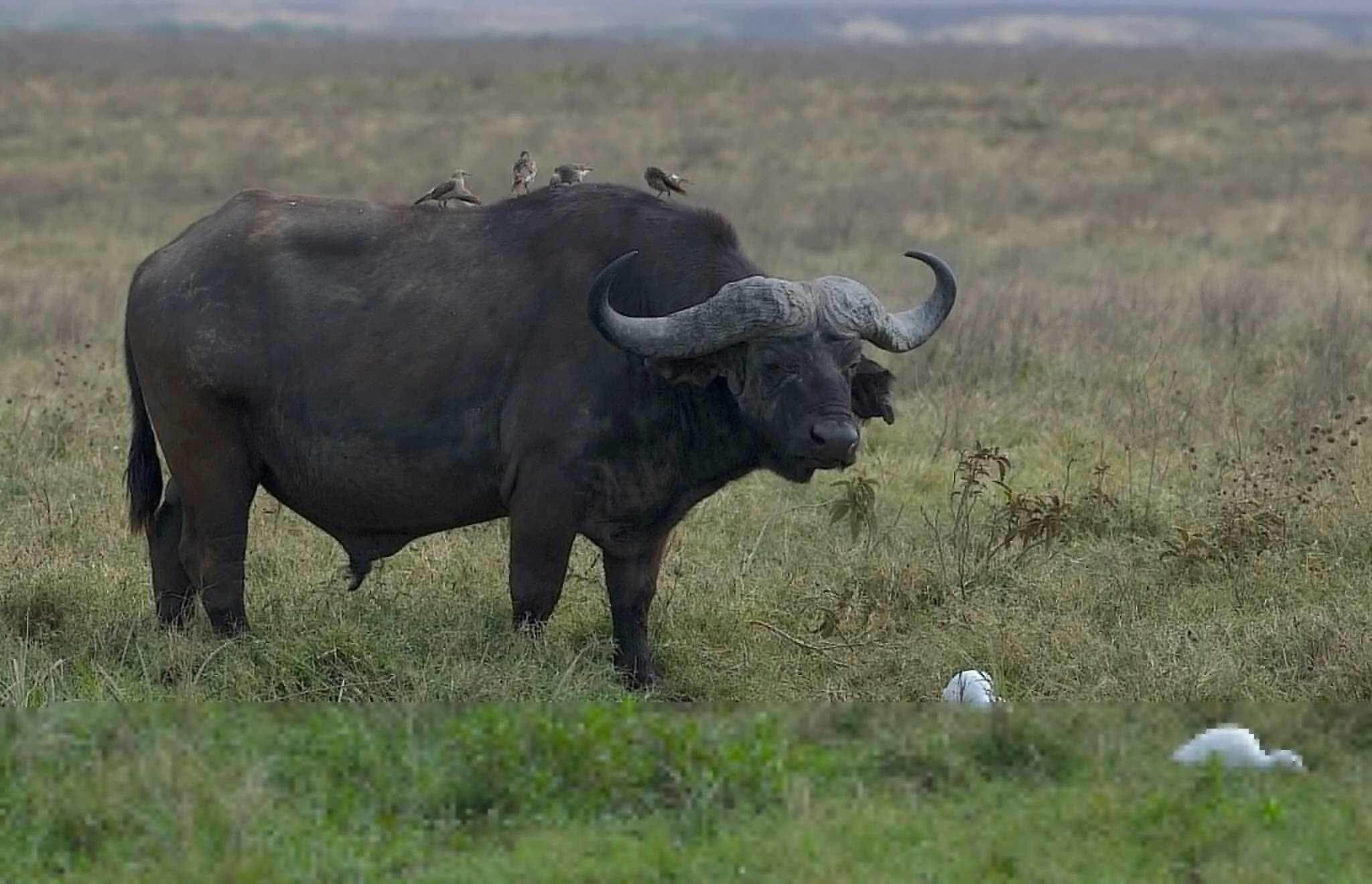
The behavior of the African buffalo (Syncerus caffer) is unpredictable. Unlike its cousins, the American bison, yak, or Asian water buffalo, this animal has never been domesticated. In human whispers, buffalos are called "black death" and may kill more people than lions or hippos.
A big bull, like this one in Ngorongoro Crater, Tanzania, weighs as much as a small car.
To protect themselves from predators, a herd of African buffalo play team defense. The young, elderly, or sick are encircled by the others, butts in, horns out!
Come safari with us in 2025 or 2026! We'll keep our distance from the African buffalo. Promise!
Bestie Beasties
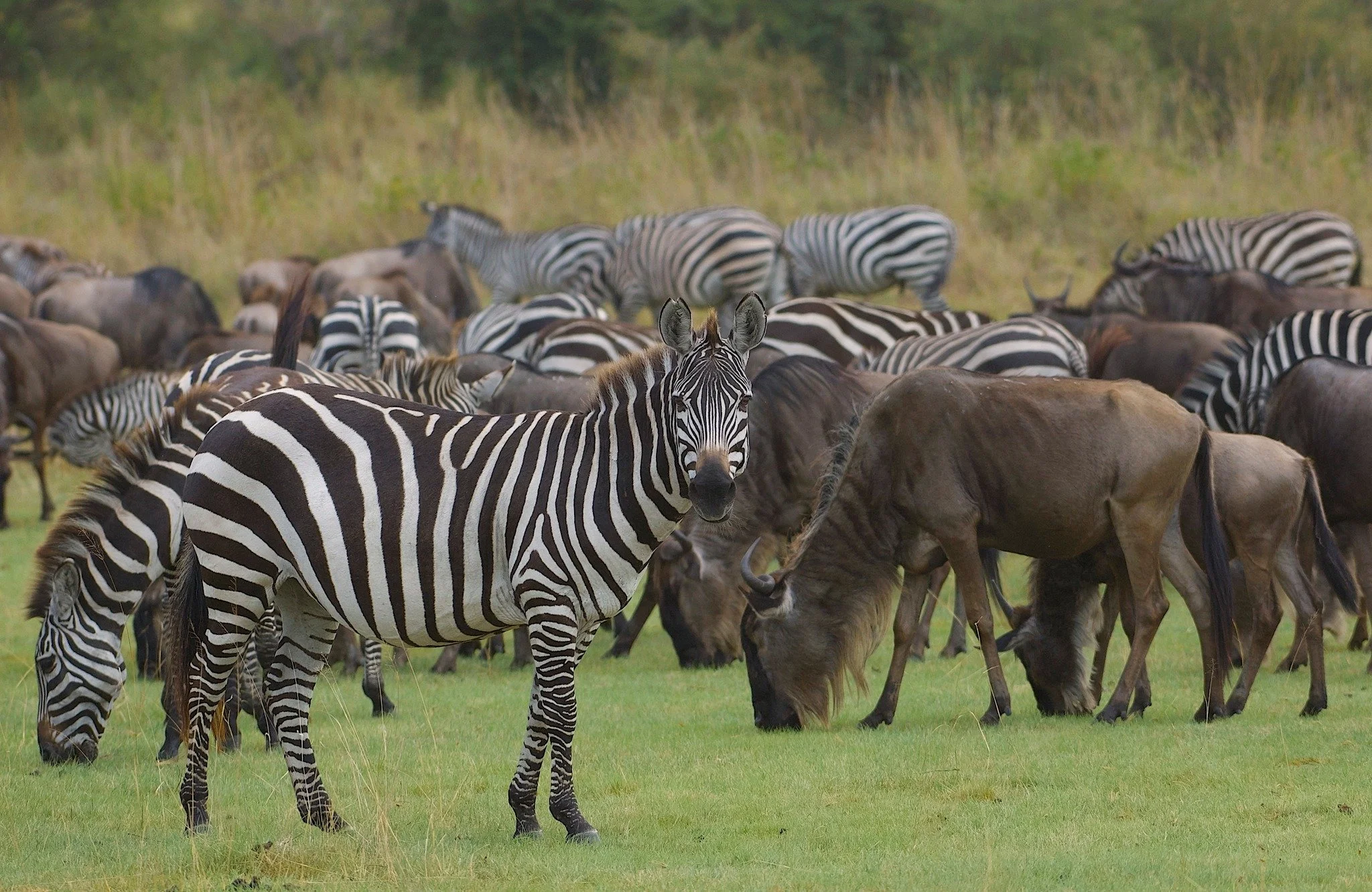
We usually think of the wildebeest (gnu) in the context of "the Great Migration" of the Serengeti. However, mixed in these traveling mega-herds are many other species, including zebras.
The relationship between the wildebeest and the zebra is most interesting. These two animals crop grasses differently, so their grazing is complementary. They also perceive their world differently (helpful for avoiding predators!); the wildebeest's keen sense of smell complements the zebra's keen senses of sight and sound.
Working together, these animals do better than working alone. There's a sermon in there somewhere.
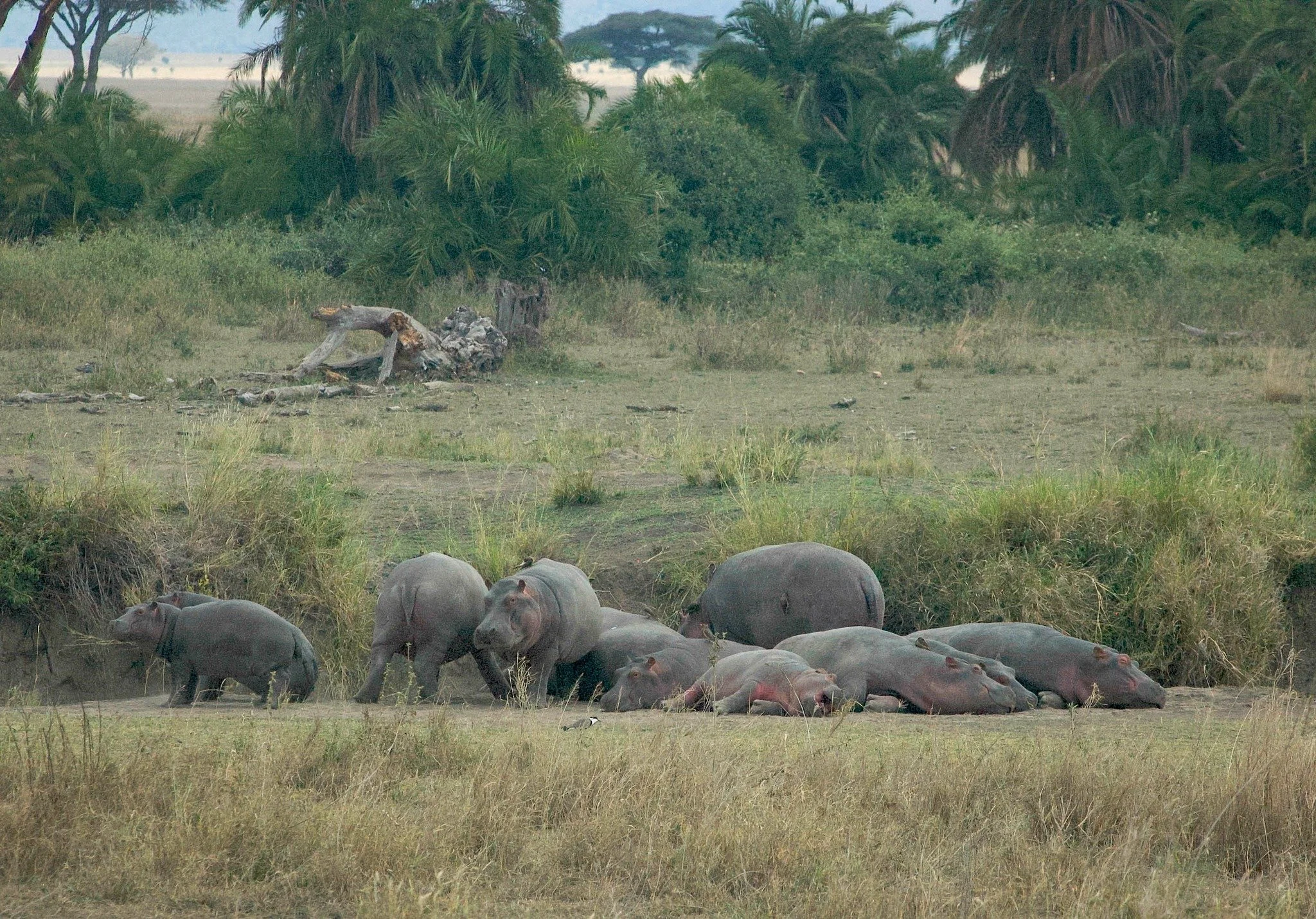
A Bloat of Hippos
Yes, you read that right. A group of hippopotamuseses may be called a bloat. Or a crash. I prefer to save the crash label for rhynos.
For the curious: Many English terms for animal collectives go back to the 15th and 16th centuries. One influential work in this regard is titled the Book of St. Albans (1486). In it was a list of “the compaynys of beestys and fowlys." The book seems to have been popular, offering language tidbits for gentlemen-hunters looking for the right word for beestys to drop while telling storyes at dinner partyes (I'm gust guessing here).
A Straight-tusked Elephant?
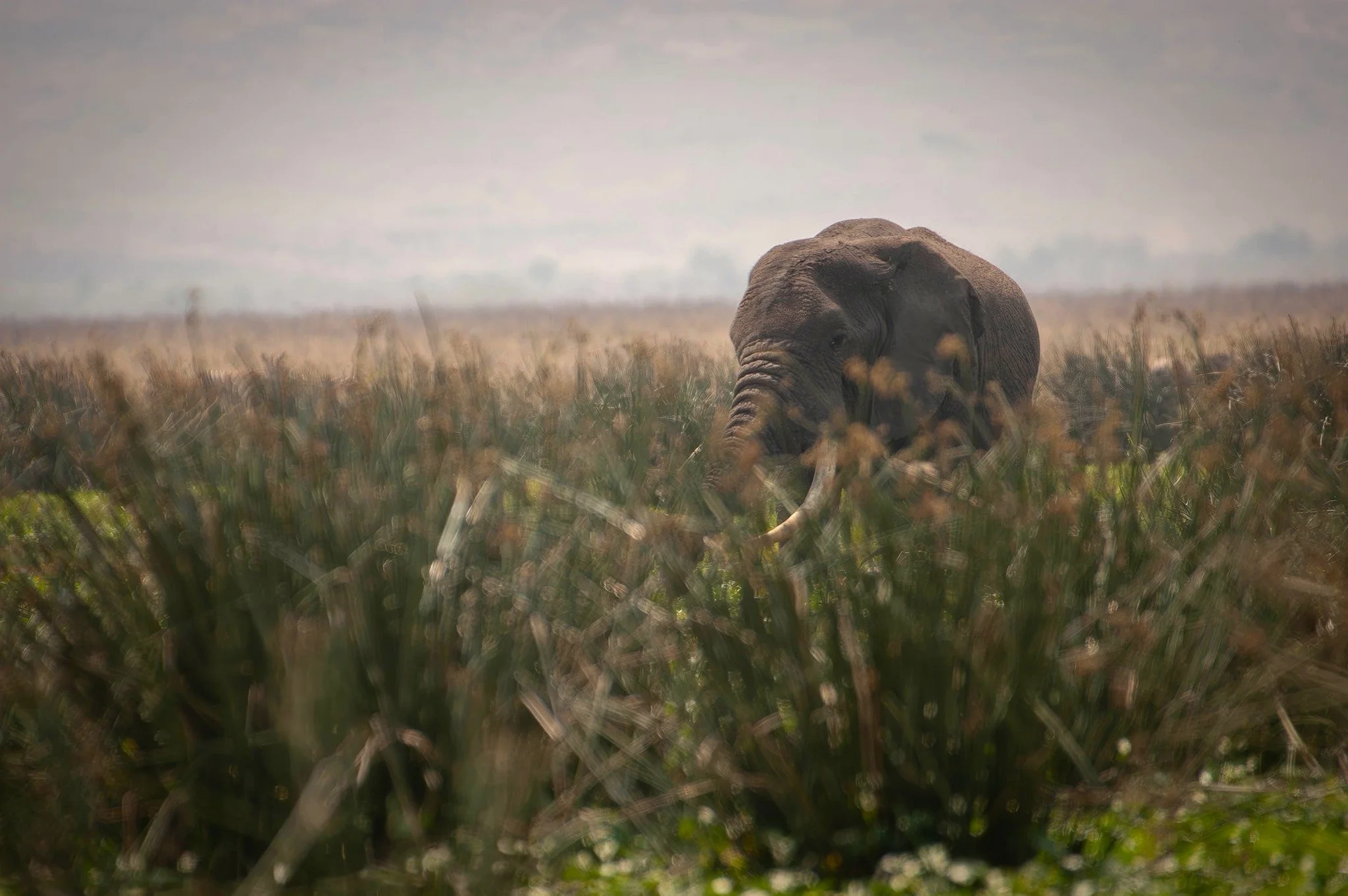
The African savanna elephant (Loxodonta africana africana) is a big animal. Standing ten feet at the shoulder and weighing 13,000 pounds (on average), these tuskers are the largest land animal alive today.
However, do you know that its ancestor, the Straight-tusked elephant (Palaeoloxodon antiquus) was even bigger! Remains of this species suggest that a mature bull measured 13 feet at the shoulder and weighed 29,000 pounds (imagine a semi-truck and empty trailer with knees!).
The Straight-tusked elephant once roamed temperate forests around the Mediterranean sea. The species was likely hunted out by humans and did not survive the end of the last ice age.
Footnote 1: Listen to the sound of creation groaning (Rom 8:22-24).
Footnote 2: an 8' tusk from a Straight-tusked elephant was found in 2022 in southern Israel. It is the largest complete fossil tusk ever found in the Near East. (see the link here: https://www.cbsnews.com/.../straight-tusked-elephant.../)
Caption: My eyes look like this when . . .
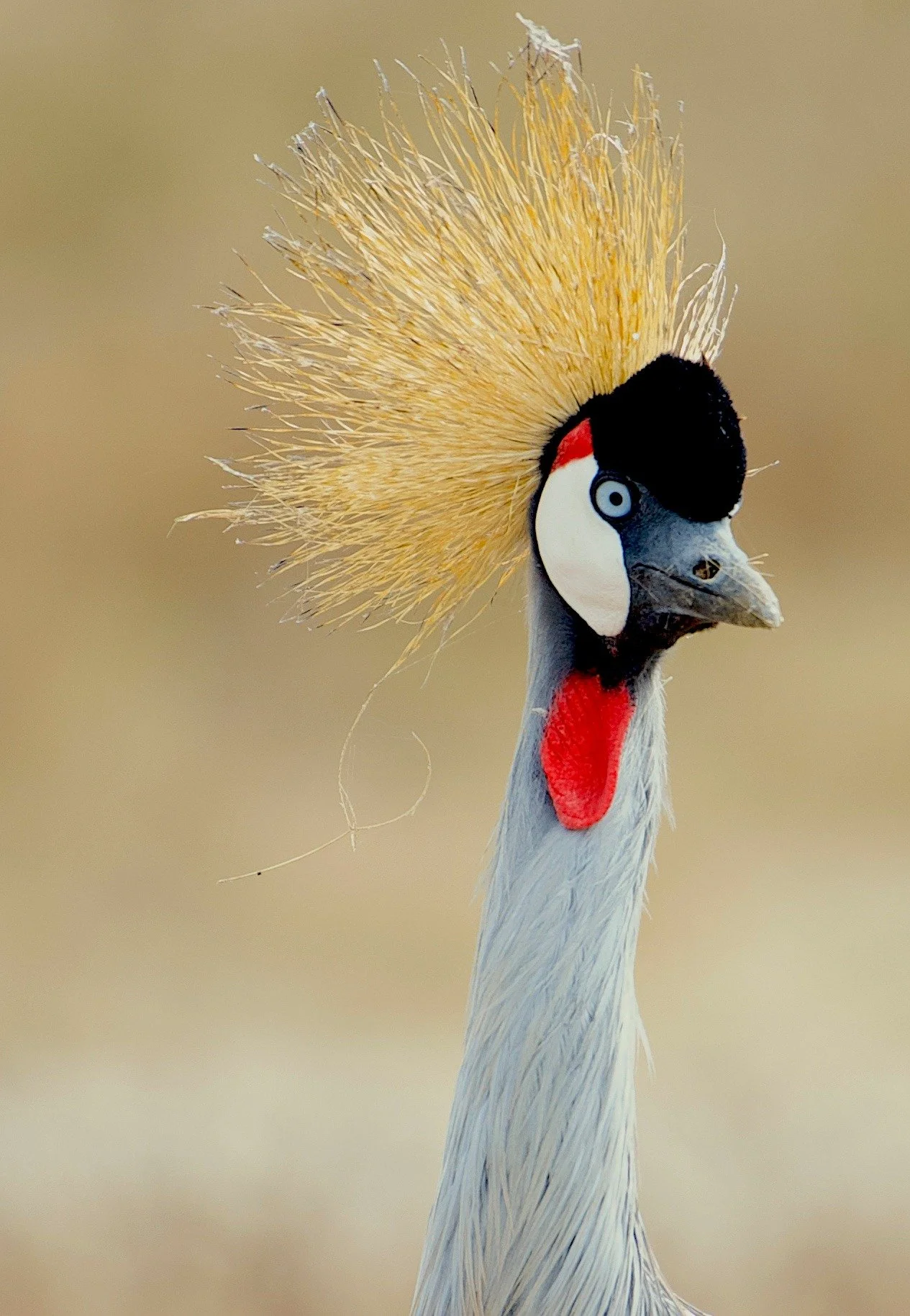
. . . the wife comes at my face with tweezers.
Grey crowned crane (Balearica regulorum).
Fun Facts from an Elephant Nursery
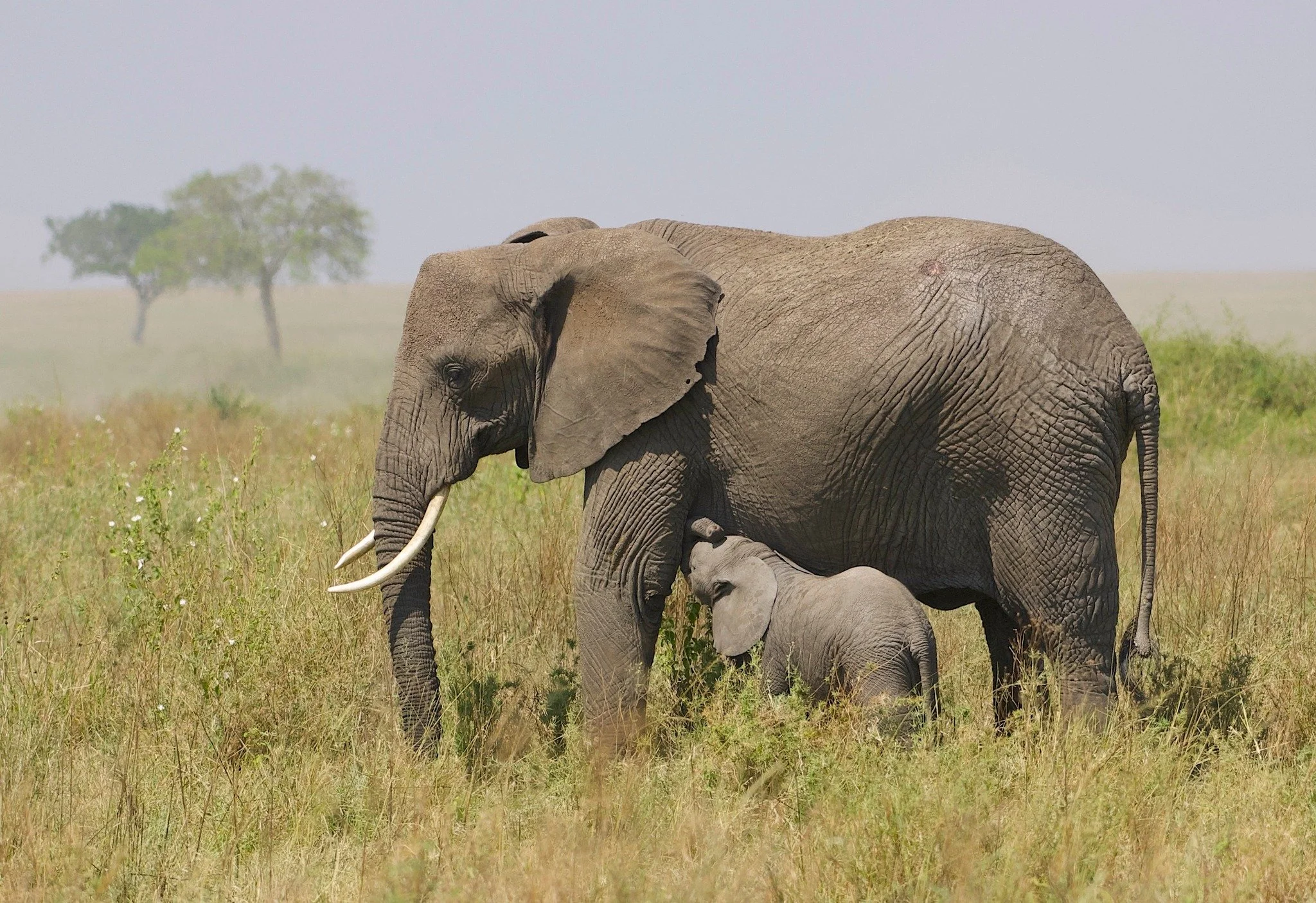
Fun facts from a Serengeti nursery.
1. Elephant calves drink 2 1/2 gallons of milk in a day.
2. Elephant milk has 100 times more protein than cow's milk.
3. Elephant calves are weaned between 2 and 3 years of age.
4. Elephant herds have incredible "social glue." Group behavior is modified to care for both the young and the old.
Come see the elephants! Safari with us in August of 2024 or February of 2025.
Lights on a Christmas Tree?
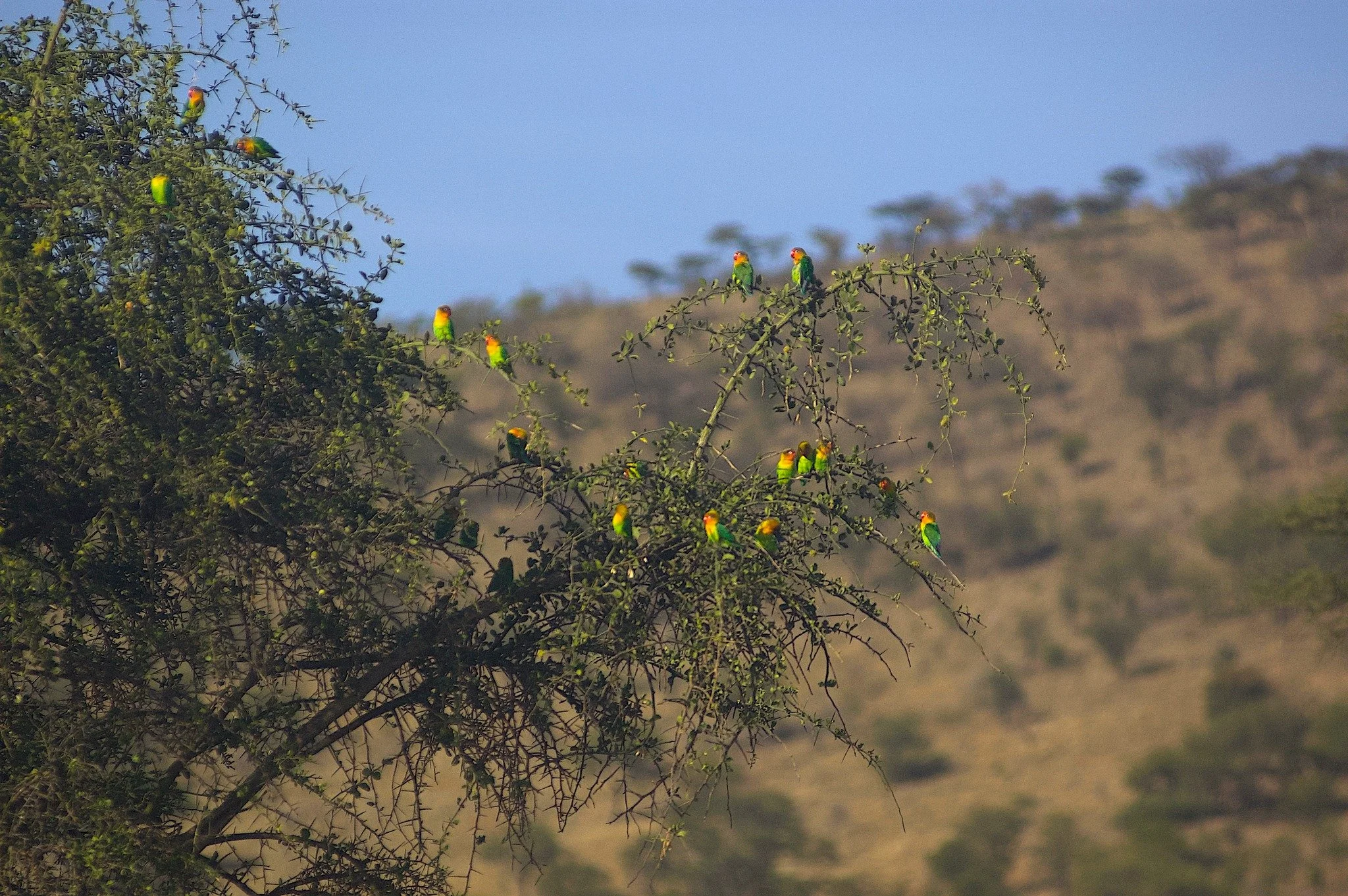
Lights on a Christmas tree?
More like Fischer's lovebirds in an acacia. These little neon-colored parrots start green at the bottom, go yellow in the neck, and orange in the head.
Their family name is Agapornis, a combination of two Greek words: agape = "love" and ornis = "bird"). They are, literally, "lovebirds."
Fischer's lovebirds (named after a German explorer) are found natively near Lake Victoria in East Africa. I captured this image of a settled flock in the central Serengeti. It was shot from the back of a jeep, hence the image is a little noisy!
Due to dwindling population numbers, laws prohibiting the export of captured lovebirds (for pets) have been enacted in Tanzania. That's good. They are more lovely in the wild, don't you think?
Lilac-breasted Roller

Nothing says East Africa like a Lilac-breasted roller. Its coloration is magnificent: lilac breast, green head, brown wings, and aqua undersides.
Rollers are aerial acrobats. They get their name from an impressive courtship flight, a dive that involves rolling and pitching. Similarly, when looking for a meal, the Lilac-breaster roller is a "perch and dive" hunter. They typically swoop down and ambush insects on the ground.
A few weeks ago I posted a head-on view of this same bird. H/T to Ken Gawne for his help with this side image.
If you want to feast on such birds with your own eyes, come on safari with us in 2025 or 2026!
Bull boss
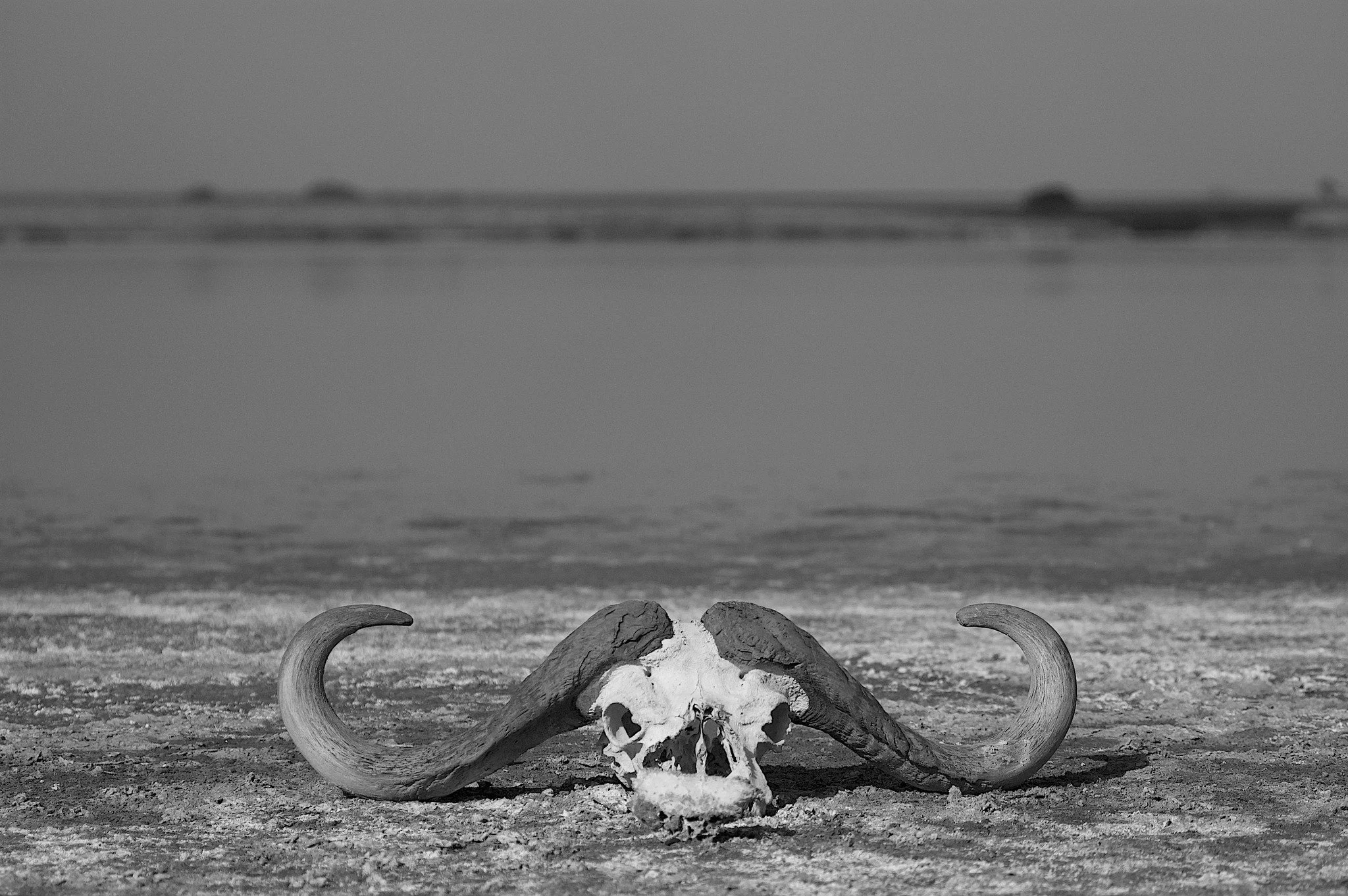
We came upon a small pond on an evening game drive. On the shore was a skull of a Cape buffalo (Syncerus caffer). Mr Nixon stood on alert; Vicki and me hopped out of the truck to get the picture. Little was left of this cantankerous bovid but its horns still commanded attention.
Horns grow on bulls and cows, rising, drooping, curling, pointing. In mature males, the horns often grow together forming a "boss" across the top of the skull (you can see a gap on this one). The point spread may reach a meter. This accessory gives the animal a formidable helmet for infighting or a weapon for repealing predators. I stepped close for the shot, stopped, sniffed the approaching night air and wondered what took this one down.
Unlike its cousins, the water buffalo or the yak, the Cape buffalo has never been tamed by man.
The Free Canary
"The Canary," by Morris Rosenfeld
The free canary warbles
In leafy forest dell:
Who feels what rapture thrills her,
And who her joy can tell?
The sweet canary warbles
Where wealth and splendor dwell:
Who knows what sorrow moves her,
And who her pain can tell?
-----------------
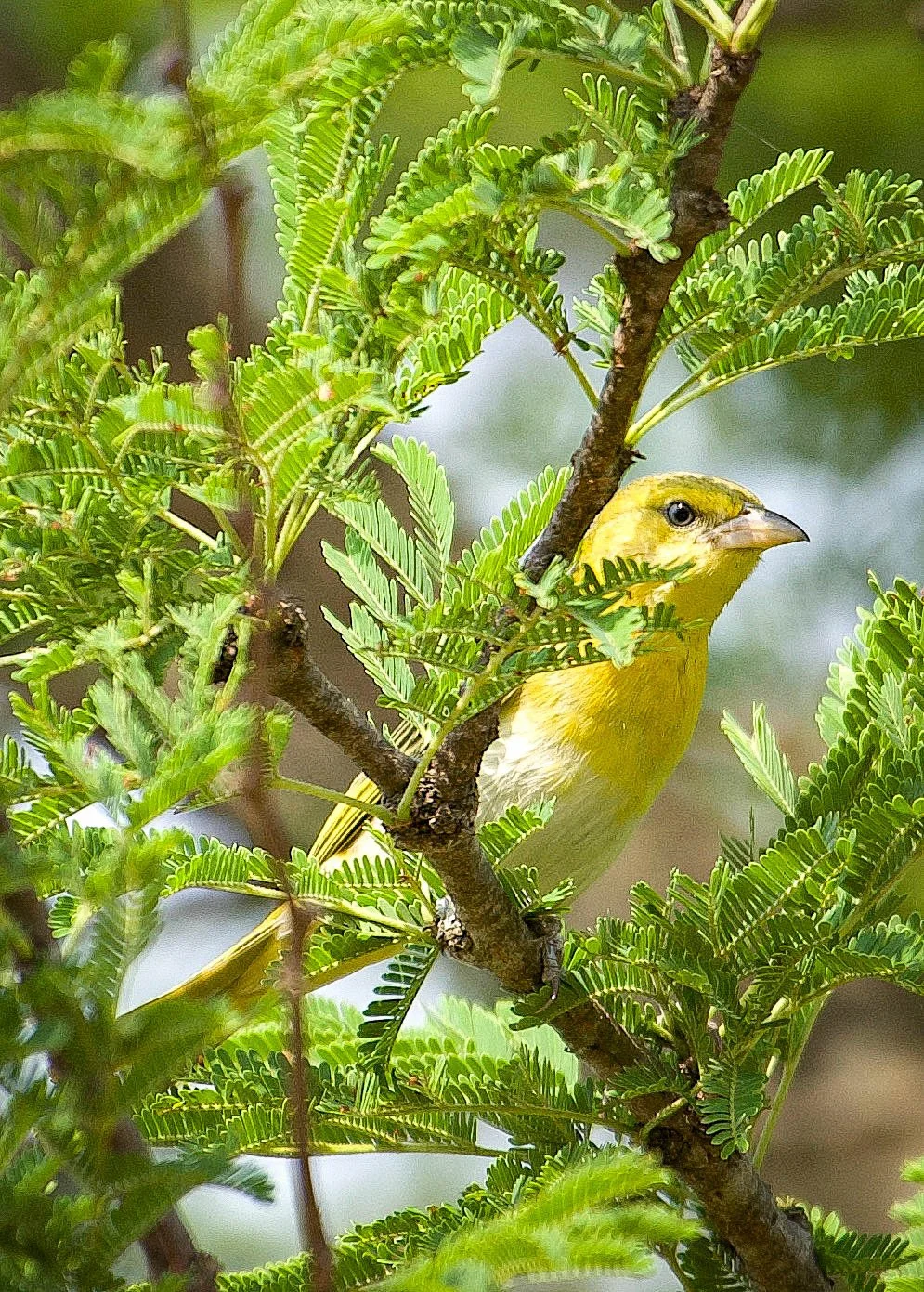
Like the inner thought-world of the birds in Rosenfeld's poem, this free canary was elusive, opaque. I tried different angles, but he always managed to keep leaves between us.
I'm guessing he is a White-bellied canary (Crithagra dorsostriata). With few dark stripes and bright colors, I'm also guessing he's male.
You can find canaries warbling worldwide, but they are only truly at home in Africa.
Sporting the colors!
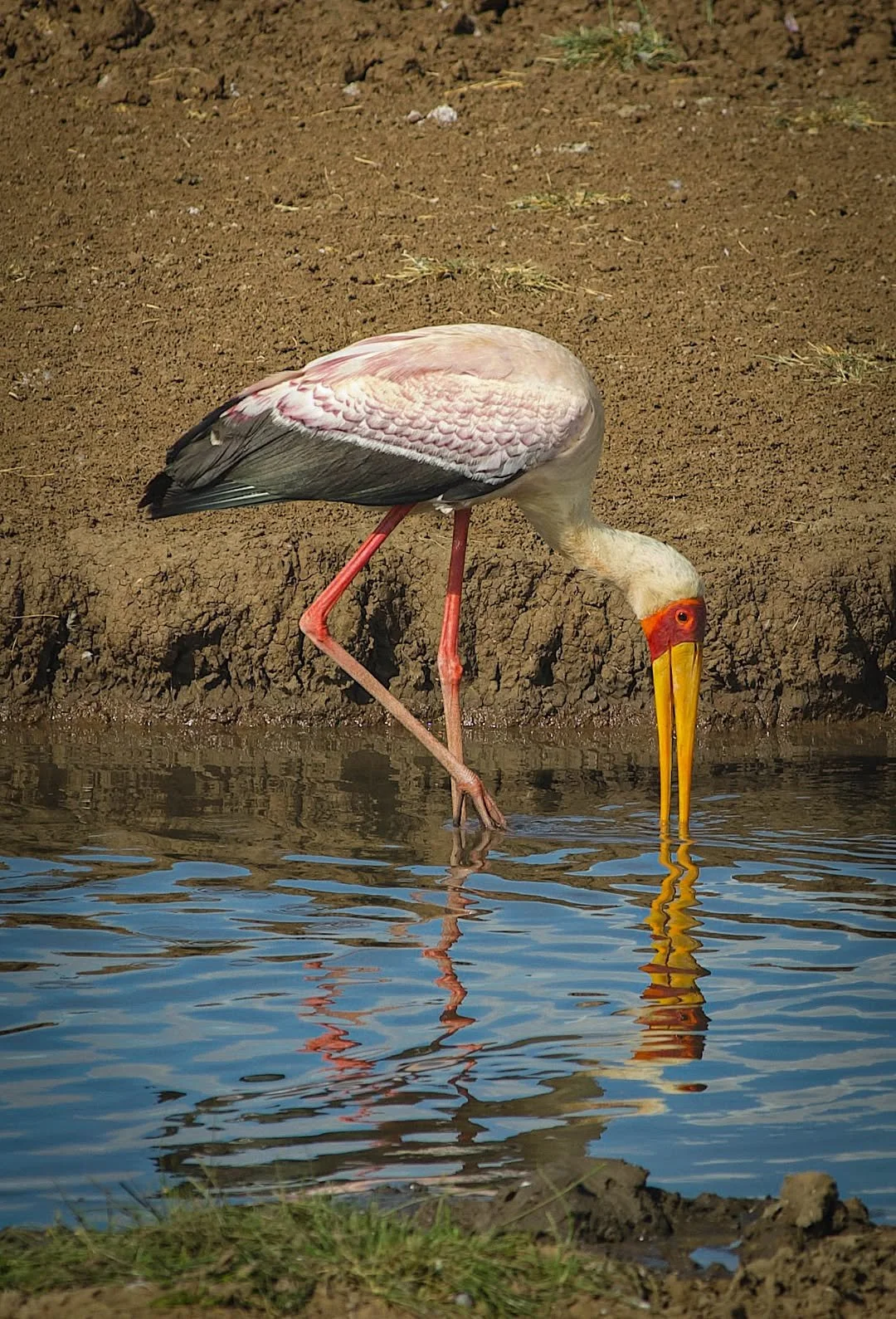
This Yellow-billed stork (Mycteria ibis) is flashing extra color in the breeding season. Its back has adopted a magenta hue, its brown legs have turned pink, and its face and bill have taken on an extraordinary glow.
I captured this image back in 2019 near Lake Manyara in north-central Tanzania. Lake Manyara, a feature of the Great Rift Valley, is part of a great flyway for migrating birds. For storks like this one, it is a "honeymoon" site. Pairing is common.
See the African flyway yourself! Come on a Tanzanian safari. But don't delay. Our August 2025 is practically sold-out; our trip scheduled for February of 2026 is getting ready to open. Contact Bible Land Explorer for details.
Sporting the Colors
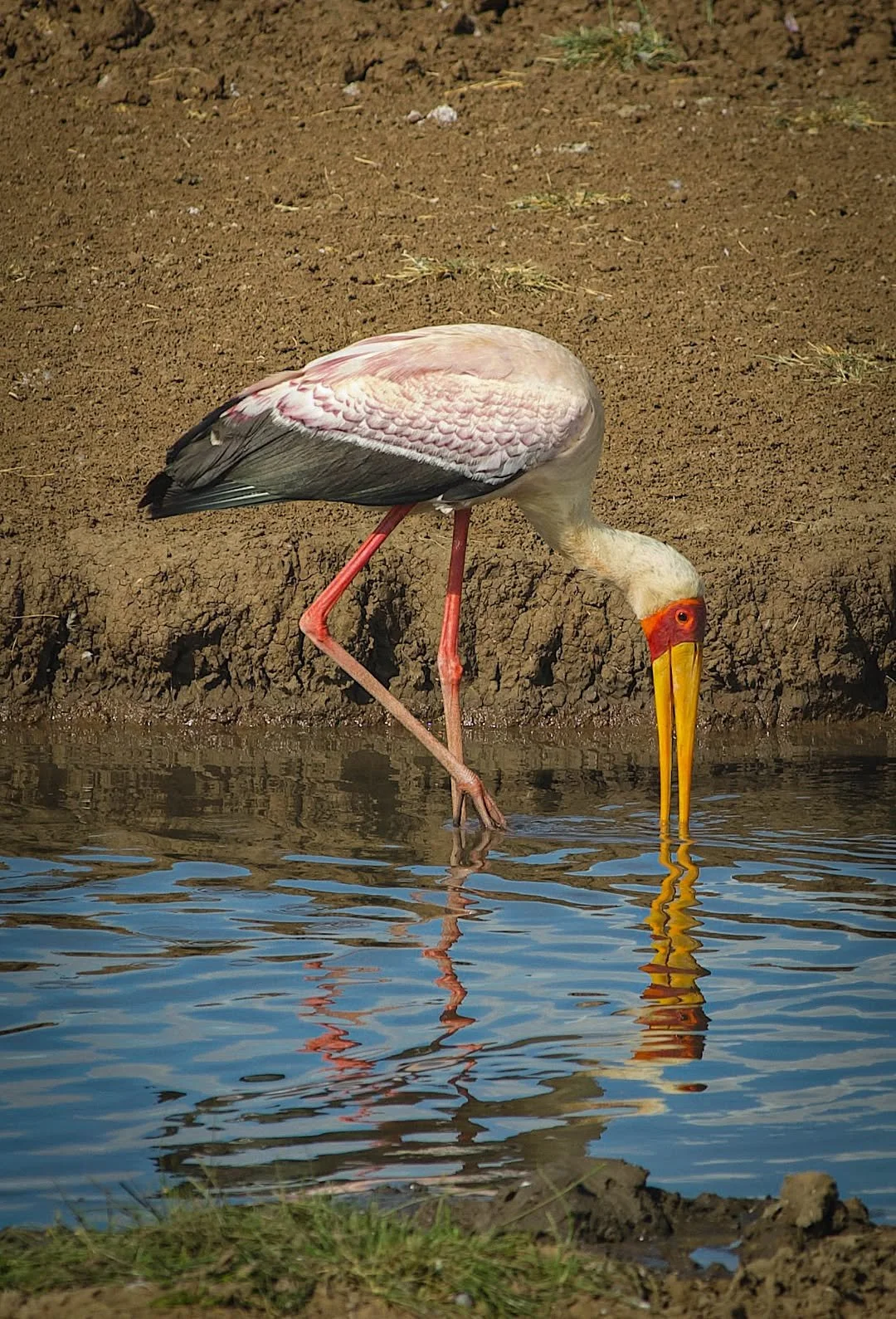
This Yellow-billed stork (Mycteria ibis) is flashing extra color in the breeding season. Its back has adopted a magenta hue, its brown legs have turned pink, and its face and bill have taken on an extraordinary glow.
I captured this image back in 2019 near Lake Manyara in north-central Tanzania. Lake Manyara, a feature of the Great Rift Valley, is part of a great flyway for migrating birds. For storks like this one, it is a "honeymoon" site. Pairing is common.
See the African flyway yourself! Come on a Tanzanian safari. But don't delay. Our August 2025 is practically sold-out; our trip scheduled for February of 2026 is getting ready to open. Contact Bible Land Explorer for details.
Worth less than a penny?
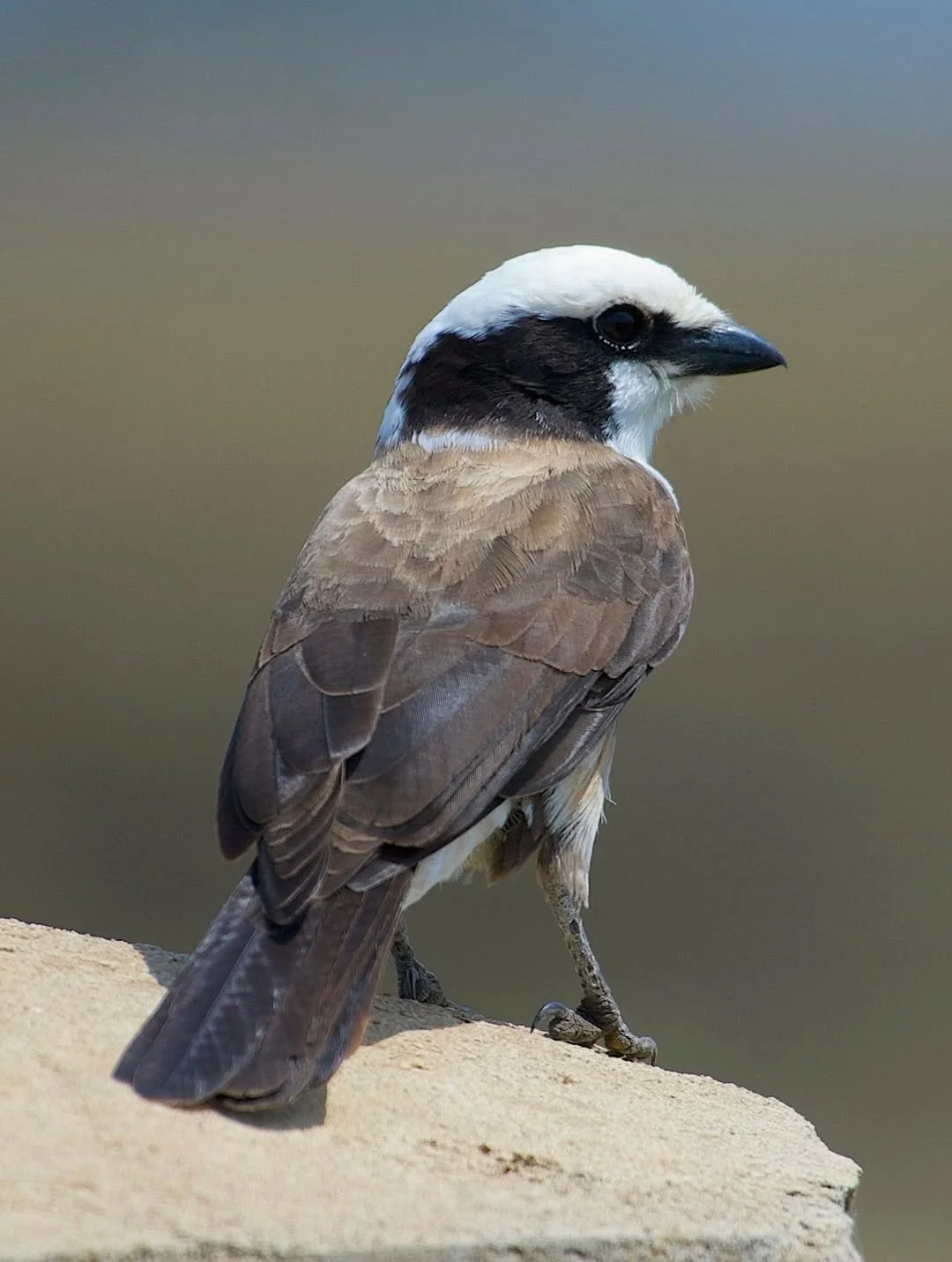
How about a lovely White-rumped shrike (Eurocephalus ruppelli) for your Sunday? Stubby little shrikes like this one are common in the dry savannas of East Africa.
Their family name, "shrike," is likely drawn from the sound of their song; some call it a shriek!
Shrikes are members of the passerine order (which means they have feet perfect for "perching").
Naturalists who study the bible identify passerines with the Greek word struthion, often translated into English as "sparrow." It is unlikely that Jesus had a White-rumped shrike specifically in mind (due to range) when he described a bird worth less than a penny (Mt 10:29, Lk 12:6-7), but I do appreciate the possibility that not one of these falls to the ground apart from the knowledge of our Father.
The natural world is valued by God. Sharing His values is an expression of worship. Observe and preserve!
Throws up
Bible Land Explorer Julia Hinkle throws up with the staff from Olerai Lodge. Tanzania? Yup. Goin' on safari!

Enjoying the Afternoon Sun
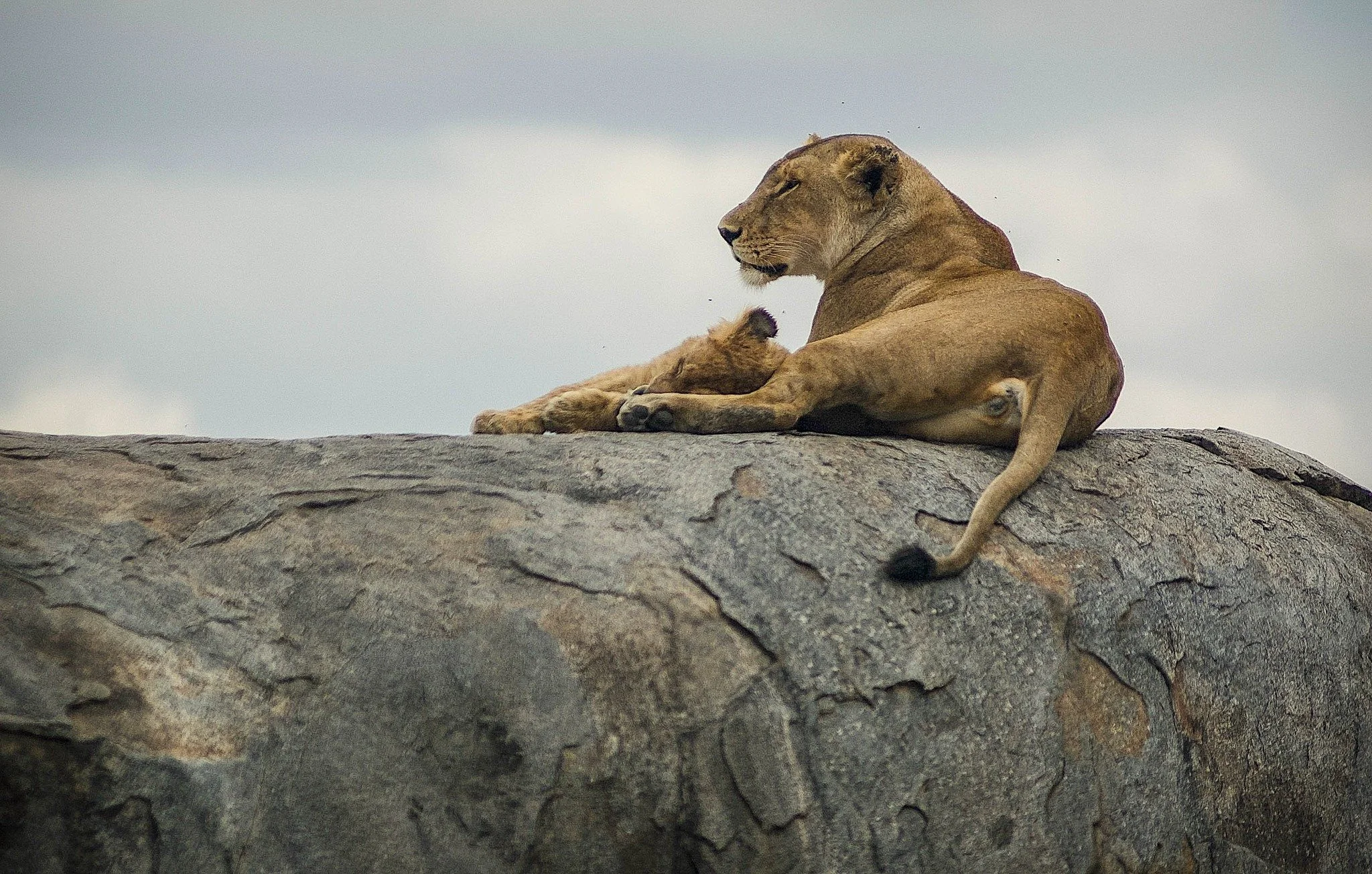
Lioness and cub on a kopje. Like islands in a vast sea, granite kopjes rise above the Serengeti grasslands and provide a special habitat for both plants and animals. On one, we found this lioness and cub enjoying the afternoon sun.
Go wild with us on safari in 2025 or 2026.
Welcome Committee
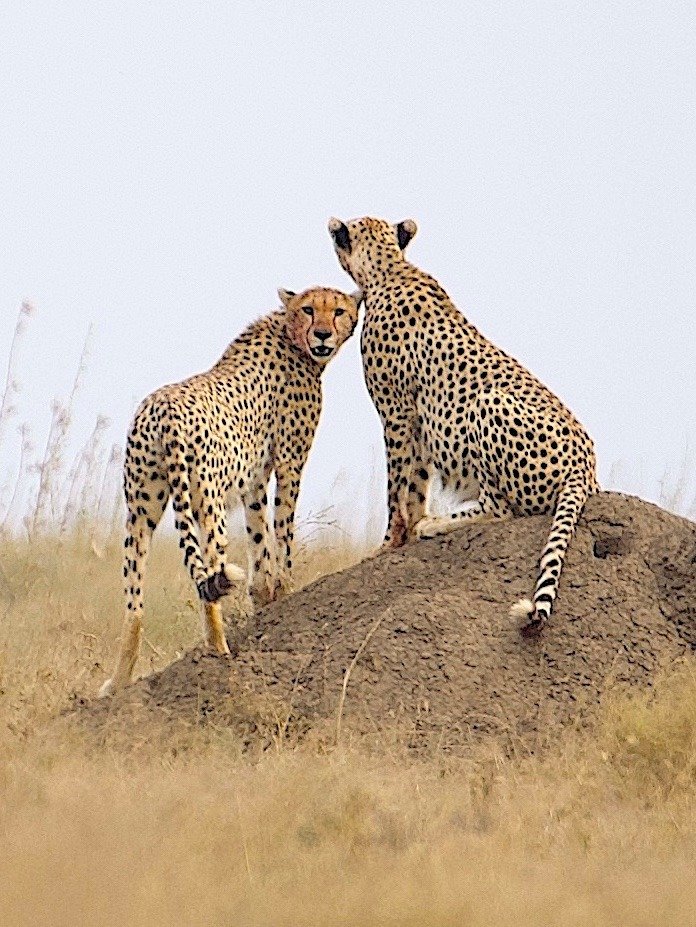
So we were met in the Serengeti by this welcome committee ...
Incidentally, standing on a termite mound always improves your perspective.
Our Knobby Tyres
The success of our African safaris rests on knobby tires and good wheelmen.