Exploring Tanzania

The Black-bellied Bustard: Master of Grassland Camouflage

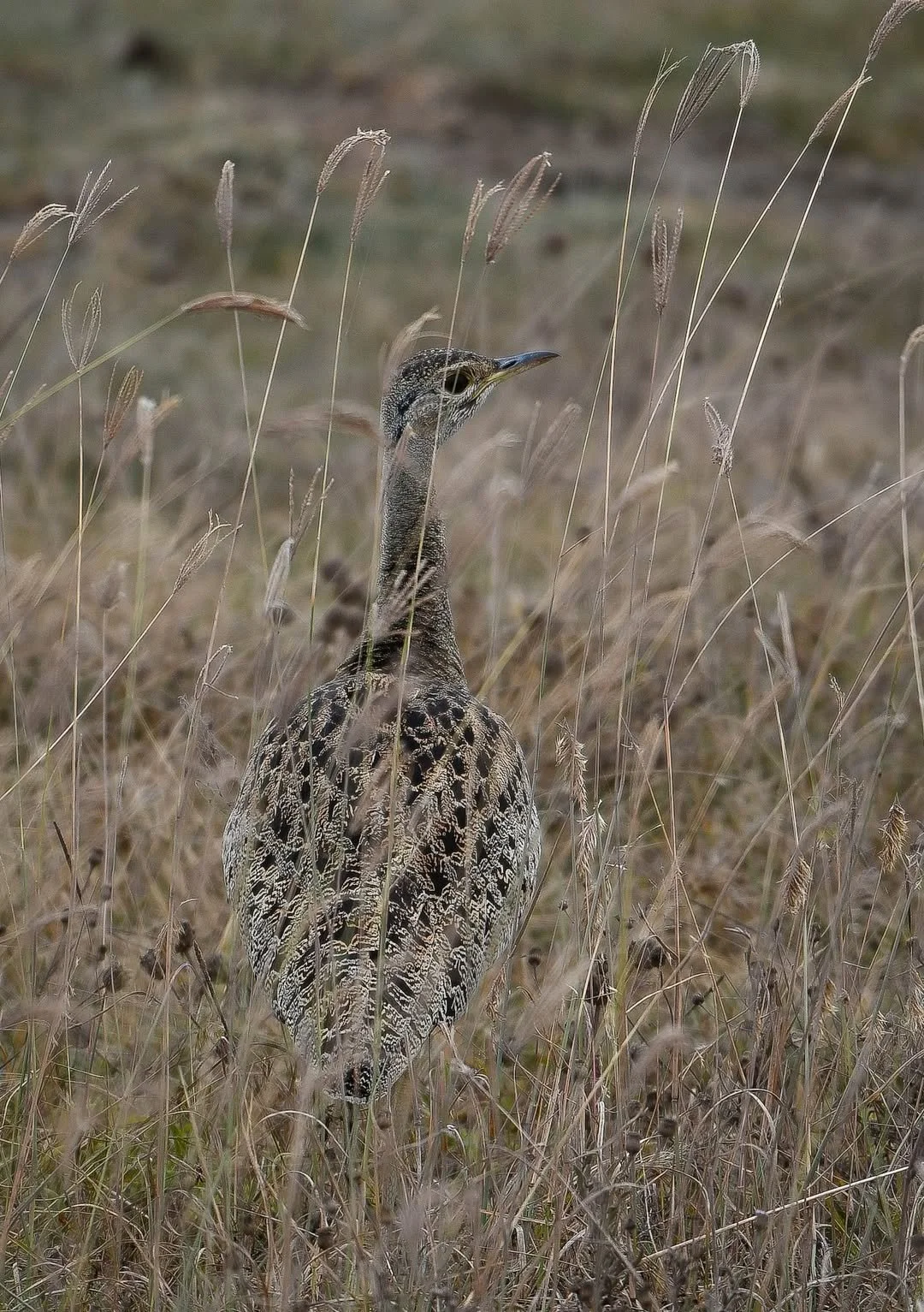
A male Black-bellied Bustard standing in the tall grass of the African savannah, showcasing its intricate black and white lacy plumage.

The Master of Disguise: The Black-Bellied Bustard

The Black-bellied Bustard (Lissotis melanogaster) is one of the most elegant ground birds of sub-Saharan Africa. While it may be smaller than its famous cousin, the Kori Bustard, what it lacks in sheer size it more than makes up for in artistic detail.

A Lacy Pattern of Protection

The male of the species is magnificently adorned in a complex, lacy pattern of black, white, and tawny brown. This isn't just for show; this "disruptive coloration" serves as the ultimate camouflage, helping the bird vanish into the shimmering heat and tall stalks of the African grasslands.

A Highlight for Birders on Safari

Identifying a Black-bellied Bustard in the wild is a rewarding challenge for any traveler. Often, you won’t see them until they perform their distinctive courtship display—a slow, rhythmic stretching of the neck followed by a sharp "popping" sound that carries across the plains.

See the Hidden Wonders of Africa in 2026 & 2027

From the "Big Five" to the masterfully camouflaged birds of the bush, our expeditions are designed for those who want to see it all.

  • 2026 Expeditions: Our current roster is nearly full—check for last-minute availability!

  • 2027 Expeditions: We are officially accepting early inquiries for our return to Tanzania. Email your questions to us here.
Nursing Mum: Elephants & 2026 Tanzania Safari

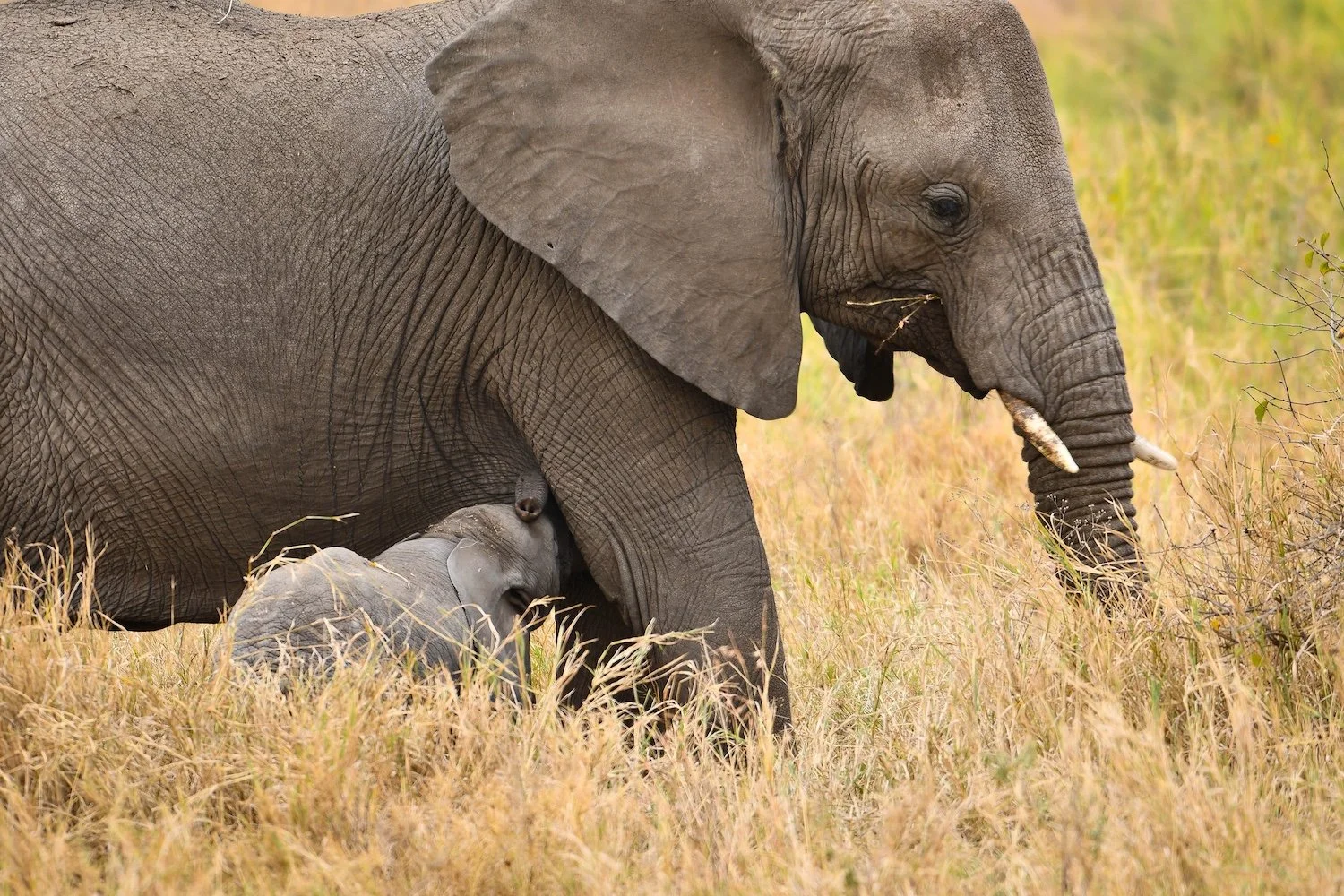
An elephant calf nursing from its mother in the wild, showcasing the unique placement of the mammary glands.

The Tender Side of the Savannah: How Elephant Calves Nurse

Is there anything more heartwarming than a nursing calf? Just look at his curled little trunk! And if you look closely at the mother—doesn't it almost look like she’s smiling?

While we all know that elephants are mammals, their biology is surprisingly similar to our own in ways you might not expect.

Surprising Elephant Anatomy

Did you know that elephants have two breasts similar to humans, rather than udders like cows or multiple rows of teats like dogs? These mammary glands are located high in the elephant's chest, tucked securely between the two front legs.

Because of this unique placement, elephant calves (and their mothers) nurse while standing upright. It is a beautiful, intimate display of the deep social bonds that define elephant herds.

Witness the Magic of the Herd in 2026

There is nothing quite like seeing a mother and calf interact in their natural habitat. If you’ve ever dreamed of standing on the plains of the Serengeti to witness these gentle giants, now is the time to act.

  • Upcoming Safari Dates: February 18–28, 2026.

  • Final Call: We are currently finalizing our roster for this expedition.

  • Experience the Wild: From nursing calves to the Great Migration, join us for an unforgettable journey through Tanzania. Check the schedule here for future trips.

Verreaux's Eagle-owl: The Silent Predator of East Africa

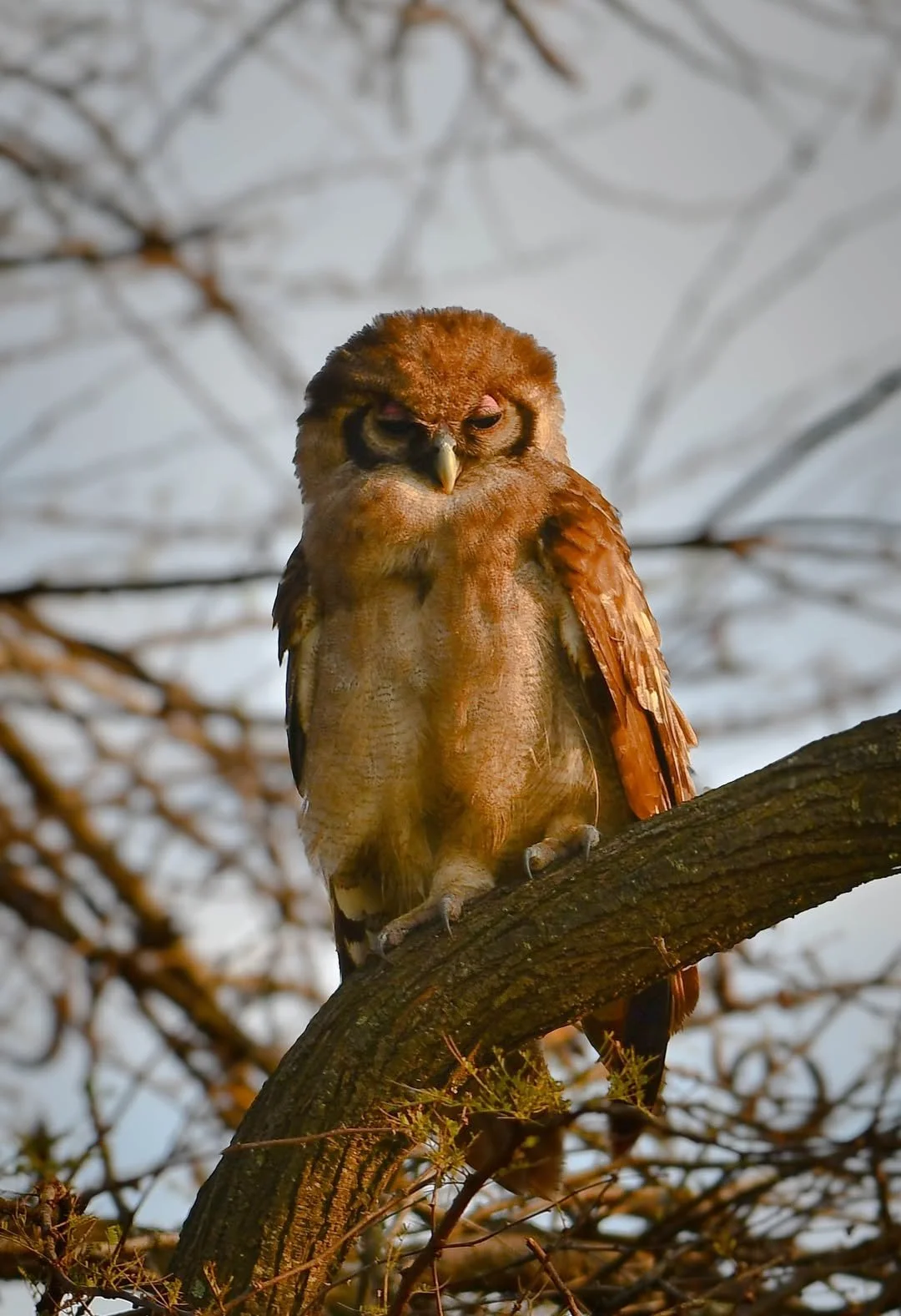
A large Verreaux's Eagle-owl (Bubo lacteus) with its signature pink eyelids roosting in an acacia tree in East Africa.

The Silent Assassin: Verreaux's Eagle-owl

Meet the Verreaux's Eagle-owl (Bubo lacteus), a massive raptor reaching up to 24 inches in length. While they are common to the woodlands of East Africa, spotting one requires a keen eye, as they spend their days roosting and sleeping deeply in the dense shade.

Built-In Stealth Technology

When the sun goes down, this owl becomes one of the most formidable hunters on the savannah. What makes them so deadly? It’s their natural "stealth technology."

  • Silent Flight: Small, hair-like textures line the edges of their feathers, designed specifically to break up air turbulence and eliminate the sound of wing-flapping.

  • The Drop: They drop quietly out of the absolute darkness onto their prey, which can include everything from amphibians and fish to small mammals—and even monkeys!

  • Lethal Impact: The sheer weight of this eagle-owl, combined with incredible talon strength, is designed to kill immediately upon impact.

Don't worry—if one is headed your way, you won’t hear it coming.

Experience the Night Life of Africa

From the "pink eyelids" of the Verreaux's Eagle-owl to the roar of the lions, the African night is full of mystery. Join us as we explore the best wildlife habitats in Tanzania.

  • 2026 Safari Status: Our current schedule is nearly full—check for remaining seats!

  • 2027 Expeditions: We are accepting early inquiries for our return to the bush. Email your questions to us here.
The Impala: Africa’s 55 MPH Acrobat and the "M" Brand

Getting to Know the Impala

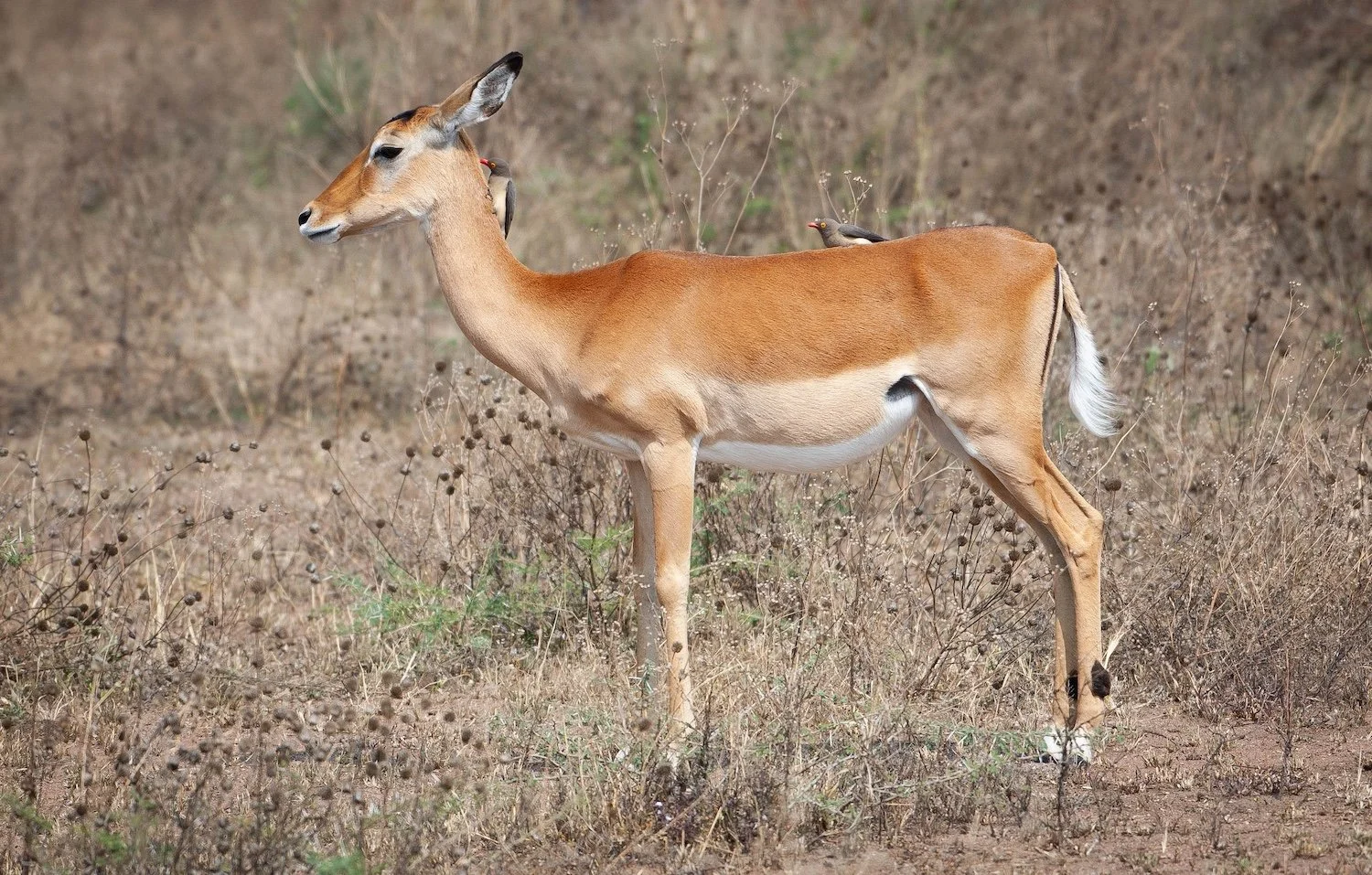
This stately antelope (Aepyceros melampus) is a perennial crowd-favorite on any game drive. With a glossy coat of cinnamon and cream set against a bright white belly, the Impala is as elegant as it is athletic.

The "M" Brand

God has given the impala some very specific “branding.” Black hairs ring the eyes and tip the ears, head, and feet. Most famously, they sport a distinctive black “M”-shape on their buttocks.

In the guide world, there is a running joke about that marking:

"Mmmmmm," say the carnivores! It’s the “M” for Mmm-pala—the most common “fast food” on the plains. (Get it? Fast food? Ha!)

Speed and Agility

However, catching an impala is no easy task. They are masters of evasion, utilizing a combination of raw speed and high-stakes acrobatics:

  • Sprinting: They can reach speeds upwards of 55 mph.

  • Agility: They are famous for cutting sharply mid-run to lose a predator.

  • Leaping: An impala can leap 10 feet high and cover a staggering 30 feet forward in a single bound.

A Symbiotic Friendship

In the shot above, you'll notice two oxpeckers resting on this female. This is a classic example of mutualism in the wild; these birds provide a "cleaning service" by picking at parasites and ticks, while the impala provides a steady food source for the birds.

See the Impala in the Wild

While they are common, watching a herd of impalas “pronking” (leaping) across the grasslands never gets old. Join us as we explore the heart of Tanzania and Kenya.

  • 2026 Safari Dates: Limited seats are still available for our February and June expeditions.

  • 2027 Planning: We are currently accepting early inquiries for our return to the Serengeti. Email us here for more information.

For a clearer view to the “M” brand on the impala, see the posting here.

Little Bee-eater eating a Little Bee

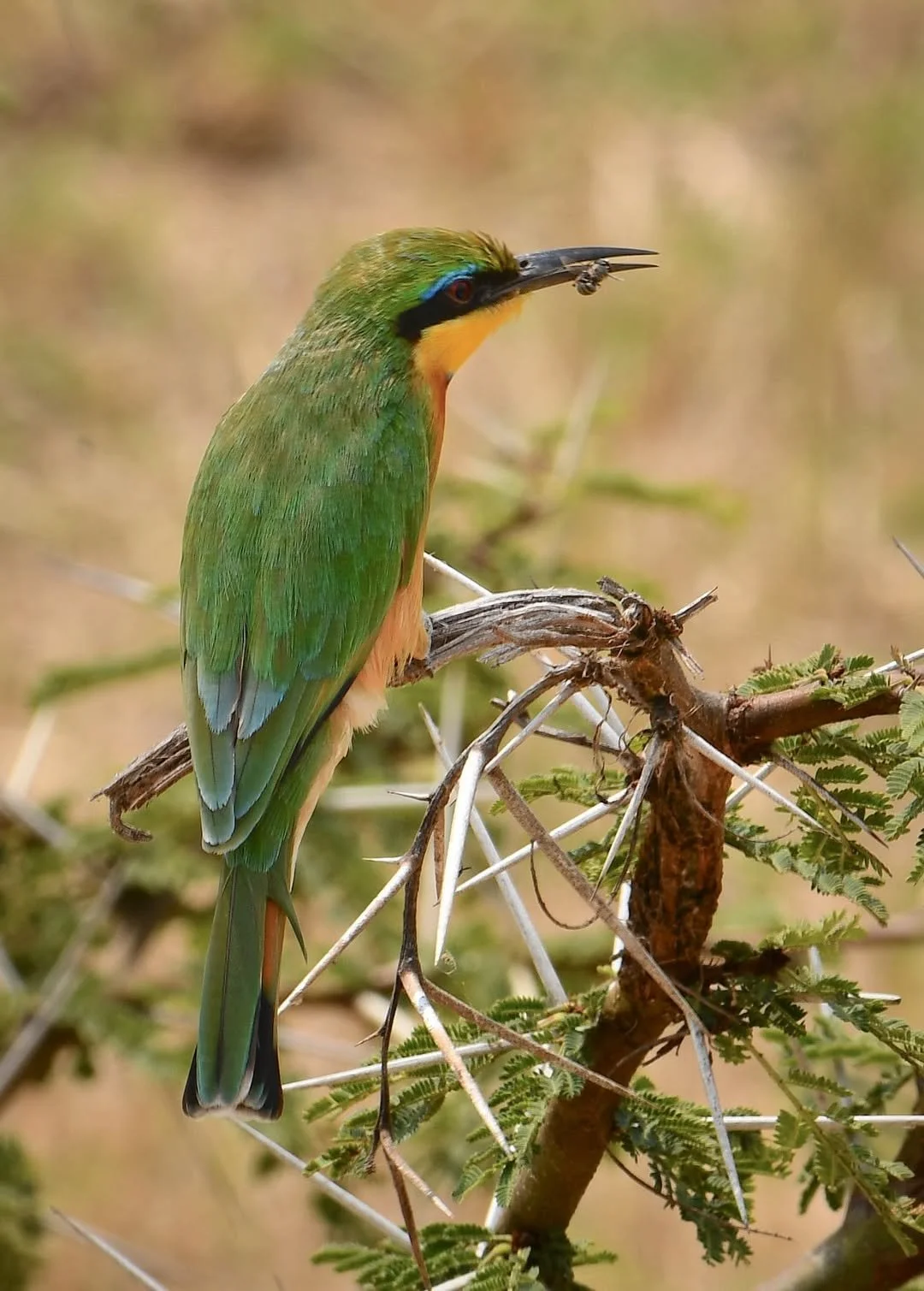
A colorful Little Bee-eater (Merops pusillus) perched on a branch in Tanzania with a bee in its beak.

Emeralds of the Savannah: The Little Bee-eater in Action

How about a Little Bee-eater (Merops pusillus) to brighten your Tuesday morning? This particular specimen is doing exactly what its name suggests: enjoying a fresh catch!

The Art of the Aerial Hunt

The Little Bee-eater is a master of precision. These birds typically hunt from low perches, darting out to snatch insects—especially bees and wasps—directly out of the air. But how do they eat a stinging insect without getting hurt?

  • The De-Stinger: Once caught, the bird returns to its perch and repeatedly slams the bee against a hard branch.

  • The Safety Measures: This rubbing and striking motion effectively removes the stinger and exhausts the venom before the bird consumes its meal.

A Living Rainbow

Common throughout sub-Saharan Africa, these birds are gorgeously attired and impossible to miss. They sport a brilliant green back, a vibrant yellow and orange throat, and a sharp black-and-blue eye line (the superciliary stripe). I spotted this colorful hunter while exploring the landscapes of northern Tanzania.

Curious about the blue eyebrow of the Little Bee-eater? Check out our post here.

Witness Africa’s Avian Wonders

You don’t have to be an expert "birder" to be dazzled by the Little Bee-eater. Their fearless nature and bright colors make them a favorite for photographers on our game drives.

  • 2026 Safari Dates: Limited seats remain—join us to see the colors of the Serengeti for yourself.

  • 2027 Waitlist: We are now accepting inquiries for Tanzania 2027. Email us here.

Rüppell's Vulture: The Grumpy Scavenger of the Serengeti

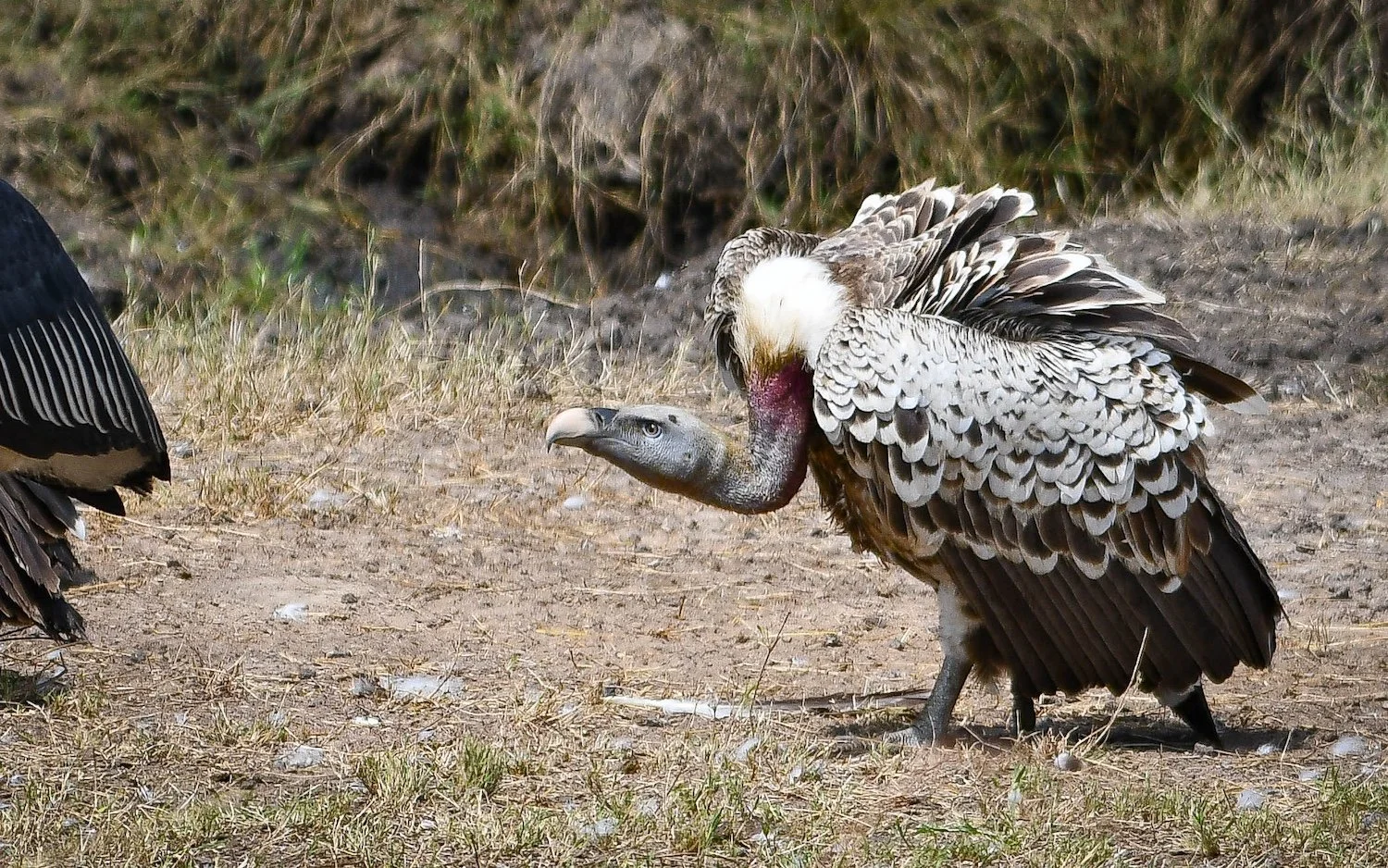
Group of vultures competing for food on the Serengeti plains, showcasing the "greedy game" of scavengers at a fresh kill.

This bad-tempered Rüppell's Vulture (Gyps rueppelli) would have preferred to dine alone on the Serengeti plains. Unfortunately, he couldn't drive the competition off at the same time. As soon as he chased off one rival, another moved in for a bite of the sprawling carcass.

Witnessing the "Greedy Game" of Serengeti Scavengers

We watched, amused, as this greedy game of “get your head out of my cape buffalo” went on and on. Known as the efficient garbage collector of East Africa, these vultures prefer fresh kills but won't hesitate to fuss over rotting ones too.

Meet the Rüppell's Vulture (Gyps rueppelli)

Rüppell's Vulture is an efficient scavenger in East Africa. As the photo above shows, the bird’s unique scaled plumage is completely puffed out in a defensive display, shielding a buffalo carcass from rival scavengers. Its bare head and long, downy neck are on full display—useful traits that prevents gore from clinging to its feathers while it reaches deep inside a kill. This moment captures the raw, chaotic "pecking order" that defines survival on the Serengeti.

Yuck.

Care to dine on the Serengeti?

Join us as we “glamp” (glamorous camping!), eat, sing, and game drive some of the the best wildlife habitats in Tanzania.

  • 2026 Safari Status: Our current schedule is nearly full—check for remaining seats!

  • 2027 Expeditions: We are accepting early inquiries and building a wait list. Email your questions to us here.
For more on this high flying African vulture, see the post here.

Grant’s Gazelle: The Serengeti’s Arid-Land Survivor

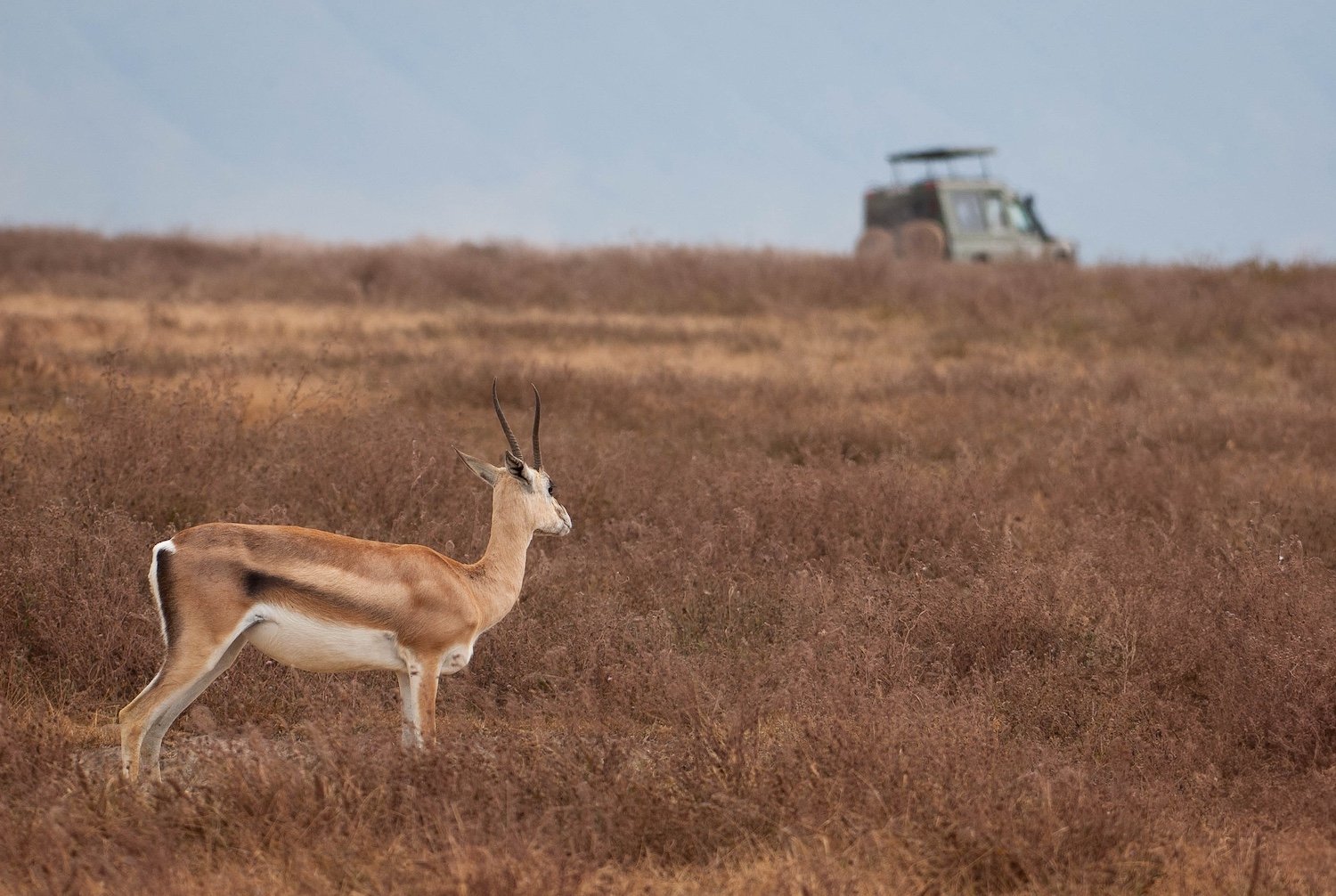
Grant's gazelle on a Serengeti ridge in the dry season with a safari rig in the background.

The Resilient Grant’s Gazelle: A Serengeti Survival Story

A lone Grant’s gazelle (Nanger granti) stands frozen on a ridge, its lyre-shaped horns silhouetted against the sky. It watches intently as a 4x4 Land Cruiser dips over the horizon. In the Serengeti National Park, this is the dance between nature and those who come to witness it.

Mastering the Arid Savanna

While many species in the Serengeti are slaves to the nearest watering hole, the Grant’s gazelle is a master of arid-land adaptation. These elegant antelopes thrive in dry environments by performing a feat of biological engineering: they extract almost all the moisture they need from the plants they eat.

Unlike their water-dependent cousins, the Thomson’s gazelle, Grant’s gazelles actually migrate in the opposite direction of the Great Migration. By heading into drier, semi-desert regions, they avoid intense competition for food. Their secret weapon is a highly efficient digestive system and large salivary glands that allow them to process tough, woody plants and “browse” (leaves and stems) that other grazers cannot stomach.

The Ultimate Game of Hide and Seek

As we drive away, I want to holler: “See you later, buddy. Keep an eye out for the cheetahs.”

The warning is a serious one. While Grant’s gazelles are larger and more powerful than other gazelles, they remain a top prize for Serengeti cheetahs. To survive, they rely on:

  • Stotting: A high-jump display used to signal their fitness to predators.

  • Speed: Clocking in at nearly 50 mph to outrun a closing threat.

  • Vigilance: Using the open ridges to spot movement from miles away.

Join Us for a Safari

There is no substitute for seeing the “Circle of Life” in person. February is the heart of the calving season in the southern Serengeti, a time when the plains are teeming with new life—and the predators that follow.

Experience the thrill of a Grant’s gazelle sighting (or the adrenaline of a cheetah chase) for yourself. Plan your Tanzania safari for 2027 and witness the raw beauty of the African wilderness.

Expedition February 2026: Now sold out. All seats taken.

Expedition 2027: Email us today to be the first to know when seats open for our next Serengeti expedition. Use the link here.

For more on Grant’s gazelle, see the post here.

The Tanzanian Red-Billed Hornbill: Meet the Real-Life Zazu

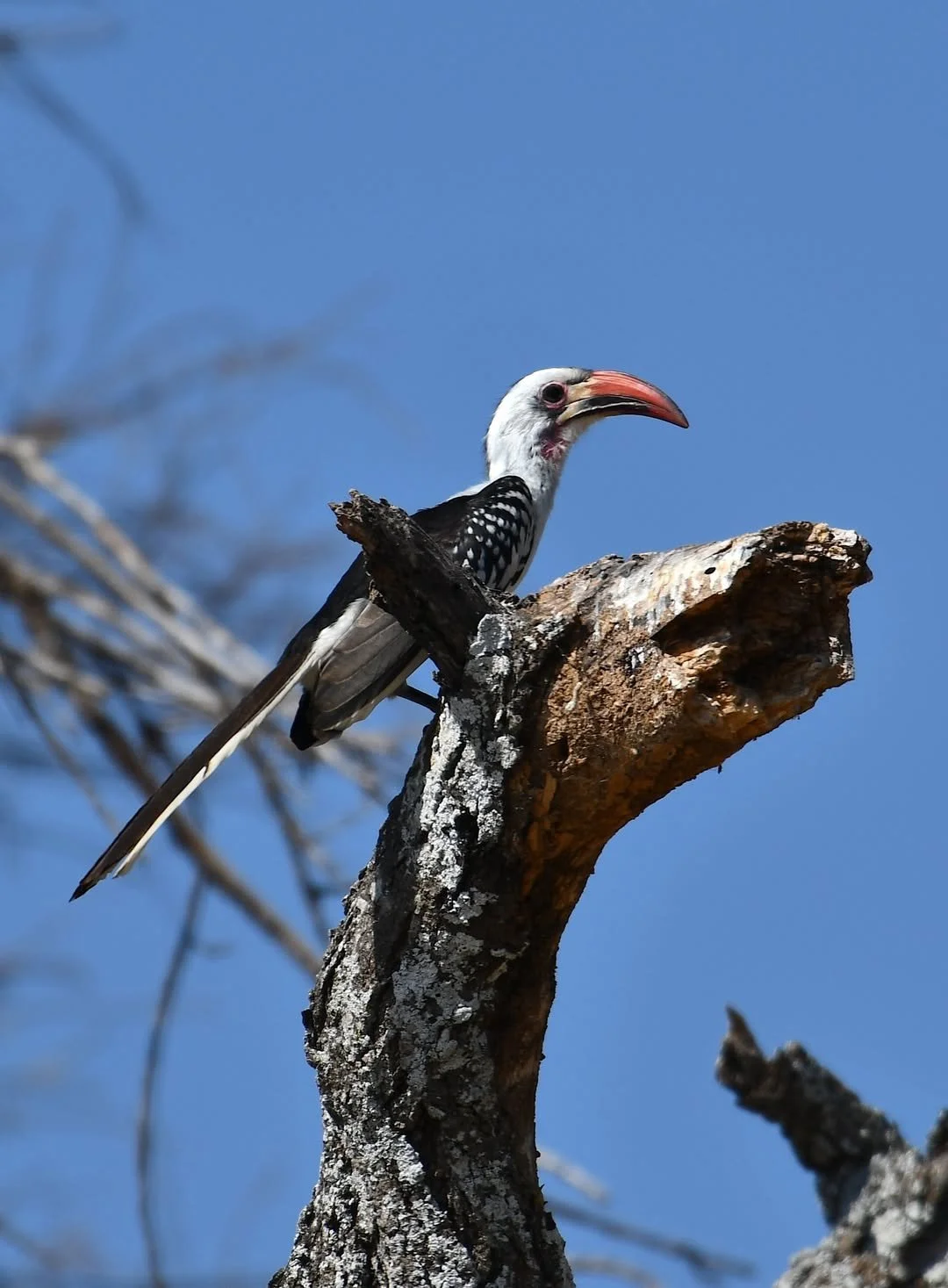
Meet the Tanzanian Red-Billed Hornbill: The Real-Life Zazu

How about a Tanzanian red-billed hornbill for your Tuesday morning? If you’ve ever seen Disney’s The Lion King, you already know this bird’s famous relative. While Zazu serves as the royal majordomo on screen, the real-life red-billed hornbill is just as full of personality.

A Unique Tanzanian Resident

This particular species, Tockus ruahae, is endemic to central Tanzania. You’ll often find them in the big parks, distinguished from other hornbills by their bright red, curved beaks and the black skin around their eyes.

Unlike many birds that stay tucked in the canopy, red-billed hornbills are frequently found on the ground. They use their powerful, slightly serrated beaks like garden tools to dig through loose soil and leaf litter for seeds, insects, beetles, and even small lizards.

The Call of the Savanna

If you’re near one, you can't miss him. Watch him bob his head down and listen to his rhythmic, clucking cry: kok kok kok kok kok kok kokok kokok kokok kokok! This distinctive bobbing display is often a territorial signal or a way to communicate with their monogamous partners.

See Them in Person

February is one of the most magical times to witness Tanzania's avian diversity. Whether they are foraging alongside mongooses (a famous symbiotic relationship where they warn each other of predators) or nesting in tree hollows, these birds are a safari highlight.

Join us for a Tanzania Wildlife Safari in February 2026!

While our current expedition is sold out, we are now accepting early interest for our 2027 Safari.

  • Join the 2027 Safari Waitlist – Don’t miss your chance to photograph the "Circle of Life" in person.

Indian Ocean Trade Networks in the New Testament World

A network of tradings zones in the Indian Ocean developed between 300 BC and AD 300. This network not only generated awareness of the larger world in the NT period, but introduced luxury goods to those who could afford them. Check out the video below!

Coke’s Hartebeest: The Serengeti’s High-Speed Survivor

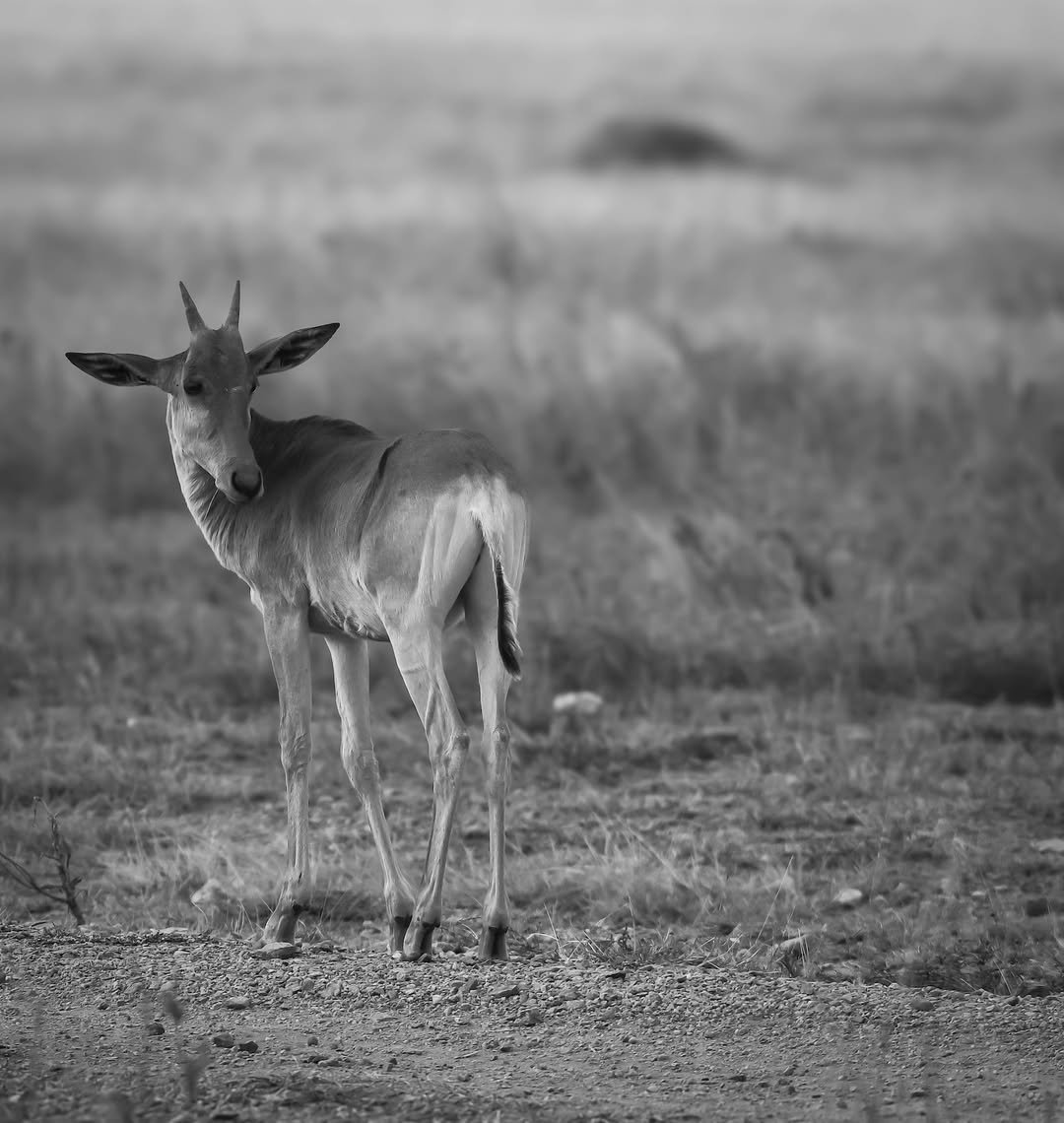
Juvenile Coke's Hartebeest on the Serengeti plains, Tanzania.

Africa’s Diversity: The Speed and Grace of Coke’s Hartebeest

When it comes to antelopes, no place on earth has a greater variety than Africa. Some 72 native species have been identified across the continent, ranging from the tiny dik-dik to the massive eland. While they vary in size, all African antelopes share key traits: they are smooth-haired, hollow-horned, and dedicated grass-eaters.

The Nimble Giant: Coke’s Hartebeest

Spotted on the great plains of the Serengeti, the juvenile Coke’s hartebeest (Alcelaphus buselaphus cokii) pictured above is already showing the sturdiness of its species. As one of Africa’s larger antelopes, the hartebeest is easily recognized by its long, narrow face and high, sloping back.

Don’t let their awkward silhouette fool you—they are built for survival. Mature adults are remarkably nimble and known for their incredible speed.

  • Top Speed: They can clock in at 55 km/h (34 mph).

  • Agility: They are famous for being able to "turn on a dime," a vital skill when outmaneuvering predators like lions or hyenas.

Witness the Diversity of the Serengeti

From the speed of the hartebeest to the resilience of the Grant’s gazelle, the Serengeti is a masterclass in creation. February is often a good time to see these animals in action, as the calving season brings a burst of activity to the southern plains.

  • 2026 - All seats have now been taken.

  • 2027 - Email Us to Join the WaitlistBe the first to receive itinerary details and priority booking for our return to the plains. Here’s our email link.

The Most Feared Moment in Africa: A Cape Buffalo Encounter

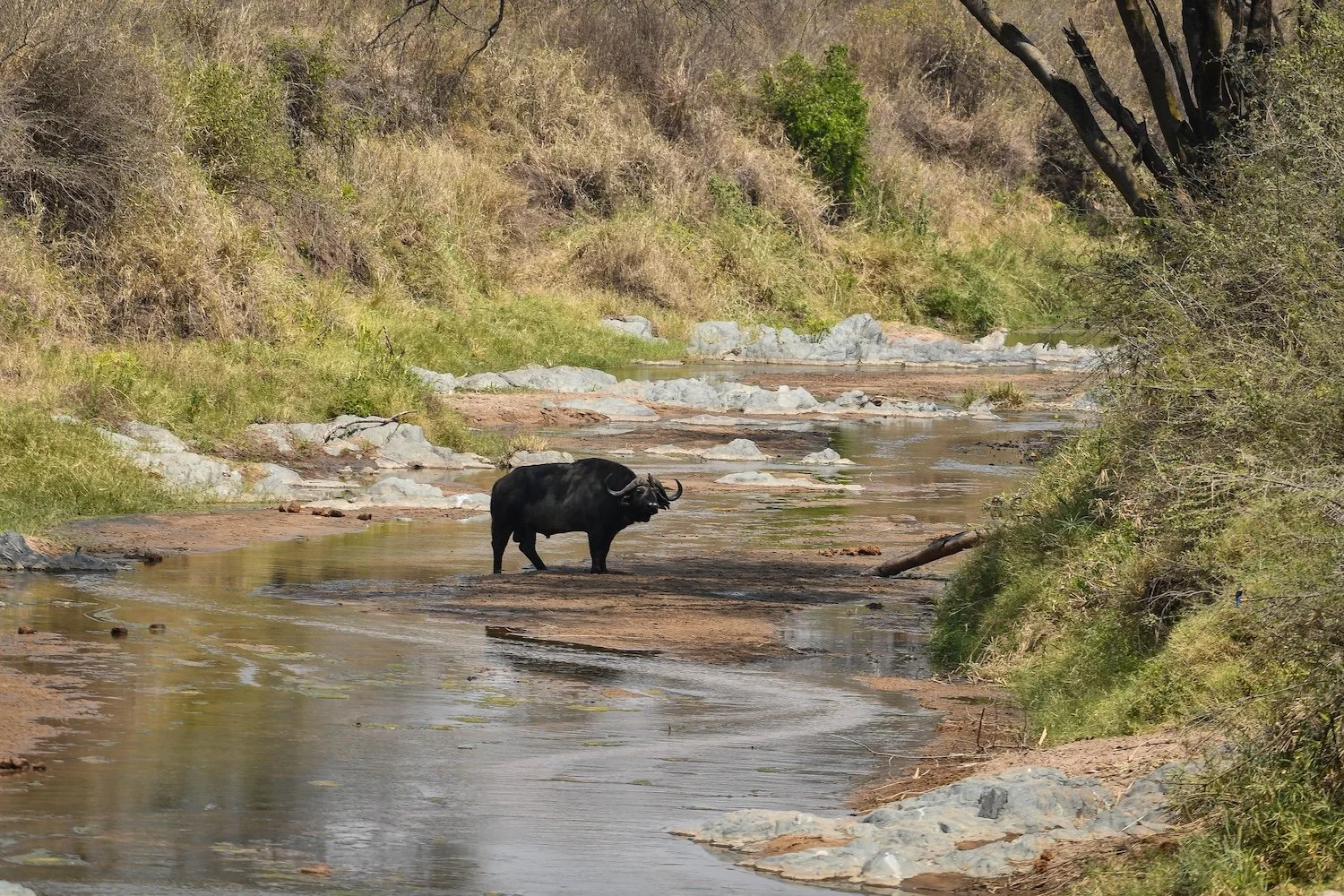
Cape Buffalo (Syncerus caffer) or “Dagga Boy” standing in a stream in West Tanzania.

Facing the "Black Death": A Midnight Visitor in West Tanzania

There is nothing quite like the sound of the African wild pressing against your bedroom wall.

Vicki and I were drifting off to sleep the other night when we were startled by a massive African or Cape Buffalo (Syncerus caffer) scratching against the wood frame of our tent platform. From inside the safety of the canvas (!), we listened to this legendary "Dagga Boy" breathe heavily and munch on wet grass just inches away. Eventually, he wandered back into the darkness. All's well that ends well.

Why the "Dagga Boy" is Most Feared

In the Serengeti and across West Tanzania, the most feared animal isn't the lion or the leopard—it’s an excommunicated old bull buffalo. Known as Dagga Boys (or "mud boys" in Zulu), these veterans have left the protection of the herd.

Their reputation is built on three dangerous traits:

  • Power: A mature bull can weigh up to 900kg (2,000 lbs) of pure muscle.

  • Unpredictability: Without a herd to protect, they become incredibly grumpy and territorial.

  • The "Black Death": This nickname was earned because they are known to circle back and stalk hunters or perceived threats, making them one of the most dangerous members of the Big Five.

Experience the Wild for Yourself

Whether you are watching them soak in a stream or hearing them scratch against your tent, a Cape Buffalo encounter is a core part of the African safari experience.

Expedition Update:

  • February 2026: Sold Out.

  • 2027: Enter the inner circle! Email us here to join the priority waitlist for our next journey into the heart of Tanzania.

The Shaggy, Smelly Waterbuck: Africa’s Natural Bug Repellent

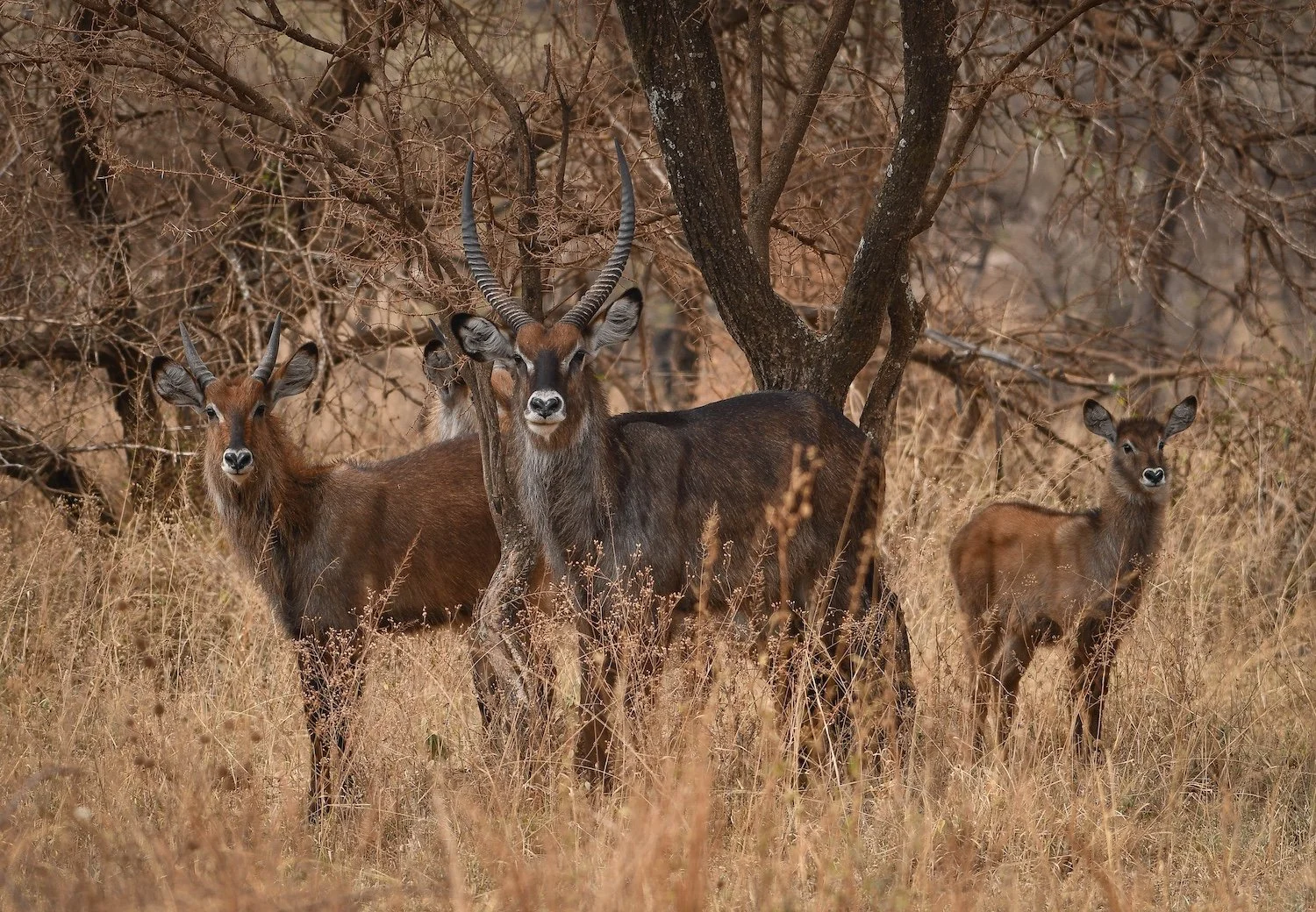
Shaggy Waterbuck (Kobus ellipsiprymnus) standing near a stream in the Serengeti, Tanzania.

Meet the Waterbuck (Kobus ellipsiprymnus). In the world of African antelopes, they are easily the most “textured” characters on the plains.

The shaggy part is obvious. Their hair ranges from a dusty brown to a deep grey, darkening as they age. But the smelly part? That’s where the real biological magic happens.

The Secret of the Musk

While I wasn’t quite close (or downwind) enough to sniff this family group, the Waterbuck's unique biology is legendary. Their skin glands produce a thick, musky oil that serves a triple purpose:

  1. Waterproofing: It keeps this large antelope dry and buoyant when hanging out in their namesake rivers and swamps.

  2. Predator Deterrent: The odor is reportedly strong enough to make lions think twice about their dinner choice.

  3. The Ultimate Insecticide: This potent oil is a natural defense against the dreaded tsetse fly, a pest that most safari-goers spend their whole trip dodging!

Maybe next year I'll forgo the DEET and just go with a "Waterbuck Hair and Body Mist." What do you think? It might keep the bugs away, though I can't promise Vicki will let me back in the Land Cruiser!

experience the Serengeti (and its Scents) in Person

Experience the quirky side of African wildlife for yourself.

  • February 2026 Expedition: Sold Out.

  • 2027 Expedition: Don't get left behind! Email us today (link here) to join the 2027 Priority Waitlist and be the first to know when booking opens.

The Variable Sunbird: A Flashy Gem of Arusha, Tanzania

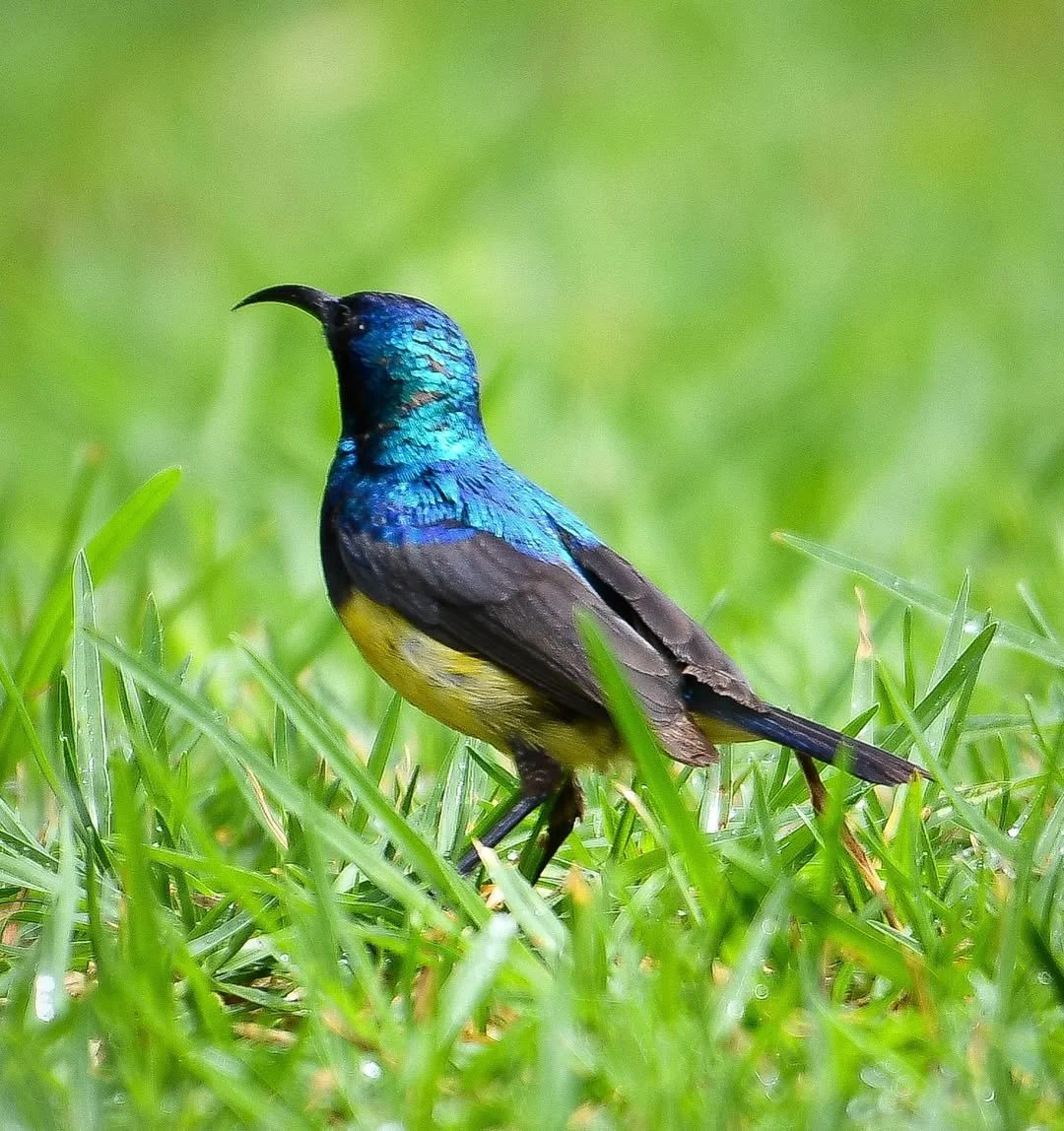
Male Variable Sunbird (Cinnyris venustus) with metallic blue-green head and yellow belly in Arusha, Tanzania.

The Variable Sunbird: A Flashy Gem of Arusha

The call of the Variable Sunbird (Cinnyris venustus)—a rhythmic tew-tew-tew-tew-tew—is one of the most iconic sounds of equatorial Africa. These flashy little avians are the "socialites" of the savanna; they often perch on the highest branches and are never shy about announcing their presence to the world!

A Study in Iridescence

The male, shown here, is truly brilliant. His head and nape shimmer with a “metallic” blue-green luster that contrasts sharply against a vibrant yellow belly. It’s a color palette that seems almost too bright to be real.

Beyond its beauty, the sunbird is a precision-engineered feeder. Its needle-like curved beak and specialized tubular tongue are perfect for extracting nectar from the deep bells of tropical flowers. While they look similar to hummingbirds, sunbirds are a distinct Old World family of birds.

Backyard Birding in Tanzania

I spotted this particular specimen enjoying a midday shower in the sprinklers at our lodge outside of Arusha, Tanzania. It’s a reminder that on safari, the magic doesn't just happen in the parks—sometimes it’s right outside your room!

Join the 2027 Expedition

Want to see the “jewels” of Arusha for yourself?

  • February 2026: Sold Out.

  • February 2027: Don't miss the "tew-tew" call in person! Email us (here’s the link) to join the 2027 Waitlist and get priority access to our next Tanzanian adventure.

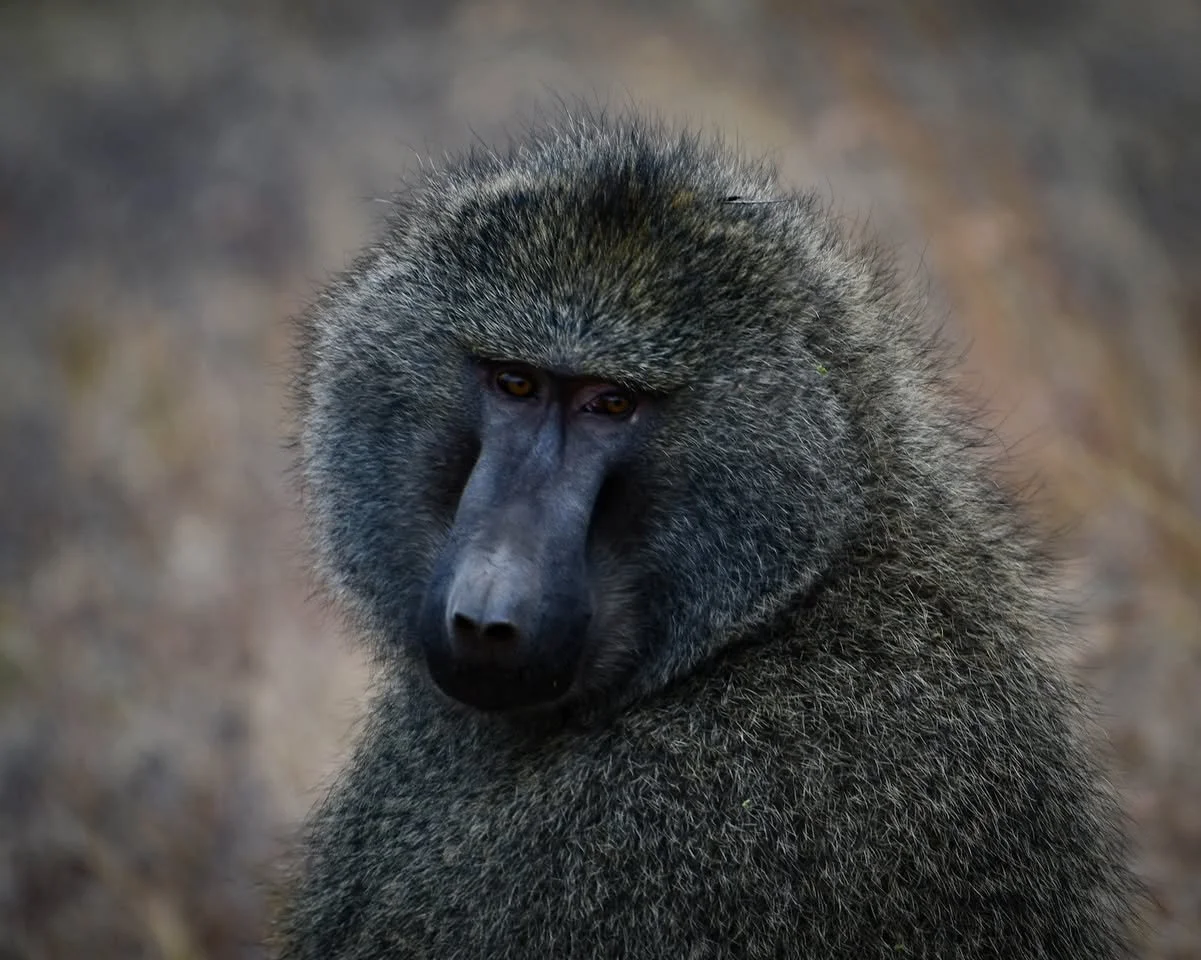
The Face of the Underworld: Meeting the Olive Baboon (Papio anubis)

The Face of the Underworld: Meeting the Olive Baboon

I’ve always found the "dog face" of the Olive Baboon to be a little threatening. Their sheer size and those formidable teeth make them one of the most respected primates on the savanna.

Why "Olive"?

This species is commonly called "olive" due to the unique coat of the Olive Baboon (Papio anubis)—a blend of grey-greenish fur that provides excellent camouflage in the African scrub.

The Mythological Connection

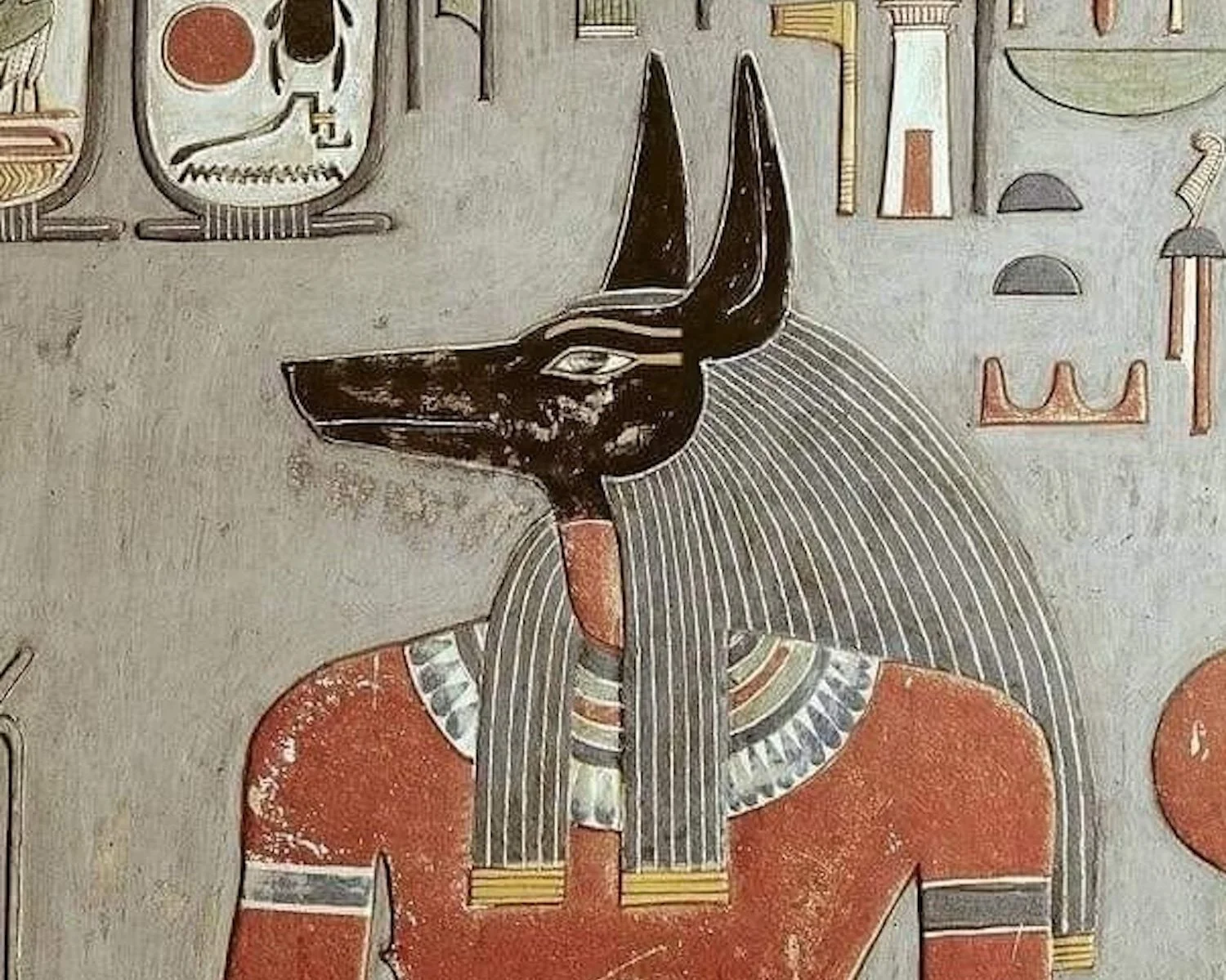
The official name, Papio anubis, carries a dark and fascinating history. While Papio is the genus marker for baboons, Anubis is the Greek rendering of the Egyptian god of the underworld.

When the French naturalist Jean-Baptiste Audebert named this primate in 1797, he was struck by the muzzle's resemblance to the jackal-headed deity. Like the god who weighed the hearts of the dead, the Olive Baboon has a piercing, "dog-faced" gaze that feels like it’s looking right through you.

Experience the Serengeti Wildlife

From the "dog-faced" baboons to the elusive leopards, the Serengeti is a land of living legends.

Expedition Update:

  • February 2026: Sold Out. All seats are taken!

  • 2027: We are heading back! Email us (here’s the link) to join the 2027 Waitlist and be the first to receive details on our next Tanzanian adventure.

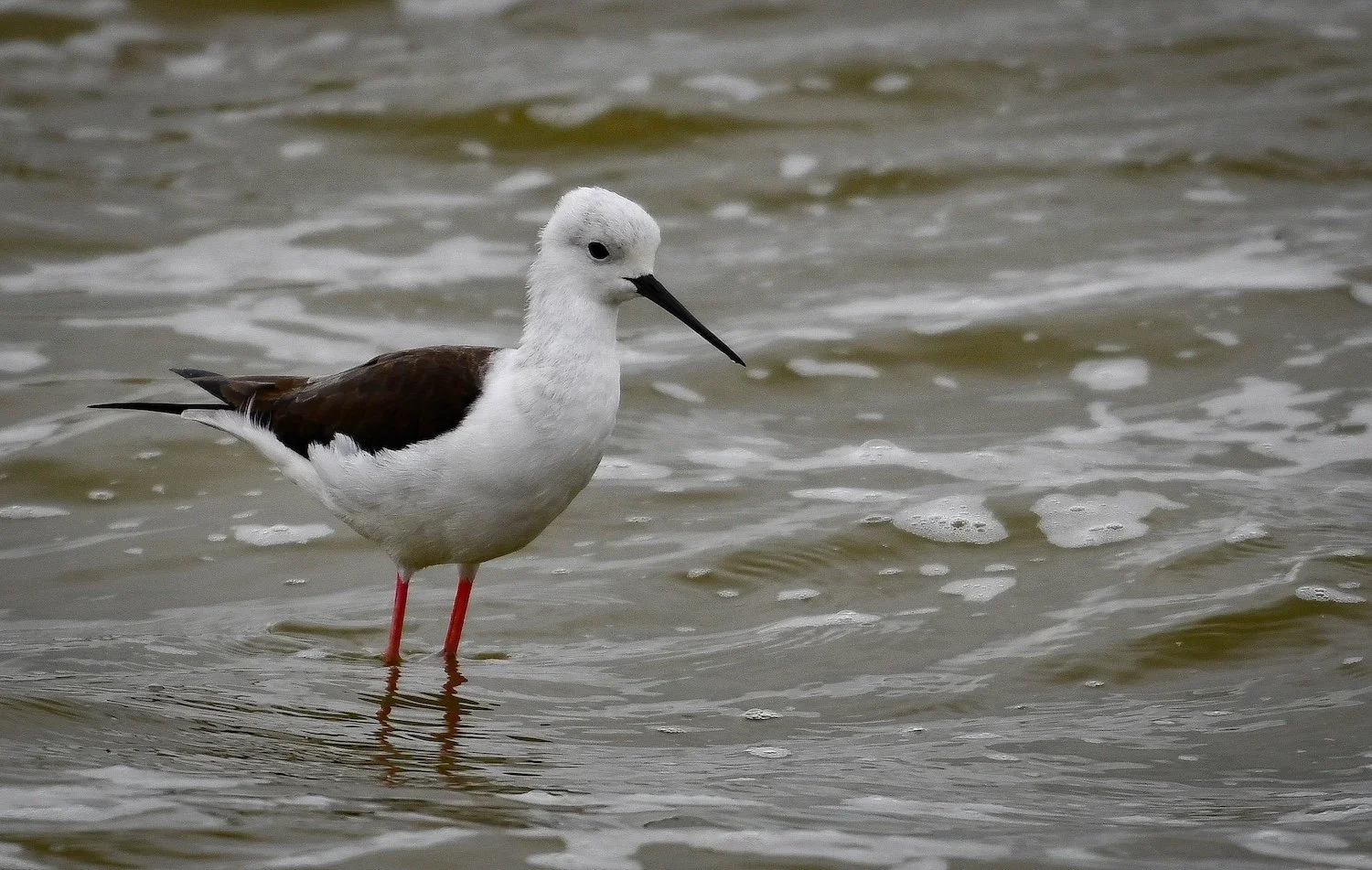
Walking on Stilts: A Close Encounter with the World’s Leggiest Bird in Tanzania

Walking on Stilts: A Day at Lake Magadi, Tanzania

If you ever find yourself on the floor of the Ngorongoro Crater, your eyes will likely be drawn to the massive lions or the rare black rhinos. But if you look toward the shimmering, salt-crusted edges of Lake Magadi, you’ll find one of the most elegant (and slightly comedic) sights in East Africa: the Black-winged Stilt.

The "Supermodel" of the Soda Lake

The first thing you notice about the Black-winged Stilt is the contrast. Their plumage is a sharp, tuxedo-like black and white, topped off with a needle-thin beak. But then, you see the legs.

Bright pink and impossibly thin, these legs look like they shouldn’t be able to support the bird at all. In fact, stilts hold the record for the longest legs relative to body size of any bird in the world. Watching them navigate the slapping waves of Lake Magadi, it’s immediately clear how they earned their name; they truly look like they are walking on wooden poles.

Why Lake Magadi?

Lake Magadi isn't your typical freshwater retreat. It is a soda (alkaline) lake, a harsh environment that most animals avoid. However, for waders like the stilt, it’s a goldmine.

  • Foraging Strategy: Their height allows them to wade deeper than other shorebirds, reaching food sources that smaller birds can't touch.

  • The Menu: They use those sharp beaks to peck at brine flies, larvae, and small crustaceans that thrive in the alkaline waters.

  • Adaptation: While the soda levels can be corrosive, the stilt thrives here, sharing the shoreline with shimmering flocks of Lesser Flamingos.

A Photographer’s Dream

Capturing a Black-winged Stilt in motion is a highlight of any Tanzanian safari. Whether they are delicately picking their way through the mud or taking flight with those long legs trailing behind them like a rudder, they bring a unique grace to the rugged landscape of the crater.

Pro-Tip: If you’re visiting Ngorongoro, bring a pair of high-quality binoculars or a long telephoto lens. The stilts often stick to the muddy shallows of Lake Magadi where the "slapping waves" meet the shore—a perfect spot for action shots.

Bridging Worlds: A Morning with Makuna Saruni in Mollel Emanyata

Makuna Saruni of Mollel Emanyata, Tanzania.

A short distance from the lush banana plantations near Mto wa Mbu (the "River of Mosquitoes") is the village of Mollel Emanyata. There we met someone who represents the vibrant future of Tanzania: Makuna Saruni.

As the son of a Maasai chief, Makuna carries the weight of centuries-old traditions on his shoulders. Yet, he is also an articulate young man with his sights set firmly on a university education next year. Meeting him wasn't just a cultural exchange; it was a glimpse into how the next generation is balancing ancestral heritage with modern ambition.

The Heart of Maasai Tradition

While many visitors recognize the Maasai by their vibrant red shukas and intricate beadwork, talking with Makuna revealed the depth behind the aesthetics. We learned about:

  • The Sacred Role of Cattle: In Maasai culture, cattle are not just livestock; they are a sign of wealth, status, and a spiritual gift from the deity.

  • The Warrior’s Path: Young men traditionally progress through life stages—from childhood to Moran (warrior) and eventually to elderhood.

  • Community Values: Respect for elders and the collective ideology of the tribe remain the bedrock of their society.

A Vision for the Future

Makuna is part of a growing movement of Maasai youth pursuing higher education to better advocate for their communities. In a world where land rights and climate change increasingly threaten the semi-nomadic way of life, articulate voices like Makuna’s are essential.

His goal to begin college next year reflects a broader shift: Maasai traditions are not "vanishing" but are instead evolving. Young leaders are proving that you can cherish your culture while embracing the tools of global citizenship.

Children inside the village schoolhouse.

Why Mto wa Mbu Matters

The area of Mto wa Mbu is unique in Tanzania for its incredible diversity. It is one of the few places where you can see the Maasai's pastoralist lifestyle side-by-side with the irrigation-based farming of the Chagga or the expert woodcarving of the Makonde.

Meeting Makuna reminded us that the true beauty of a Tanzanian Safari isn't just the wildlife—it’s the people. Young people like him inspire hope that we can all move forward together, respecting where we’ve come from while reaching for what’s next.

The Mara River Crossing

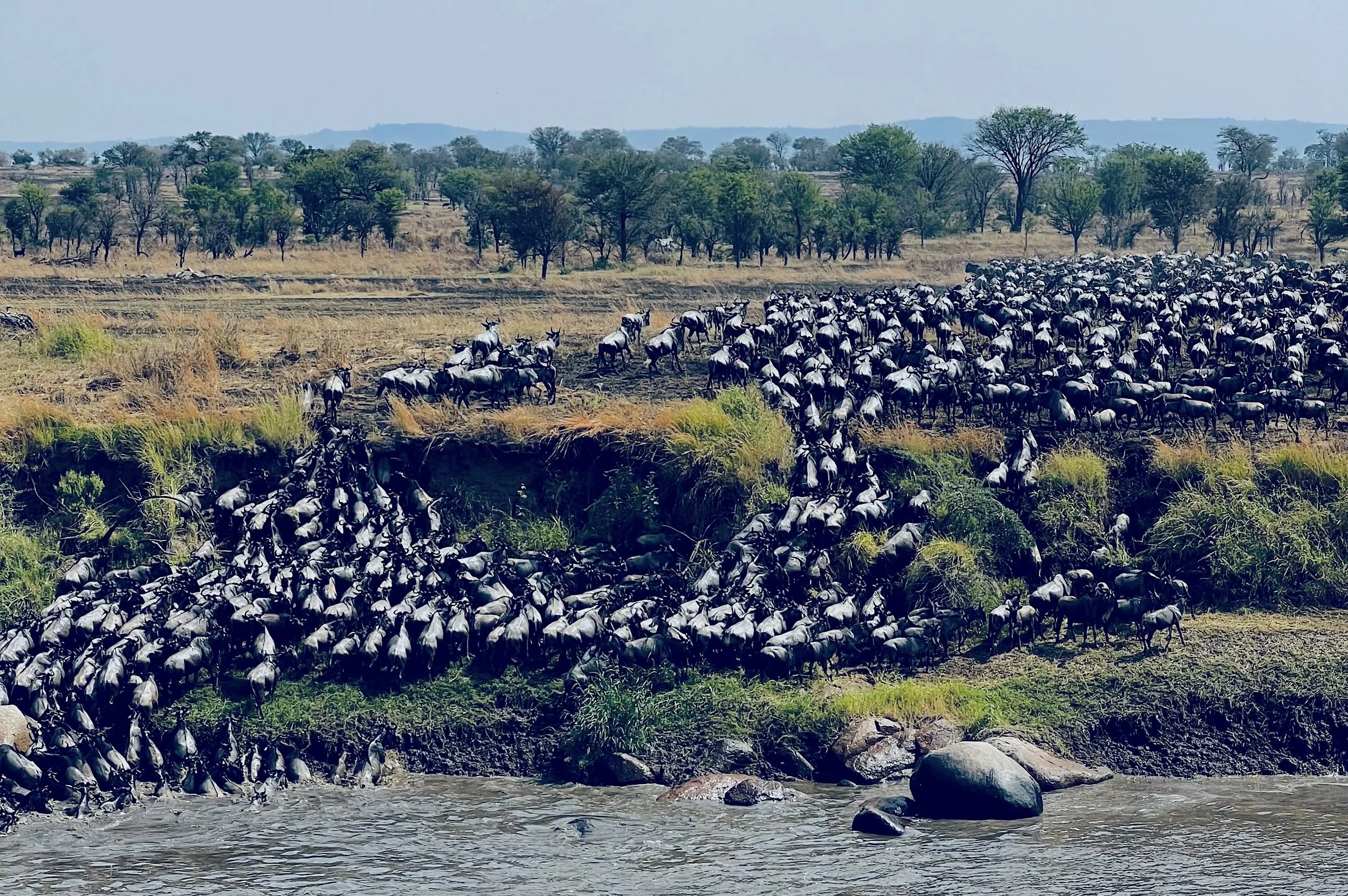
Large herd of wildebeest and zebra gathering at the edge of the Mara River during the Great Migration.

The Greatest Show on Earth: Witnessing the Great Migration

There is no sound quite like it—the thunder of over two million hooves hitting the dust-baked earth of East Africa.

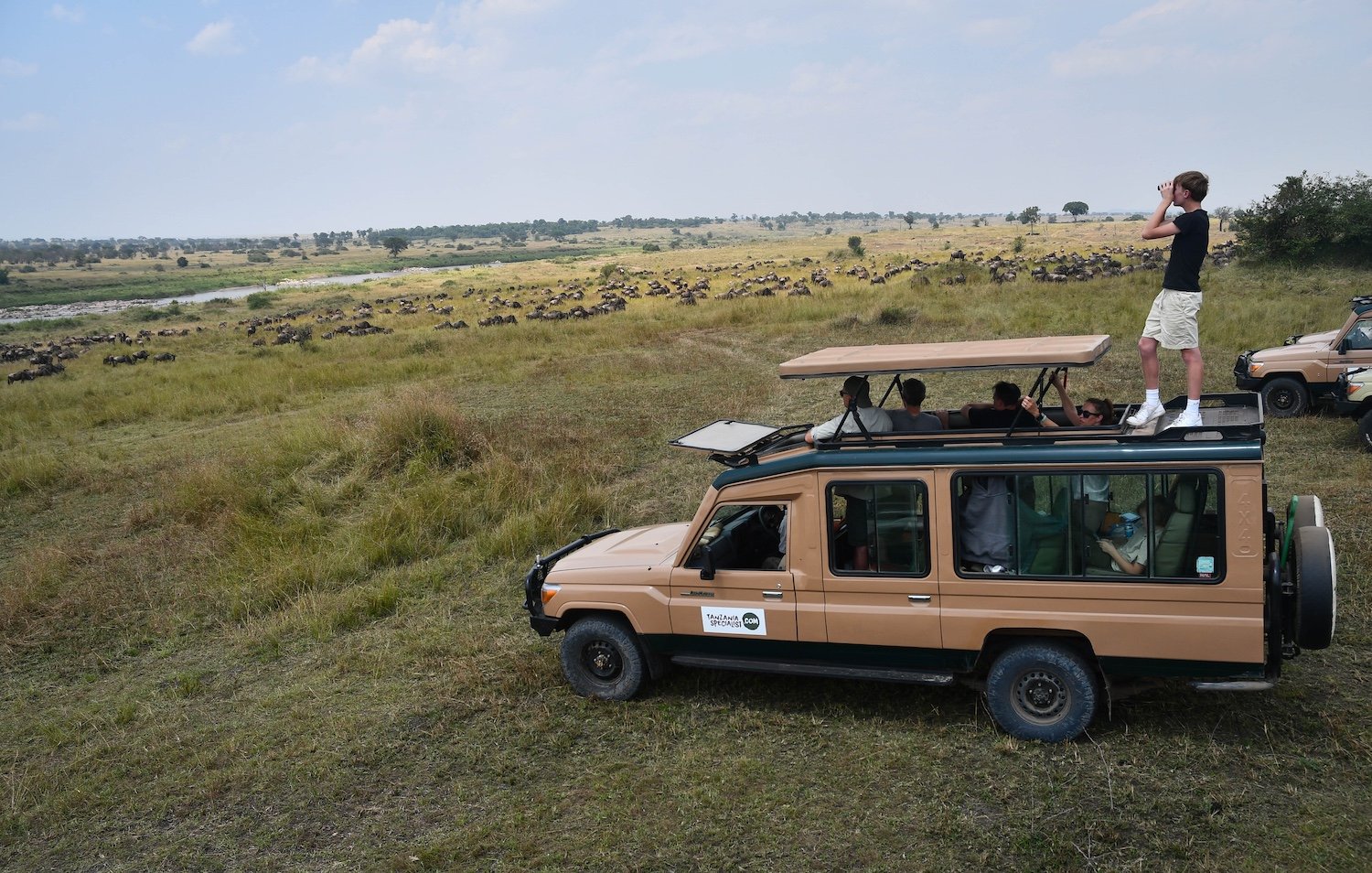
We recently stood on the banks of the Mara River, the natural border between Tanzania’s Serengeti and Kenya’s Maasai Mara, to witness the Great Migration. Known as the largest mass movement of land mammals on the planet, this isn't just a trek; it’s a high-stakes drama of survival, instinct, and raw power.

The Chaos of the Mara River Crossing

The herds of wildebeest and zebra gather by the thousands at the river’s edge. There is a palpable tension in the air as they wait for one brave leader to take the plunge. When they finally go, it’s a spectacle of:

  • Adrenaline: Watching thousands of animals navigate steep cliffs and "slapping waves."

  • Nature’s Gauntlet: The Mara River is home to some of Africa’s largest Nile crocodiles, waiting for the crossing to begin.

  • The Symbiosis: Notice how the zebras and wildebeests travel together; zebras have excellent memory for the migration route, while wildebeests can scent water from miles away.

A massive herd of blue wildebeest and zebras charge up and out the Mara River during the Great Migration.

North for Feeding, South for Birthing

The Great Migration is a relentless circular journey of about 1,200 miles. The herd follows the rains in a constant search for greener pastures:

  • The North (Feeding & Breeding): During the winter months, the herd pushes north into the Maasai Mara to graze and breed.

  • The South (Birthing): In the summer, the rhythm shifts as they move south into the Serengeti for the calving season.

At either end of the calendar, it is a spectacle to behold. In 2024 and 2025, we had the incredible opportunity—as the photo above demonstrates—to witness the intensity of the Mara River crossing. Looking ahead, we anticipate arriving in 2026 specifically for the birthing season (stay tuned for future posts on that incredible sight!), intense for a different set of reasons.

Join Us on Safari!

We don't just want to tell you about it; we want you to see it for yourself. The sight of the herd stretching across horizon is a soul-stirring experience that stays with you forever.

Ready to check the Serengeti off your bucket list?

We are currently making plans to witness the Great Migration again in 2027, and we’d love for you to join our caravan. Email us here to get the first opportunity at seats when registration opens!